What Is ITER? Understanding 500 MW, Q = 10 and the State of Construction
ITER is not a power station. This guide explains its burning-plasma goals, equipment deliveries and installation in 2026, planned research and D–T operation, and the technical challenges that remain for industry.
Read the Japanese original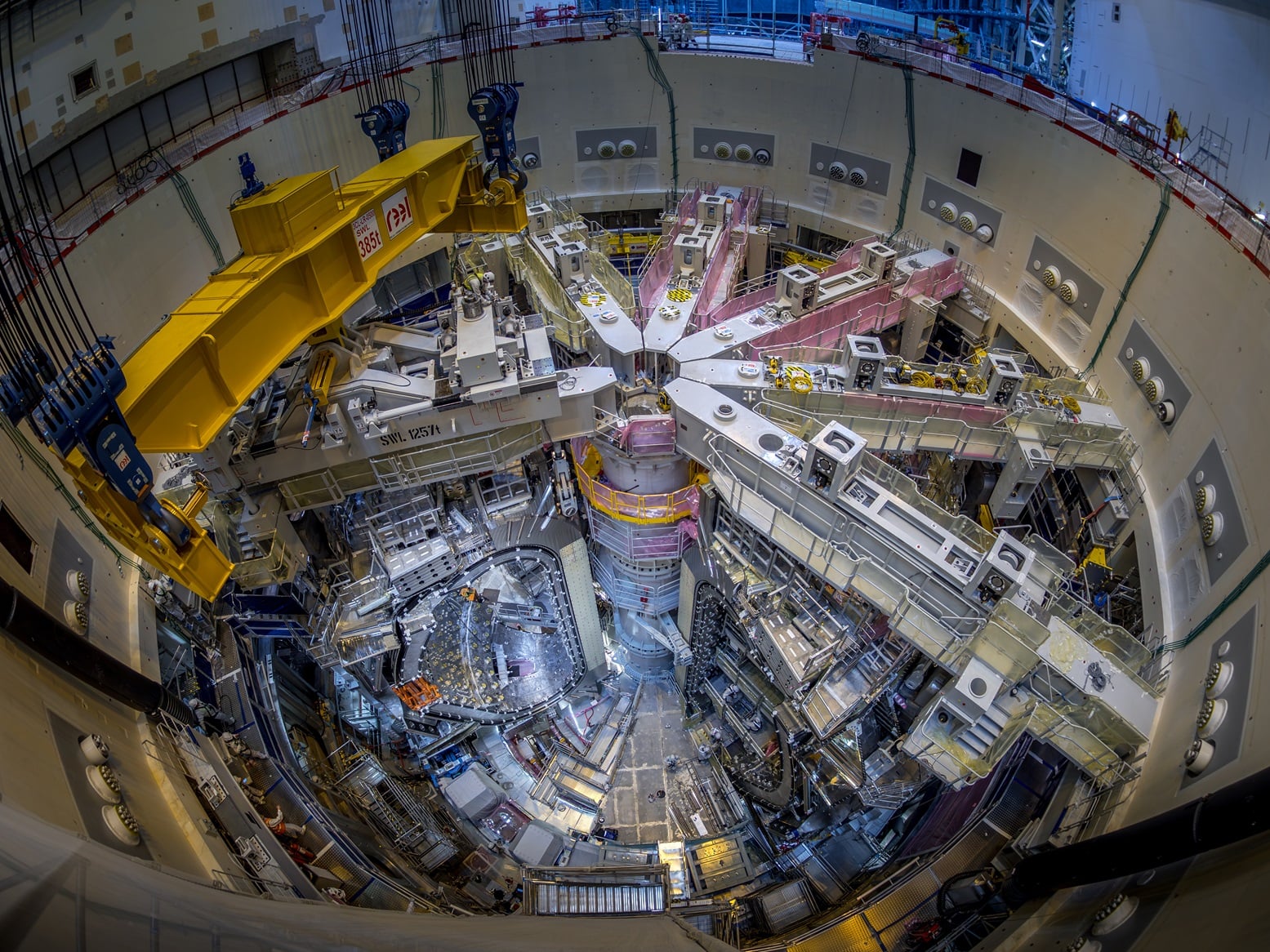
What will ITER demonstrate?
ITER is an international experimental fusion reactor under construction in southern France. Its seven members are Japan, Europe, the United States, China, India, South Korea and Russia. Its central task is to investigate a ‘burning plasma’, in which heat produced by deuterium–tritium reactions makes a substantial contribution to heating the plasma itself. It also investigates how to make enormous magnets, heating, cooling, fuel handling and remote maintenance function as one machine. Official ITER overview
Reading ‘500 MW’ and ‘Q = 10’ correctly
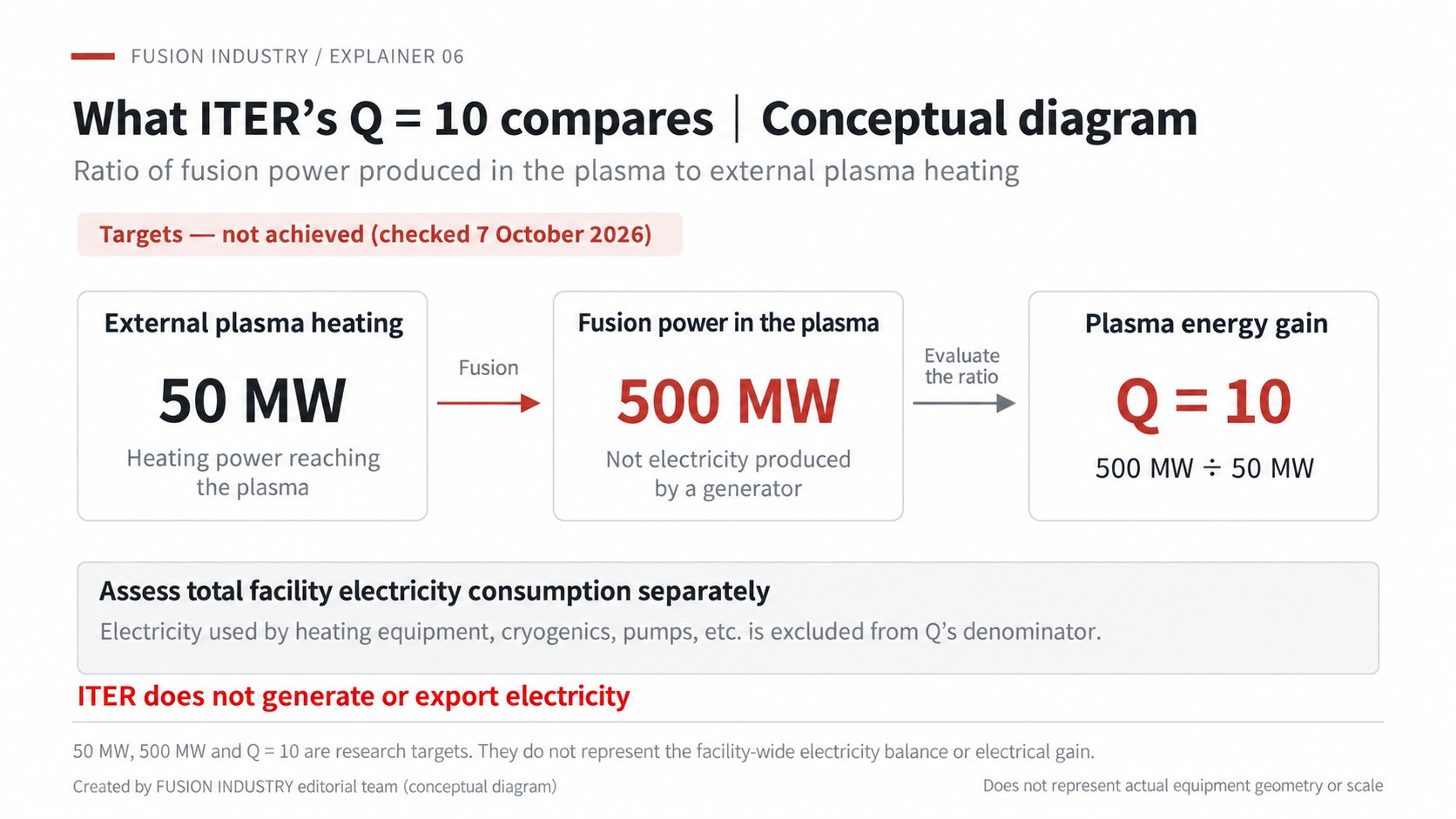
The 500 MW target is fusion power within the plasma, not electrical power from a generator. Q = 10 means producing ten times as much fusion power as the 50 MW of external heating supplied to the plasma. This is different from a balance that includes heating-equipment efficiency and electricity used throughout the facility by refrigerators, pumps and other systems. ITER is not intended to supply this heat as commercial electricity. Describing Q = 10 as ‘multiplying electricity tenfold’ is therefore incorrect. ITER’s technical objectives
How does it operate?
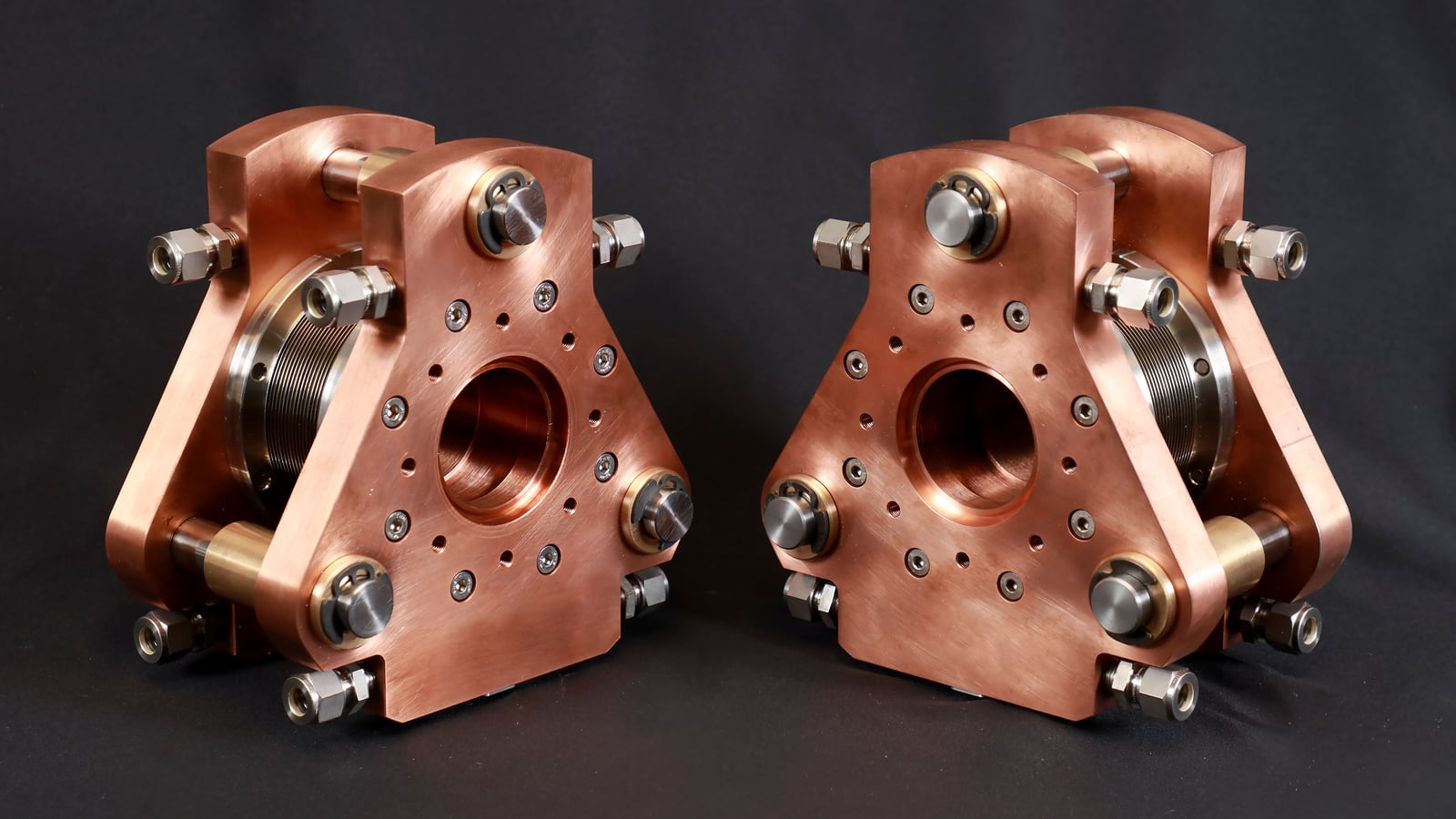
Magnetic fields generated by superconducting magnets confine the plasma, while external heating brings it toward the conditions required for fusion. As burning progresses, helium nuclei produced by the reactions heat the plasma. A divertor to handle heat and particles flowing to the edge, shielding to protect equipment, and measurement and maintenance in a radiation environment are also essential. Technologies for producing tritium inside the reactor will be tested, but validating test blankets and achieving fuel self-sufficiency across a power station are separate milestones. Technology integration and fuel-breeding tests
Why burning plasma changes the research
Unlike experiments controlled by increasing or decreasing external heating, burning plasma has the reaction itself as a major heat source. Confinement performance, self-heating and particle motion therefore influence one another. It is important to establish whether reaction energy reaches the intended locations and whether too much heat escapes. A growing contribution from helium-nucleus self-heating does not automatically mean that external heating is entirely unnecessary or that the facility has surplus electricity. Official explanation of self-heating
Construction status as of 7 October 2026
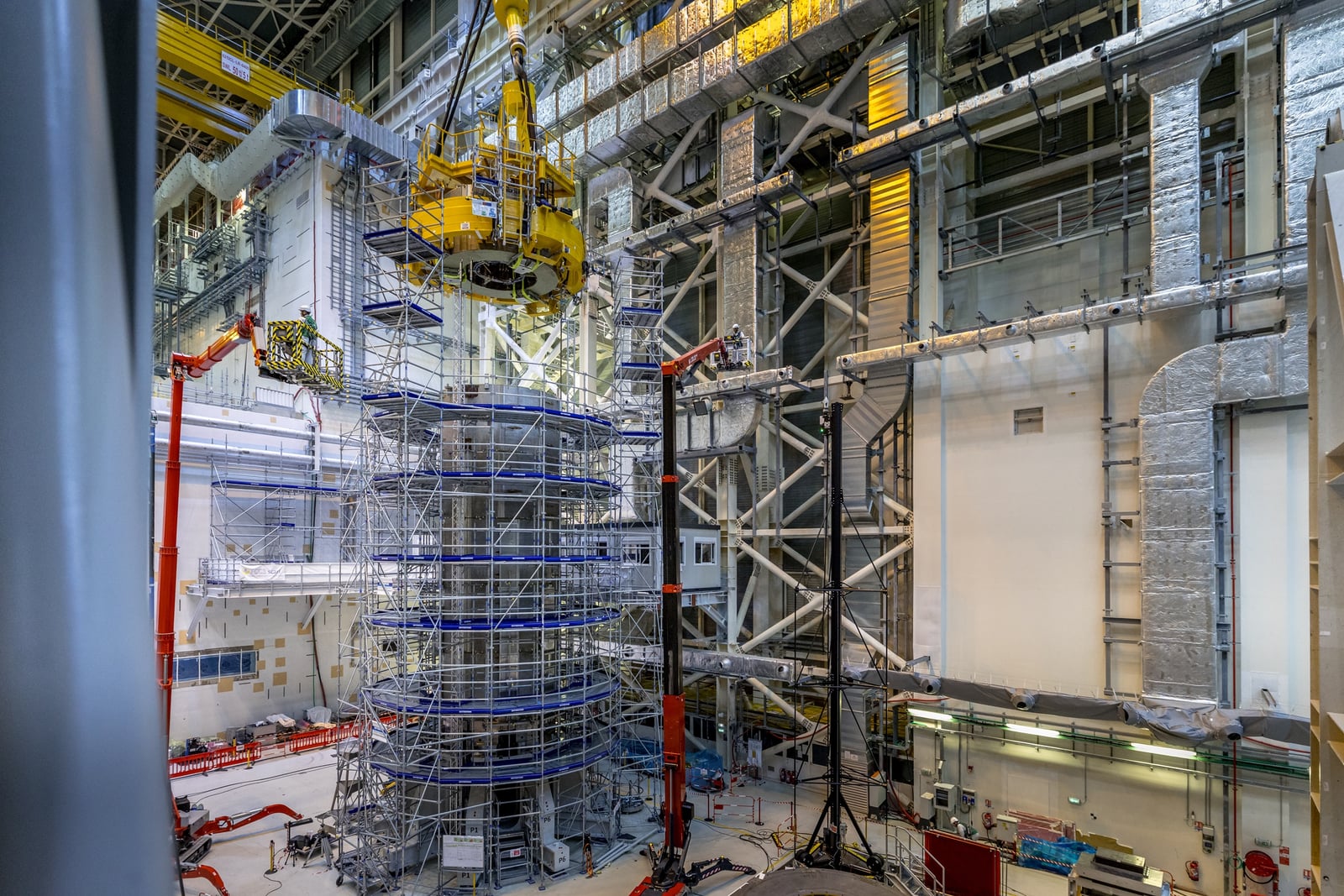
Installation of the sixth of nine sector modules was completed on 28 July 2026. The ninth and final vacuum-vessel sector arrived on 2 October, and on 5 October the ITER Organization reported that the main core components were all on site. However, ‘main core components’ in that announcement does not include in-vessel components such as the divertor and blankets. Completing deliveries does not mean assembly of the entire machine is complete or operation has begun. Installation announcement / Arrival of the final sector

Read the schedule as a plan
The new schedule presented in 2024 places the start of research operation in 2034, operation at full magnetic energy in 2036 and the start of deuterium–tritium operation in 2039. Both the equipment available and the scope of initial operation have changed from the previous ‘first plasma in 2025’ plan. The June 2026 Council announcement also reported progress against Baseline 2024. These are future plans, not achieved burning-plasma results or dates for starting electricity generation. Official schedule explanation / 2026 Council announcement
The year 2039 also refers to the start of the D–T operating phase. It does not mean that the target power or Q = 10 will be reached that day. Construction, commissioning individual systems, integrated commissioning, research operation and experiments with different fuels must be distinguished. When comparing schedules, check not just the year but what the project intends to be ready to do in that year.
Implications for industry and remaining challenges
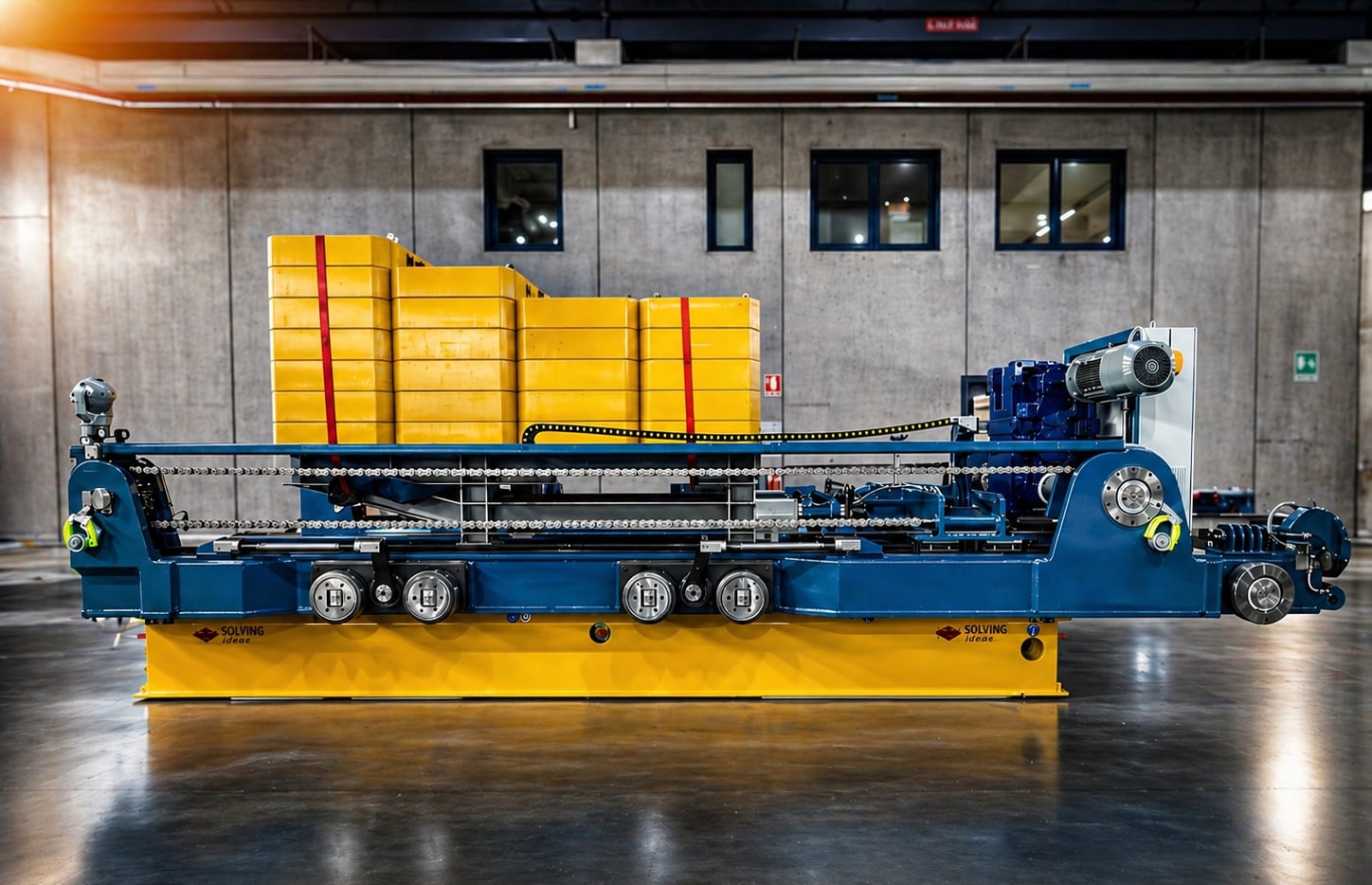
ITER assembles equipment manufactured under work-sharing arrangements among its members. QST serves as Japan’s Domestic Agency. For industry, the achievement is experience in delivering superconductivity, welding, precision measurement and heavy transport under demanding quality requirements. Together with operational research at JT-60SA, this knowledge will inform demonstration-reactor design. ITER alone will not resolve maintenance frequency, availability, fuel self-sufficiency or generation costs. Companies considering entry need to distinguish technical relevance from procurement opportunities that are actually open for applications.
How to assess the next steps
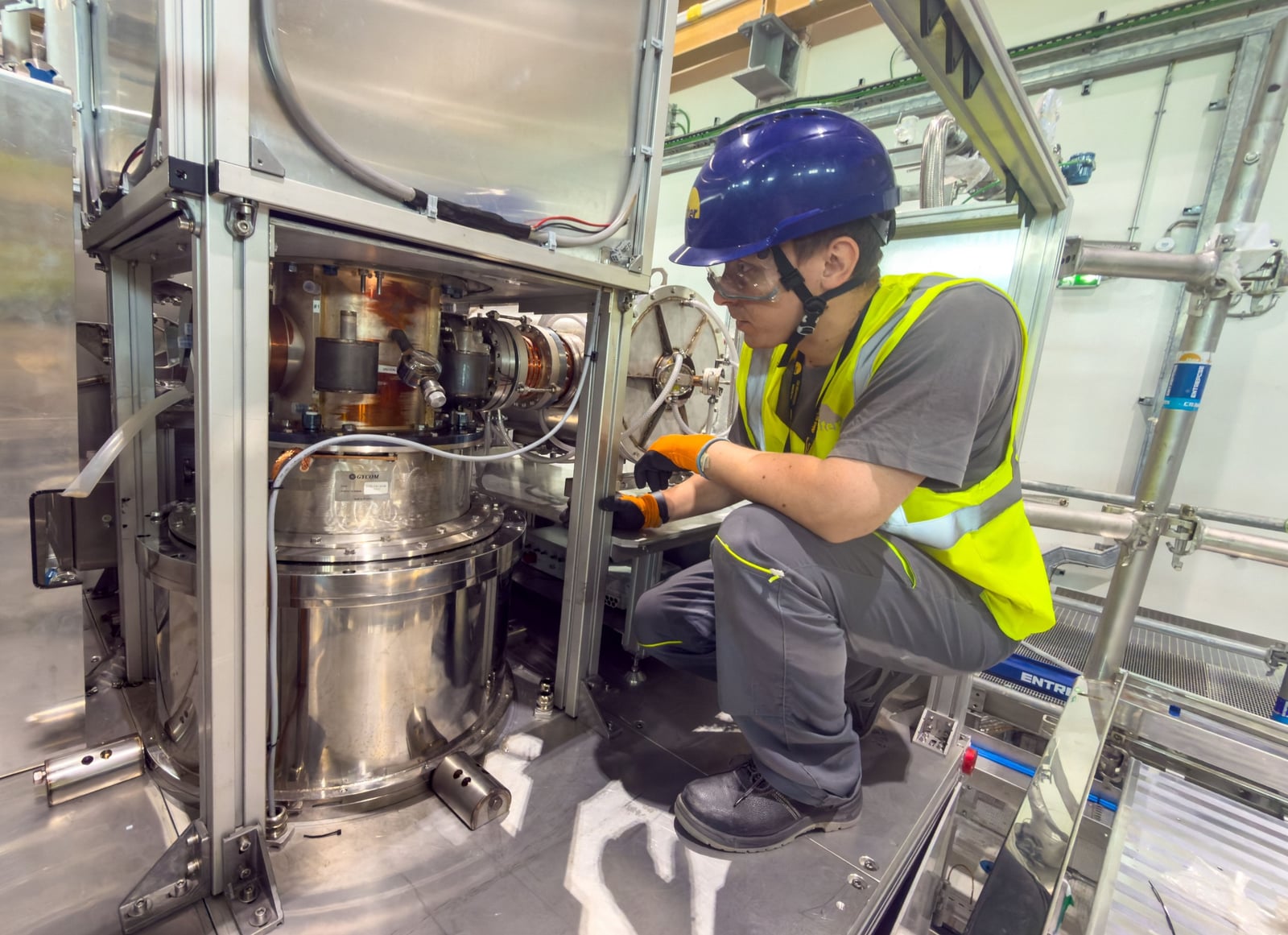
During construction, concrete checkpoints include installation and connection of the remaining modules, manufacture of in-vessel components and commissioning of individual plant systems. Once experiments begin, evaluation will combine plasma conditions, operating duration, the share of self-heating and equipment heat loads. None can be assessed simply by counting delivered components.
Design changes also matter to industry. The 2024 schedule revision set out a policy of changing the plasma-facing first-wall material from beryllium to tungsten. Decisions intended to improve alignment with research objectives change the work required in materials, joining, manufacturing and testing. Reading these technical conditions alongside formal procurement specifications and contracts is key to understanding industrial developments. This article does not indicate review or supervision by the ITER Organization.
Official information from related companies and research institutions
Check each organization’s announcements for development progress and technical documentation.
- ITER Organization | What will ITER do?
- ITER Organization | ITER in a few lines
- ITER Organization | New baseline press-conference summary
- ITER Organization | 38th ITER Council Meeting
- ITER Organization | Two-thirds of ITER tokamak core now in place
- ITER Organization | A remarkable chapter draws to a close
- ITER Organization | Fusion Glossary (Alpha heating)
- Europe completes the final ITER Vacuum Vessel sector
Information checked as of:2026-10-07
Covers construction progress and operating plans. 500 MW and Q = 10 are design targets, not evidence that future performance or schedule goals have been achieved.