Laser Fusion Beyond Ignition: Japan’s Role in the Repetition Challenge
NIF has demonstrated ignition and target energy gain. Turning those results into electricity requires efficient lasers, repeatable targets and integrated operation, areas where Japanese photonics and precision engineering already have concrete research connections.
Read the Japanese original 日本語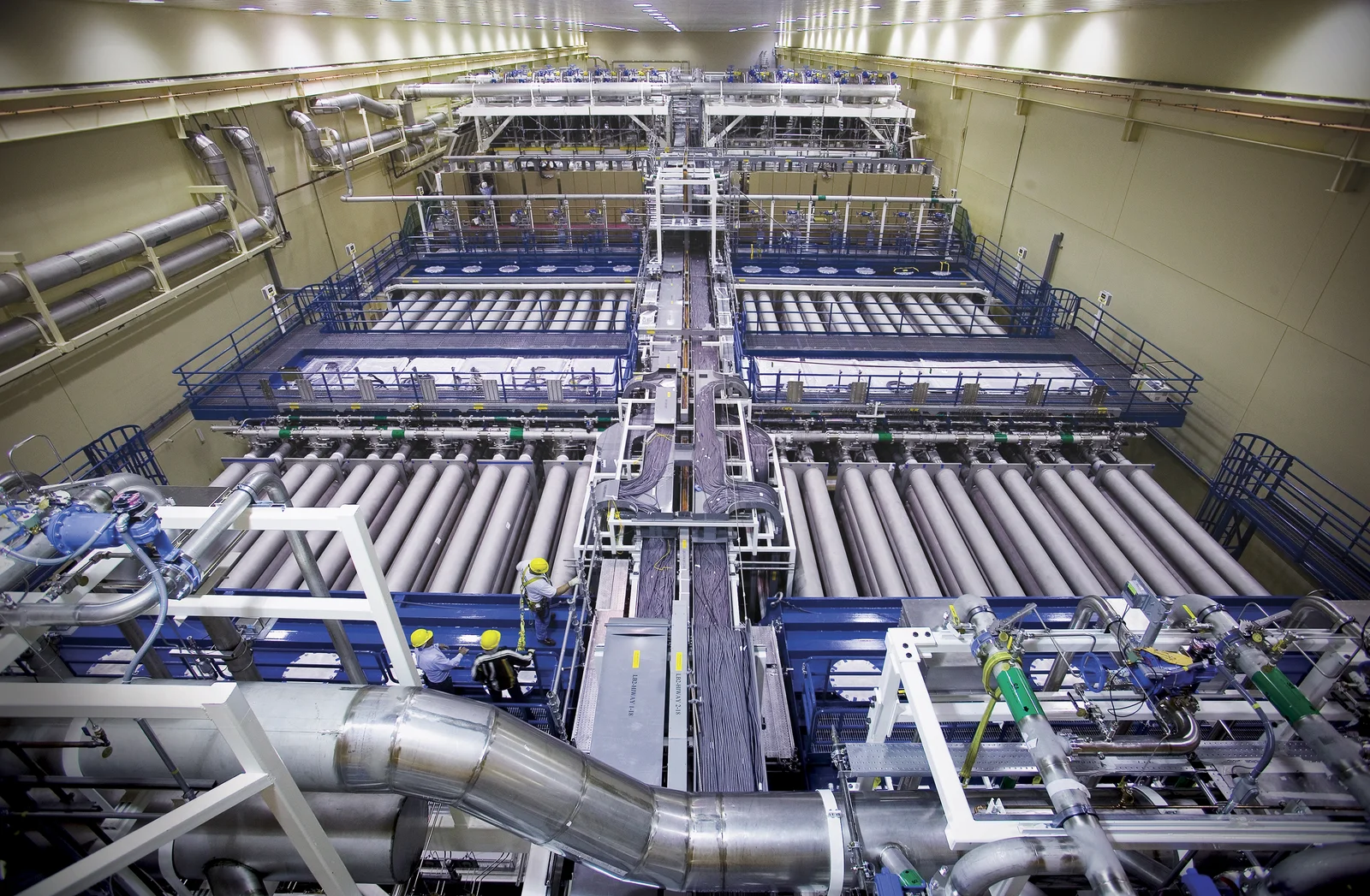
Laser fusion compresses and heats a tiny amount of fuel so quickly that fusion reactions occur before it flies apart. The U.S. National Ignition Facility (NIF) has established an important scientific milestone: ignition and fusion energy exceeding the laser energy delivered to the target. The next industrial challenge is to repeat high-performance shots efficiently, accurately and economically.
For Japanese and international suppliers, this creates connections across lasers, optics, precision fabrication and control. It also makes careful definitions essential. A repeated targeting experiment and a fusion-energy experiment can advance the same field while demonstrating very different things.
Compressing the fuel before it expands
In inertial-confinement fusion (ICF), a small fuel capsule is driven to extreme density and temperature. Material expelled from its outer surface pushes the remaining fuel inward in an implosion. The fuel’s own inertia briefly delays expansion.
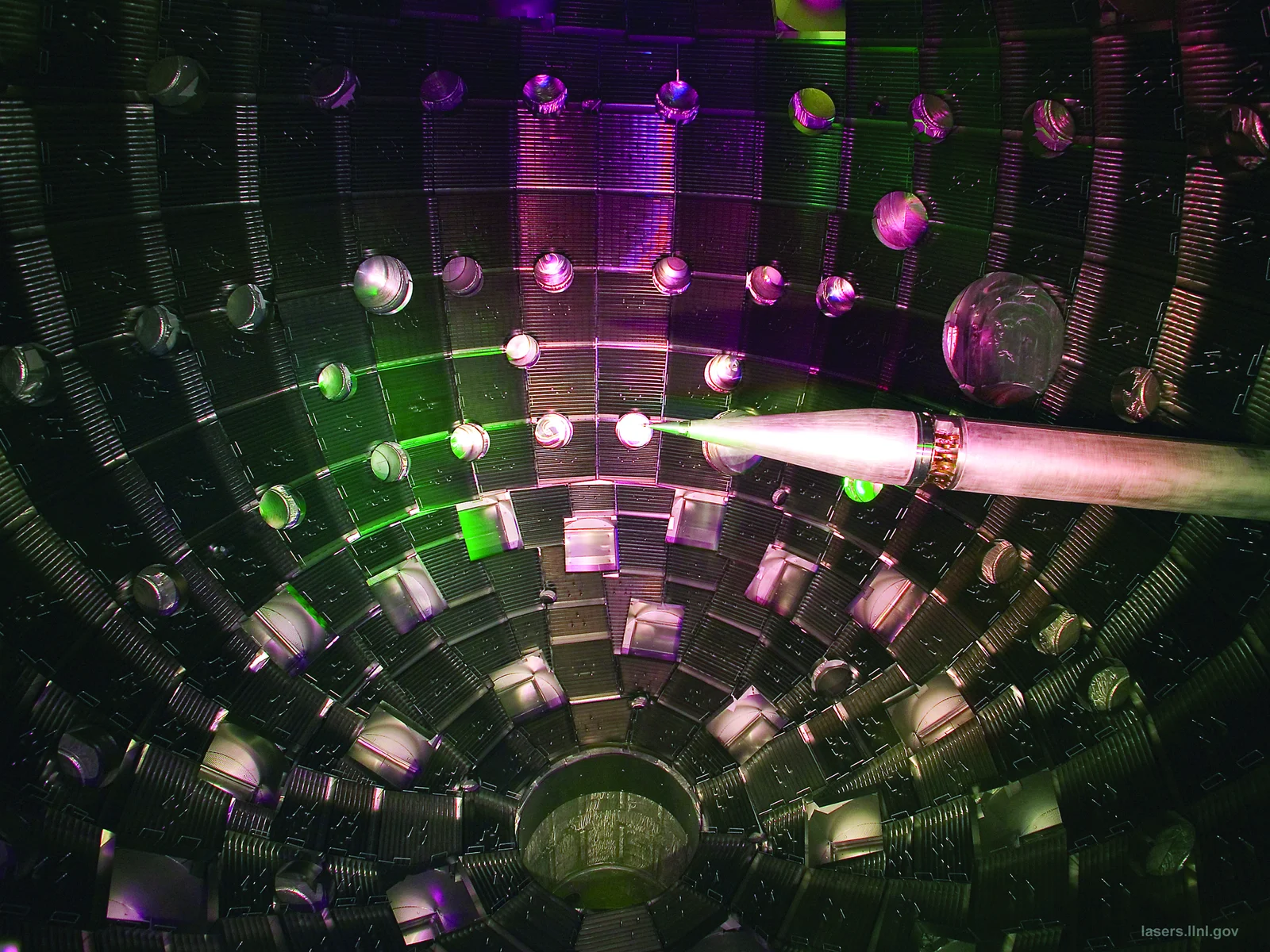
NIF uses indirect drive: up to 192 beams enter a hollow enclosure called a hohlraum, where they generate X-rays that drive the capsule. Direct-drive approaches instead illuminate the capsule itself. Fast ignition separates compression from an additional rapid heating step. These distinctions determine which laser, target and control technologies a program needs. LLNL ignition overview, University of Rochester direct-drive research and Osaka fast-ignition research
Reading NIF’s achievements at the right boundary
NIF first achieved its ignition milestone on 5 December 2022. On 7 April 2025, it produced 8.6 MJ of fusion energy, with reported measurement uncertainty of ±0.45 MJ, from 2.08 MJ of laser energy delivered to the target: a target gain of 4.13.
LLNL’s public history, checked on 18 October 2026, also lists an eleventh ignition experiment on 20 June 2026, yielding 7.9 ±0.4 MJ with target gain of approximately 3.8. These numbers belong to different shots. They demonstrate repeated scientific progress, not a continuously operating power plant. LLNL experiment history
Target gain compares fusion yield with laser energy arriving at the target. It does not use the facility’s electrical consumption as the denominator. A net-electricity claim would need a different accounting boundary.
From laser light to net electricity
A power plant must convert electricity into laser light, use that light to drive a high-gain target, collect fusion energy as heat and convert heat back into electricity. Cooling, vacuum, fuel delivery and other auxiliaries consume part of the output. Improving any one step does not settle the complete balance.
The Livermore Institute for Fusion Technology (LIFT) identifies efficient, high-repetition-rate drivers as a research priority, including operation at around ten shots per second. These are development requirements for future inertial-fusion-energy systems, not operating conditions already demonstrated by NIF. LIFT driver research
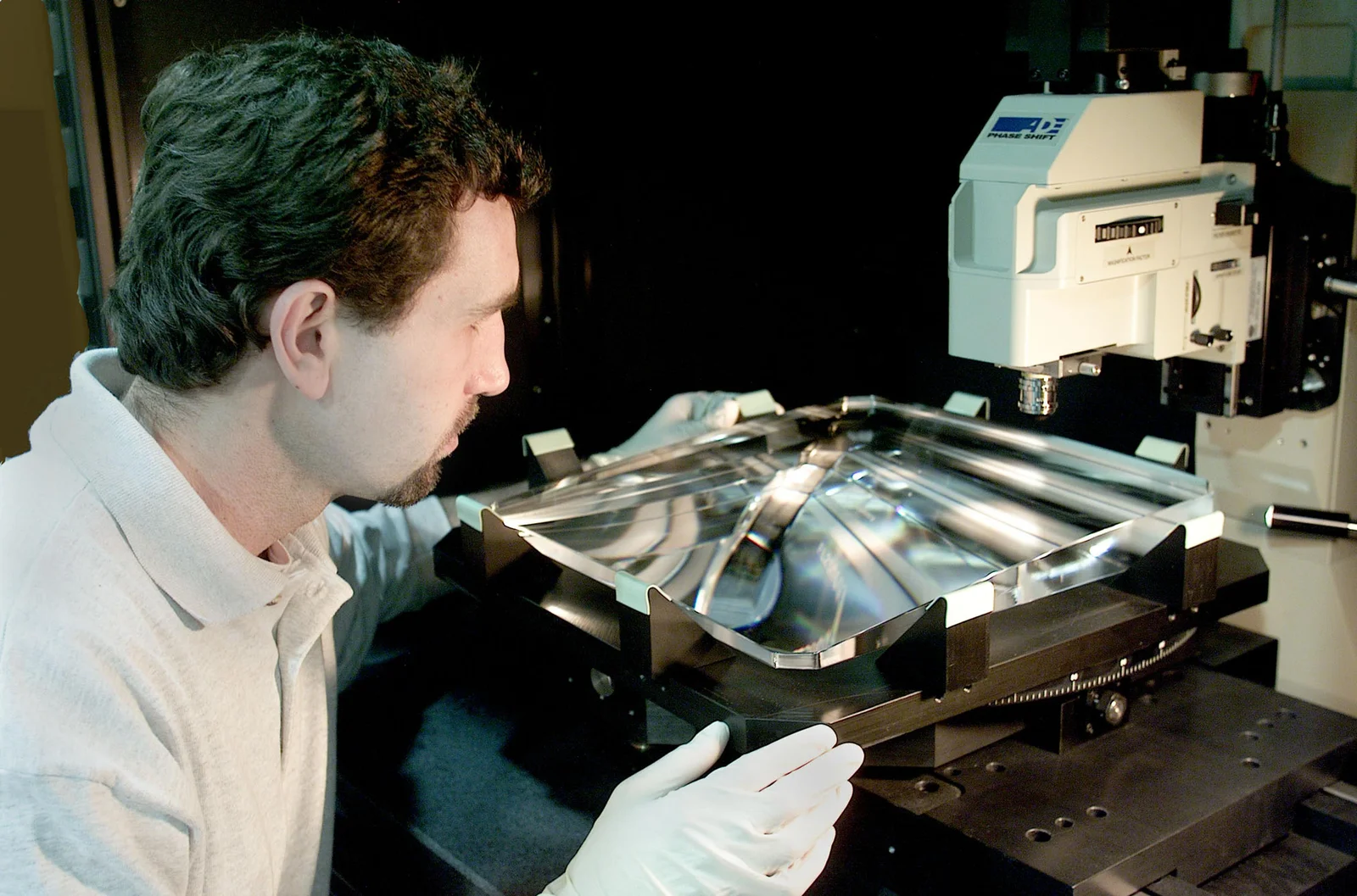
For a component manufacturer, average power and accumulated wear can matter as much as peak performance. A mirror or amplifier that survives a carefully prepared experiment must also be evaluated for repeated operation, inspection and replacement. Cost comparisons need the expected lifetime and maintenance assumptions, not only a unit price.
Every shot needs a new target
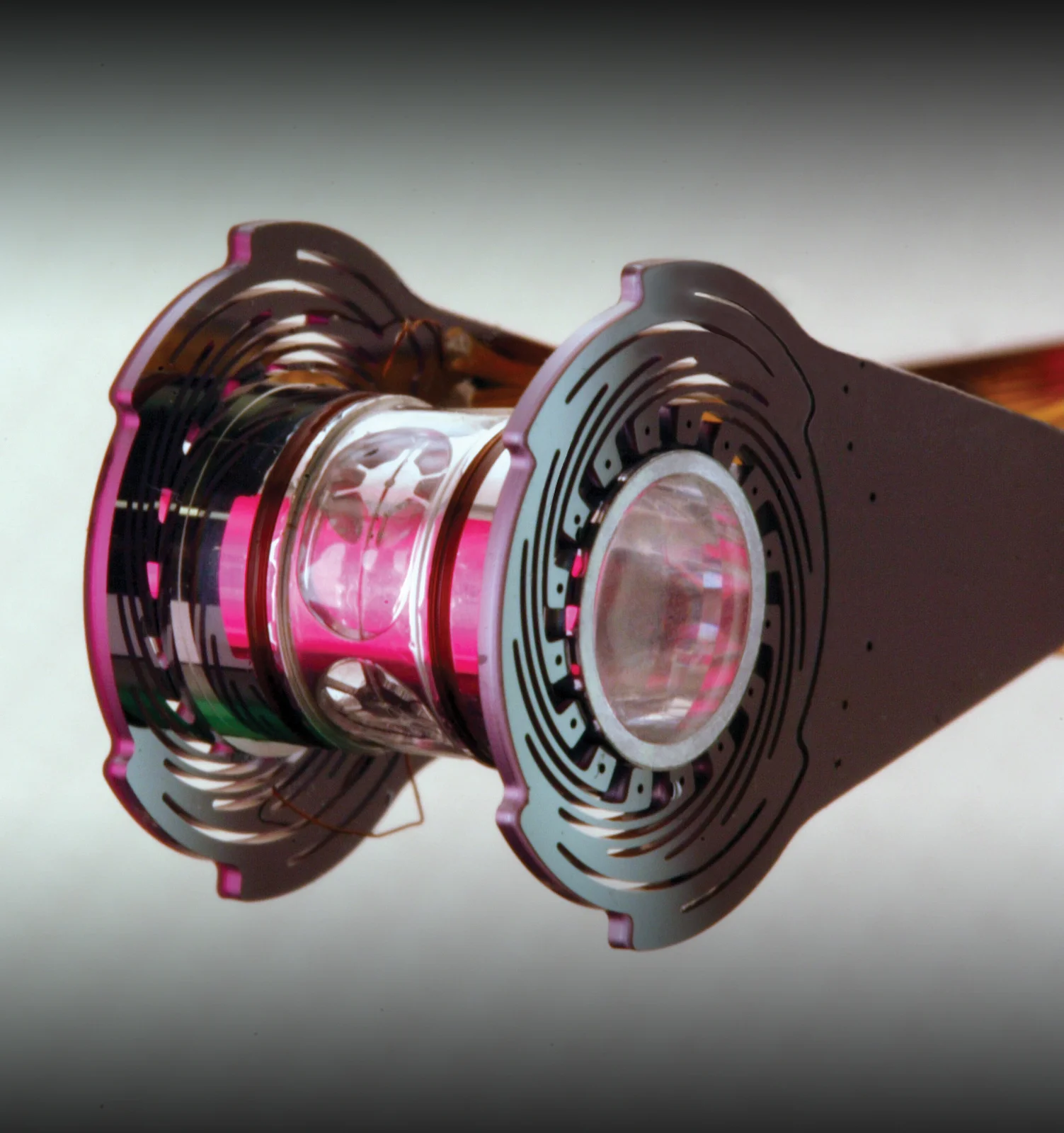
A power plant would consume targets as part of normal operation. Manufacturing must produce consistent structures, inspection must reject defects, and delivery must place each target at the correct location and time. Maintaining the required fuel condition adds another constraint. LIFT treats target fabrication as a distinct research area because laboratory-quality targets must eventually become a scalable, affordable product. LIFT target research
After each shot, the chamber must be ready for the next one. Debris and gas affect that process, while optical protection and diagnostics must remain effective. The integrated cycle includes production, delivery, tracking, irradiation, measurement and recovery. A successful subsystem test should be reported precisely within that cycle.
Japan’s one-hour experiment tested targeting integration
Hamamatsu Photonics and EX-Fusion announced on 31 July 2025 that they had continuously irradiated mock fuel targets with a high-power pulsed laser for one hour. Hamamatsu’s public announcement specifies 10 J laser energy and a 10 Hz repetition rate with target tracking. Joint experiment announcement
This is a concrete Japanese example of bringing a light source together with target delivery, tracking and aiming. The targets were mock targets. The result does not mean one hour of fusion burn or one hour of electricity generation, and it does not establish the performance of a future full-energy driver.
Its significance for suppliers is the interface: the laser and moving target must coincide reliably. Improvements in sensing, timing and trajectory prediction have value only when measured in the combined system under disclosed conditions. Scaling the energy and tightening performance requirements remain separate tasks.
Four industrial entry points
The first is the driver: pump sources, amplifiers, cooling and power supplies must deliver efficient pulses repeatedly. The second is optics, including lenses, mirrors, crystals and coatings that retain their properties under demanding illumination.
The third is target manufacture: deposition, precision processing and metrology must control small variations that influence implosion. The fourth is measurement and control: high-speed imaging, position detection, timing electronics and simulation coordinate the event. These categories are an editorial map of the engineering work, not an assertion that any particular product is qualified for a reactor.
Japan’s academic connection is also concrete. The University of Osaka’s Institute of Laser Engineering publishes arrangements for collaborative use and joint research with its large laser facilities. An overseas team should distinguish a university research facility, a laser manufacturer and a reactor developer when identifying a counterpart; they supply different capabilities and operate under different access arrangements. Institute of Laser Engineering collaboration framework
Ignition leaves important plant questions open
A D–T laser-fusion plant still needs heat recovery, neutron-resistant components and a sustainable tritium fuel cycle. Ignition does not demonstrate fuel self-sufficiency, component lifetime or remote maintenance. Nor does one targeting run establish production economics.
When reading the next announcement, ask four questions: real fuel or a mock target; one shot or repeated operation; laser input or whole-facility input; measured result or design objective? Answering them keeps the achievement visible while preserving the remaining uncertainty. It also turns a distant power-plant vision into a more useful question for industry: which specific capability needs to improve next?
At a glance
- Fusion approach
- Laser / ICF
Sources & verification
- LLNL: Achieving Fusion Ignition and experiment history
- LLNL: Target improvements behind the NIF fusion record
- University of Rochester LLE: Inertial Confinement Fusion
- University of Rochester LLE: Omega Laser Facility
- The University of Osaka, ILE: Collaborative research framework
- The University of Osaka: Fast-ignition research
- Hamamatsu Photonics and EX-Fusion: One-hour mock-target irradiation
- LLNL LIFT: Driver technology
- LLNL LIFT: Target fabrication
Information verified: 2026-10-08
NIF target gain is distinguished from net electricity. LLNL history checked on 18 October 2026 lists 11 ignition experiments through 20 June 2026. Hamamatsu main page verifies mock targets, one hour, 10 J and 10 Hz; 500 μm and >50% claims from the Japanese article are omitted because their supporting PDF was not independently verified. Historic NIF photos are not images of Japanese experiments.
Saved to the same reader account as the Japanese edition. Sign-in and saved-item screens use a Japanese interface.