JT-60SA: Japan and Europe’s Testbed for Advanced Tokamak Operation
First plasma, integrated commissioning and future heating experiments are different milestones. Here is what JT-60SA contributes to fusion research and its suppliers.
Read the Japanese original 日本語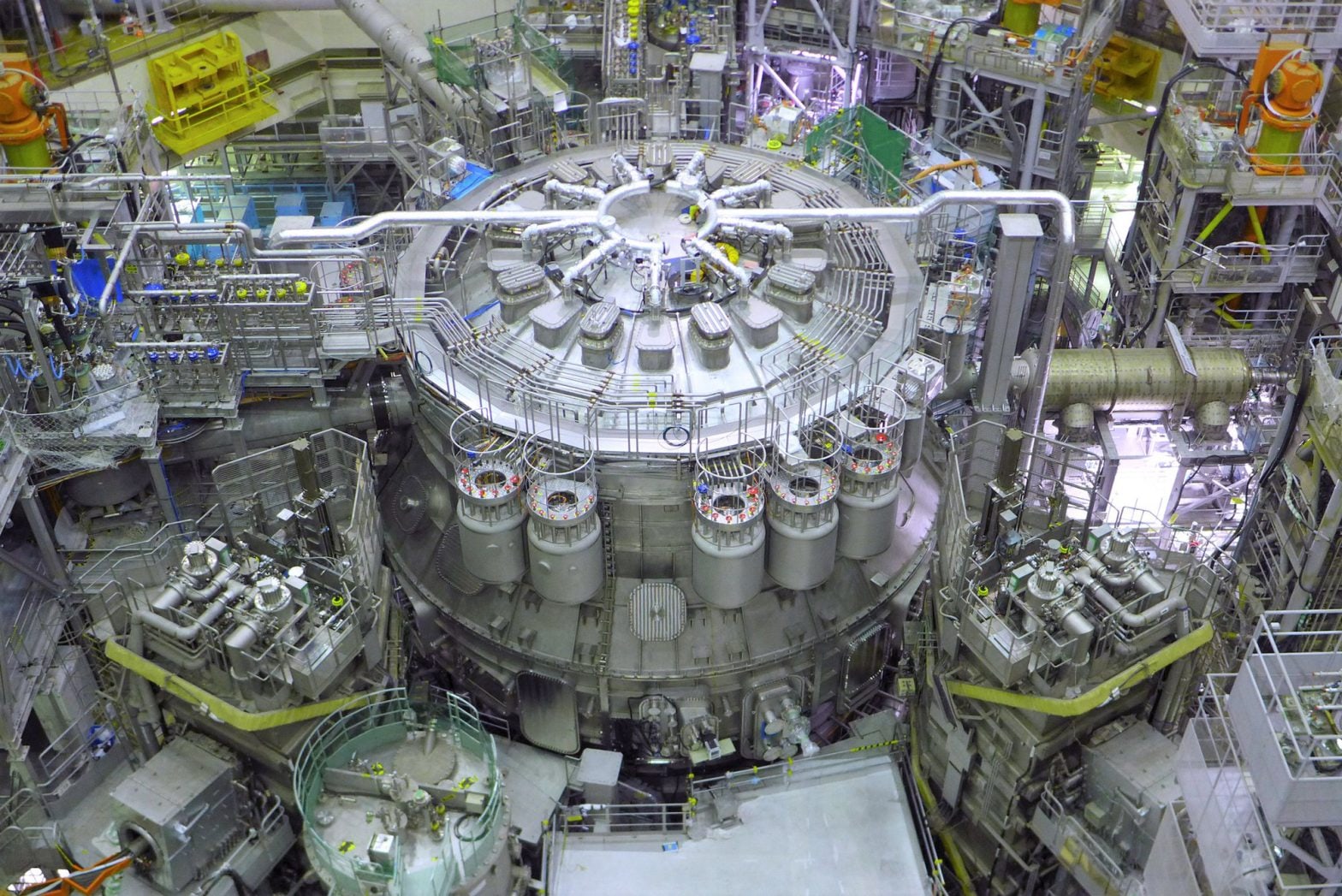
JT-60SA gives Japan and Europe a shared platform for learning how a large superconducting tokamak behaves as an integrated system. For researchers, its value lies in plasma control and advanced operating scenarios. For suppliers, it provides experience of assembling, commissioning and maintaining the equipment that makes those experiments possible.
The essential distinction is between a plasma research facility and a power plant. JT-60SA helps prepare the former’s knowledge for the latter’s requirements; it does not sell fusion-generated electricity.
What the machine is designed to do
Located in Naka, Ibaraki Prefecture, Japan, JT-60SA is supported by Japan’s National Institutes for Quantum Science and Technology (QST) and Europe’s Fusion for Energy (F4E). It combines the Japanese domestic tokamak program with cooperation under the Broader Approach, the Japanese–European framework that complements ITER.
Its objectives include supporting ITER’s research goals, investigating high-performance plasmas relevant to demonstration reactors, and training researchers and engineers. Those purposes explain why operating methods and reproducibility matter alongside peak performance. QST’s project overview
Confine, heat, measure and control
A tokamak combines magnetic fields to confine electrically charged particles in a toroidal chamber. At JT-60SA, neutral beams and electromagnetic waves supply heating, while diagnostics measure properties such as temperature and density. Operators must manage pressure, position, shape and heat transport together.
The planned hydrogen and deuterium research should be distinguished from deuterium–tritium burning-plasma experiments and electricity-generation demonstrations. A hot plasma is an important research achievement, but its temperature alone does not establish power-plant performance. Research plans for heating experiments, in Japanese
Three questions help interpret results. Can a high-pressure plasma remain stable? How long can the desired performance be maintained? And do measurements agree with predictions closely enough to improve control? A brief maximum, a sustained operating condition and a validated model each answer different questions.
First plasma and the 2026 commissioning stage
JT-60SA produced its first tokamak plasma on 23 October 2023; QST announced that result the following day. The subsequent upgrade program added systems needed for more demanding experiments. QST’s first-plasma announcement
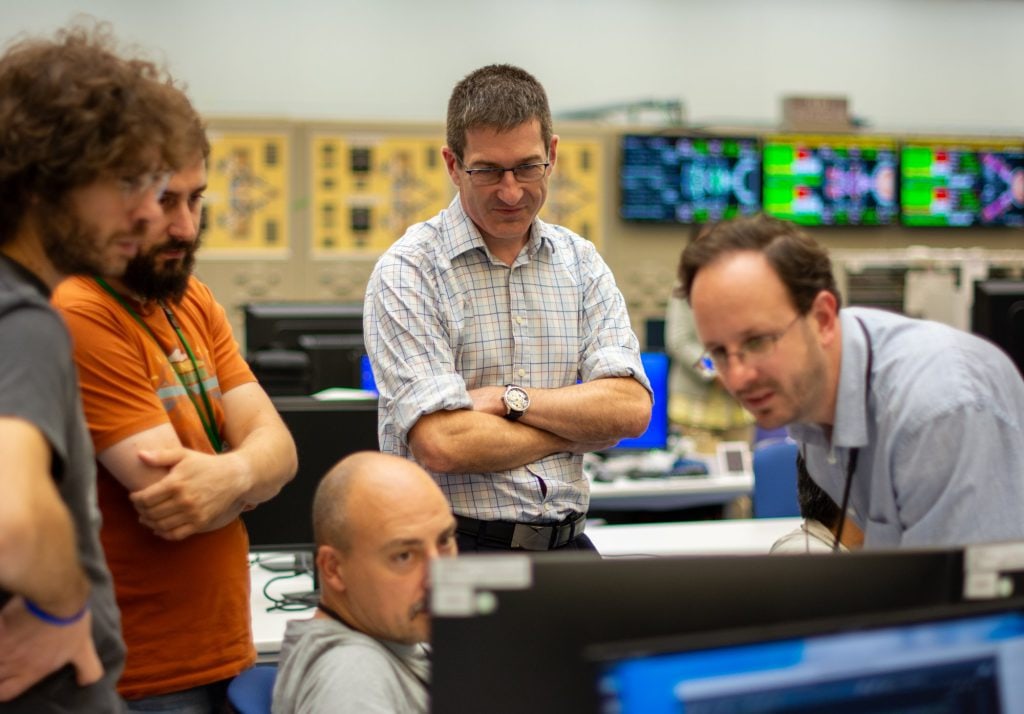
Integrated commissioning for heating experiments began on 27 February 2026 and was announced on 13 March. This stage tests newly installed equipment together with existing systems, starting with in-vessel control coils. It is more than switching on individual components, but it is not itself a report of the planned heating campaign’s scientific results. QST’s English commissioning announcement
F4E’s March 2026 account described a roughly six-month experimental campaign expected to start toward the end of that year. That remains a schedule statement in the cited announcement. Similarly, specifications such as 5.5 MA plasma current or approximately 100-second operation are not automatically the latest achieved experimental values. F4E’s account of preparations
How it relates to ITER and Q-DEMO
JT-60SA explores control and operating conditions that can inform ITER, while investigating demanding plasma regimes relevant to later reactors. ITER is intended to study burning plasma and the integration of large fusion systems. Japan’s Q-DEMO concept adds staged electricity-generation and fuel-breeding objectives.
These are complementary programs with different experimental boundaries. Progress in JT-60SA cannot by itself demonstrate tritium self-sufficiency, reactor-material lifetimes or the economics of a generating station. The useful question is which specific result can be transferred into another project’s design or operating decisions. QST’s description of the connected programs
Precision manufacturing becomes an operating capability
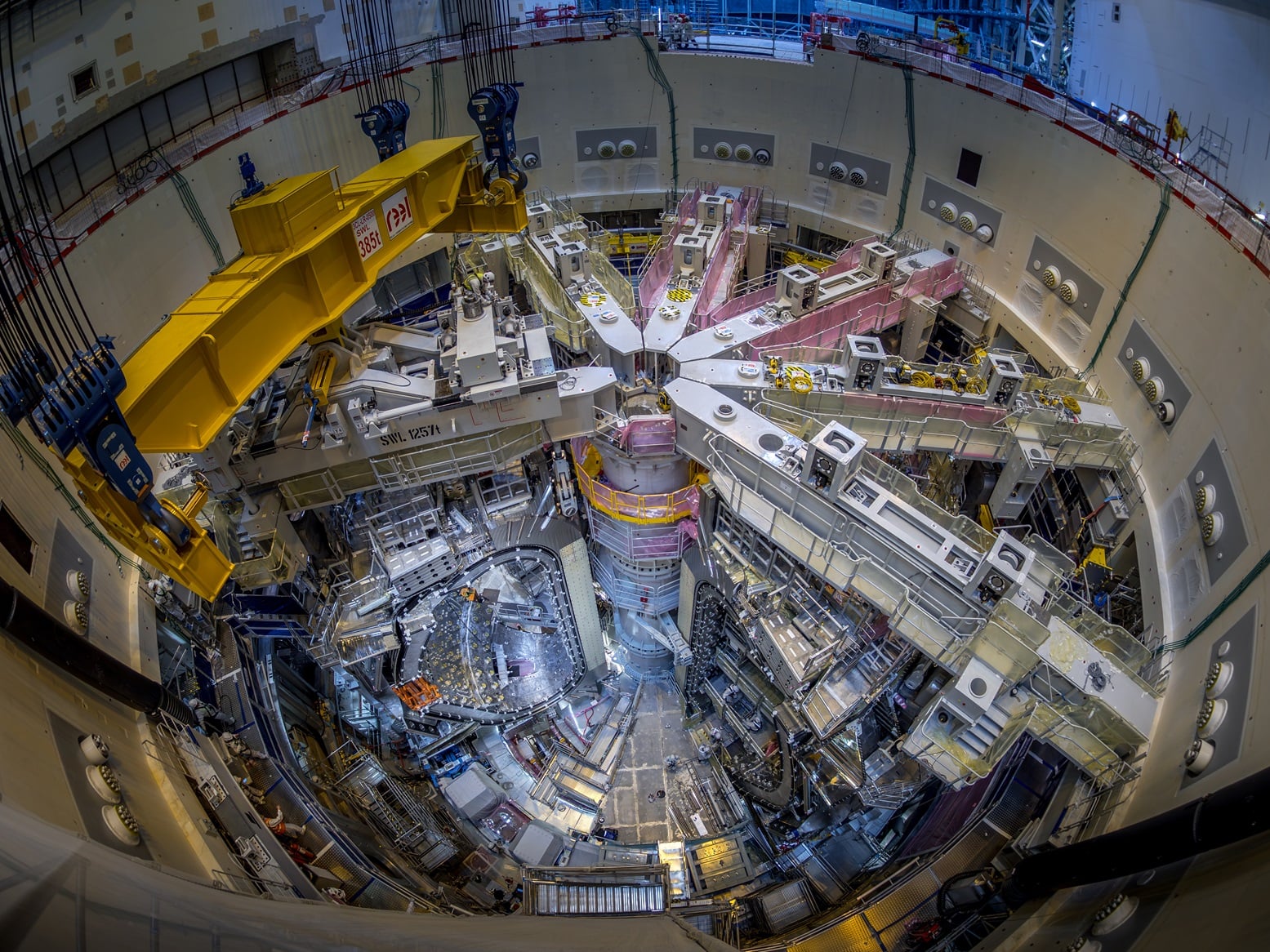
In December 2025, QST and Mitsubishi Electric reported making two approximately eight-metre-diameter fast plasma-position control coils inside the vessel, with position and shape accuracy within ±2 millimetres. These copper coils have a different function from the machine’s large superconducting magnets. The joint coil-manufacturing announcement
That example makes the industrial challenge concrete. The research requirement must be translated into a component that can actually be manufactured, installed and controlled in its intended location. Power supplies, vacuum systems, cryogenics, heating and diagnostics all add interfaces that must work together.
For suppliers, this suggests a useful distinction between demonstrating a component’s standalone performance and establishing reliable operation inside a larger machine. Commissioning helps expose integration problems. It does not guarantee future orders or earnings for the companies involved.
Fuel delivery has its own integration milestones
On 28 July 2026, F4E reported that Sener had manufactured a pellet centrifuge accelerator for JT-60SA. The planned system combines equipment that forms frozen hydrogen pellets, accelerates them and transports them toward the plasma. At publication, the approximately five-metre-long accelerator was at Germany’s IPP for integration with other subsystems and testing. F4E’s manufacturing and test-plan report
Manufacture, integrated testing, installation and successful operation at JT-60SA are separate milestones. Fuel delivery therefore offers another example of mechanical, vacuum and control engineering coming together, rather than proof that an announced component is already operating on the tokamak.
What to look for in the next results
Useful reporting should identify the fuel, heating conditions and equipment configuration, then give the achieved plasma parameters and how long they were sustained. Repeated performance matters: a single successful discharge and a reproducible operating method provide different evidence.
Researchers and business developers should also ask what the result changes. Does it improve a control model, qualify an interface, reveal a maintenance issue or inform an ITER or DEMO operating scenario?
A 100-second research pulse would not mean uninterrupted commercial electricity supply. Terms such as “world’s largest” and “restart” are useful context only when accompanied by the experimental scope and conditions. The photographs here document earlier facilities and work; their dates should not be mistaken for new 2026 results. This is independent editorial analysis, not a statement issued or endorsed by QST or F4E.
Sources & verification
- QST: The JT-60SA project (Japanese)
- QST: First plasma, announced 24 October 2023 (Japanese)
- QST: Integrated commissioning for heating experiments, 13 March 2026 (Japanese)
- Fusion for Energy: Europe and Japan restart JT-60SA
- QST and Mitsubishi Electric: Fast plasma-position control coils completed (Japanese)
- QST: Organization and research plans for heating experiments (Japanese)
- QST: JT-60SA construction and magnet materials (Japanese)
- Fusion for Energy: Europe develops a new fuel source for JT-60SA
Information verified: 2026-10-07
Independent English editorial adaptation reviewed on 18 October 2026. Historical events, published plans and achieved results are distinguished. Original Japanese publication date is preserved.
Saved to the same reader account as the Japanese edition. Sign-in and saved-item screens use a Japanese interface.