Blankets and heat recovery
- Official name
- Fusion reactor blanket
- ENGLISH
- Breeding blanket
In a D–T fusion reactor, the blanket receives neutron energy as heat and also supports tritium breeding. Heat extraction and material durability are crucial.
Read the Japanese original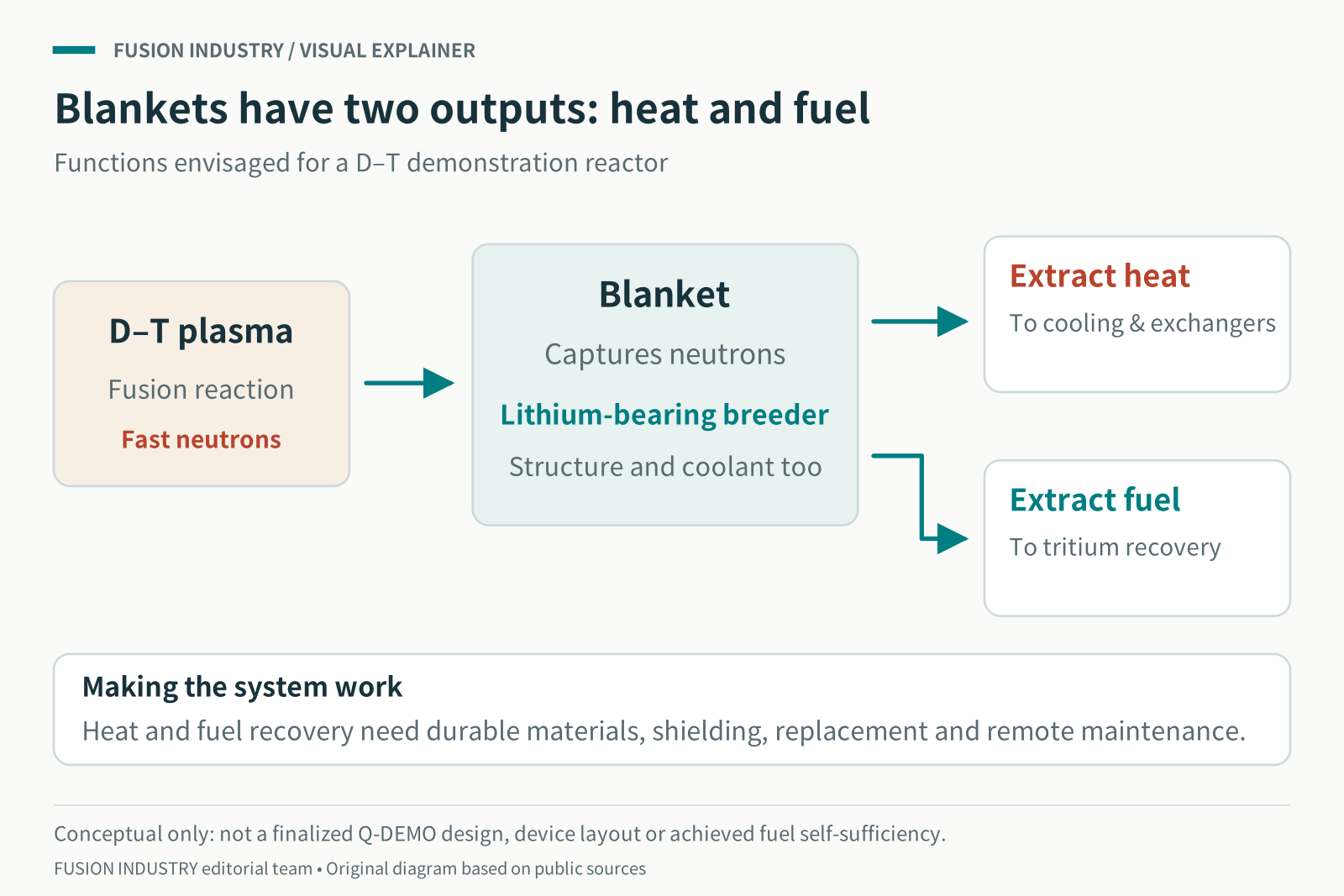
In a D–T fusion reactor, the blanket receives neutron energy as heat and also supports tritium breeding. Heat extraction and material durability are crucial.
Business considerations
Consider manufacturing repeatability, maintenance, quality assurance and supply availability alongside individual performance. Check the reactor's overall objectives and the scope demonstrated for each component.
Understanding the organizations and companies
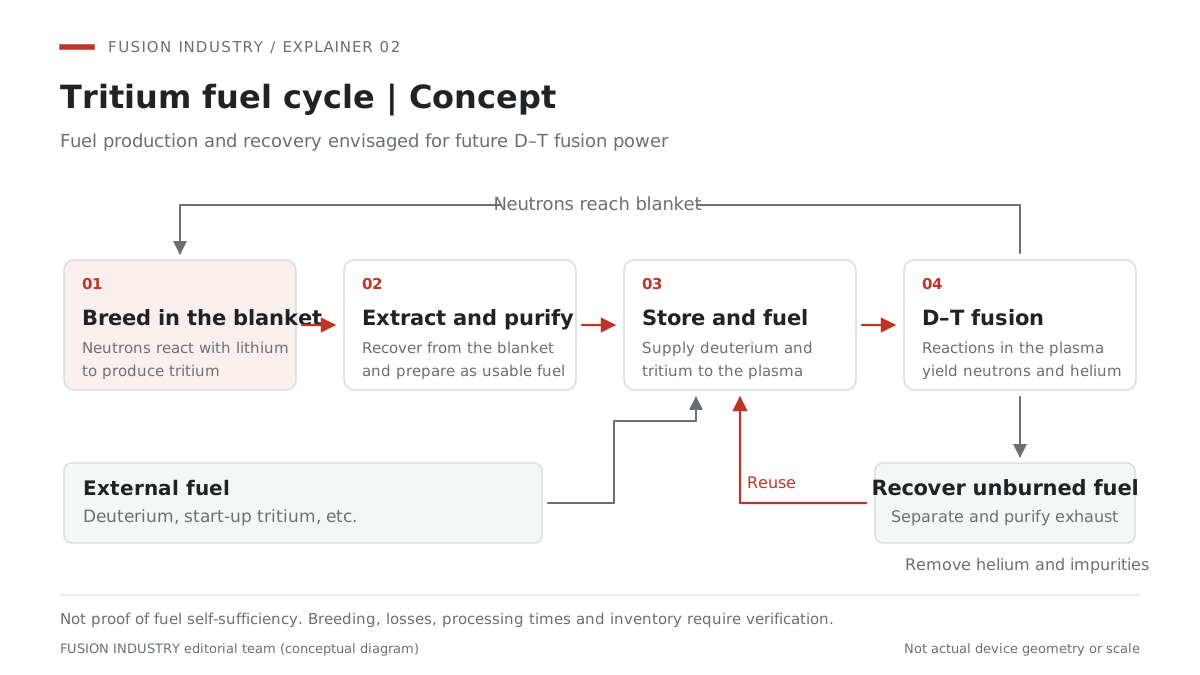
A D–T reactor blanket is an in-vessel system combining heat recovery, shielding and tritium breeding. Materials, coolants and replacement methods depend on the approach and design. ITER's test blanket modules test future technologies; they do not demonstrate fuel self-sufficiency or electricity generation across ITER. Company test loops and conceptual designs must also be distinguished from long-term irradiation tests inside a reactor.
ITER Organization / Members' Domestic Agencies / Kyoto Fusioneering / Helical Fusion / Type One Energy
Official information from related companies and research institutions
Check each organization’s announcements for development progress and technical documentation.