Stellarators and Japan’s Helical Route: Turning Steady-State Physics into a Maintainable Plant
LHD and Wendelstein 7-X provide a research foundation for a new generation of stellarator developers. The industrial challenge is to turn carefully shaped magnetic fields into equipment that can be manufactured, fueled and maintained.
Read the Japanese original 日本語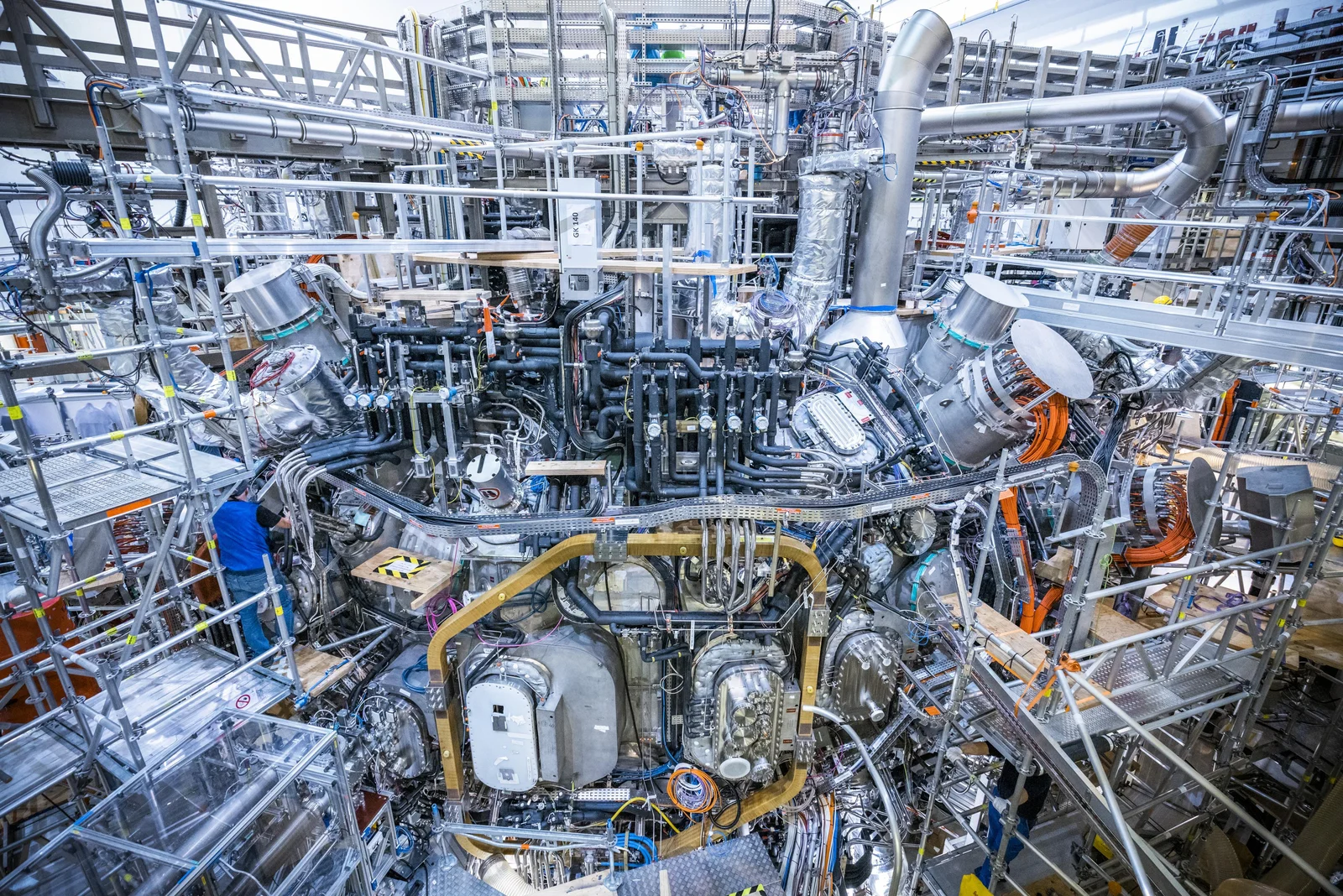
Stellarators create the magnetic field needed to confine plasma primarily with external coils. That gives them an attractive starting point for sustained operation. Japan’s Large Helical Device (LHD) and Germany’s Wendelstein 7-X (W7-X) have built an experimental foundation; private developers now seek to turn that knowledge into power-plant designs.
The commercial question is broader than how long a plasma lasts. Can the magnetic geometry be built accurately, integrated with heat and fuel systems, and maintained at an acceptable cost?
Designing the twist outside the plasma
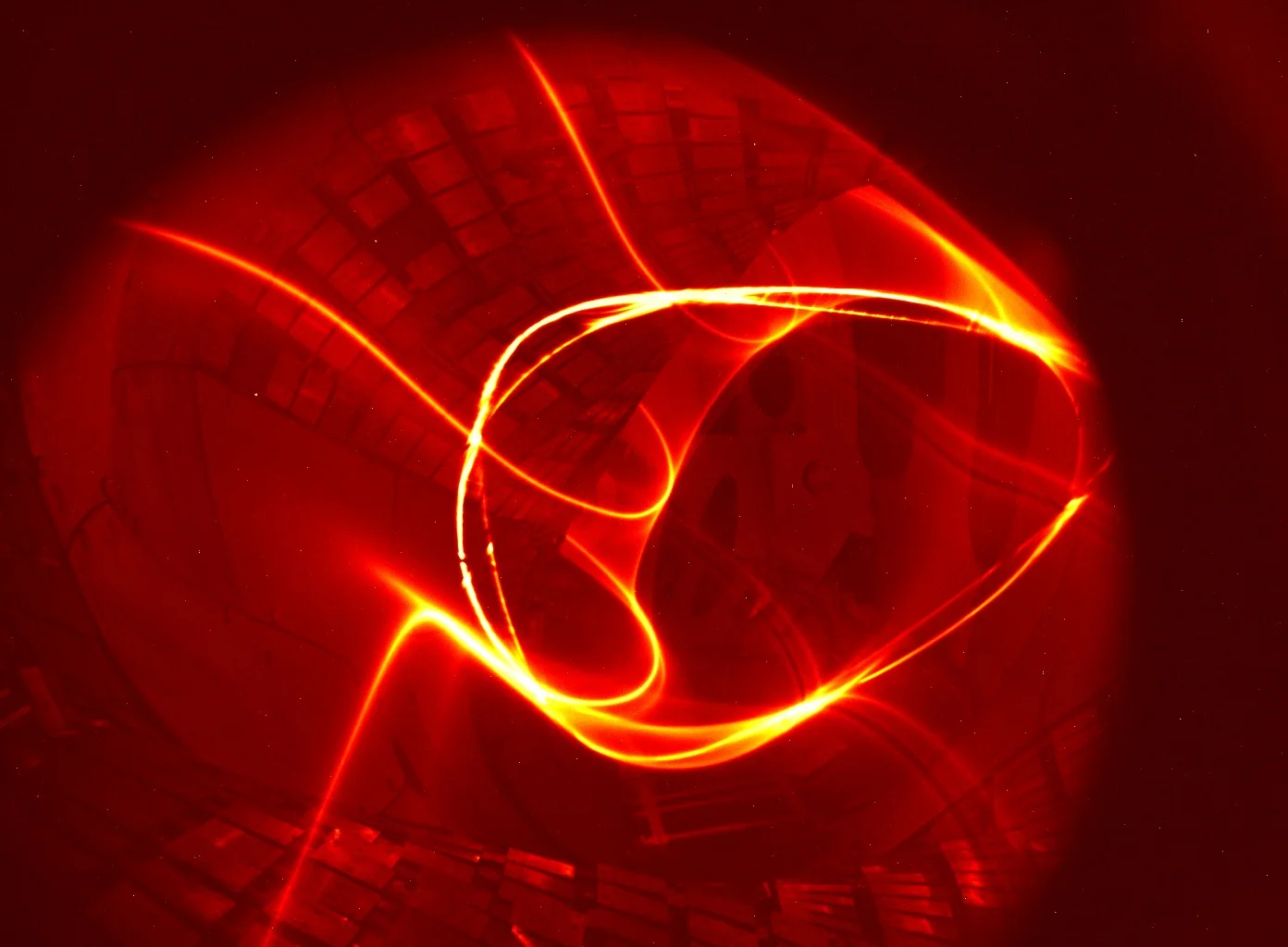
In a magnetic-confinement device, field lines must wind around both the main ring and its cross-section. A tokamak relies on a substantial plasma current to help produce that twist. A stellarator obtains it mainly through the shape and arrangement of external coils, without requiring a large toroidal plasma current as the basis of confinement. IPP explanation of stellarators
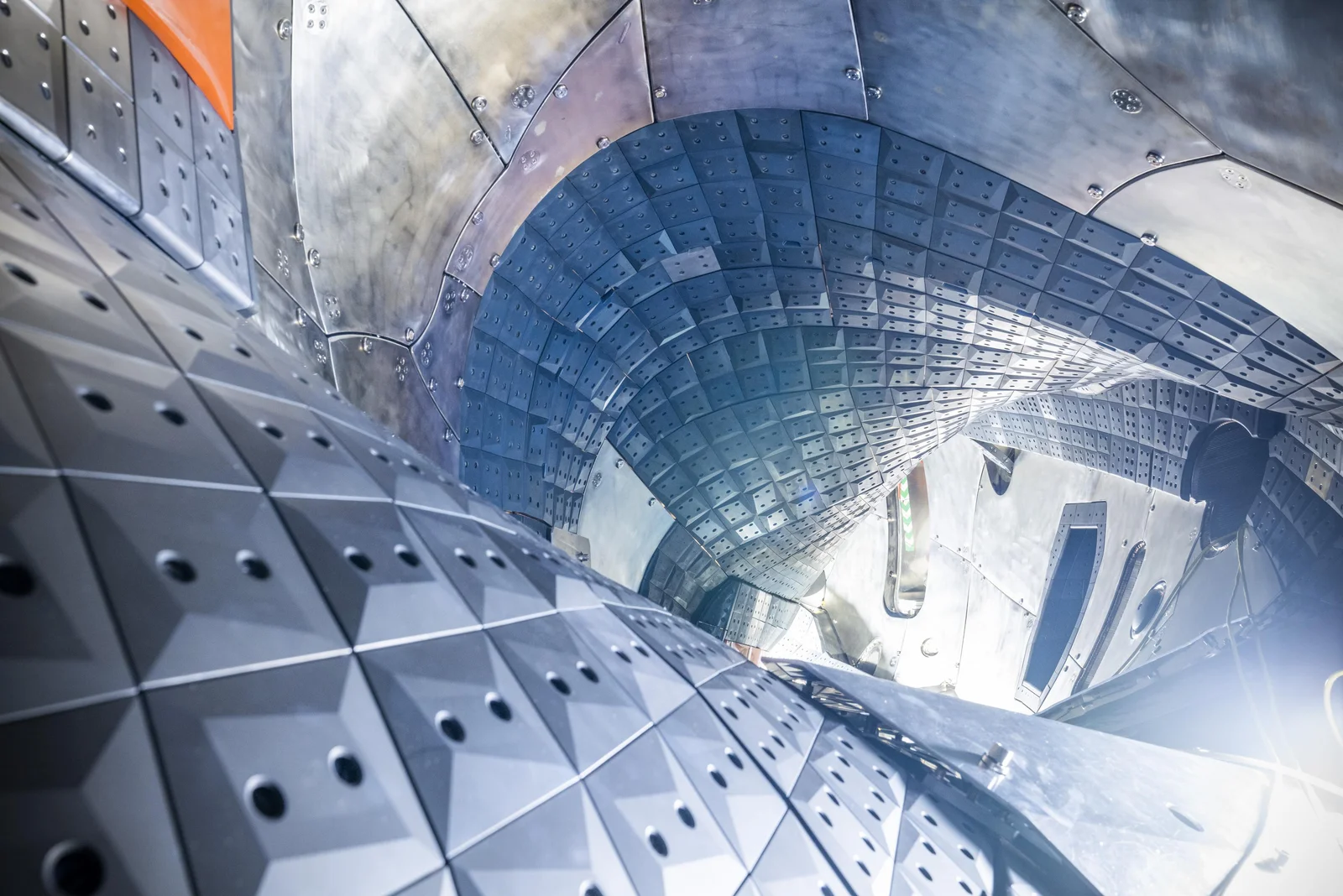
Japanese coverage often uses “helical” alongside “stellarator.” Here, both refer to the wider family of externally shaped confinement systems, while retaining important design differences. LHD’s heliotron configuration and W7-X’s optimized modular coils are not interchangeable geometries. The W7-X photographs in this article depict the German research device, not LHD or a Japanese company’s reactor.
The distinction also does not mean that every plasma current is zero. Pressure-driven bootstrap currents can still arise. W7-X research has tested the effectiveness of its optimized field, including the reduction of these currents. IPP report on magnetic optimization
Long operation requires more than a persistent field
External coils can maintain a field without continually inducing the main plasma current through transformer action. This changes the engineering problem compared with a tokamak and is an important attraction of the stellarator route.
A persistent field, however, is only one condition for a persistent power supply. Heating, fuel delivery, heat and particle exhaust, magnet cooling and wall protection must work together. Damaged components still need inspection and replacement. A long discharge therefore needs to be assessed alongside performance and the loads imposed on the machine.
This is where system integration becomes commercially significant. A fuel injector, diagnostic or control system can contribute to the performance of the whole device even when the magnetic configuration is its defining feature.
What the W7-X result actually showed
The Max Planck Institute for Plasma Physics (IPP) reported that a W7-X experiment on 22 May 2025 maintained a high triple-product performance level for 43 seconds. The triple product combines plasma temperature, density and energy-confinement time. The 43 seconds describes the duration of the high-performance phase; it is not the energy-confinement time itself.
IPP’s 3 June announcement was subsequently updated on 30 June. Including then-unpublished long-pulse results from the JET tokamak placed W7-X and JET alongside one another in sustained triple-product performance. The result should not be presented as proof that W7-X surpassed every tokamak under every condition. Pellet fueling developed by Oak Ridge National Laboratory and its coordination with microwave heating were important contributors. IPP report, including its update
Japan’s LHD has completed its experimental campaign
LHD is located at the National Institute for Fusion Science (NIFS) in Toki, Gifu Prefecture. Experiments began on 31 March 1998. After reaching 200,000 discharges in December 2025, LHD completed its experimental program on 25 December 2025. It should not be described as still conducting experimental operations in October 2026. NIFS completion notice
Its data and accumulated experience in confinement, heating, diagnostics and superconducting equipment remain a research foundation. For an international partner evaluating Japan’s ecosystem, the distinction is important: an established scientific capability can support future development without an existing research device becoming a commercial plant.
From three-dimensional fields to buildable hardware
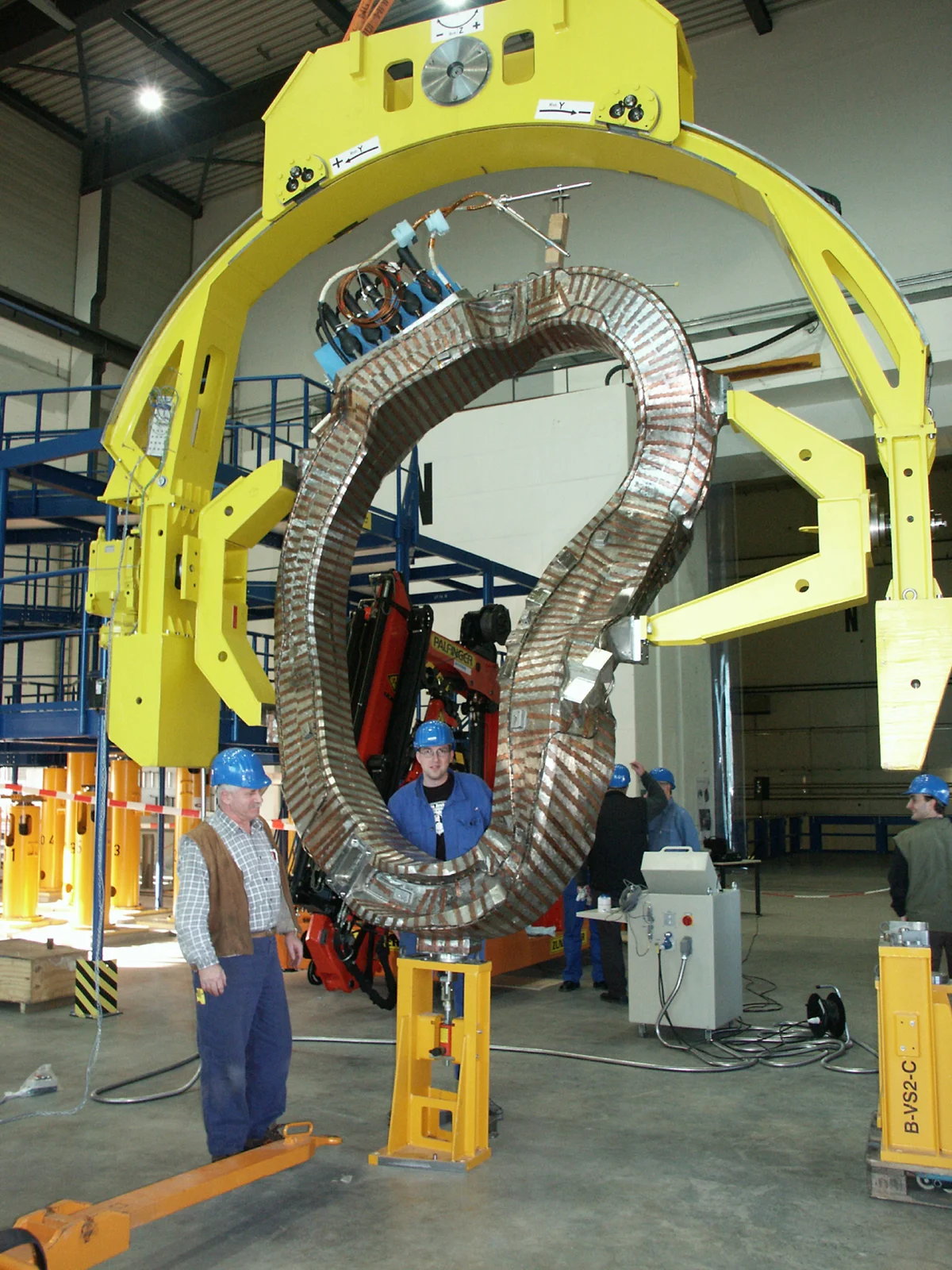
Complex coil and vessel shapes demand precision in conductor forming, winding, assembly measurement and structures that withstand electromagnetic forces. Manufacturing tolerances are part of the physics problem: deviations from the intended shape can change the field, so engineering feedback must return to the design.
Access is equally important. A reactor needs space for heating, diagnostics, fueling, exhaust and component replacement. A magnetic configuration with excellent confinement is not sufficient if it leaves no practical maintenance route. Optimization, CAD, machining, joining and nondestructive examination meet at these interfaces.
For suppliers, an especially useful question is whether the tolerance specified on a drawing is tied to a demonstrated magnetic requirement and an achievable inspection method. Reducing uncertainty in that connection can be as valuable as improving the nominal performance of an isolated component.
Private programs are pursuing different demonstrations
Japan’s Helical Fusion identifies high-temperature superconducting magnets and liquid-metal blanket and divertor systems as central technologies. Its Helix Program places integrated demonstration through Helix HARUKA before the electricity-generating Helix KANATA concept. These are the company’s development plans, not an announcement that LHD has become a power station. Helical Fusion technology and Helix Program
Germany’s Proxima Fusion published its Stellaris power-plant concept in 2025, connecting computational optimization and high-temperature superconductors with engineering requirements. U.S.-based Type One Energy has published the physics design basis for Infinity Two. Both are evidence of design work; neither publication is evidence of an operating electricity-generating plant. Stellaris concept and Infinity Two design basis
Fuel, heat and maintenance remain decisive
A deuterium–tritium (D–T) plant must recover neutron energy as heat and establish a tritium fuel cycle, including breeding tritium from lithium. Coil geometry does not remove material damage, fuel-accounting requirements or the power consumed by auxiliary equipment. ITER explanation of tritium breeding
The opportunity is to translate an inherent compatibility with steady-state confinement into an advantage for the entire plant. Component life, replacement time, manufacturing cost and internal electricity consumption determine how much of that advantage reaches a customer. The next evidence to seek is integrated performance under relevant conditions, with a credible route to building and servicing the resulting machine.
At a glance
- Fusion approach
- Stellarator
Sources & verification
- IPP: Stellarator principles
- IPP: Wendelstein 7-X performance results, including JET update
- IPP: W7-X magnetic optimization and bootstrap current
- NIFS: Completion of LHD experiments
- Helical Fusion: Technology
- Helical Fusion: Helix Program
- Proxima Fusion: Stellaris concept design
- Type One Energy: Infinity Two physics design basis
- ITER: Tritium breeding
Information verified: 2026-10-08
Research results, conceptual designs and company demonstration plans are distinguished. LHD experiments ended on 25 December 2025. W7-X’s 43-second performance phase is not energy-confinement time; IPP’s JET correction is retained. Company plans do not establish achieved power generation.
Saved to the same reader account as the Japanese edition. Sign-in and saved-item screens use a Japanese interface.