ITER
- Name details
- ITER (fusion experimental reactor)
- ENGLISH
- ITER
ITER is an international fusion experiment under construction in southern France. It studies burning plasma and machine technology, but will not generate or transmit electricity.
Read the Japanese original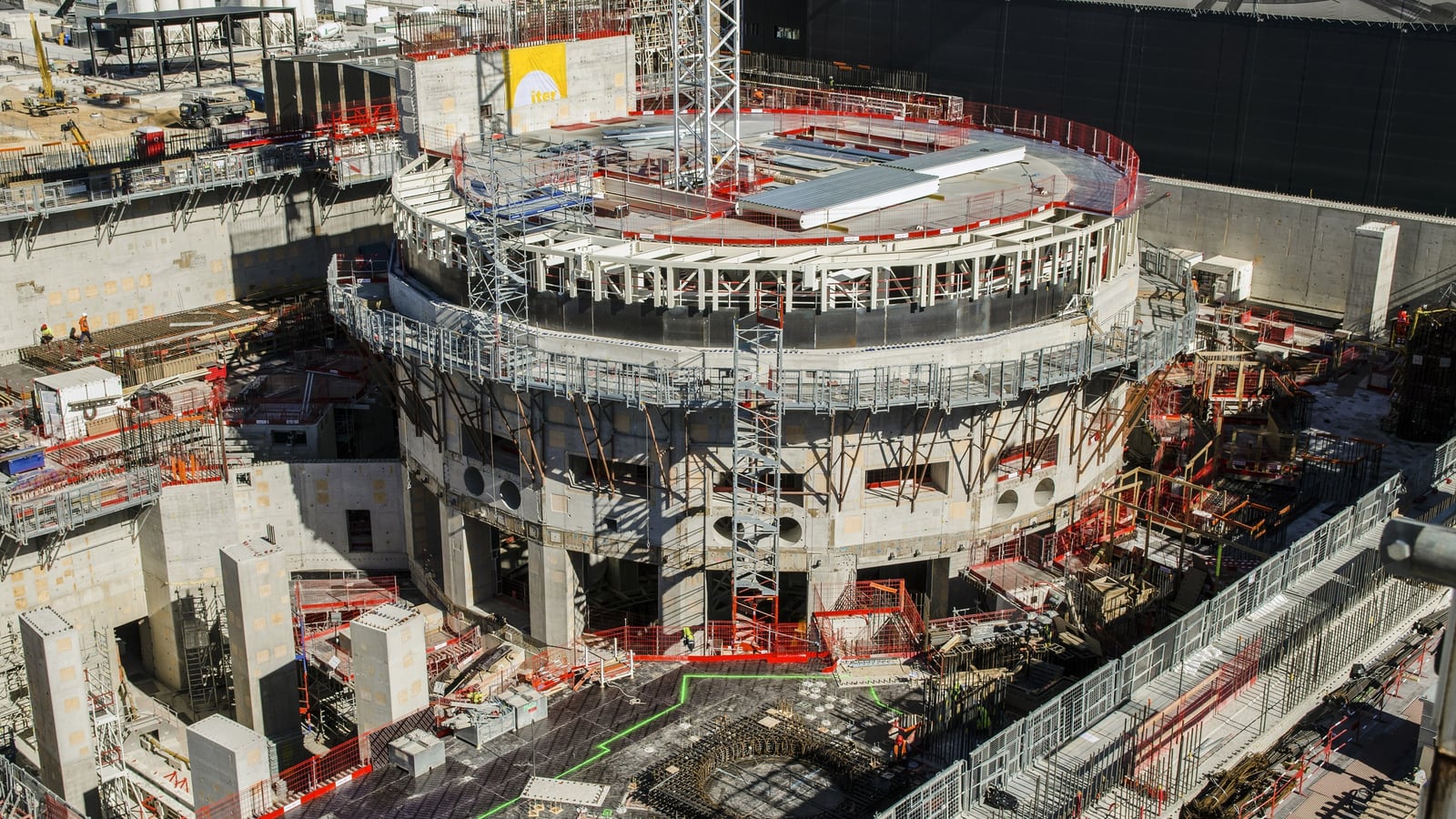
Project profile
Research results, fusion power, net electricity generation and commercialization are distinguished. Future operating dates and power levels are targets announced by the operator.
- Official name
- ITER
- Operator
- ITER Organization
- Operator type
- International collaboration
- Host country
- France
- Host location
- Saint-Paul-lez-Durance
- Category
- Research device
- Technical approach
- Tokamak
- Development stage
- Construction
Development stage note: France is the host country. Do not map every participant as an installation country. Scheduled years are not achieved milestones.
Research and development objectives
An international experimental machine for demonstrating burning plasma and integrated fusion-reactor technologies. It will not generate electricity.
Verified milestones
- 2020 · Achievement or implementation verified
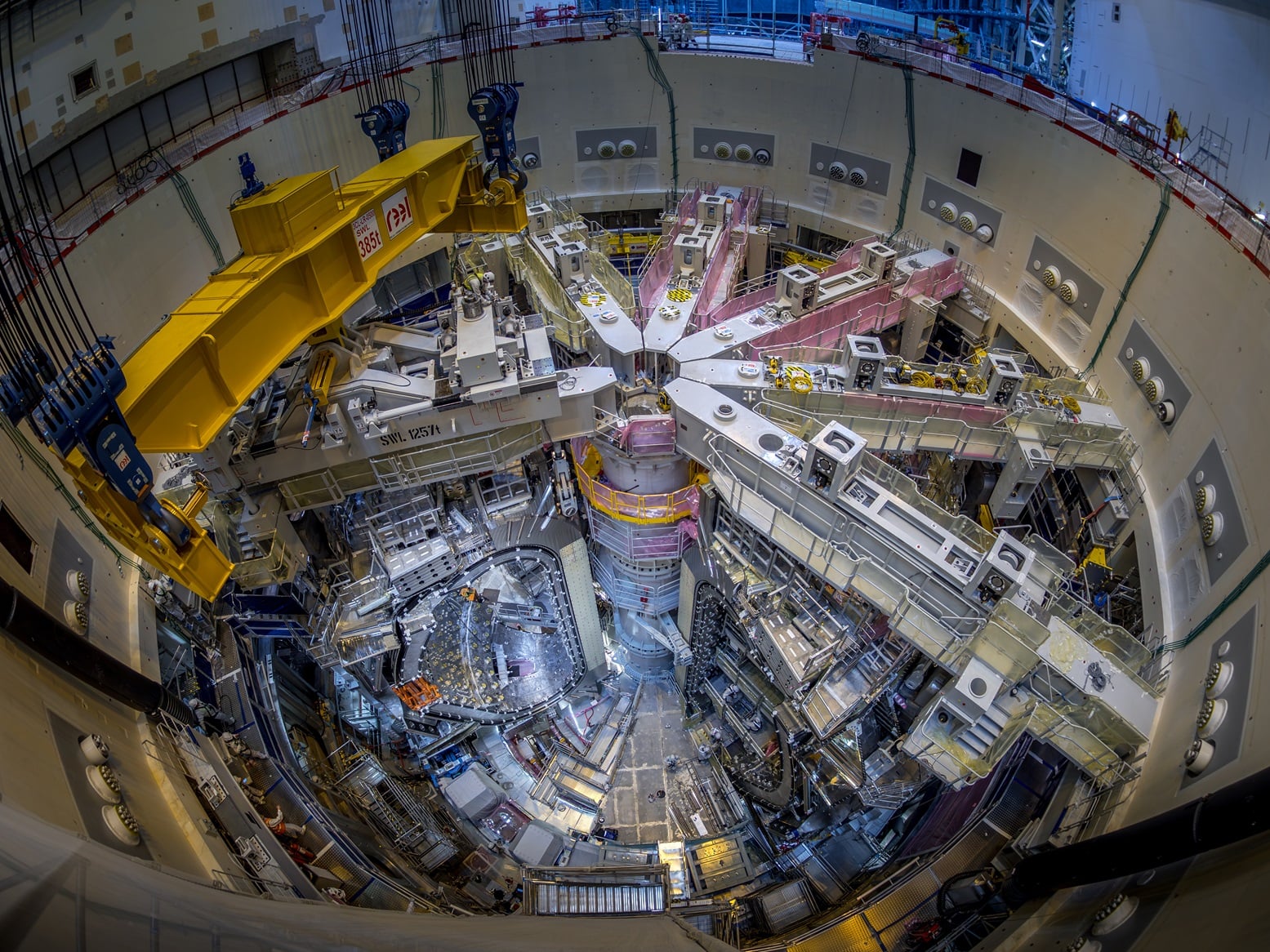
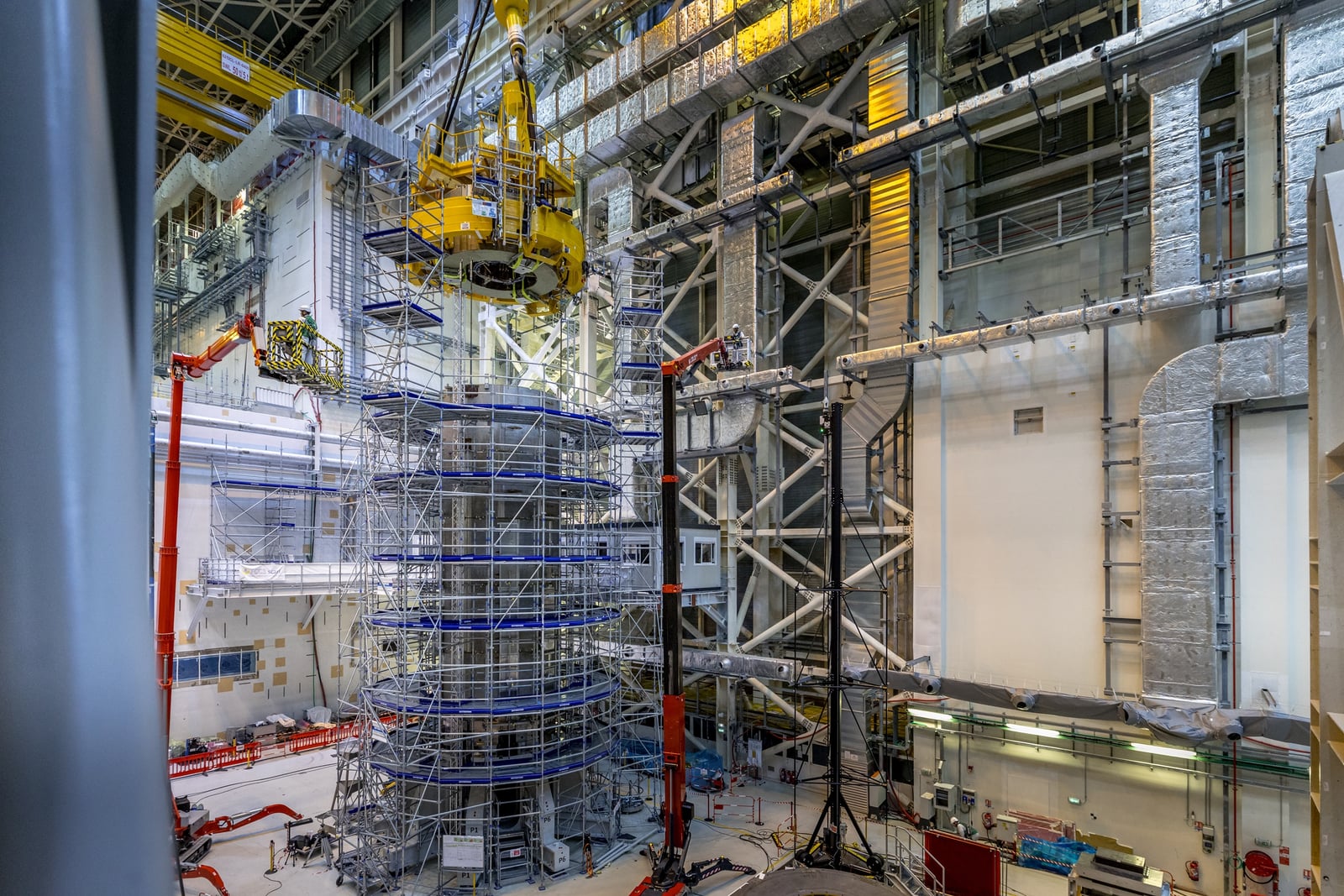
Machine assembly began.
- 2023 · Achievement or implementation verified
Civil construction of the Tokamak Complex completed.
Announced future targets
- 2034 · Announced target (not achieved)
Announced target for the start of research operation.
- 2039 · Announced target (not achieved)
Announced target for the start of deuterium–tritium operation.
Published technical specifications
| Item | Published value | Meaning, conditions and sources of values |
|---|---|---|
| Fusion power | 500 MW | Plasma design target, not electrical output |
| External plasma-heating input | 50 MW | Denominator of the Q=10 target, not total facility electricity consumption |
| Plasma fusion gain Q | 10 | Design target |
Companies with verified involvement
- Yamato Gokin Co., Ltd.:Supply and delivery record
- Asahi Kinzoku Kogyo Inc.:Technology development
- Tokyo Electronics Co., Ltd.:Supply and delivery record
- IHI Corporation:Supply and delivery record
- A.L.M.T. Corp.:Supply and delivery record
- Sugino Machine Limited:Technology development
- Hitachi, Ltd.:Supply and delivery record
- Toshiba Corporation:Supply and delivery record
- Canon Electron Tubes & Devices Co., Ltd.:Technology development
- Mitsubishi Heavy Industries, Ltd.:Supply and delivery record
- Mitsubishi Electric Corporation:Supply and delivery record
- Furukawa Electric Co., Ltd.:Supply and delivery record
Related in-depth FI articles
Verification scope and classification notes
- Editorial classification of the purpose described in official sources; not necessarily the operator's formal classification.
- No item was verified in this review. This does not establish that none exists or that it is undisclosed.
- Matched IDs and subjects of existing public articles; not used as scientific or technical evidence.
Official project information ↗
- ITER In a Few Lines(ITER Organization)
Verified: 2026-10-12 - What will ITER do?(ITER Organization)
Verified: 2026-10-12
Last verified: 2026/10/12 20:28:19 (Japan time)
What is ITER?
ITER is both the name of a fusion experiment under construction in Saint-Paul-lez-Durance in southern France and the international program behind it. This large tokamak studies science and technology needed for future fusion power, but ITER itself will neither generate nor transmit electricity. ITER at a glance
The name originally came from International Thermonuclear Experimental Reactor. Current official explanations use ITER as a proper name meaning “the way” in Latin. Its history is therefore slightly different from an acronym fully explained by expanding an English formal name. The history of the name
What will it investigate?
A major subject is burning plasma. Here, burning does not mean the chemical reaction of oil or gas with oxygen. Fusion of deuterium and tritium produces a helium nucleus and a neutron, releasing energy. ITER studies conditions in which the helium nuclei make a major contribution to heating the plasma from within. Fusion reactions / Burning plasma
An externally heated experiment mainly studies the response to heat supplied by researchers. When fusion reactions themselves become a powerful heat source, the relationships among temperature, particle motion, confinement and control change. Predicting this state and determining whether it can be handled stably are important for future reactor design.
How it works: magnetic confinement in a tokamak
ITER creates plasma inside a doughnut-shaped vacuum vessel and confines it with magnetic fields produced by external coils and the plasma current. Plasma consists of electrically charged particles whose motion can be controlled by magnetic fields. The superconducting magnets producing these strong fields are cooled to cryogenic temperatures, while very hot plasma is handled inside them.
Magnets alone are not enough. The experiment also needs fueling, heating, diagnostics, vacuum pumping, cooling, power supplies and control. Walls and divertors receive escaping heat and particles. ITER also tests the technology of integrating all this equipment in a large machine. How a tokamak works
Q=10 does not mean ten times as much electricity
A representative ITER target is 500 MW of fusion power for 50 MW of external heating delivered to the plasma. This ratio is plasma gain Q=10. The 500 MW is fusion-reaction power, not electrical output. ITER's objectives
The 50 MW denominator does not include all electricity consumed across the facility. Losses in supplying electrical power to heating equipment, and consumption by cooling, vacuum and auxiliary systems, are additional. Reaching Q=10 would therefore not mean that ten times the input electricity could be delivered to the grid. As of 8 October 2026, these remain ITER research objectives.
Testing tritium breeding
Future D–T fusion power requires a way to replenish consumed tritium. ITER also plans tests of test blanket modules, or TBMs, that use lithium to produce tritium.
These limited test modules are intended to investigate future blanket technology. This is distinct from demonstrating fuel self-sufficiency for ITER as a whole or integrating fuel, heat and electricity operation in a power plant. ITER's tritium-breeding tests
How the ITER Organization and QST are related
The seven participating parties are Japan, Europe, the United States, Russia, China, South Korea and India. They share contributions such as equipment, while the ITER Organization integrates the overall program and operates the site facilities. The ITER Organization is an international organization separate from Japan's QST. The ITER Organization
As Japan's Domestic Agency, QST coordinates procurement of Japan's assigned equipment and facilities and personnel cooperation. Shipping equipment manufactured by Japanese companies to ITER in France is different from constructing the ITER machine in Japan. QST's role
Differences from JT-60SA and Q-DEMO
JT-60SA is an experiment in Naka that studies plasma operating methods relevant to ITER and demonstration reactors. Q-DEMO is a conceptual design for a demonstration reactor targeting electricity generation. Knowledge of burning plasma gained at ITER will not automatically resolve fuel-cycle, materials-lifetime, maintenance or net-electricity challenges. Understanding which question each program addresses helps avoid misreading its achievements.
Related terms and further reading
Information verified
8 October 2026. Organization names, roles, plans and achievements were checked against official public sources.
Official information from related companies and research institutions
Check each organization’s announcements for development progress and technical documentation.
Check the official information
- ITER Organization | In a Few Lines
- ITER Organization | Project Progress in Milestones
- ITER Organization | What is Fusion?
- ITER Organization | What is burning plasma?
- ITER Organization | What is a tokamak?
- ITER Organization | What will ITER do?
- ITER Organization | Tritium Breeding
- ITER Organization | The ITER Organization
- QST | Quantum energy research and the Q-DEMO conceptual design report
- ITER Organization | New baseline press-conference summary
- ITER Organization|38th ITER Council Meeting
- ITER Organization|Two-thirds of ITER tokamak core now in place
- ITER Organization|A remarkable chapter draws to a close
- ITER Organization|Fusion Glossary(Alpha heating)
Checked:2026-10-08