Helical Fusion raises ¥3.23 billion: Fuji Electric moves from power-supply delivery into machine development
Helical Fusion announced ¥3.23 billion in its second Series B close. Read the Fuji Electric capital and business alliance through funding definitions, an existing power-supply contract and demonstration-machine development stages.
Read the Japanese originalAnnouncement date:2026-10-08

Helical Fusion announced on October 8, 2026 that it had raised ¥3.23 billion in the second close of its Series B. It also announced a capital and business alliance with Fuji Electric that day. A company already supplying power equipment is now participating in technical and business development discussions. The business significance lies in the boundaries of the funding figures and the work specified by the alliance. Funding announcement / Alliance announcement
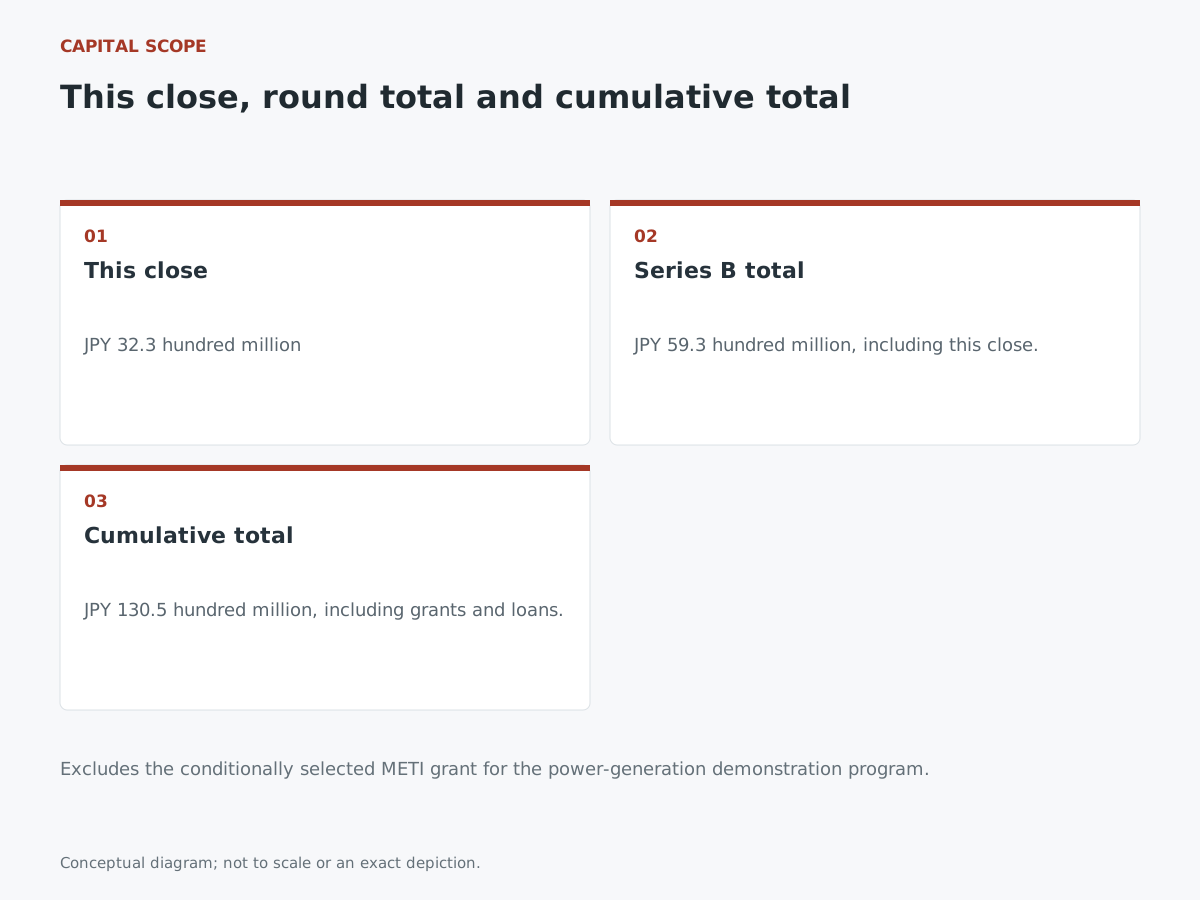
What ¥3.23 billion, ¥5.93 billion and ¥13.05 billion cover
The latest ¥3.23 billion brings the Series B total to ¥5.93 billion. The company's cumulative ¥13.05 billion figure includes subsidies and loans, including Gifu Prefecture support. It does not include the subsidy conditionally selected under METI's electricity-generation demonstration promotion program. Definitions of the amounts
Treating all ¥13.05 billion as equity or adding future subsidies as confirmed funding would misrepresent development resources. The published cumulative total is not current cash on hand either. Assessing whether remaining development costs are covered and which stages can be funded requires further information about expenditure plans and conditions on use.
Fuji Electric moves from a supply contract to development discussions
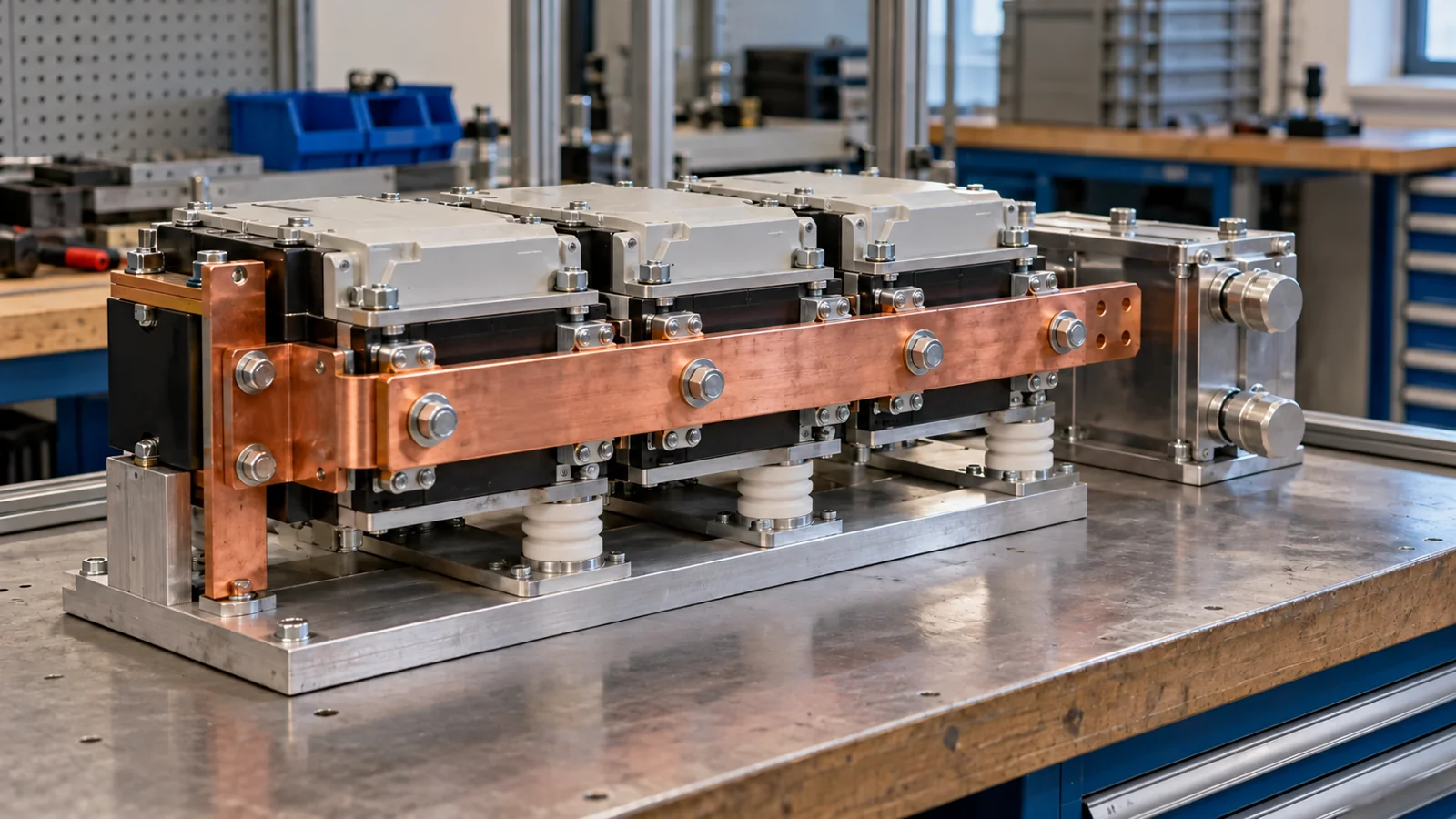
The companies announced a supply contract for high-temperature superconducting magnet power equipment in September 2025. The explanation then described cooperation on power supplies and related equipment for the integrated demonstrator Helix HARUKA, with subsequent use in the first power plant Helix KANATA also envisaged. Coils need stable low-voltage, high-current supply, making power control a distinct technical challenge for operating magnets. The 2025 supply contract
Fuji Electric has now invested and become an official Helix Program partner, joining concrete discussions on technical and business development for HARUKA and KANATA. This can be read as broadening a component-supply relationship into machine development. The announcement does not disclose a new supply contract's value, equipment quantities or Fuji Electric's individual investment amount. Scope of the new alliance
Investor names do not reveal contract terms
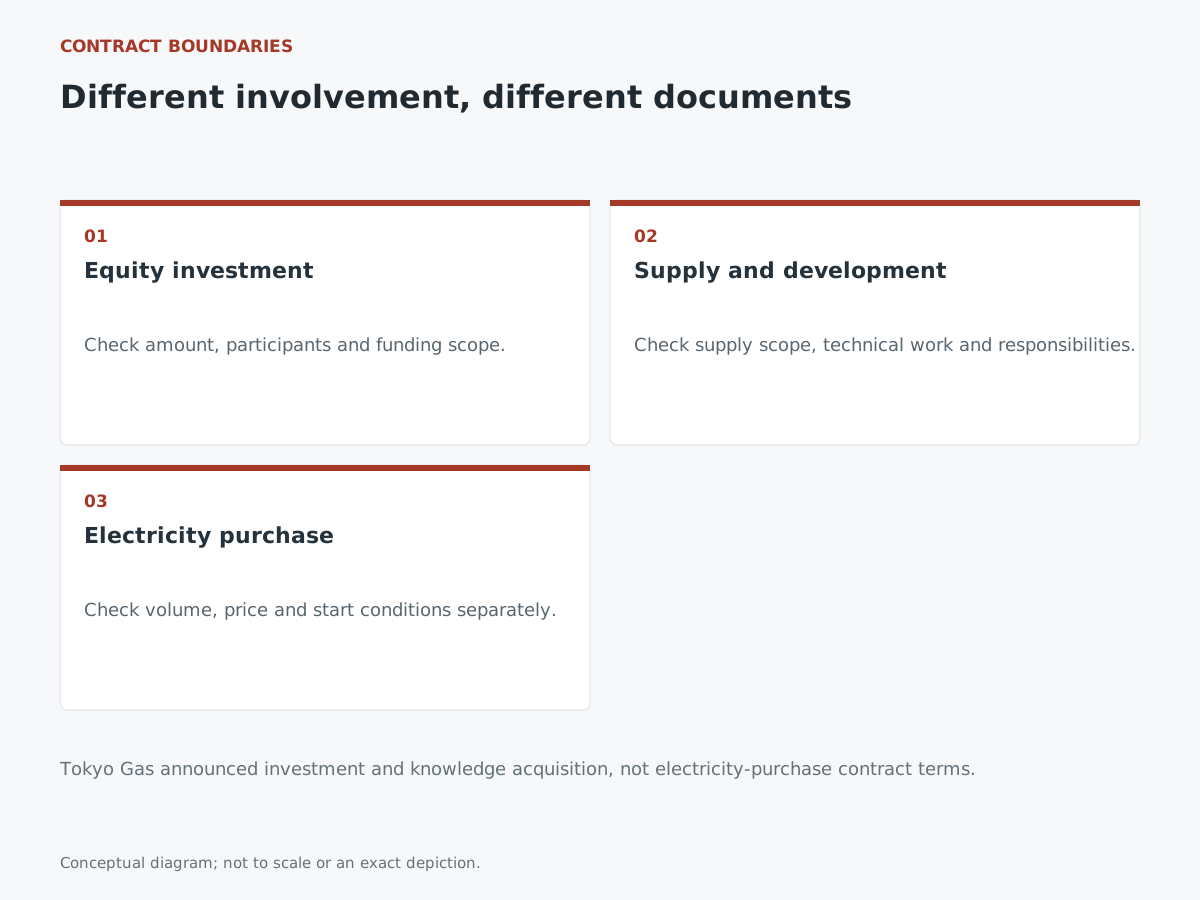
New shareholders include Fuji Electric, Fujikura and Tokyo Gas. Tokyo Gas states that its investment supports Helical Fusion and helps it gain knowledge of fusion technology development and industrialization trends. Tokyo Gas announcement
Participation by an energy company is noteworthy as a connection through which a potential future user learns about development. However, Tokyo Gas's announcement does not describe a power purchase agreement specifying quantity, price or supply start date. Investment, equipment supply, joint power plant development and electricity purchasing are separate relationships. Do not infer confirmed future revenue or customers from the number of participating companies; check each company's stated role.
After funding, attention turns to HARUKA demonstration
The company says manufacturing and construction are progressing in dedicated space at the National Institute for Fusion Science in Toki, Gifu, toward high-temperature superconducting magnet demonstration with HARUKA. HARUKA is positioned as a machine integrating and testing component technologies, and KANATA as the first power plant beyond it. Construction status / Machine roles
The October 8 announcement targets integrated demonstration with HARUKA and practical generation with KANATA during the 2030s. These are company plans; the funding round does not establish achieved integrated demonstration or net generation. Future assessment will depend not only on completed components but on published performance and operating conditions when they are combined. Plans in the latest announcement
What has long-duration operation research established?
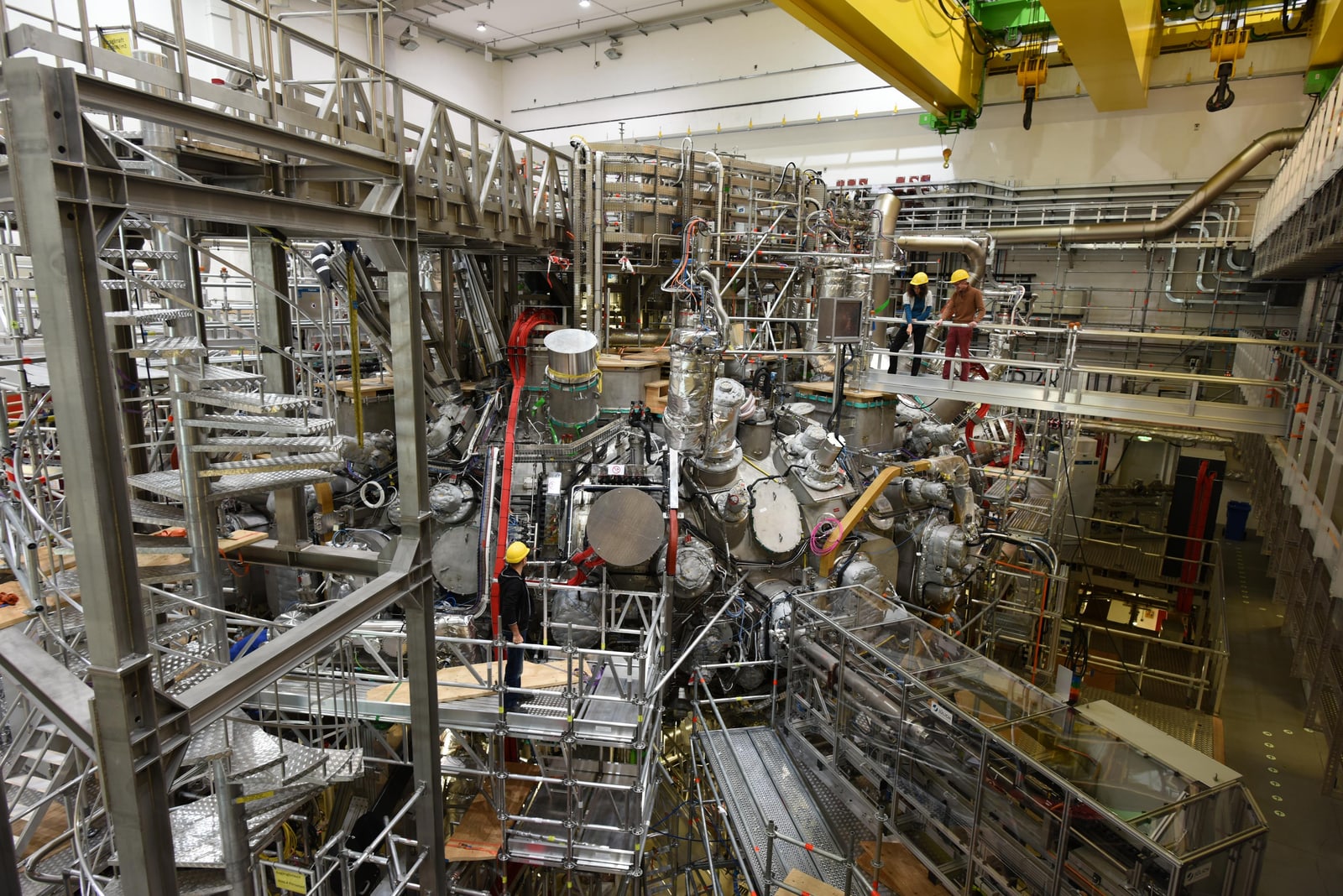
Wendelstein 7-X (W7-X), operated by Germany's Max Planck Institute for Plasma Physics (IPP), provides research context for helical and stellarator approaches. IPP reported maintaining a high triple product—the product of density, temperature and energy confinement time—for 43 seconds in an experiment on May 22, 2025. Precise coordination of fueling and heating supported the result. A June 30 addendum revised the explanation to state that, including previously unpublished JET results, the two machines were on a par in sustaining high performance for long periods. This is progress in IPP plasma research, not commercial electricity generation. W7-X is separate from Helix HARUKA and KANATA; its result does not validate Helical Fusion's machine performance or demonstration schedule. IPP announcement and addendum
What prospective suppliers can prepare now
In our editorial assessment, Fuji Electric's example illustrates an entry path from existing product supply into deeper development participation. Prospective suppliers can prepare both product specifications and a distinction between conditions testable in a demonstrator and uncertainties in scaling to a future machine.
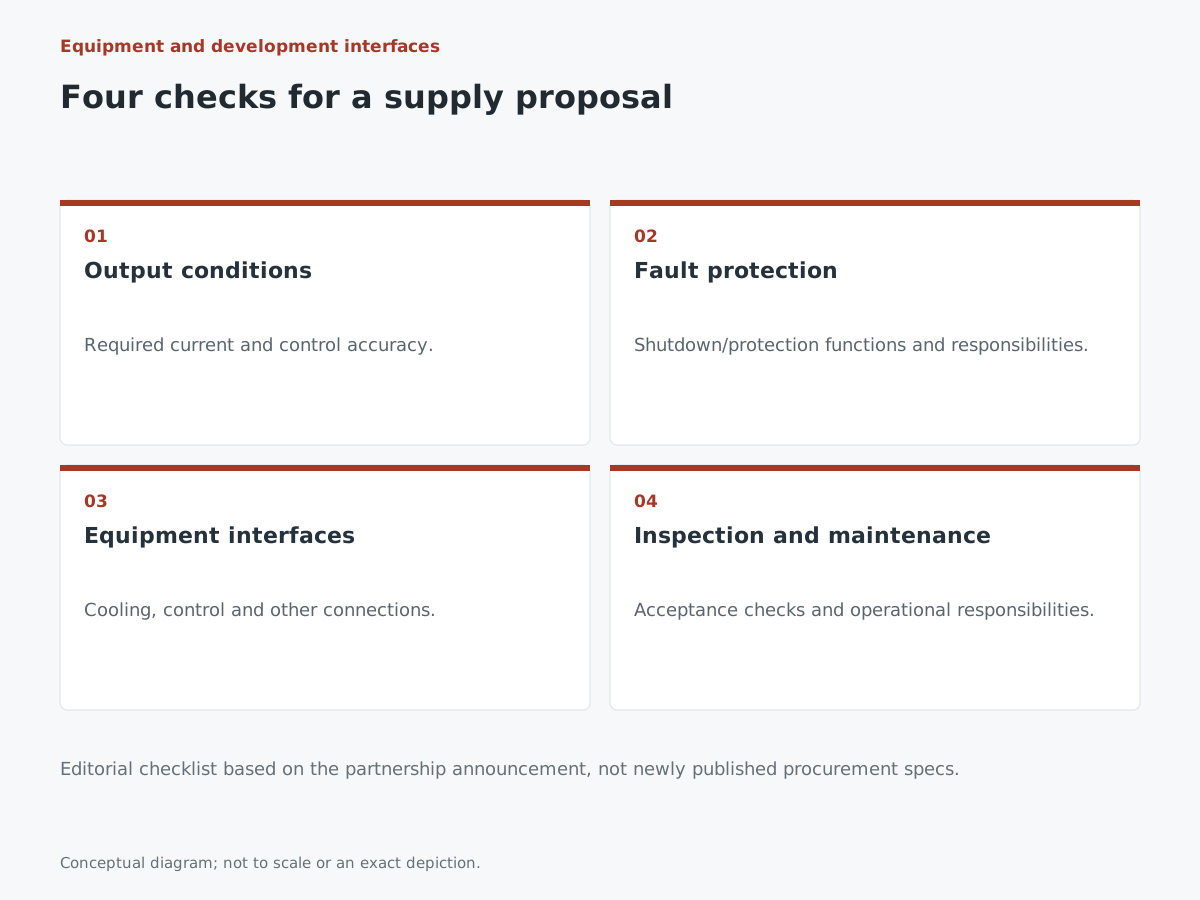
For power supplies or controls, organize required current and precision, abnormality protection, interfaces with other suppliers' equipment and inspection and maintenance responsibilities. These are business-development questions informed by the alliance, not newly announced procurement specifications. Beyond the ¥3.23 billion headline, watch which tests and equipment receive funding and what data they produce for the next contract decision.
- Helical Fusion | Series B second-close announcement (October 8, 2026; issuer release via PR TIMES)
- Helical Fusion | Capital and business alliance with Fuji Electric (October 8, 2026; issuer release via PR TIMES)
- Helical Fusion | Power-supply contract with Fuji Electric (September 30, 2025)
- Tokyo Gas | Investment in Helical Fusion (October 8, 2026)
- Helical Fusion | Helix Program and roles of HARUKA and KANATA
- IPP | Wendelstein 7-X long-duration plasma research (June 3, 2025; addendum June 30)
Information checked as of:2026-10-09
Funding and the alliance have been announced. The cumulative ¥13.05 billion includes subsidies and loans. Demonstration and generation remain company plans; investment does not imply a power purchase commitment.