Japan’s Fusion Supply Chain: Where Manufacturing Expertise Becomes a Business
Japanese procurement examples show how precision manufacturing, joining, inspection and system integration enter fusion projects, and why an experimental order is not a commercial-reactor demand forecast.
Read the Japanese original 日本語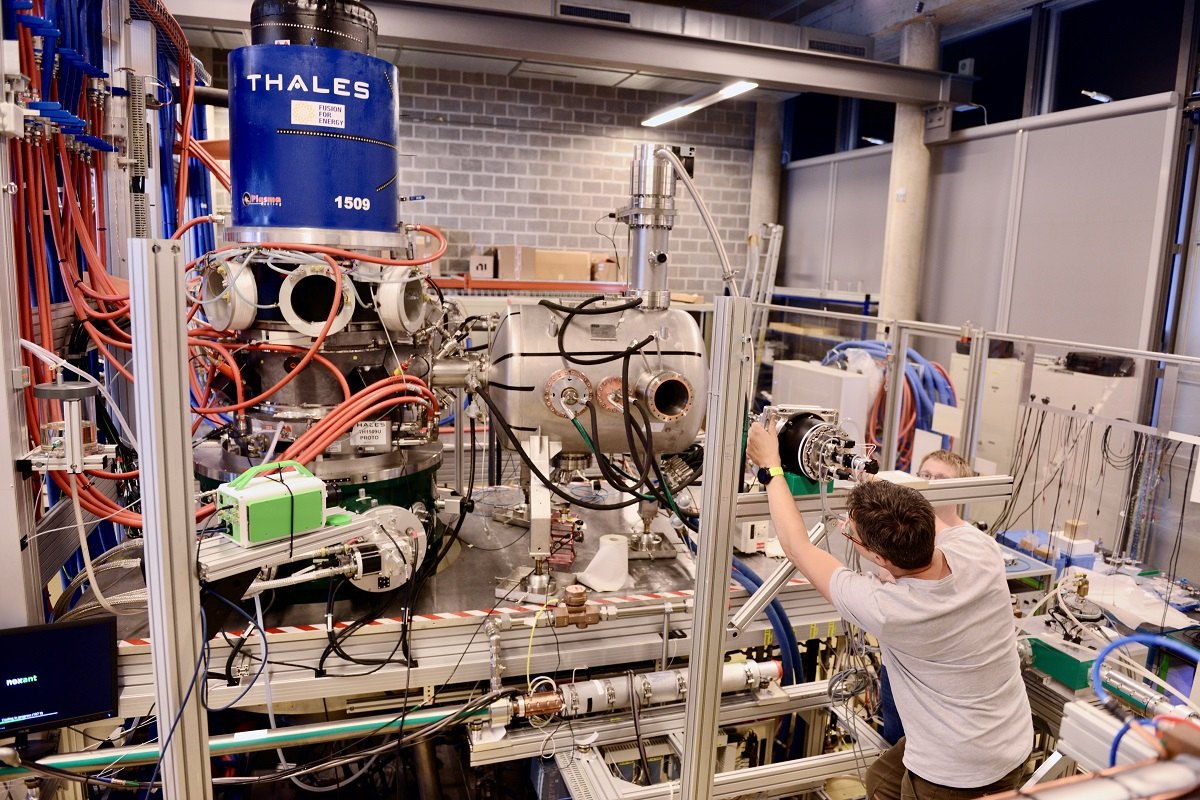
A manufacturer does not need to build a complete fusion power plant to participate in fusion. Heating a plasma, removing heat, maintaining vacuum and proving that equipment meets its specification all require specialist suppliers. The useful starting point is a defined engineering task with a customer, an acceptance test and a clear allocation of responsibility.
Japan offers concrete examples. Its public research organizations work with industrial manufacturers on international research equipment. For overseas partners, those relationships are more informative than a headline estimate of the future fusion market: they show which capabilities already have customers, and which still need qualification.
A heating system is a network of suppliers
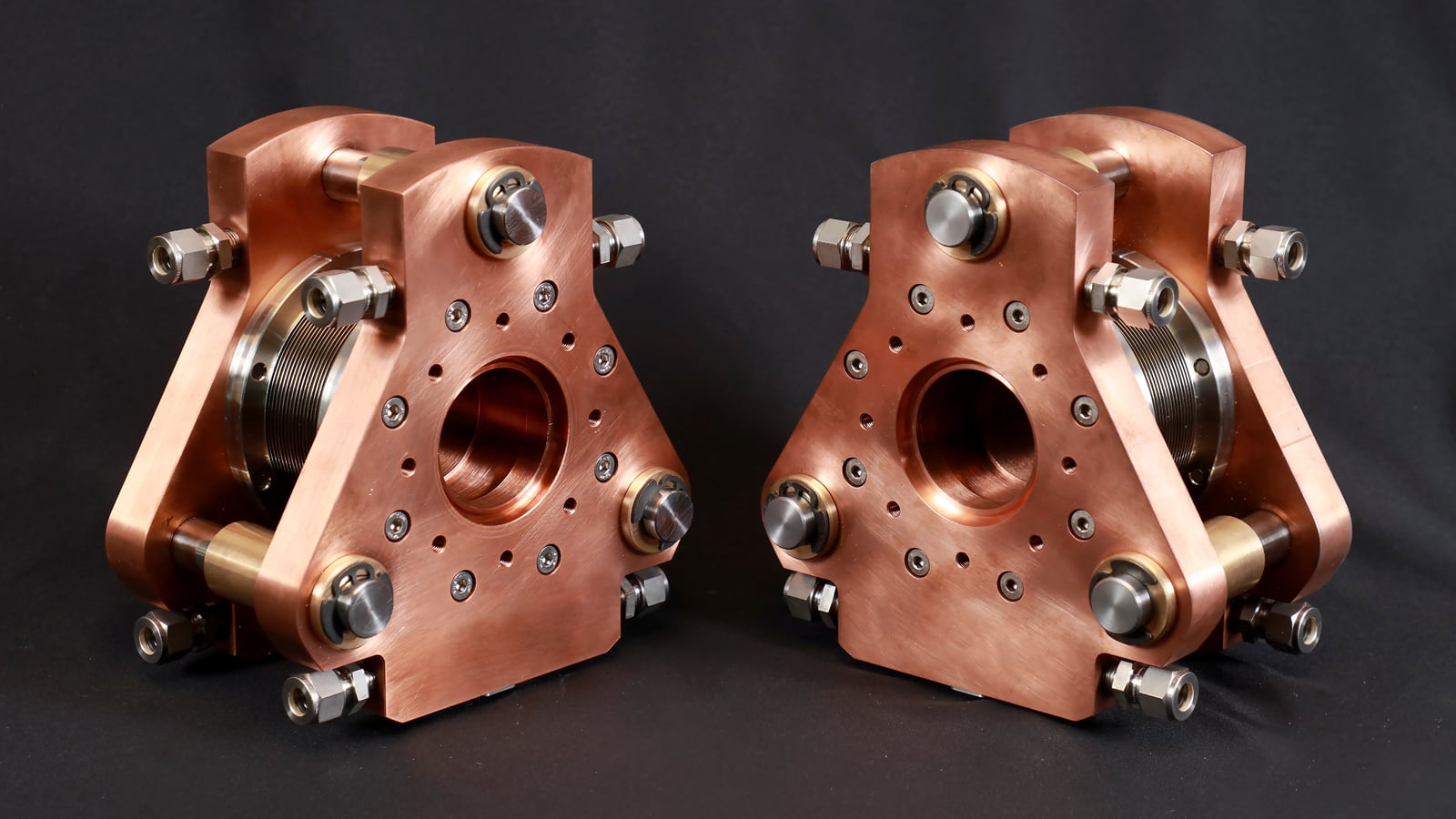
On 20 May 2026, the National Institutes for Quantum Science and Technology (QST) announced that it had accepted procurement of 20 additional gyrotron systems for ITER in May 2025, and signed design and manufacturing contracts with six Japanese companies in March 2026. A gyrotron is a high-power microwave source used to heat and help control plasma. These are research-machine components, not orders for commercial electricity-generating reactors. QST procurement announcement
The business lies in more than the microwave-generating tube. A complete system needs magnets, vacuum-tight structures, precision joints, power equipment and supporting hardware. Manufacturing and individual adjustment must bring these elements to a common specification. An existing industrial capability can therefore be relevant without an existing product being ready to install unchanged.
For a foreign supplier approaching Japan, the practical question is where its component or service fits into this arrangement. Is the customer the research organization, a system manufacturer or another component supplier? The answer determines the interface, documentation and qualification work. A public announcement of a contract already awarded should not be treated as an open invitation to bid.
Inspection connects fabrication to acceptance
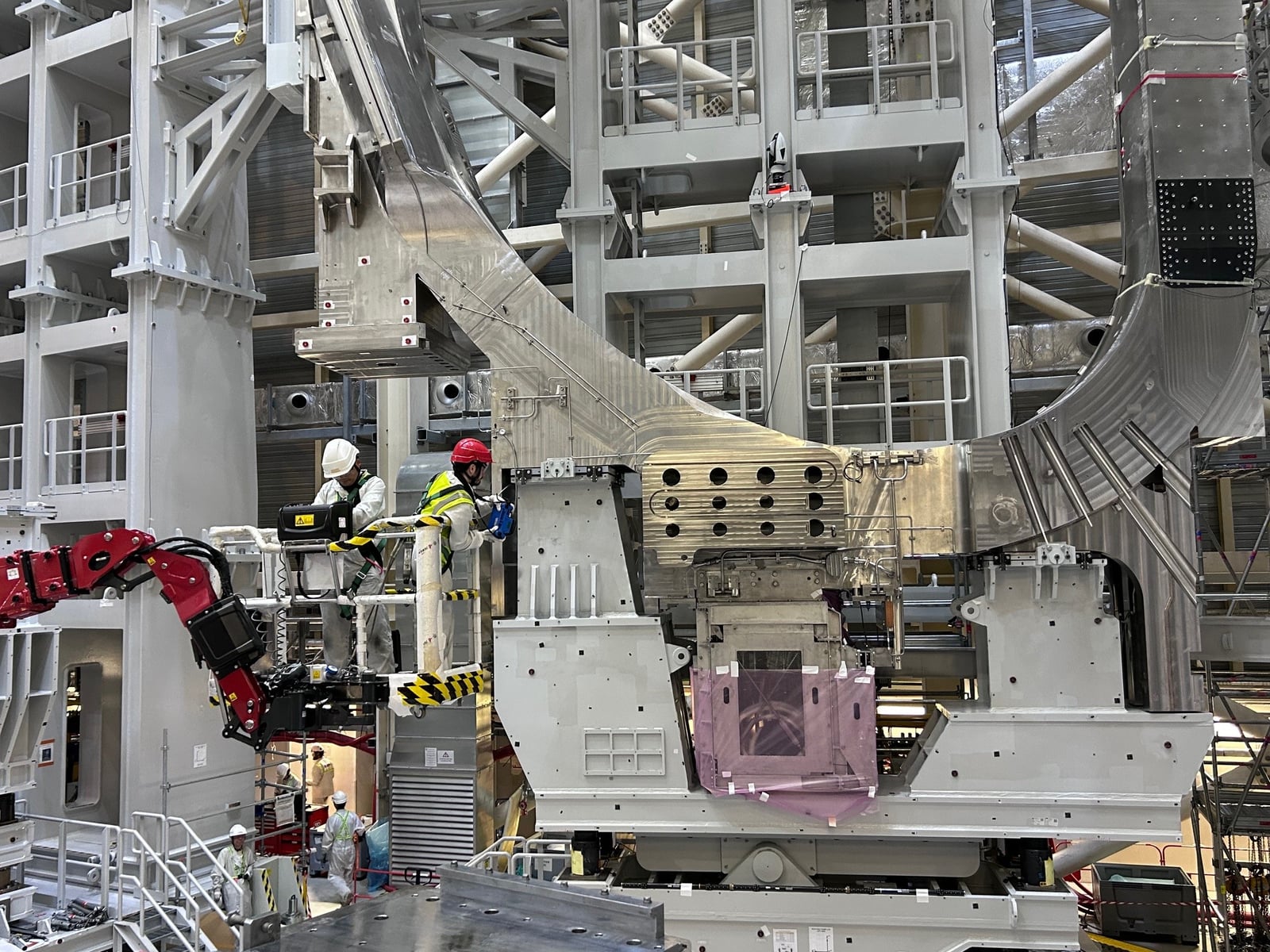
A second example concerns the divertor, the component system that receives intense heat and exhaust particles at the plasma boundary. In July 2025, QST and Hitachi announced a full-scale prototype of ITER’s outer vertical target and successful qualification testing of high-heat-flux test pieces. The announcement describes joining specialized materials, automated welding, nondestructive examination and precise assembly. QST and Hitachi announcement
Reproducing a shape is only part of the assignment. A supplier must control its process, detect defects and document conformity. Before investing in dedicated equipment, it should establish the distance between its present capability and the required evidence: can an existing production line make a useful test coupon, or does the qualification route require a new process?
Inspection data can be part of the product’s value. But whether those data support a later qualification, a different design or another customer must be agreed rather than assumed. The relevant test conditions and acceptance authority matter as much as an impressive individual result.
Selling a component or accepting a function
Consider a hypothetical precision-machining business. Supplying a part to a drawing is different from supplying an assembly that must remain vacuum-tight after joining. The second role can include process selection, leak testing and the inspection record. The quotation needs to say who owns each responsibility.
Component acceptance and system acceptance should also remain distinct. If dimensions are correct but the assembled machine misses its performance target, who investigates the cause, pays for retesting and manages a design change? Technical competence does not eliminate the commercial risk of an unclear boundary.
A useful first proposal can fit on one page: the deliverable, the evidence supplied with it, the operating conditions assumed, and the responsibilities retained by the customer. These are editorial business-development questions, not the participation rules for a particular Japanese procurement.
Test results feed back into design
Europe provides a complementary example. Fusion for Energy (F4E), the European organization responsible for Europe’s contribution to ITER, reported in January 2026 that the final design review for its ITER gyrotrons had been completed the previous month. Experience from prototype testing at Switzerland’s FALCON facility informed the design. F4E design-review report
The lead photograph shows a European prototype at FALCON in 2022. It does not depict Japan’s additional procurement announced in 2026. Keeping those dates and systems separate reveals a useful supply-chain lesson: the iteration between testing, integration and design is itself valuable work.
From development orders to repeatable manufacturing
Prototype work rewards flexibility. Repeated production rewards stable processes, consistent inspection and traceable records. Moving between the two can change staffing, tooling and working-capital needs before it changes sales volume.
Ask how mature the specification is, which test could trigger the next revision, and how far ahead materials must be ordered. Also distinguish a finite research order from a recurring replacement-parts business. A qualification achieved for ITER does not automatically qualify the same product for a private reactor, a different confinement approach or a future power plant.
The remaining uncertainty is substantial: public equipment announcements do not guarantee future commercial quantities, specifications or ordering dates. A grounded entry strategy begins with a bounded task that a current customer needs solved, then uses the resulting engineering and quality record to justify the next step. That is a firmer basis for planning than relying entirely on a predicted year for fusion electricity.
Sources & verification
- QST: Procurement of 20 additional ITER gyrotron systems
- QST and Hitachi: ITER divertor prototype and qualification tests
- QST: ITER information-session questions and answers
- F4E: Final design review for ITER gyrotrons
Information verified: 2026-10-07
Procurement and qualification examples are verified research-equipment milestones. They do not establish commercial-reactor demand, future order volumes or supplier eligibility. Original Japanese publication date is retained separately from this English review.
Saved to the same reader account as the Japanese edition. Sign-in and saved-item screens use a Japanese interface.