What are neutrons, the carriers of fusion energy? The work beyond the magnetic field
In D–T fusion, neutrons carry about 80% of the reaction energy. Why do they travel beyond the magnetic field, and how do scattering, absorption, and shielding differ? Real detectors guide this basic explanation connecting heat recovery with materials assessment.
Read the Japanese original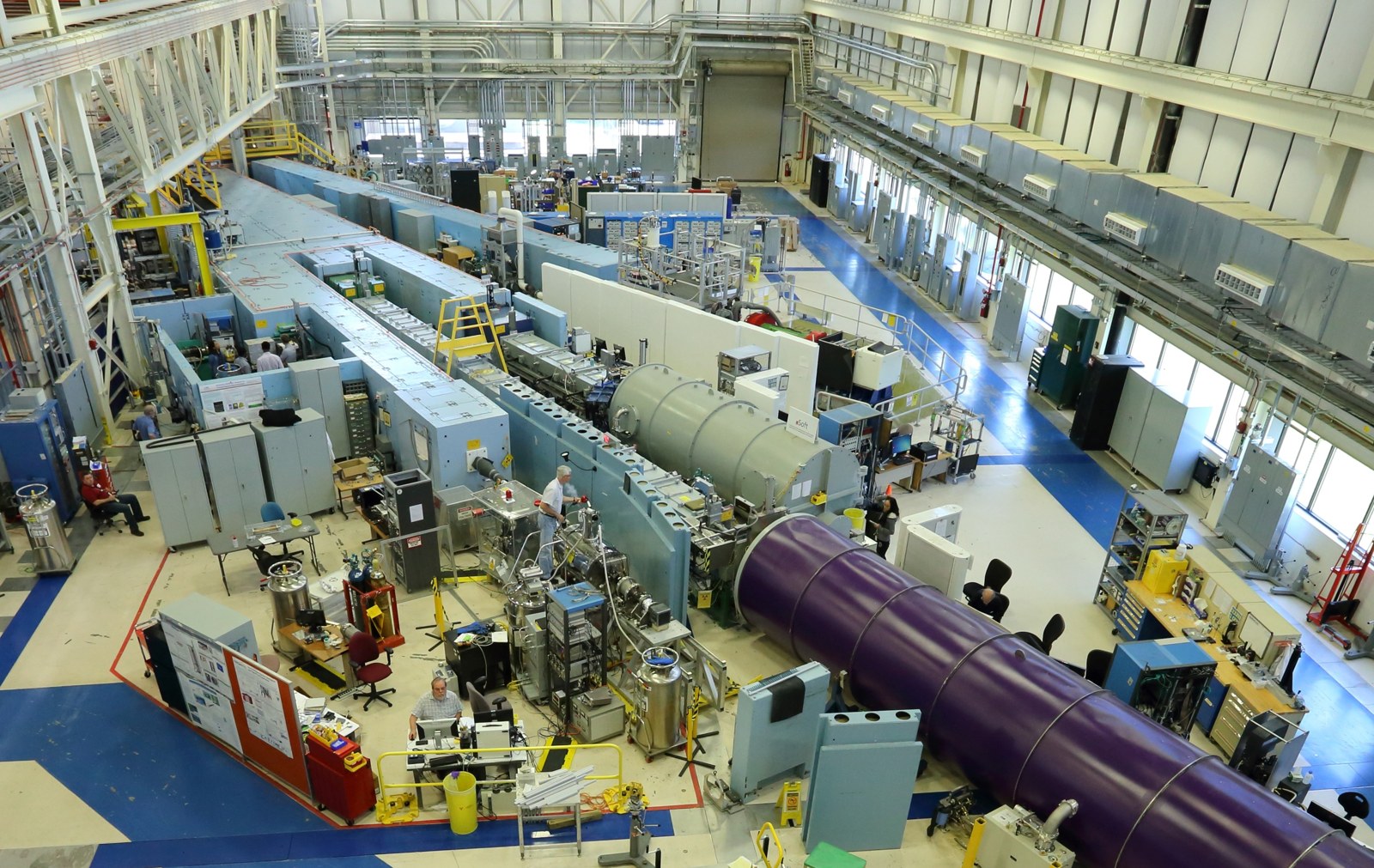
How do we extract energy from a fusion reactor that confines hot plasma with magnetic fields? In the D–T reaction, which uses deuterium and tritium, neutrons provide that bridge. Following this uncharged particle reveals why heat-recovery equipment, shielding, and materials testing are needed outside the plasma.
This article is a basic explanation of how neutrons work. Its photographs show neutron research and detection equipment at the US National Institute of Standards and Technology (NIST), not fusion power reactors. They illustrate the kinds of real instruments used to measure neutrons.
The particle carrying about 80% of the reaction energy
Neutrons are electrically neutral particles that make up atomic nuclei alongside protons. Reactions such as fusion and fission can release them from nuclei. Their interactions with matter and the ways they are detected differ from those of charged particles such as electrons and protons. DOE’s basic explainer uses this difference as a starting point for explaining neutron applications.
In the D–T reaction, a deuterium nucleus and a tritium nucleus produce a helium nucleus and a neutron. About 17.6 MeV of energy is released. The neutron emerges carrying about 14.1 MeV and the helium nucleus about 3.5 MeV. MeV is a unit of energy per particle, not temperature or electrical output itself.
Dividing 14.1 by 17.6 gives approximately 80%. But this describes the distribution of energy produced by the reaction. It does not mean that 80% of input electricity can be recovered or that generating efficiency is 80%. Evaluating electricity output also requires considering conversion of heat into electricity and the power consumed by equipment operating the reactor. A 2021 report by the US National Academies of Sciences, Engineering, and Medicine sets out where energy goes inside such a reactor.
Why neutrons move beyond the magnetic field
A charged particle moving across a magnetic field experiences a force that bends its direction of travel. Magnetic-confinement approaches exploit this property. Helium nuclei produced by D–T reactions also carry charge, and their energy can help heat the plasma.
Neutrons, on the other hand, have zero electric charge. Their paths therefore cannot be bent and confined by the same force acting on charged particles, and they travel from the plasma toward surrounding structures. Assuming that strong magnets also keep neutrons inside leads to a mistaken understanding of reactor architecture.
Neutrons are not entirely unrelated to magnetism, however. They have a property called a magnetic moment and are also used to investigate the magnetic properties of matter. This microscopic property, introduced in NIST’s explanation, needs to be distinguished from the mechanism confining charged particles in a power reactor.
Scattering, absorption, and shielding are not the same
Neutrons entering matter may change direction or energy through interactions with nuclei. This is scattering. They may also slow down by transferring energy to the other nucleus. Absorption, in which a neutron is taken into a nucleus, is a separate process. Absorption can change the nuclide or produce other particles or radiation.
Shielding is the design of systems that use these interactions to reduce radiation reaching a location that needs protection. Simply installing a thick wall does not stop every neutron in the same way. Neutron energy, material composition, thickness, arrangement, and secondary radiation must all be considered. ITER’s explanation likewise treats scattering and absorption as distinct processes.
This difference also matters when interpreting experimental results showing that neutrons passed through something. Measuring not just how many were transmitted but how their direction and energy changed can reveal clues about a material’s internal structure and state. The NIST small-angle neutron-scattering instrument in the opening photograph is one example of a research facility for examining matter.
Counting neutrons by converting them into light or electrical signals
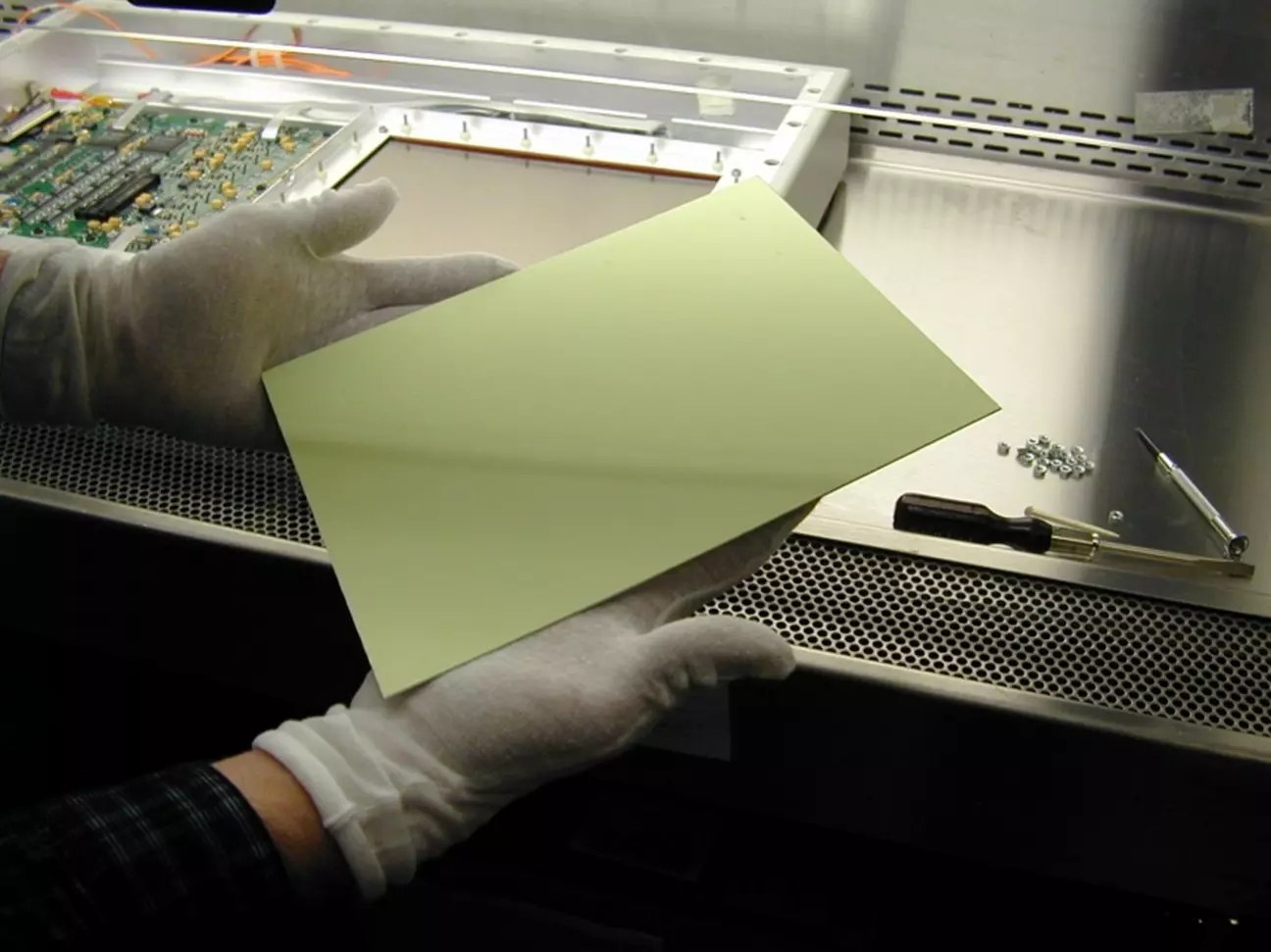
To measure invisible neutrons, their reactions with matter are converted into detectable signals. The LiF:ZnS screen in NIST’s detector introduction is one example. Light generated through reactions with neutrons is read by a light-sensitive detector.
The plate in the foreground of the photograph is the screen, with the detector’s interior visible behind it. Rather than thinking of a camera directly photographing neutrons, it is easier to understand this as imaging their effects on matter. This is an actual instrument used to explain detection principles, not photographic evidence of electricity generation by fusion.
Checking position and conditions, not just numbers
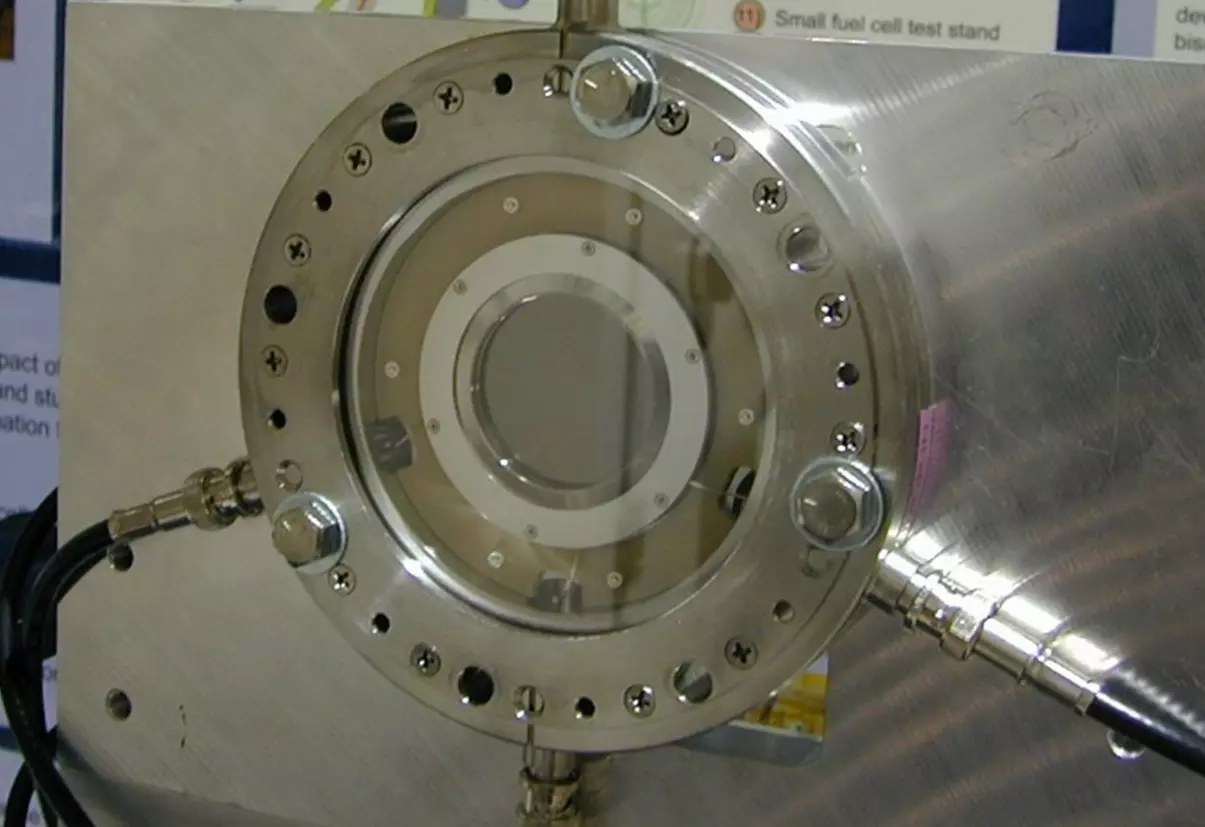
The same NIST introduction also includes a detector using a microchannel plate (MCP). It reads signals from a fine structure made sensitive to neutron capture. Both its configuration and its measurement strengths differ from those of a system that photographs a screen.
A single detector cannot measure every neutron with identical accuracy. The required instruments and calibration depend on whether the aim is to determine position, follow changes over time, or identify an energy distribution. The NIST neutron-imaging instruments introduced here cannot be read as providing a performance guarantee for 14.1 MeV fusion neutrons.
When reviewing research results or instrument specifications, look beyond the statement “neutrons were detected” to the energy range and conditions under which measurements were made. DOE’s account of scattering measurements on carbon and silicon also shows why measurements of energy and direction matter for validating computational models.
Measuring fast neutrons requires different techniques
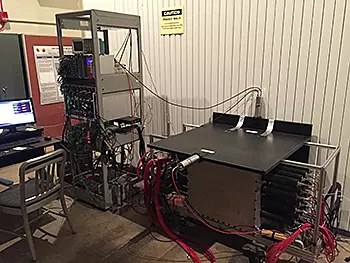
NIST’s fast-neutron spectrometer FaNS-2 is an example of an instrument studying higher-energy neutrons. Its official research description explains a method combining neutron energy transfer to protons in a scintillator with subsequent capture. Understanding scattering and absorption separately thus connects directly with real measurement technology.
The photograph shows the instrument making measurements at NIST’s californium neutron-irradiation facility, not at an operating fusion reactor. The research page marks the project as completed, and the photograph cannot establish its current operating status. It is presented here as a concrete example of equipment for measuring fast neutrons.
Outside the plasma, the work is to recover heat
In a D–T fusion reactor, receiving the energy carried by neutrons as heat in the surrounding blanket and transferring it to the cooling system is an important step toward electricity generation. Future reactors are also expected to use lithium to produce tritium. ITER’s blanket explainer distinguishes heat recovery from testing future fuel-breeding technology. It does not mean ITER will generate commercial electricity.
At the same time, neutron irradiation changes material properties. Research published by UKAEA treats atomic displacement, transmutation, and gas production as issues in materials assessment. The ability to receive heat and the ability to operate equipment for the required service period each need to be established.
For industry, opportunities lie not only in plasma performance but also in combining heat recovery, materials, shielding, diagnostics, and maintenance. Companies considering entry should establish the required neutron conditions, where components will be located, measurement and testing methods, and assumptions about replacement and inspection. Neutrons are not simply radiation leaving a reactor: they both deliver energy and have properties that make equipment design difficult.
- DOE basic explainer
- 2021 report by the US National Academies of Sciences, Engineering, and Medicine
- NIST explainer
- ITER explanation
- NIST detector introduction
- DOE account of scattering measurements on carbon and silicon
- Official research introduction
- ITER blanket explainer
- Research published by UKAEA
Information checked as of:2026-10-18
Basic explanation based on official primary sources. The reaction-energy distribution is not electricity-generation efficiency. NIST photographs show neutron research and detection equipment, not fusion power reactors.