F4E and QST sign new ITER technology cooperation agreement
European fusion agency F4E and Japan's QST announced a framework agreement on 16 November to exchange know-how on ITER equipment, with heating launchers, diagnostics and water detritiation among the potential areas.
Read the Japanese originalAnnouncement date:2026-11-16
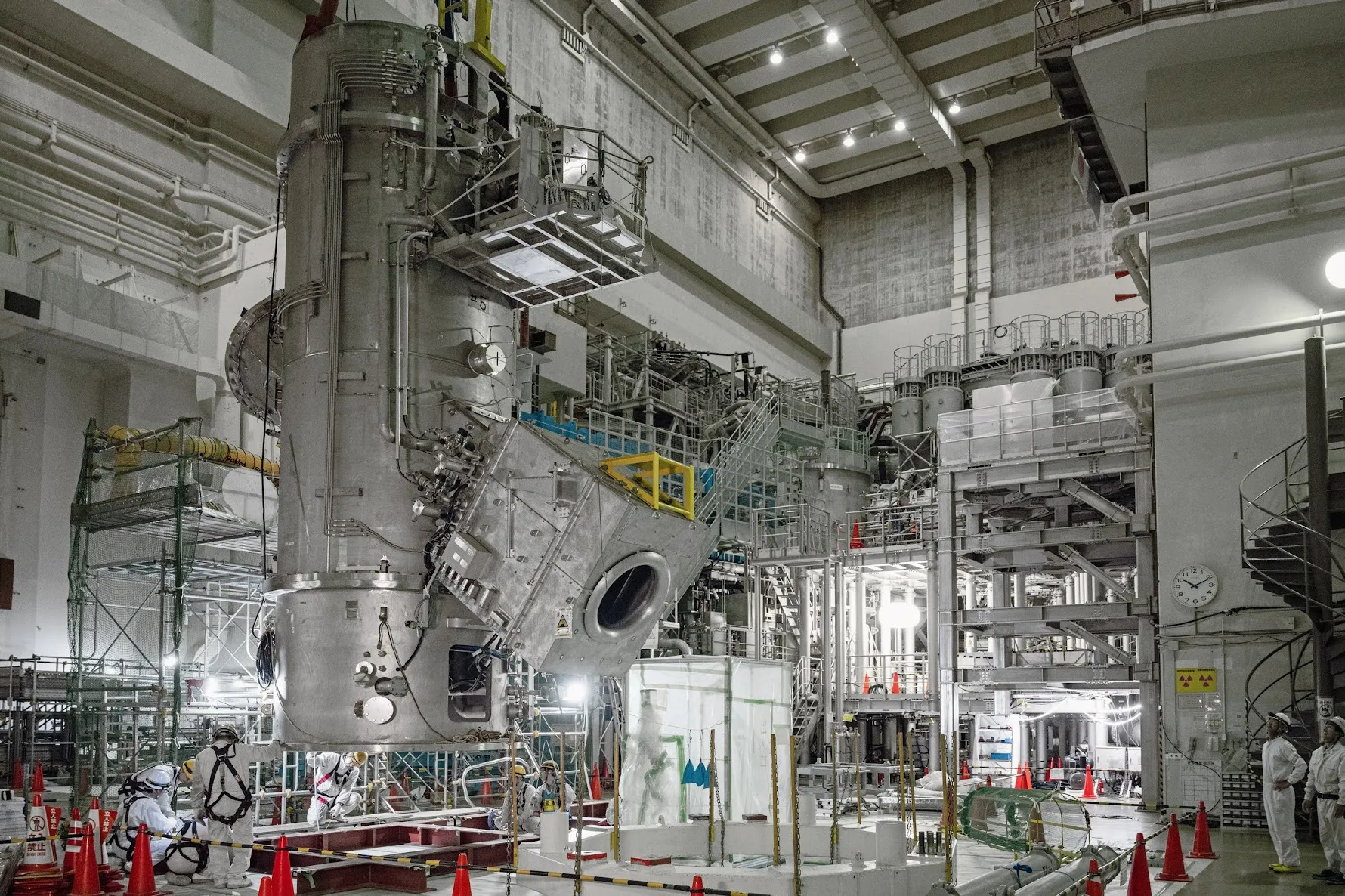
Europe's Fusion for Energy (F4E) and Japan's National Institutes for Quantum Science and Technology (QST) have signed a new cooperation agreement covering ITER equipment. F4E announced the agreement on 16 November 2026. The framework is intended to bring together practical experience in heating, diagnostics and fuel-related systems. Which technologies could be involved?
Heating, diagnostics and tritium treatment
The agreement was signed in Barcelona by F4E Director Marc Lachaise and Masaya Hanada, Director-General of QST's Naka Fusion Institute. It establishes an open-ended framework for exchanging knowledge about ITER technologies.
After the signing, the two organizations discussed three potential cooperation areas: electron cyclotron heating launchers, plasma diagnostics and water detritiation systems. These span the delivery of heating microwaves, measurement of plasma behavior and treatment of tritium-bearing water.
Activities could include meetings, technical workshops and engagement with industry. However, the framework carries no financial commitments at this stage. It is not an announcement of joint procurement, a firm equipment order or a completed installation.
Building on JT-60SA cooperation
F4E and QST already work together under the 2007 Broader Approach agreement, including JT-60SA and IFMIF/EVEDA. They have also supported one another on superconducting magnet conductors and procurement of ITER toroidal field coils.
The new framework extends this working relationship into specific ITER technology areas. Manufacturing, testing and preparing equipment for operation involves coordination across organizations as well as delivery of physical components. The next concrete sign of progress will be whether the framework leads to joint tests or participation by suppliers.
- Fusion for Energy: Europe and Japan strengthen collaboration for ITER (16 November 2026)
- Fusion for Energy: Broader Approach
- Fusion for Energy: JT-60SA upgrade
Information checked as of:2026-11-22
This is a framework for exchanging know-how, not a binding joint development contract or a funding commitment. Three areas were discussed as possibilities, not approved projects.