Why is the Webb telescope’s mirror gold?
The Webb telescope’s golden surface is only about 100 nanometres thick. Its mirror separates the job of holding a shape from that of reflecting light. A laser-fusion experiment shows what changes when the job is to change the wavelength instead.
Read the Japanese original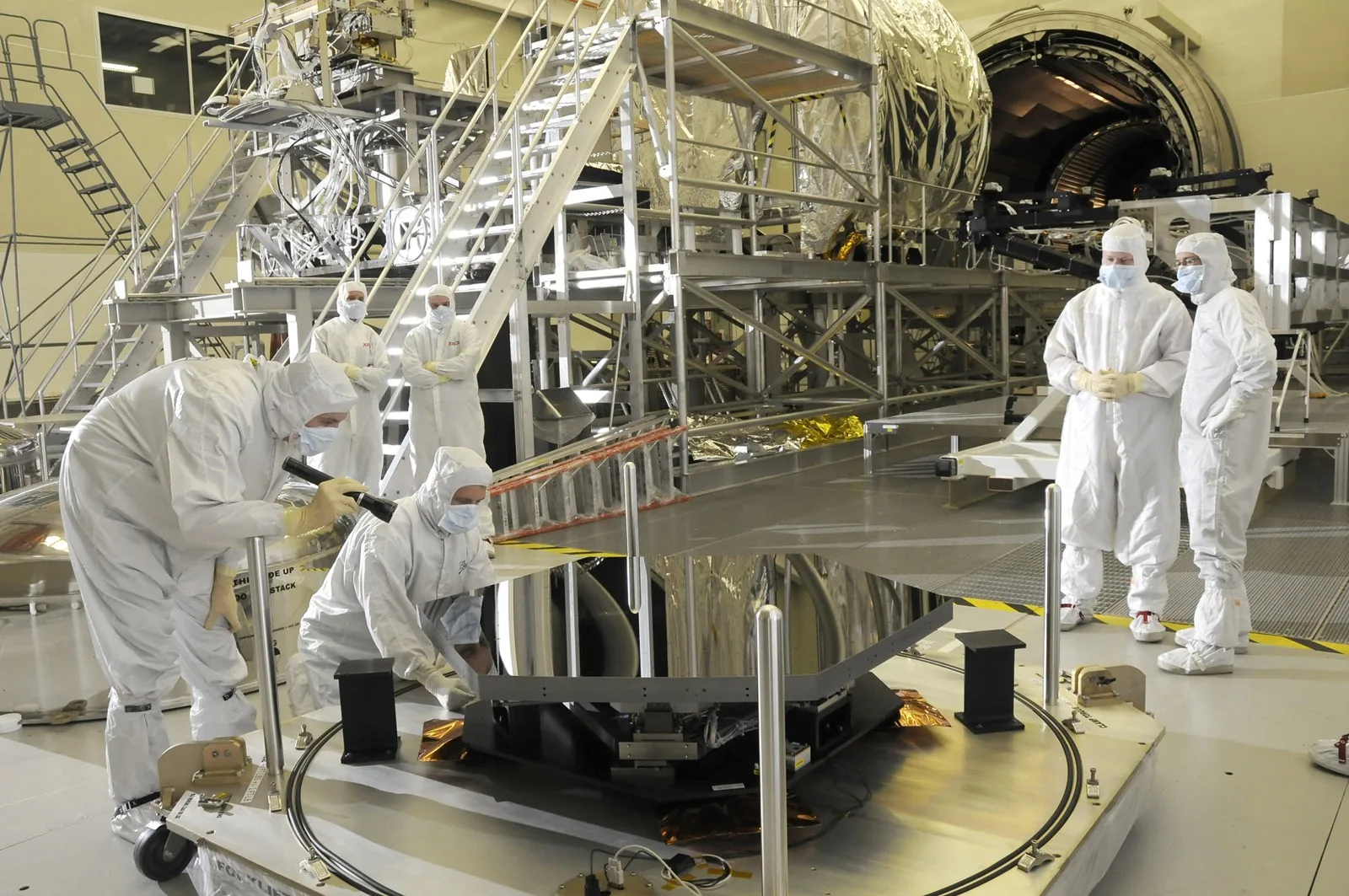
A mirror usually looks silver. The James Webb Space Telescope’s primary mirror looks gold, yet gold is not the metal that gives the mirror its shape. It is a surface layer about 100 nanometres thick. Why separate the two jobs? A comparison with laser fusion shows how differently engineers handle light when they want to see it rather than deliver it to a target.
A hundred nanometres changes the mirror
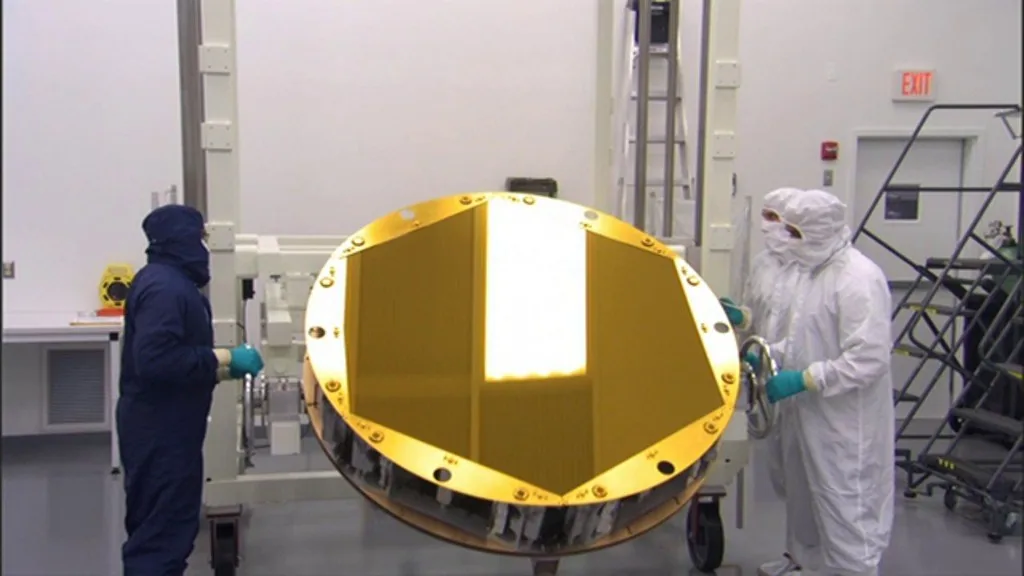
To our eyes the mirror looks golden. The engineers needed a surface that would efficiently reflect infrared light, which we cannot see. Webb uses infrared light to observe distant galaxies and objects beyond obscuring dust. If a mirror absorbs some of the light that falls on it, less of the signal reaches the instruments. Looking shiny in visible light and reflecting the wavelengths you need to measure are not the same requirement.
NASA puts the coating at about 100 nanometres, or one ten-thousandth of a millimetre. The gold was deposited on the surface of an already shaped component. The film does not provide the mirror’s shape, mass properties or dimensional stability in the cold. The point of a coating is that it can provide the required optical behaviour without doing all those other jobs.
Another metal holds the shape
Beneath the gold is beryllium. Webb’s roughly 6.5-metre primary mirror consists of 18 hexagonal segments. Those segments have to be adjusted precisely to act as a single mirror. Each needs to hold the intended shape when cold, but the whole assembly must also be light enough to launch. NASA says beryllium was chosen for its strength relative to weight and its ability to hold its shape as temperatures change.
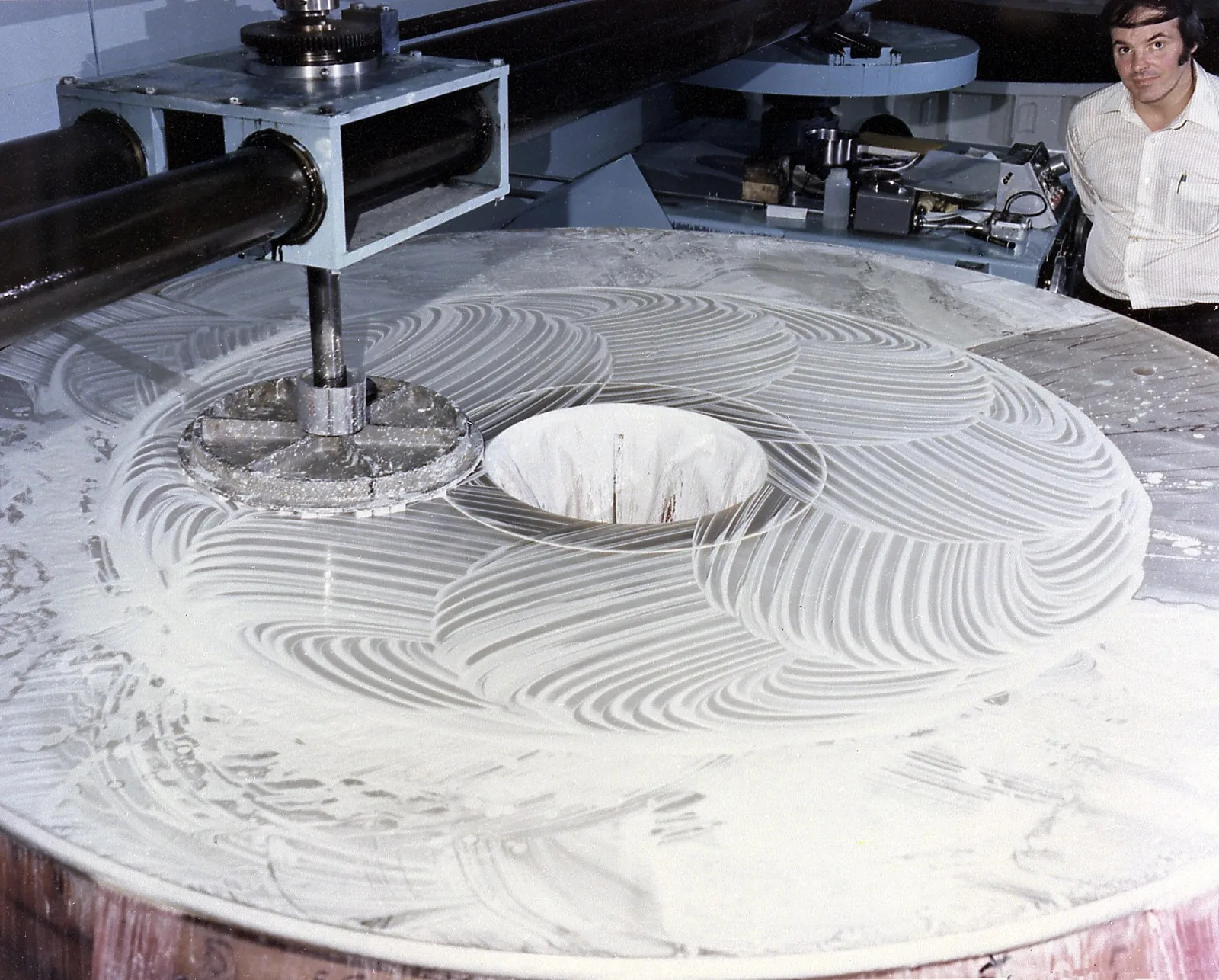
Being dimensionally stable does not mean never changing shape. NASA describes measuring the polished segments at cryogenic temperatures, using the results to correct their shape and checking them again in the cold after coating. The photograph of Hubble’s primary mirror shows a separate polishing job, not a Webb component. Precision shaping comes first; choosing a surface for the intended light is a different engineering decision.
One image from eighteen segments
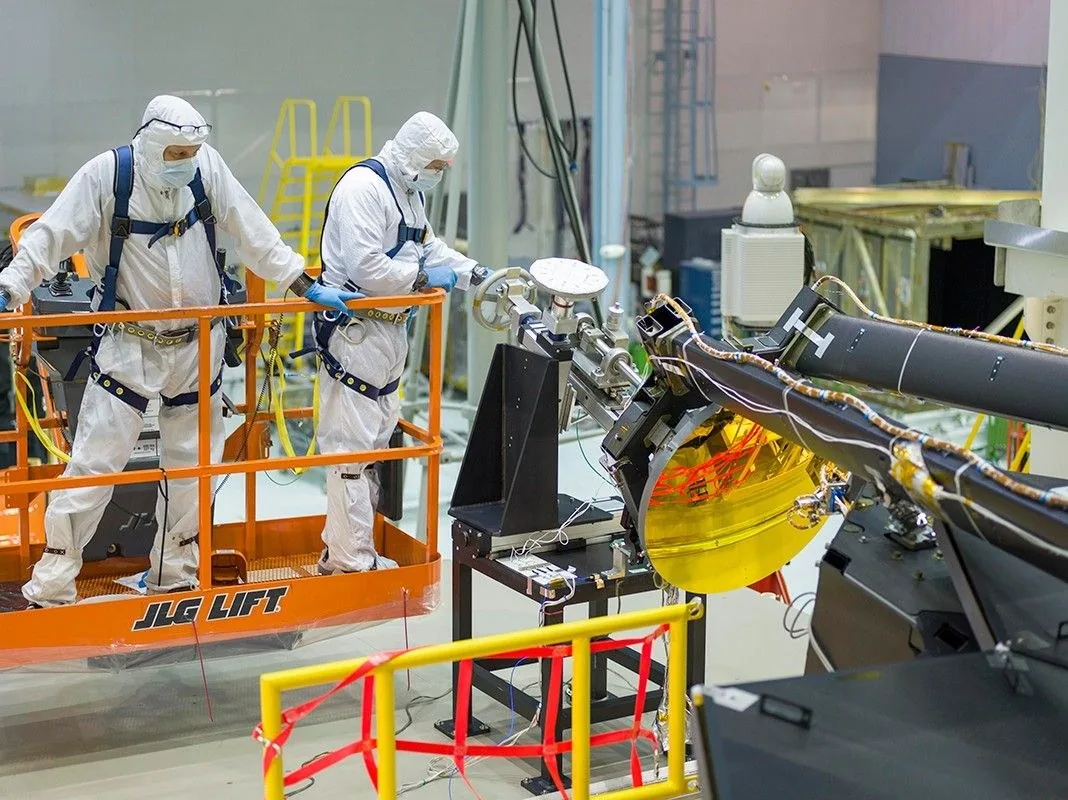
Eighteen coated segments do not form a single image simply by being placed next to one another. Webb’s primary mirror directs the collected light to a round secondary mirror. From there it travels via further mirrors to the instruments. After launch, the primary segments were adjusted to act together. The reflectivity of each surface is only part of the story: the shape, position and orientation of the mirrors determine where the light goes.
The small secondary mirror in the photograph is easy to overlook against the large golden primary. Yet it passes the collected light onward. Size is for collecting enough light, the coating is for reflecting the right band, and polishing and alignment help form the image.
In laser fusion, the wavelength changes
The National Ignition Facility (NIF) at Lawrence Livermore National Laboratory also designs for particular wavelengths. But it does not observe light arriving from space. It makes light and sends it to an experimental target. Its main laser produces infrared light at about 1,053 nanometres. In the final optics, nonlinear crystals convert part of it to ultraviolet light at 351 nanometres. Webb's gold coating reflects infrared light without changing its wavelength; NIF's crystals change the wavelength itself.
Reflection, wavelength conversion and focusing are three different jobs. The telescope photographs do not show NIF equipment. The first question to ask about an optical surface is not what colour it looks, but which wavelengths need to reach the next part of the instrument. Further reading: FI’s NIF guide (Japanese).
Sources
Official information from related companies and research institutions
Check each organization’s announcements for development progress and technical documentation.
- NASA: Webb’s mirrors
- NASA: Webb telescope overview
- NASA: Webb mirror gold-coating archive footage
- NASA: polishing Hubble’s primary mirror
- NASA: installation of Webb’s secondary mirror
- LLNL: frequency conversion at NIF
Information checked as of:2026-11-18
NASAとLLNLの公開資料に基づく科学解説。写真は宇宙望遠鏡の開発記録で、NIFの部品ではない。