W7-X cools its inner wall with 6.8 kilometres of water pipes
In 2025, W7-X coupled more heating energy to a plasma in six minutes than it had in eight minutes in 2023. Its water-cooled divertor helps explain what a longer, more powerful pulse demands.
Read the Japanese original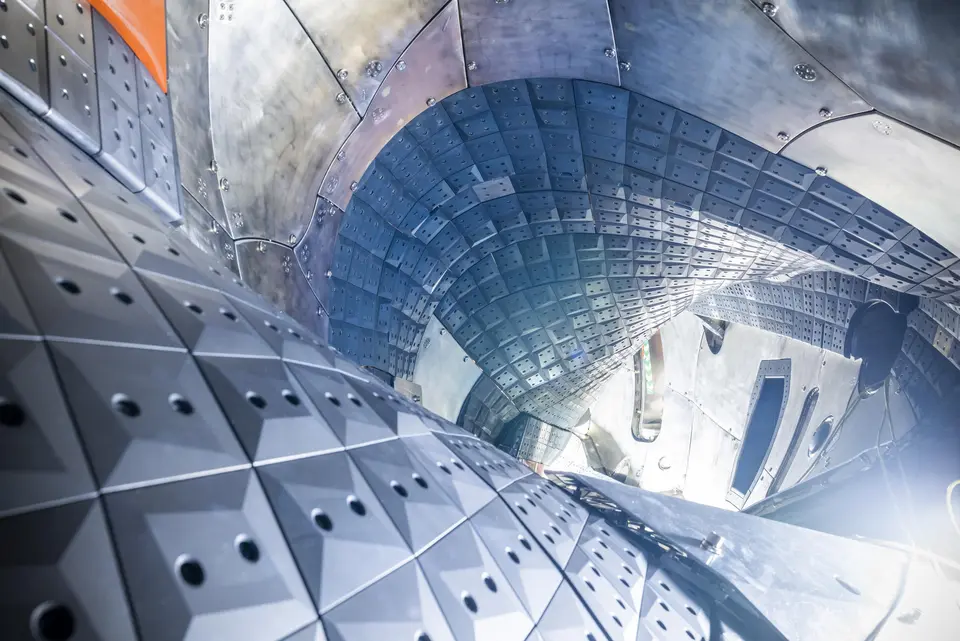
In 2025, Germany’s Wendelstein 7-X fusion experiment put more heating energy into a plasma in six minutes than it had in eight minutes two years earlier. The pulse was shorter and the energy input was higher. The inner wall offers a clue to what made the difference possible. After an upgrade, 6.8 kilometres of water pipes ran behind it.
More heating energy in a shorter pulse
W7-X is a stellarator. Coils outside the vessel generate the magnetic field that confines the plasma. According to the Max Planck Institute for Plasma Physics (IPP), an experiment in February 2023 coupled an average of 2.7 megawatts of heating power to the plasma for 480 seconds, for a total of 1.3 gigajoules. In a separate experiment reported in 2025, the team coupled 1.8 gigajoules over 360 seconds. Dividing the published energy by the duration gives about 5 megawatts.
Seconds tell us how long the pulse lasted. Megawatts tell us how fast energy went into the plasma. Multiply the two and you get the energy input, so a shorter pulse can take more energy if the heating power is higher. The 1.8 gigajoules measures heat coupled to the plasma. Electricity generated by the facility and electricity drawn from the grid are separate quantities. The 43-second triple-product result that IPP reported separately combines temperature, density and energy confinement. It describes different experimental conditions.
Water flows behind the tiles
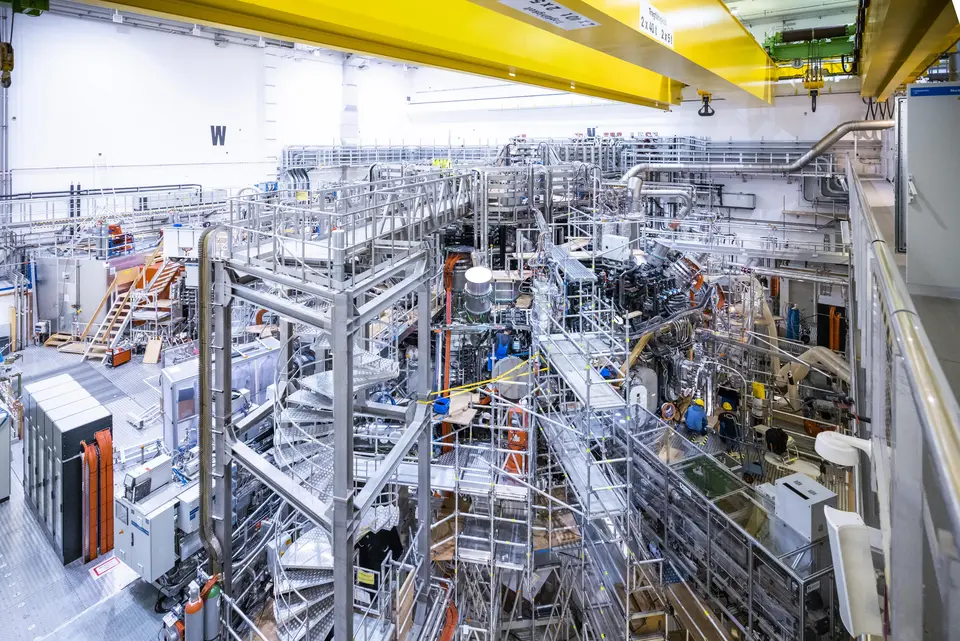
The magnetic field keeps the hot plasma core away from the wall, while some particles and heat still escape at the edge. W7-X directs part of that flow to components called divertors. Their surfaces sit where particles and heat concentrate. Before the upgrade, much of the wall protection had no water cooling. IPP reports that even at lower heating power, discharges lasted at most around 100 seconds.
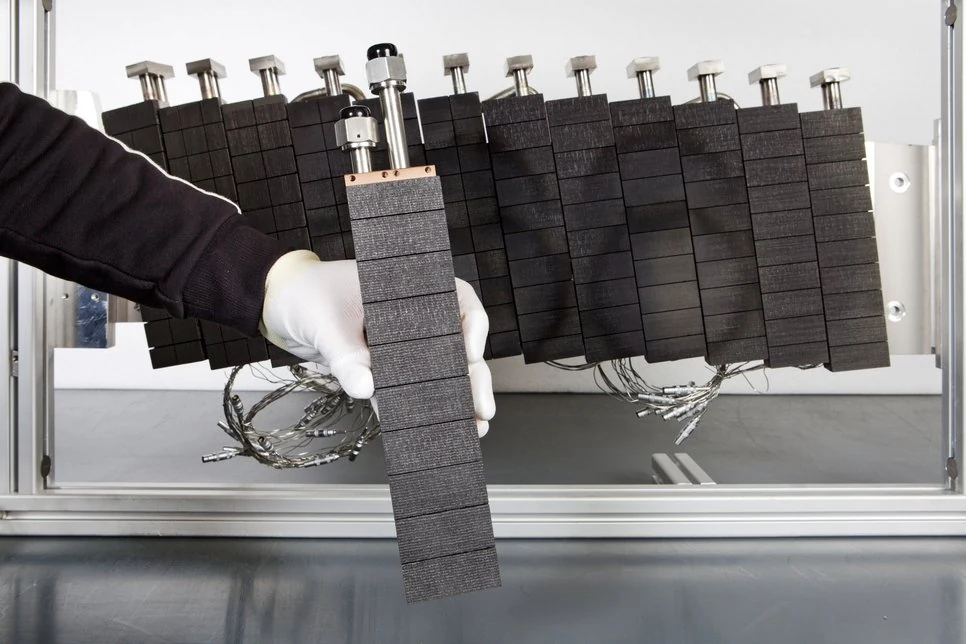
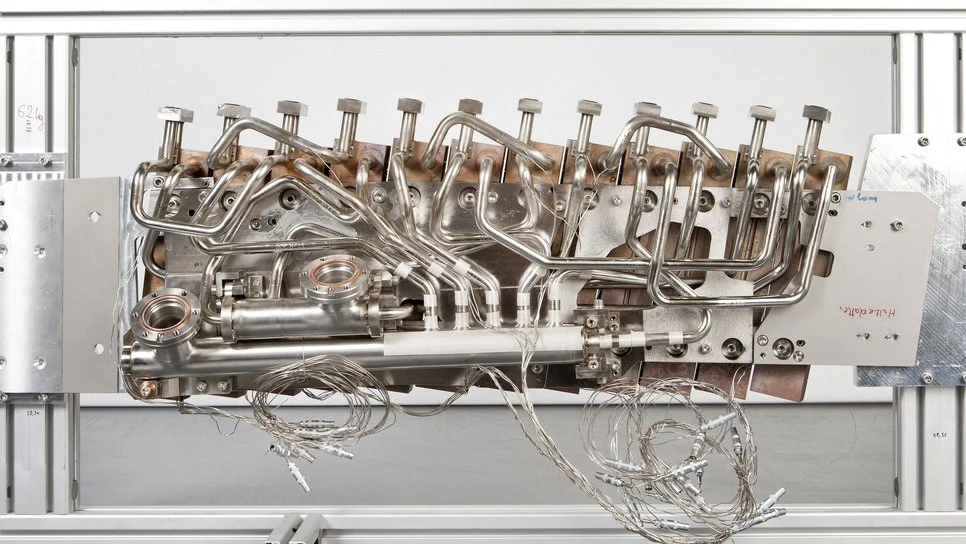
In the upgraded divertor, carbon-based tiles pass heat into copper-alloy plates. Water running behind the surface carries the heat away. The 6.8 kilometres in IPP’s 2023 report covers the whole inner-wall cooling network. Water cooling lets operators remove heat while a pulse is still under way. The heating system was also upgraded, so the two experiments cannot isolate the contribution of cooling alone.
What a power plant has to handle
When IPP announced the 2023 result, it set out a target of handling 18 gigajoules over 30 minutes. A future fusion plant will have to sustain operation, understand where heat concentrates and establish the conditions under which materials, joints and cooling equipment hold up. Dividing energy by time gives an average for the whole experiment. The load on each plate needs its own measurements.
Read the six- and eight-minute pulses together and it becomes clear why both duration and heating power matter. The equipment delivering the heat and the equipment carrying it away both have to work for the duration of the experiment.
- IPP: 480-second, 1.3 GJ experiment in February 2023
- IPP: 360-second, 1.8 GJ experiment reported in 2025
- IPP: manufacture and assembly of the water-cooled divertor
- IPP: 2024 restart and the aims of long-pulse research
Information checked as of:2026-11-17
2023・2025年の実測を比較。30分・18 GJはIPPが2023年に掲げた目標。1.8 GJはプラズマへの投入加熱量。約5 MWは公表値からの換算。