Leak testing for ITER’s largest components
ITER’s vacuum vessel sector weighed 440 tonnes. A separate divertor test took about two weeks per component. These cases and a QST specification show what suppliers must prove before acceptance.
Read the Japanese original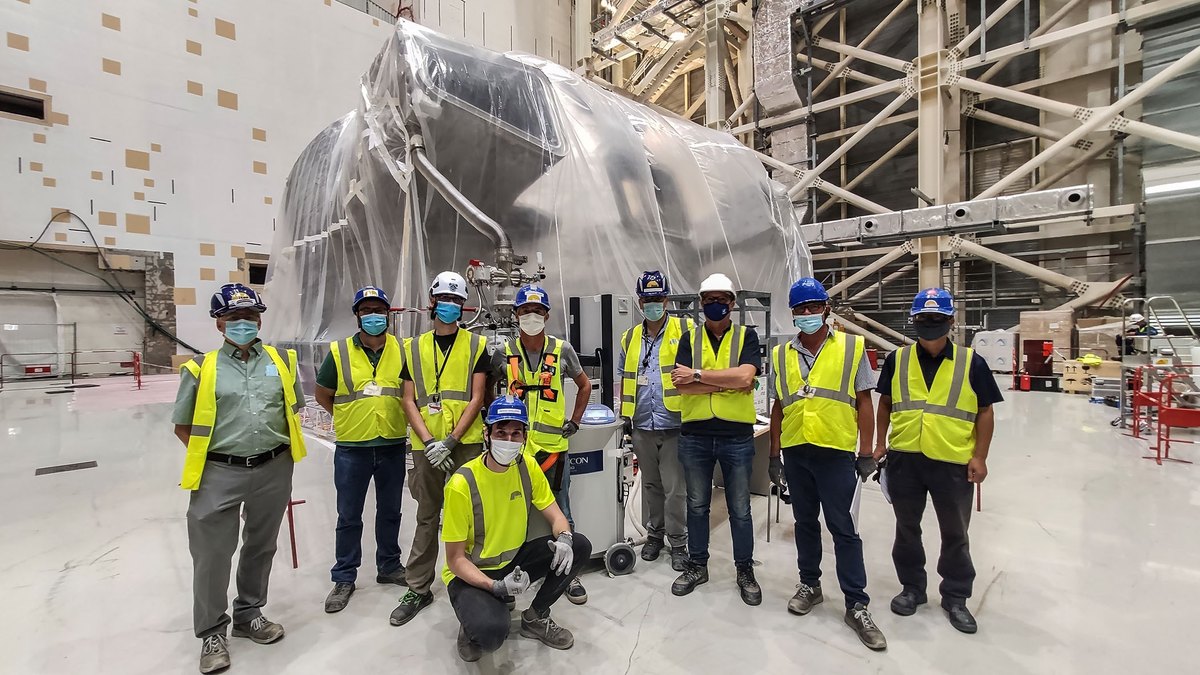
ITER wrapped a 440-tonne vacuum vessel sector in a bag and filled the enclosure with helium. That was part of the on-site leak test for sector 6 in 2020. Once the huge welded component was built, someone still had to show how little gas could escape detection. Who supplies the instruments, the test facility and the evidence? Public records show work that a component’s price alone cannot explain.
Testing the detector before acceptance
For the test, the space between the sector’s two walls was evacuated. A mass spectrometer looked for helium moving in from the surrounding bag. ITER reported that its September 2020 on-site test found no leak above its detection limit and demonstrated a level of tightness two orders of magnitude beyond the acceptance criterion. Travel restrictions led to a split between checking the safety leak rate in Korea and the more stringent operational rate on site.
A quiet instrument does not settle the question. Gas released from material surfaces adds a background against which a small helium signal must still register. The year before, ITER qualified the detector’s sensitivity in a one-cubic-metre chamber. The test had to be shown to work before it could be used to clear the component.
ITER on-site test · ITER sensitivity qualification
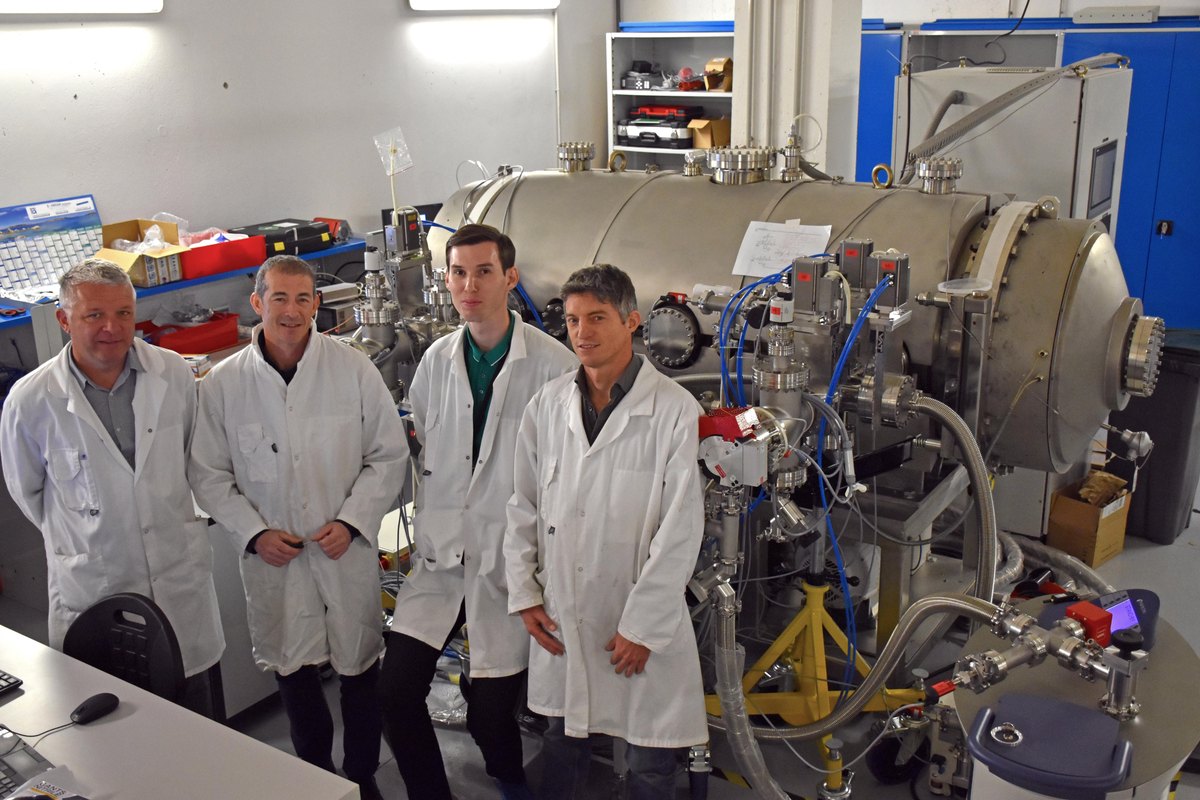
About two weeks per component
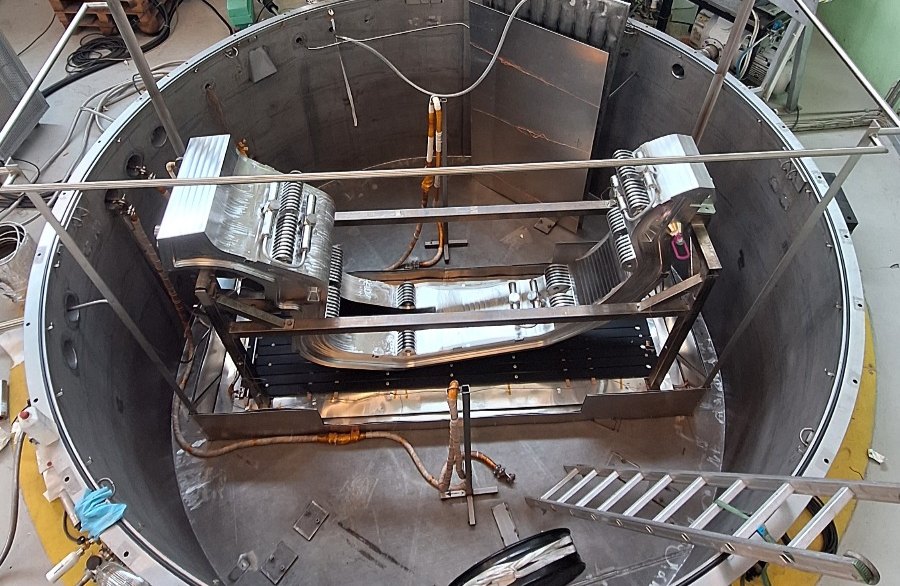
The divertor cassette bodies go through a different hot leak test. In October 2025 F4E reported that the first four bodies made by SIMIC–CNIM had completed hot helium leak testing after hydraulic pressure tests. The team heated the components up to 250°C and checked three temperature ranges. F4E put the time at about two weeks per component. The testing took place at Criotec in Italy, with the facility adapted to meet cleanliness and isolation requirements.
During that fortnight, a chamber, handling equipment and a team were tied up with the work. Final machining and dimensional checks followed. F4E documented passage of that test at the time. The report does not establish delivery or operation.
The work behind a €17 million contract
In 2020 F4E described a separate leak detection system contract for monitoring vacuum boundaries during machine operation. It put the value at around €17 million. IDOM led design, 40-30 took on process and vacuum engineering and equipment specifications, and Gutmar was responsible for manufacturing, assembly and testing within the consortium.
That figure covers a system and cannot serve as the price of a cassette test. Both examples do, however, contain work that starts after an instrument has been selected. Test facilities, vacuum engineers and companies able to produce inspection records all have a place in the supply chain.
Calibration in a Rokkasho specification
The documentation matters even in a smaller order. A November 2026 specification from QST’s Rokkasho institute calls for a quadrupole mass spectrometer to analyse gas released by materials, together with a calibrated DH reference leak. It includes connecting the equipment, checking operation, explaining how to use it and providing calibration documentation.
The application is blanket material research. ITER’s structural helium tests have a different purpose and use a different gas. Both procurements include evidence that measurements can be made under the required conditions.
Three questions to ask before bidding
Can the supplier reserve a facility for the component size and test temperature? Who supplies tooling, seals and calibration equipment? Does the quote include witnessing, documentation and retesting? ITER’s handbook puts the tooling, seals and equipment needed to demonstrate tightness on the supplier unless the contract says otherwise.
Once testing has an identified owner, the estimate can account for cleaning, transport and time on the rig. On a quotation for a vacuum component, look for the work needed to demonstrate acceptance below the machining line.
- ITER: on-site leak test for sector 6 (2020)
- ITER: detector sensitivity qualification (2019)
- Fusion for Energy: hot helium testing of divertor cassette bodies (2025)
- ITER: Vacuum Handbook and appendices
- Fusion for Energy: leak detection system contract and roles (2020)
- QST: quadrupole mass spectrometer specification (RE-15276)
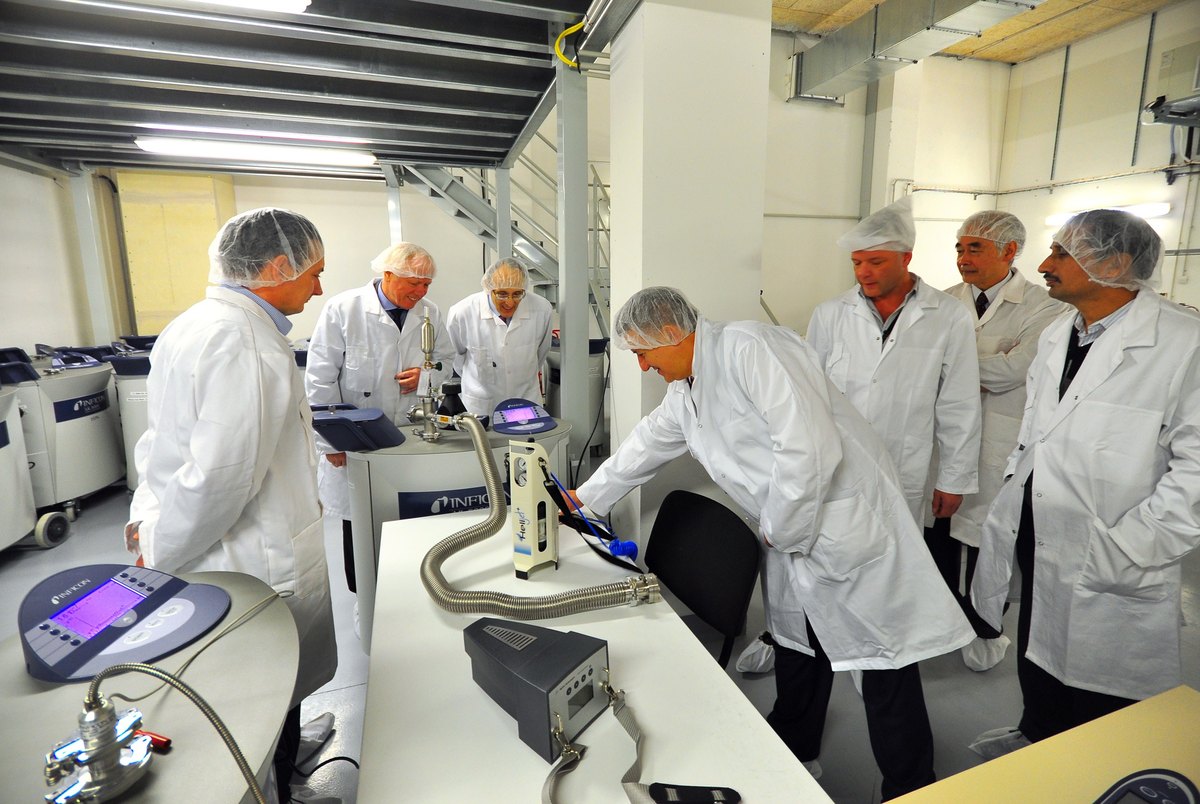
- ITER: headquarters vacuum laboratory (2015)
Information checked as of:2026-11-16
Verified against ITER and F4E test and contract reports and the QST purchase specification. Test completion, delivery and operation are distinct stages.