Laser fusion
- Official name
- Laser-driven inertial-confinement fusion
- ENGLISH
- Laser fusion
Lasers compress and heat tiny fuel targets. For power generation, integrating high-repetition-rate irradiation with target supply is a challenge.
Read the Japanese original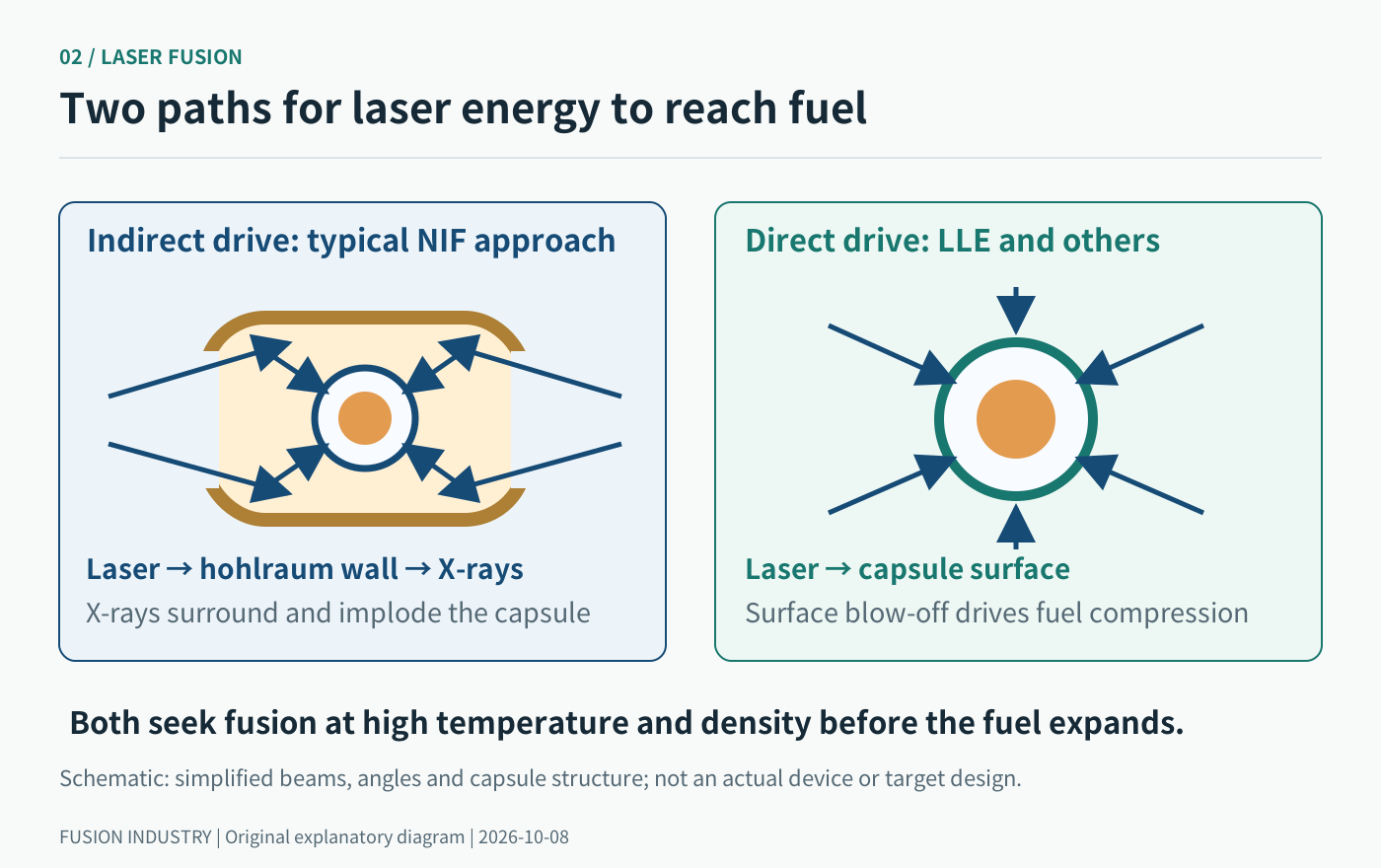
Lasers compress and heat tiny fuel targets. For power generation, integrating high-repetition-rate irradiation with target supply is a challenge.
Business considerations
Consider manufacturing repeatability, maintenance, quality assurance and supply availability alongside individual performance. Check the reactor's overall objectives and the scope demonstrated for each component.
Understanding the organizations and companies
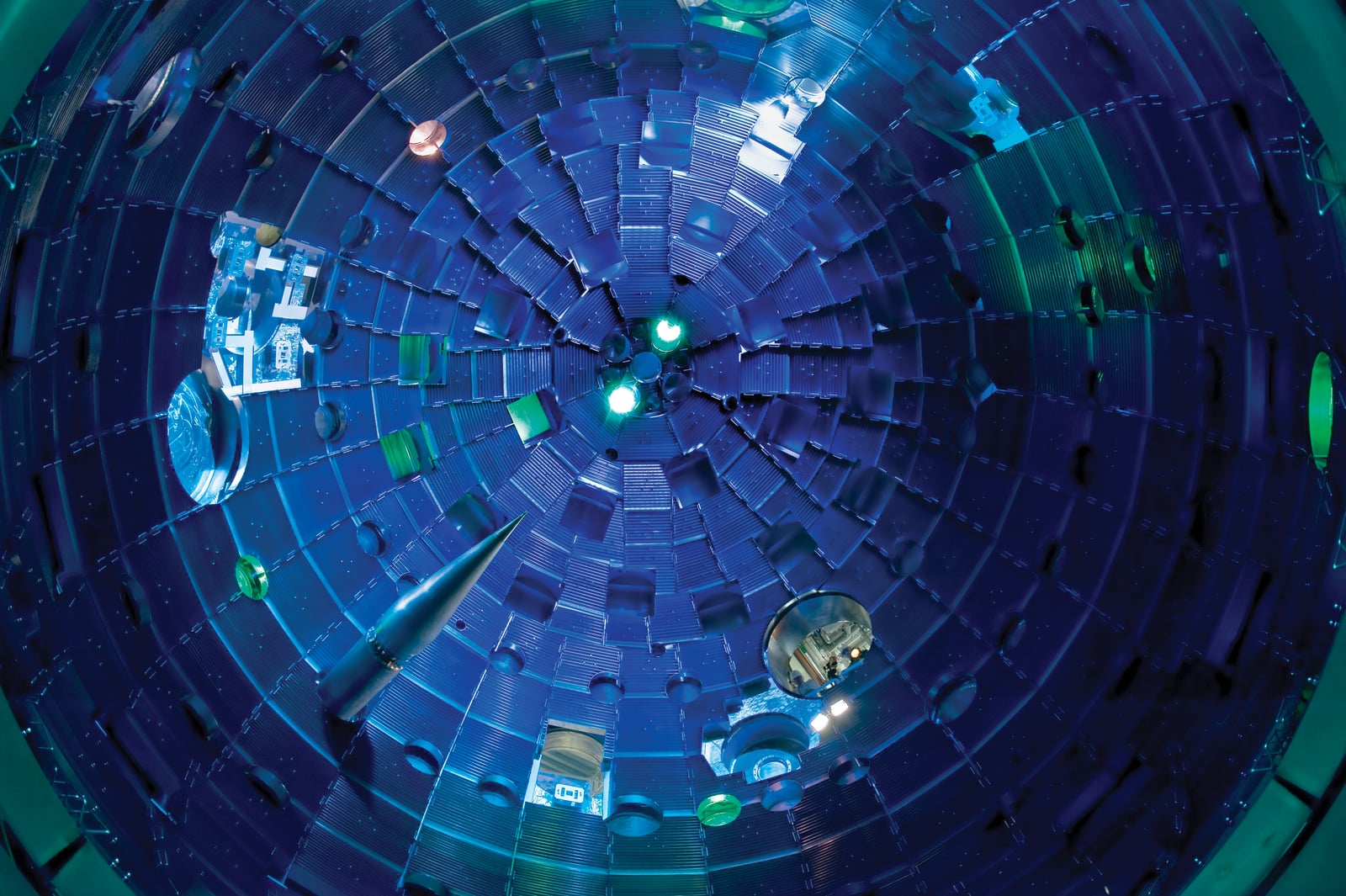
Laser-fusion research covers implosion and ignition physics, efficient light sources, target mass production and supply, and repeated irradiation. NIF's target gain and Hamamatsu Photonics/EX-Fusion's continuous irradiation of simulated targets answer different questions. Distinguishing them properly makes it easier to identify where optical and precision-manufacturing technologies fit into the process.
Lawrence Livermore National Laboratory (LLNL) / University of Rochester Laboratory for Laser Energetics / Osaka University Institute of Laser Engineering / Hamamatsu Photonics / EX-Fusion / LLNL Livermore Institute for Fusion Technology
Official information from related companies and research institutions
Check each organization’s announcements for development progress and technical documentation.
- Official materials
- EX-Fusion | Fusion technology and research
- LLNL | Achieving fusion ignition
- University of Rochester LLE | Omega Laser Facility
- Osaka University Institute of Laser Engineering | Shared use and collaborative research
- Hamamatsu Photonics/EX-Fusion | One hour of continuous simulated-target irradiation
- LLNL LIFT | Inertial-fusion laser-driver development
Checked:2026-10-08