How Germany connects fusion research with industry: the roles of W7-X and Alpha
W7-X has supported stellarator research for years, while Alpha remains a proposed demonstration machine. University and manufacturer collaborations reveal Germany's industrial foundations when public research results are kept distinct from corporate commercialization plans.
Read the Japanese original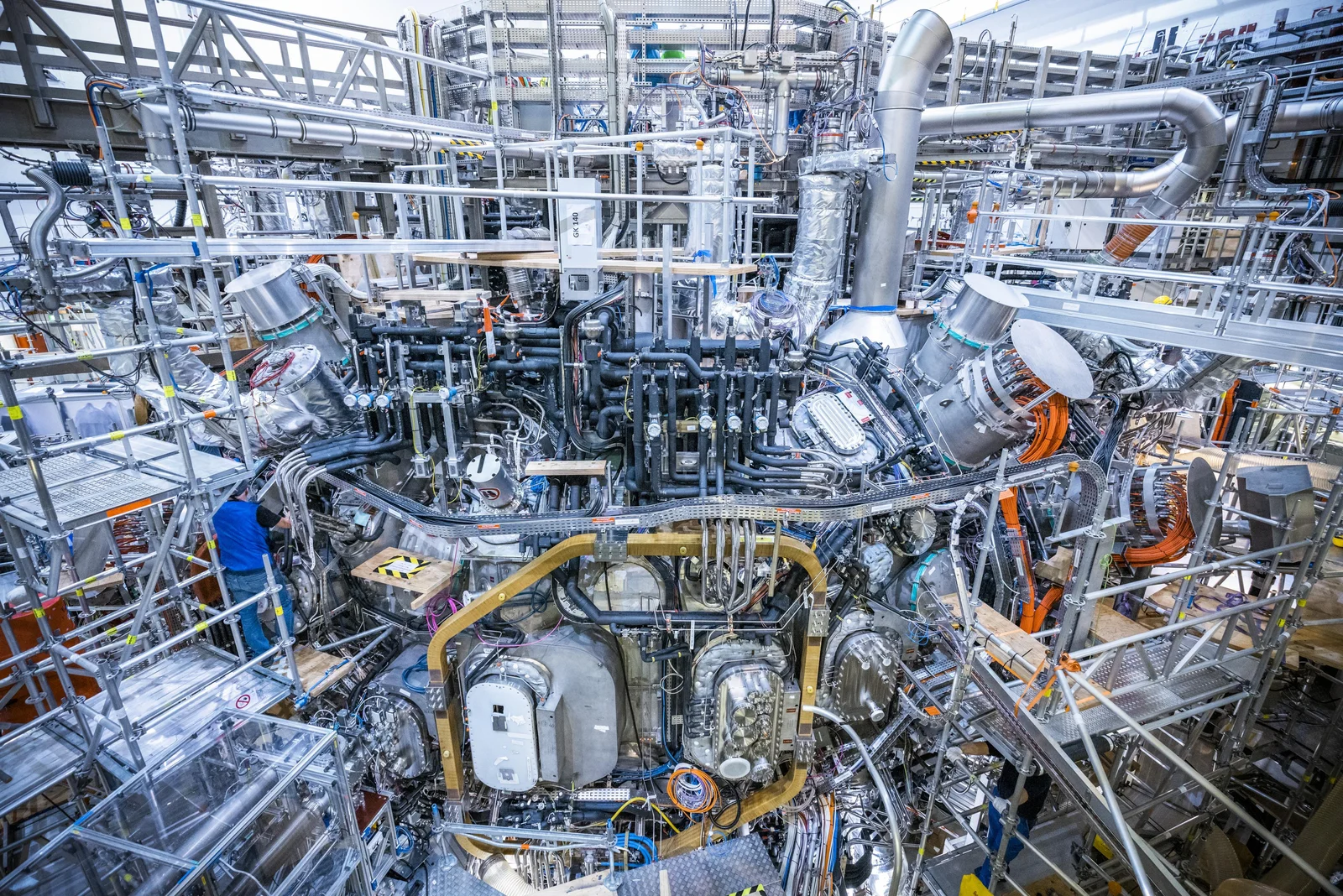
The key to Germany's fusion industry is the connection between longstanding public research and companies' plans for power plants. From Wendelstein 7-X (W7-X) in Greifswald in the north to the proposed Alpha demonstration machine in Garching in the south, this article follows stellarator research, manufacturing partnerships and remaining commercialization challenges.
Two research foundations in the north and south
The Max Planck Institute for Plasma Physics (IPP) studies the W7-X stellarator in Greifswald and the ASDEX Upgrade tokamak in Garching. Experience across confinement approaches is one of Germany's distinctive strengths. IPP's research structure and company cooperation
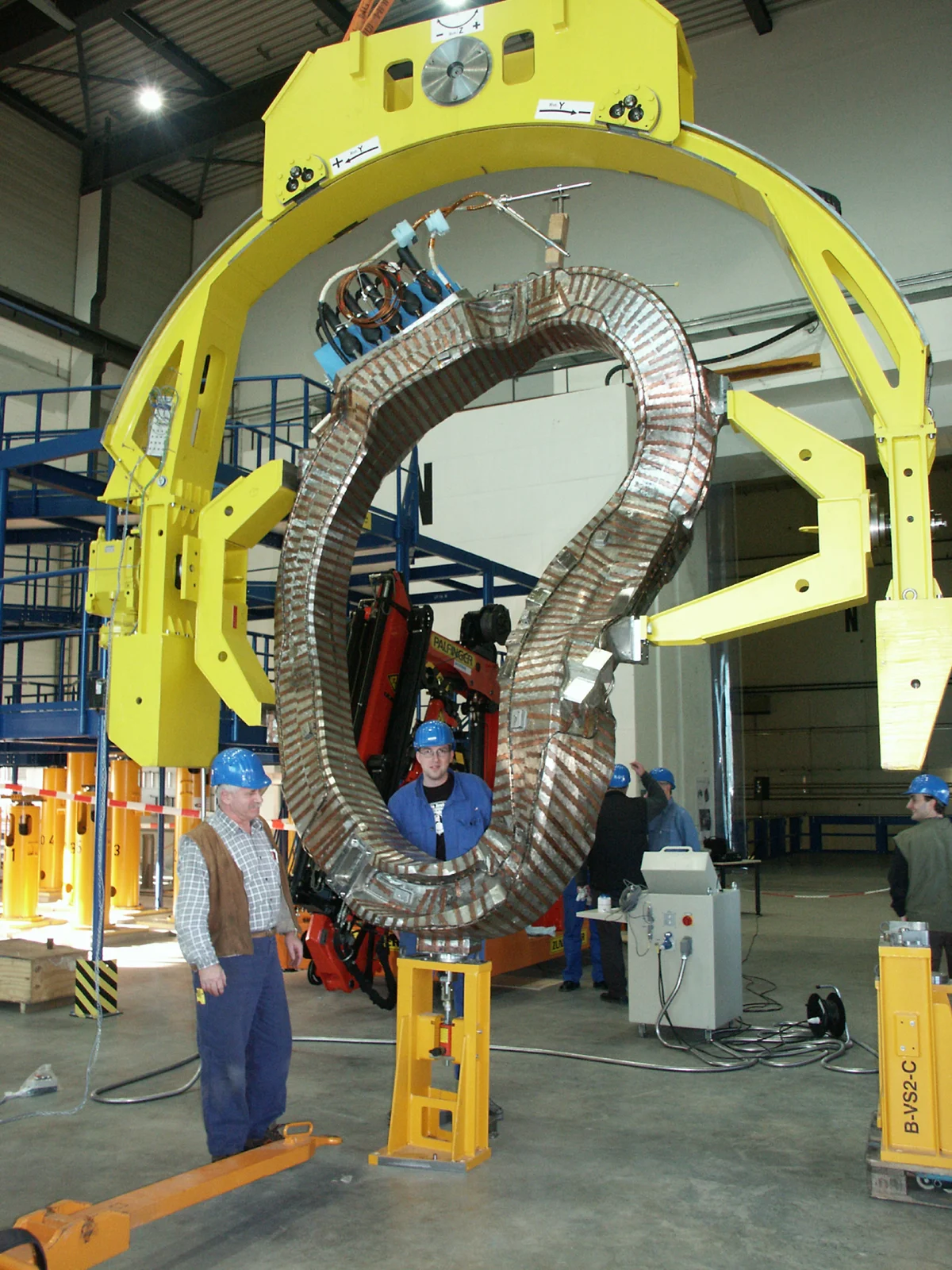
W7-X uses an optimized magnetic field centered on fifty three-dimensionally shaped superconducting coils to confine plasma. Its purpose is to test experimentally whether stellarators are suitable for power plants. Thirty-minute discharges are a goal, not an already achieved operating duration. Official W7-X overview
The coil photograph conveys the challenge of translating magnetic-field calculations into physical components. Physics theory alone does not create a machine: manufacturing, assembly and measurement must connect.
What the 43-second result demonstrates
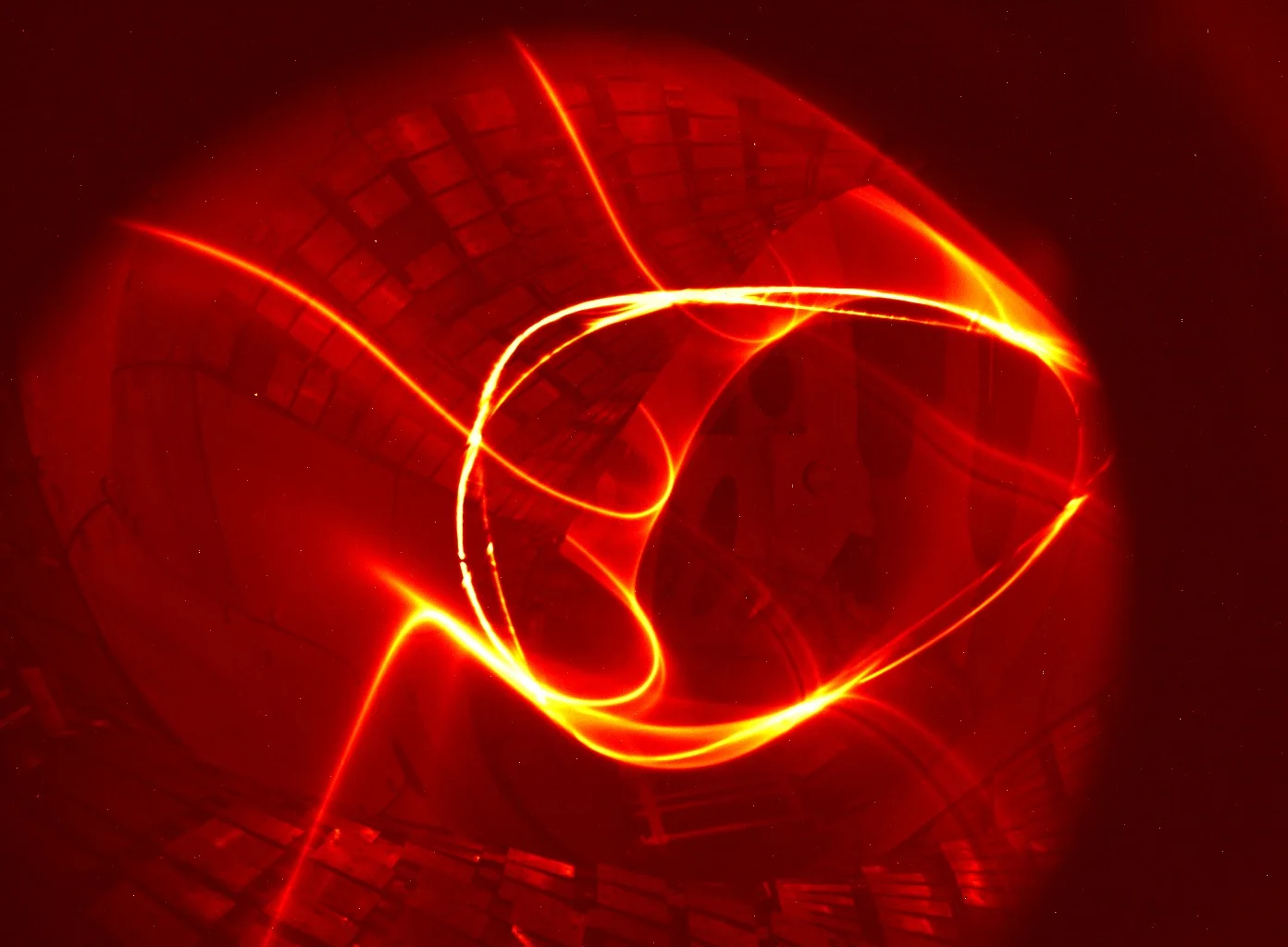
On June 3, 2025, IPP reported that an experiment on May 22 had maintained a high triple product, combining temperature, density and energy-confinement time, for 43 seconds. However, a June 30 addition revised the description in light of further JET data, stating that W7-X and JET were on a par for the triple product in long discharges. Experimental report and correction
This is an achievement in sustaining plasma, not grid delivery or commercial electricity generation. The 2015 photograph used here records magnetic-field measurement with an electron beam and fluorescent rod; it does not show the high-performance plasma from 2025. Numbers, photographs and future plans must each be interpreted for what they represent.
Upgrading a machine through university-manufacturer cooperation
HiPMiB, which will strengthen W7-X microwave heating, provides a specific example of current collaboration. IPP's July 27, 2026 announcement states that the project began in January with IPP, Karlsruhe Institute of Technology (KIT), the University of Stuttgart and Thales participating. Federal research-ministry support totals EUR 6 million. The plan is to develop a two-megawatt-class gyrotron and technology to deliver its output to the machine. HiPMiB announcement
Responsibilities are divided: KIT handles short-pulse testing and design, while Thales manufactures a demonstrator for long pulses. IPP and the University of Stuttgart focus on transmission technology. This is development in which researchers and manufacturers share challenges, not simply a purchase of finished equipment. KIT also has FULGOR for testing megawatt-class continuous-wave gyrotrons. KIT testing infrastructure
Alpha addresses a different question from W7-X
An example of the corporate connection is Proxima Fusion, announced in 2023 as IPP's first spinout. IPP's current cooperation program also lists both Proxima and Gauss Fusion as stellarator-development partners. Current collaboration program
On February 26, 2026, IPP, the Bavarian government, Proxima and RWE signed a memorandum concerning Alpha and related plans. IPP is expected to lead the science, with Proxima responsible for engineering, tendering and construction. IPP explains that W7-X investigates sustained operation, whereas Alpha would examine scaling thermal confinement toward a commercial reactor in relatively short pulses. Their experimental roles are complementary. IPP's explanation of the memorandum
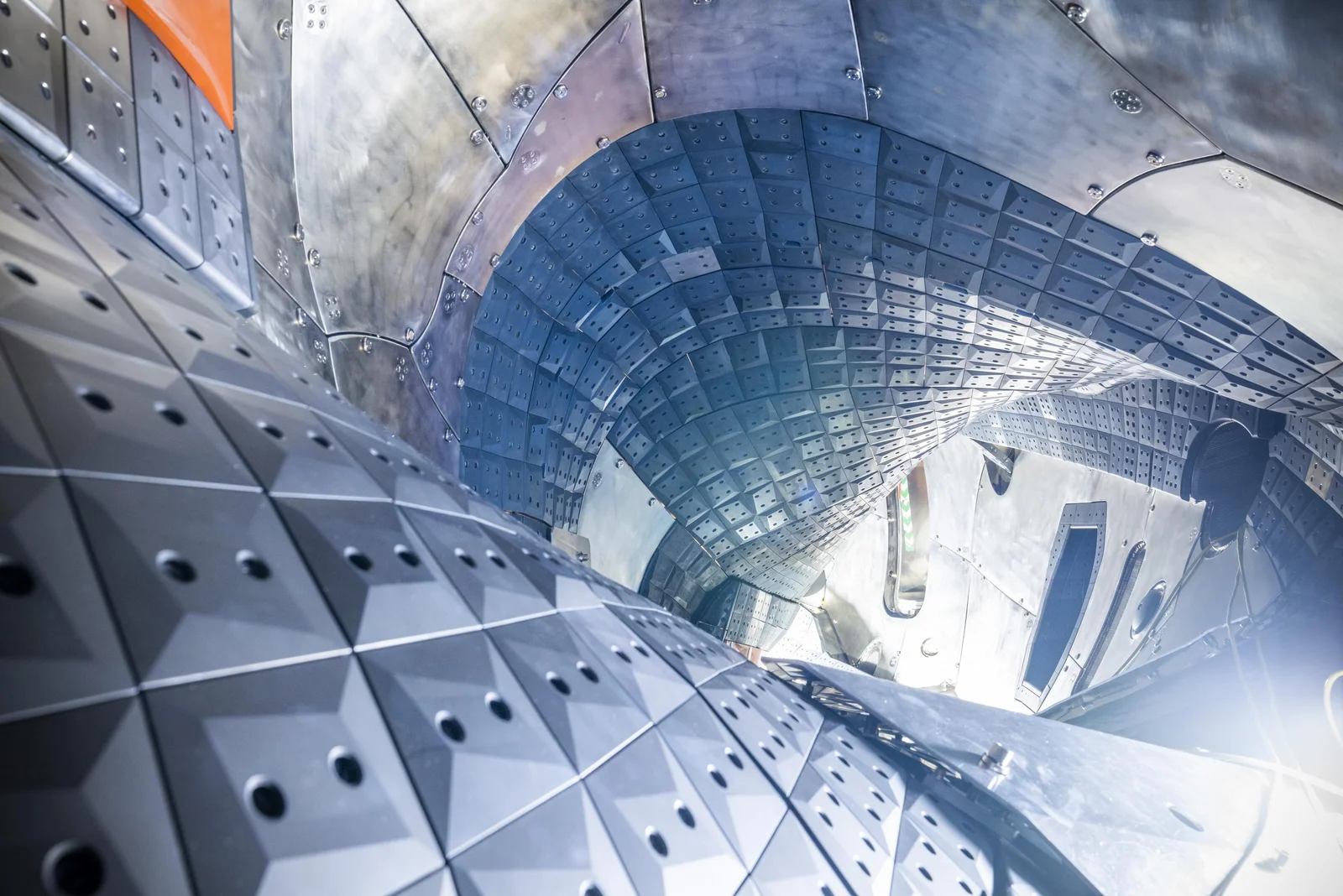
The announced EUR 2 billion total for Alpha is a planned amount, not proof that all financing is secured. Bavaria's contribution of up to EUR 400 million is subject to budget conditions, and planned private contributions depend on approval of public support. The subsequent Stellaris concept must likewise be distinguished as a future power-plant proposal. The vessel photograph shows the existing W7-X, not construction progress on Alpha.
Companies should examine the next problem to validate
Germany's strength lies in experimental machines, university test facilities, equipment manufacturers and power-plant developers each serving different stages. Japanese companies seeking a connection should first distinguish research prototypes, long-duration test infrastructure and equipment for a future demonstrator.
This is editorial analysis, not evidence of a current call or contract award. Announcing collaboration, securing finance, deciding to build and demonstrating performance in operation are separate stages. Looking beyond country names and commercialization target years to who will validate what, and how the results feed the next design, makes industrial progress more tangible.
- IPP: Wendelstein 7-X (undated permanent overview; checked October 13, 2026)
- IPP: cooperation with Proxima Fusion (May 30, 2023; checked October 13, 2026)
- IPP: W7-X experimental result (June 3, 2025; corrected June 30; experiment May 22; checked October 13, 2026)
- IPP: HiPMiB heating development (announced July 27, 2026; began January; checked October 13)
- KIT: FULGOR (updated February 12, 2026; checked October 13)
- IPP: NextGen Fusion Collaborations (undated program description; checked October 13, 2026)
- IPP: memorandum concerning Alpha and related plans (signed and announced February 26, 2026; checked October 13)
Information checked as of:2026-10-13
Country overview checked October 13, 2026 JST. The W7-X result includes the June 30, 2025 correction. The February 2026 Alpha memorandum and July HiPMiB announcement are described as plans, roles and funding conditions, not commercial generation or fully secured financing. All four photographs record existing IPP research machines, components or measurements.