Fusion fuel keeps shrinking in storage
Even without leaks or use, 100 grams of tritium becomes about 57 grams in ten years. Real storage and recovery equipment shows why fuel procurement belongs on a plant’s construction schedule.
Read the Japanese original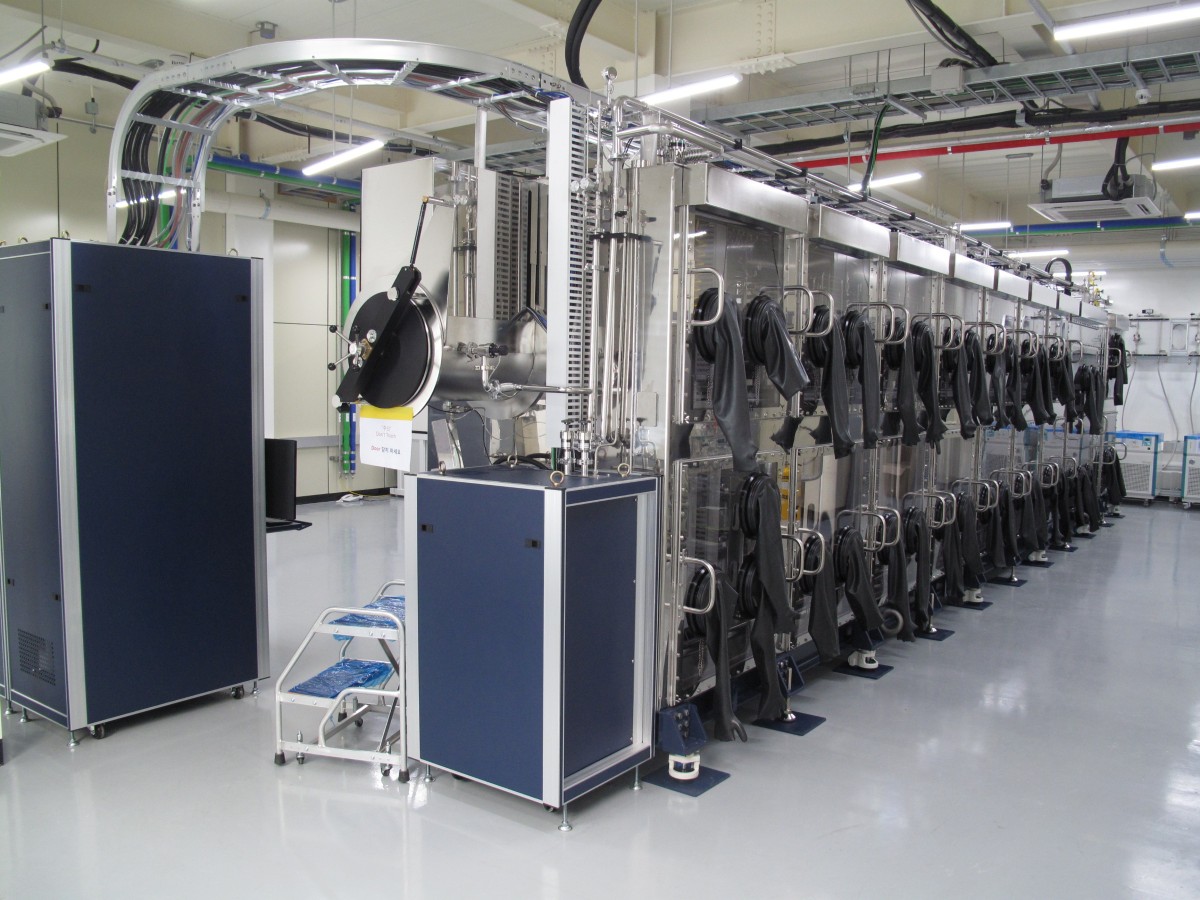
Set aside 100 grams of tritium without using it. Even with no leaks or replenishment, only about 57 grams will remain ten years later. This fusion fuel, used with deuterium, diminishes before a power plant even starts operating. Securing fuel early sounds sensible, but buying sooner also means a longer wait. When should a plant acquire its first fuel inventory?
A sealed container cannot stop atoms changing
Tritium is a radioactive isotope of hydrogen. ITER gives its half-life as approximately 12.3 years. Its nuclei decay into helium-3 during storage. The number of tritium atoms available as fuel falls even if nothing escapes the container.
Using that half-life and assuming no replenishment, withdrawal or leakage, 100 grams becomes 94.5 grams after one year, 75.4 grams after five years and 56.9 grams after ten years. The calculation is 100 × 2^(−years/12.3). These figures describe the tritium remaining, not the change in the total weight of the container and its contents.
Equipment to store fuel—and recover it
Fuel is not simply left sitting in gaseous form. At a Korean test facility described by ITER in 2013, researchers used hydrogen and deuterium to investigate storage by absorption into metal. Changing the metal’s temperature controls absorption and release. The lead photograph shows the glovebox used for these tests.
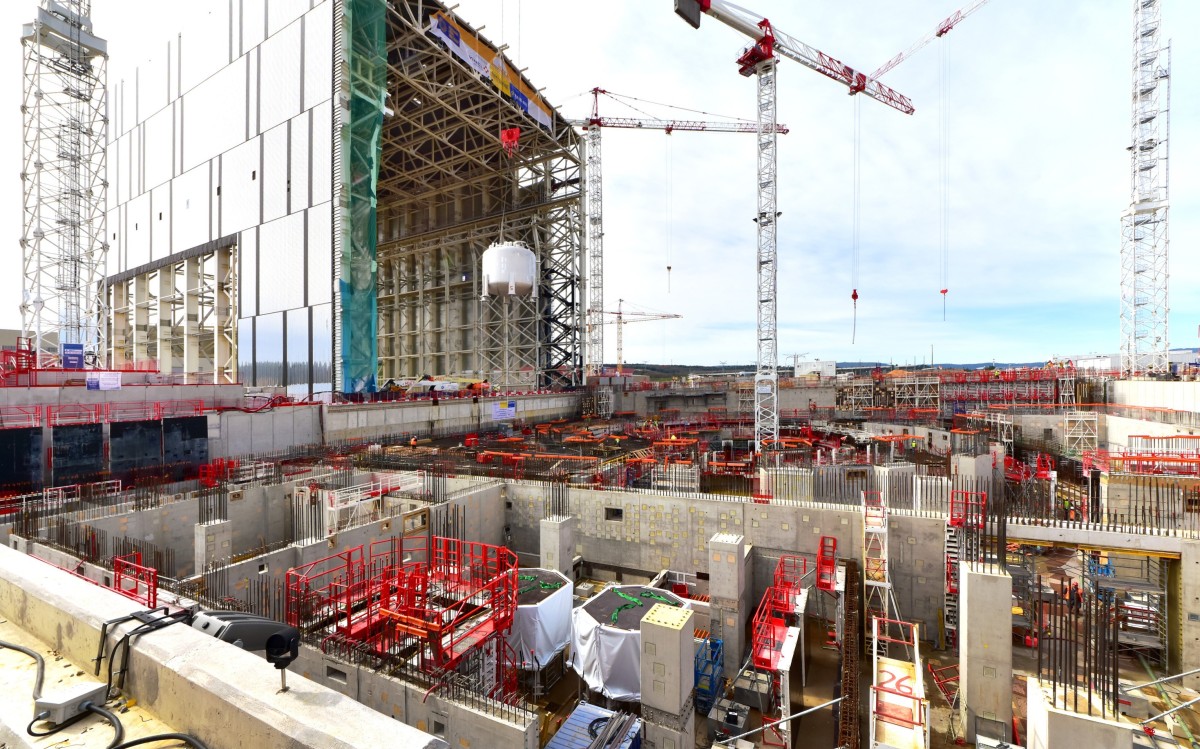
Containment also extends beyond the storage vessel. ITER is building a water detritiation system to remove tritium from water recovered from its equipment. A 20-cubic-metre tank installed in 2016 is part of that system. Radioactive decay in storage and leakage from equipment are separate problems; inventory management must account for both.
Replacing only what burns is not enough
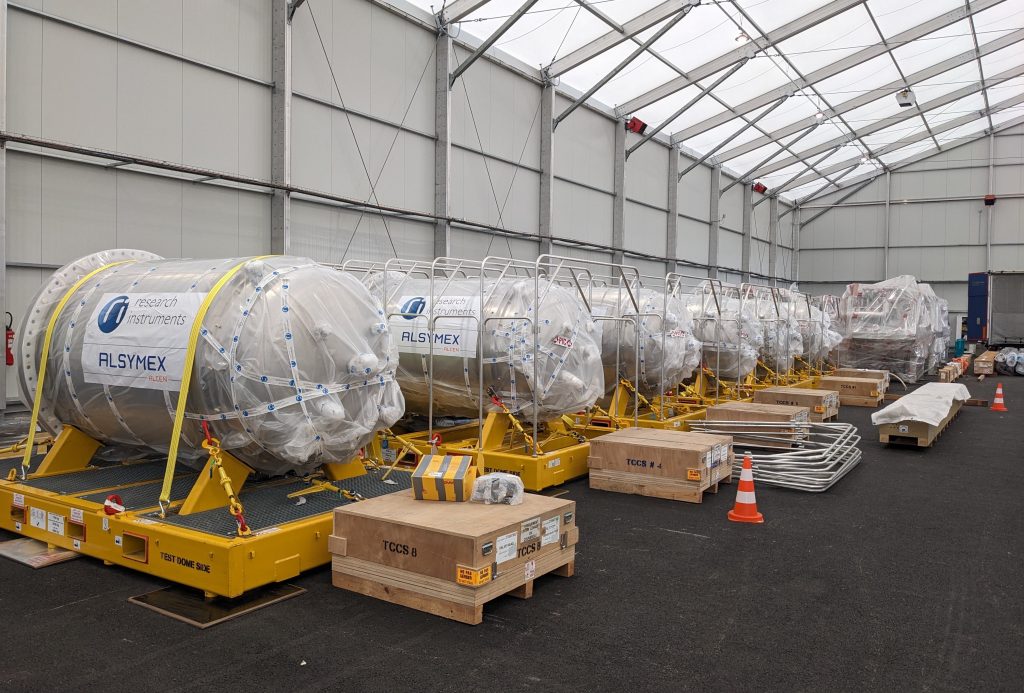
In an experimental device, unreacted fuel is extracted through the exhaust system, processed and reused. Europe’s cryopumps for ITER are among the components involved in that fuel cycle. Repeated recovery does not stop the tritium itself from decaying.
The US Department of Energy explains that deuterium is widely available in seawater, whereas tritium is scarce in nature and future power plants will need a reliable supply chain. Producing tritium by exposing lithium to neutrons is one candidate for supporting that supply. Producing, recovering and continuously using fuel at power-plant scale still presents research challenges.
Fuel has a clock of its own
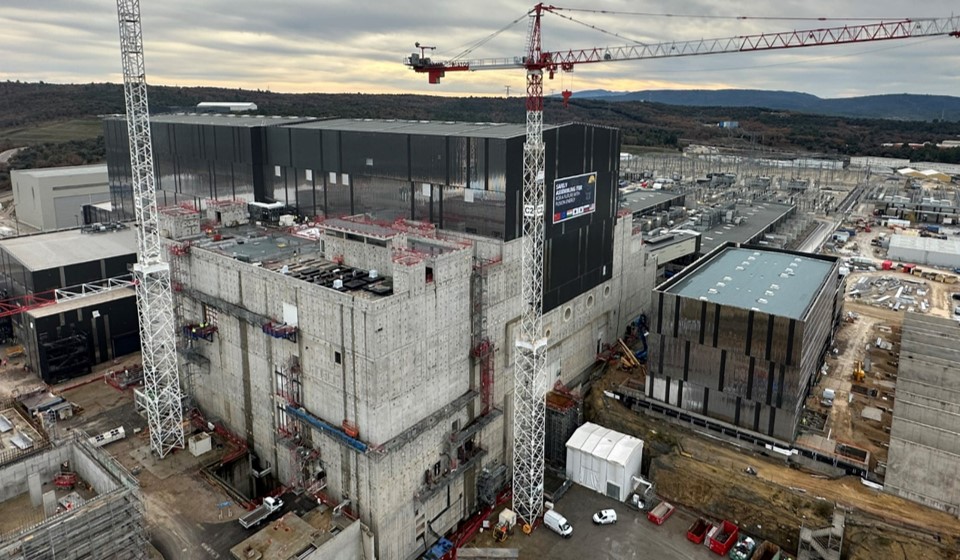
ITER’s Tritium Building will house equipment for fuel storage, processing and recycling. F4E reported completion of its civil engineering works in February 2024. Completion of the building and operation of the fuel systems are distinct milestones, each requiring verification.
For FI, the key issue is that fuel procurement and the start of operations must be planned together. Buy early to guard against shortages, and the inventory declines while it waits. Wait until just before operation, and availability at that moment becomes the question. In the calculation above, simply waiting five years means roughly a quarter of the original tritium is no longer tritium. The atomic clock will not wait for a construction schedule.
- ITER: Safety and environment
- DOE: Deuterium–tritium fusion fuel
- ITER: Reversible fuel storage tests
- ITER: Water detritiation tank installation
- F4E: Tritium Building civil engineering
- F4E: ITER cryopumps
Information checked as of:2026-11-16