JT-60SA checked 530 locations for leaks
A 2020 commissioning record separates 260 vacuum-vessel checks from 270 cryostat checks. Pressure and tracer-gas measurements answer different questions.
Read the Japanese original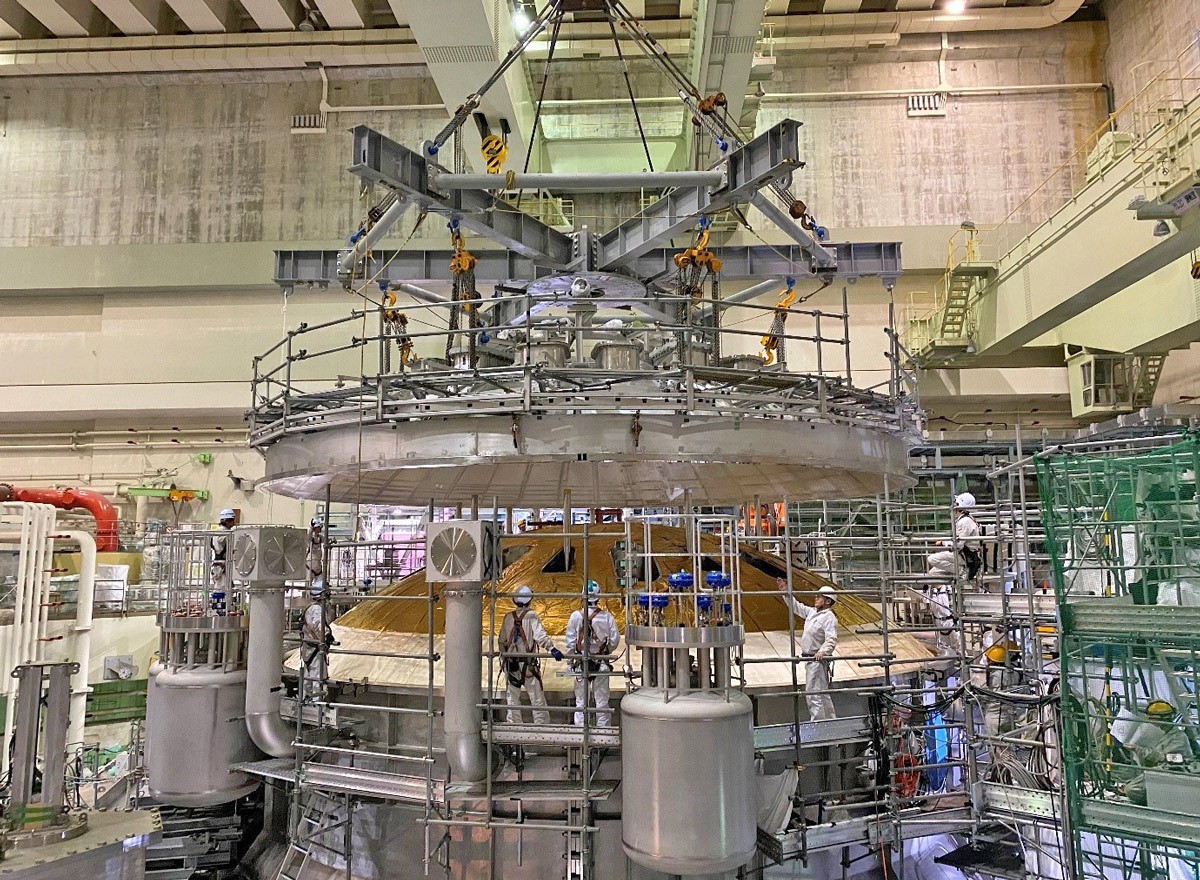
Before JT-60SA could make plasma, its team checked 530 locations for leaks. QST's November 2020 commissioning record divides them into 260 on the vacuum vessel and 270 on the cryostat surrounding the superconducting equipment. Evacuating a large machine involves more than starting pumps and watching a pressure gauge.
530 test locations, not 530 defects
QST's commissioning record reports that the tests found no leaks at those locations. The helium coolant piping was also checked. The number describes the extent of the inspection, not a tally of faults.
The plasma space and the equipment that keeps the magnets cold have different functions. Their boundaries must be checked before the machine proceeds through cooling and energisation tests.
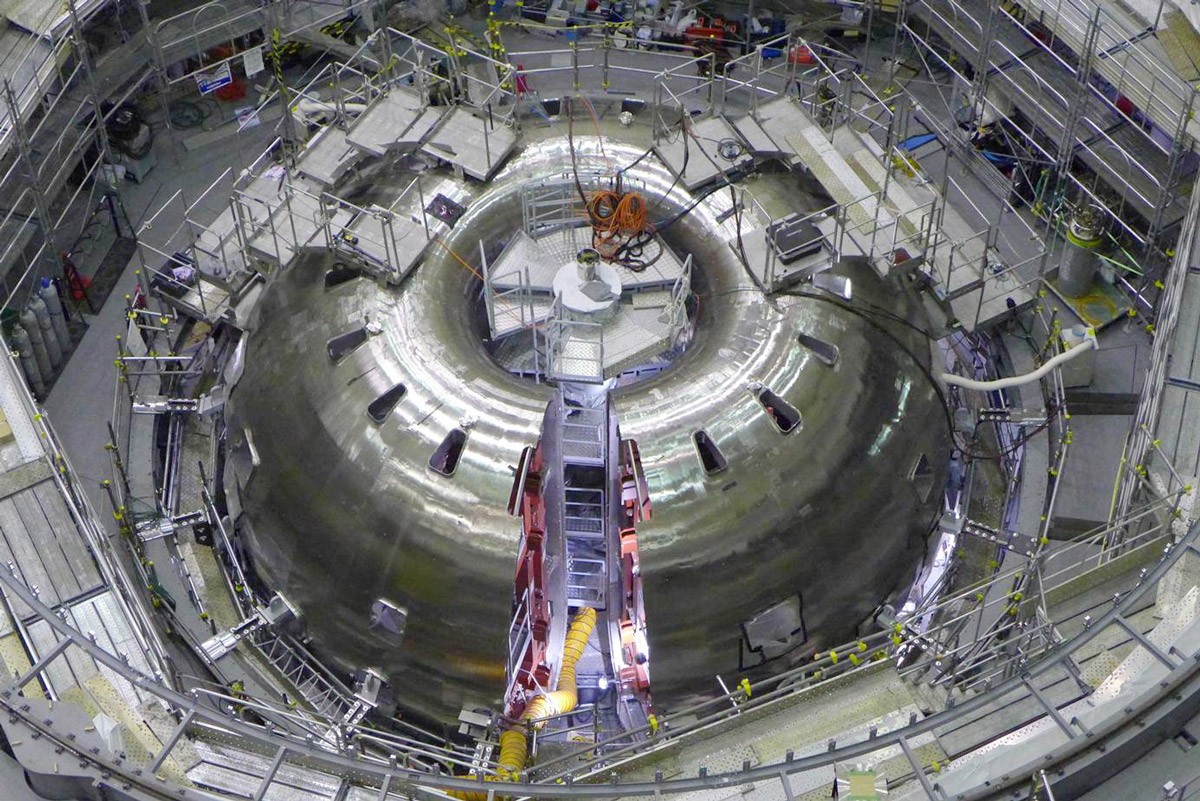
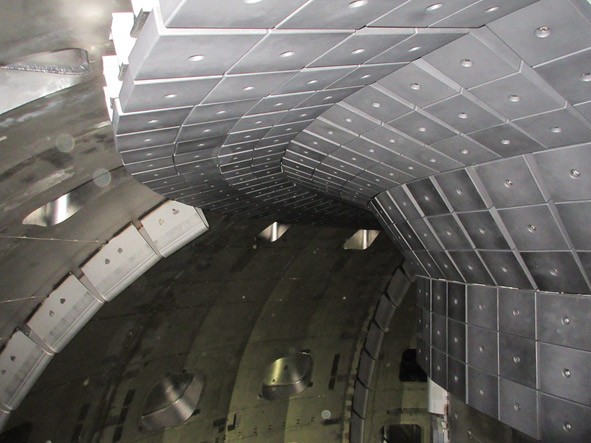
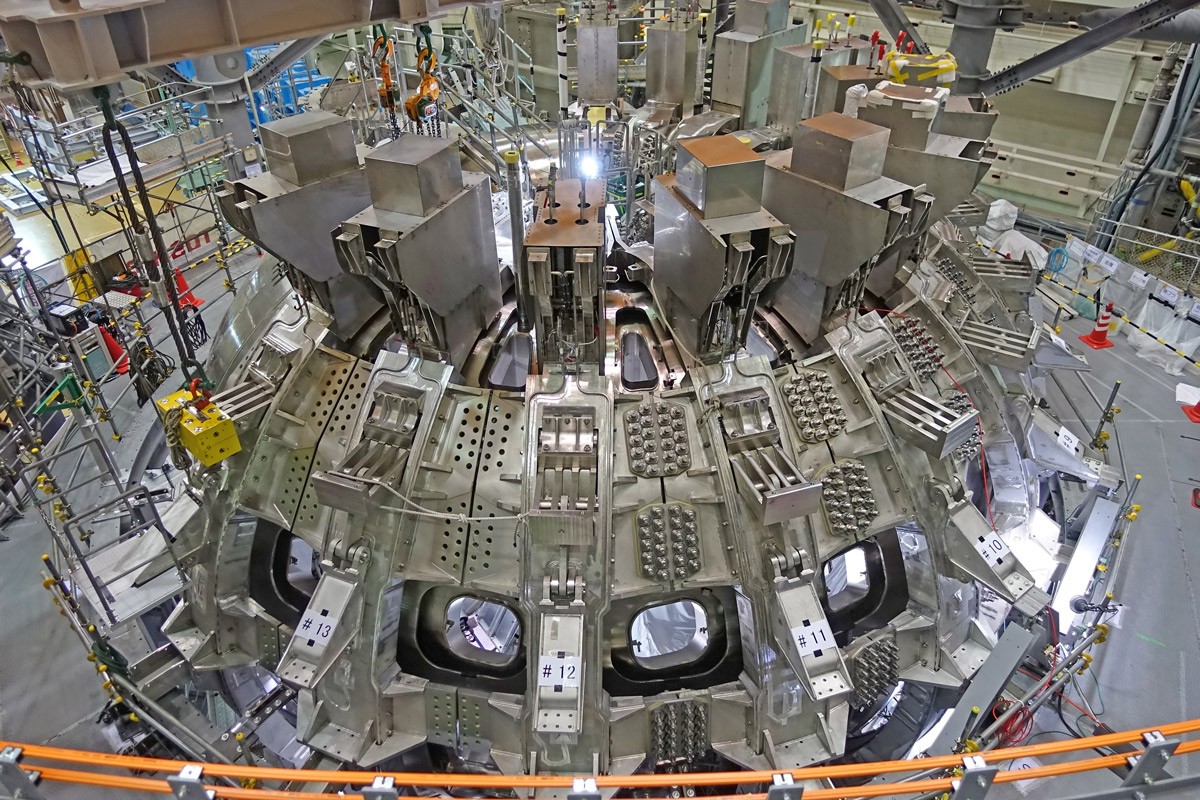
The photographs are historical JT-60SA manufacturing and assembly images. They do not show leak testing or its detectors.
A rising pressure has more than one possible cause
Gas can enter through a leak, but it can also emerge from surfaces inside an evacuated vessel. Leybold's introduction distinguishes leakage from outgassing and explains that both can occur together.
A pressure reading describes the vessel's condition without necessarily identifying the gas's origin. Repairing a joint and removing moisture from a surface address different causes.
Following a tracer gas
One common method uses helium as a tracer. Leybold's explanation of mass-spectrometer leak detectors shows helium being sprayed outside an evacuated component. Gas entering through a leak is detected inside; the mass spectrometer selects the helium signal from the gas mixture.
The response to an intentionally supplied tracer helps locate a leak. This is a general measurement principle. QST's cited record does not establish that identical equipment or procedures were used at all 530 locations.
From assembled hardware to operating condition
Leak testing is followed by other vacuum preparation. QST's July 19, 2023 account explains how heating the vacuum vessel to 200°C drives off moisture and other impurities. Pressure temporarily rises during baking and falls further afterwards. Baking and leak testing serve different purposes.
FI's interest is in the work between completed assembly and operational readiness: checking boundaries and internal conditions, then demonstrating that vessels, pipes and connections are ready for the next stage. The 530 locations make that work tangible.
- QST: JT-60SA commissioning, November 2020 leak tests
- Leybold: Basics of Vacuum Leak Detection
- Leybold: Mass-spectrometer leak detectors
- QST: Vacuum-vessel baking, July 19, 2023
Information checked as of:2026-11-29
530 is the number of test locations in November 2020, not defects. QST's record does not specify the procedure at each location; the Leybold material explains a general principle. Photographs show assembly in 2015, 2017 and 2020, not a new 2026 test.