QST opens joint tokamak research call: 17 topics for universities and industry
On November 27, QST released its FY2027 joint tokamak core plasma research call, inviting researchers at Japanese universities and companies to address 17 topics in plasma physics and device engineering. Applications close December 17 at 17:30 JST.
Read the Japanese originalAnnouncement date:2026-11-27
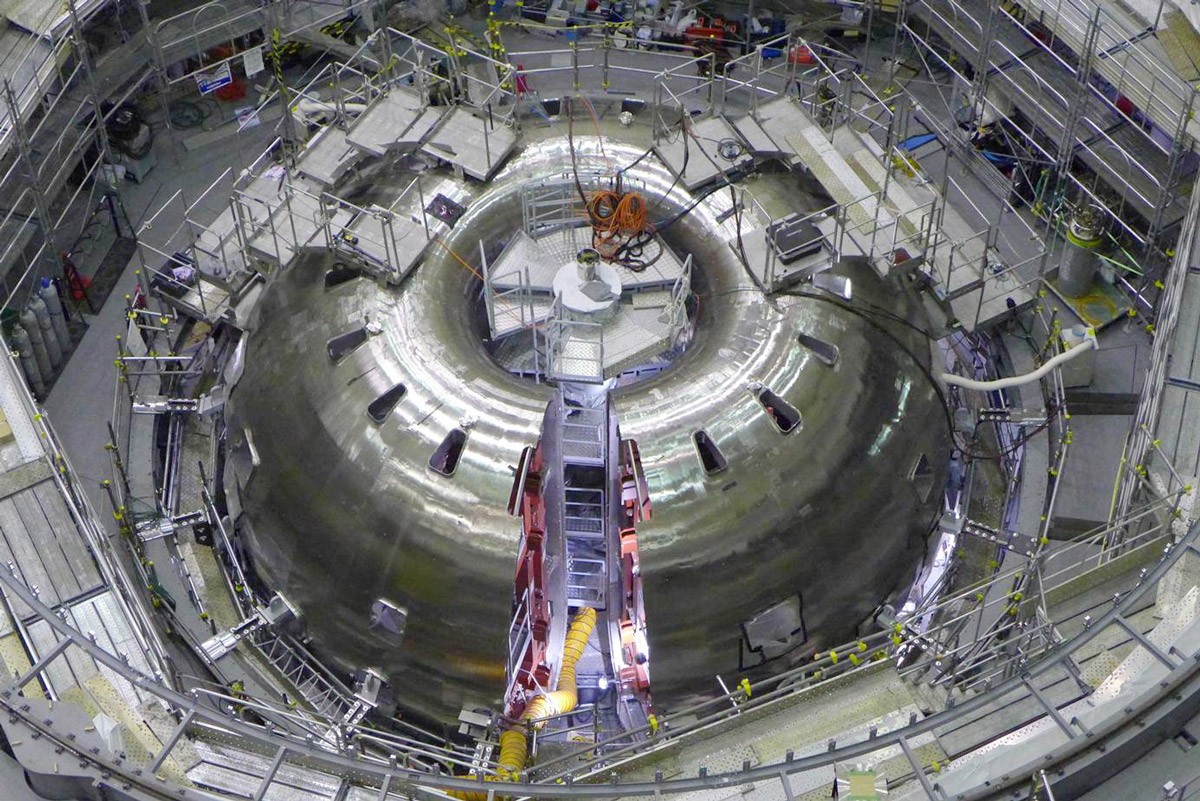
Japan’s National Institutes for Quantum Science and Technology (QST) opened its FY2027 joint tokamak core plasma research call on November 27. Researchers at companies in Japan, as well as universities, can apply to work on JT-60SA and ITER-related research. The 17 topics range from plasma physics to superconductivity, heating systems, control and diagnostics. Applications close December 17 at 17:30 Japan time.
Two routes: plasma physics and device engineering
Category A covers 8 topics, including analysis of JT-60SA and JT-60U experimental data and ITER physics questions. These include plasma transport, instabilities, heat and particle control at the divertor, interactions with wall materials, and AI-assisted diagnostic data analysis.
Category B covers 9 topics: superconductivity, device engineering including remote maintenance, power supplies, NBI and RF heating, diagnostics, plasma control, radiation effects, and large-volume data handling. Cross-disciplinary proposals are welcome.
Eligibility and timeline
Eligible applicants include researchers employed at universities, private-sector organizations and public research institutions in Japan. Residency and other conditions apply; university principal investigators must hold at least an assistant professor position. Applicants must consult the relevant research and technical staff before applying. New projects run for 1–3 years, with selection notifications expected around March 2027. Research involving JT-60SA also requires an application to its joint Japan–Europe experimental team. QST’s call documents detail the application procedure and conditions.
Information checked as of:2026-11-27
Publication of the call, not selection results or equipment orders.