Balloon helium has another job in research magnets
From nitrogen's normal boiling point near 77 K to helium's near 4 K, coolant selection starts with material properties and ends with a working installation.
Read the Japanese original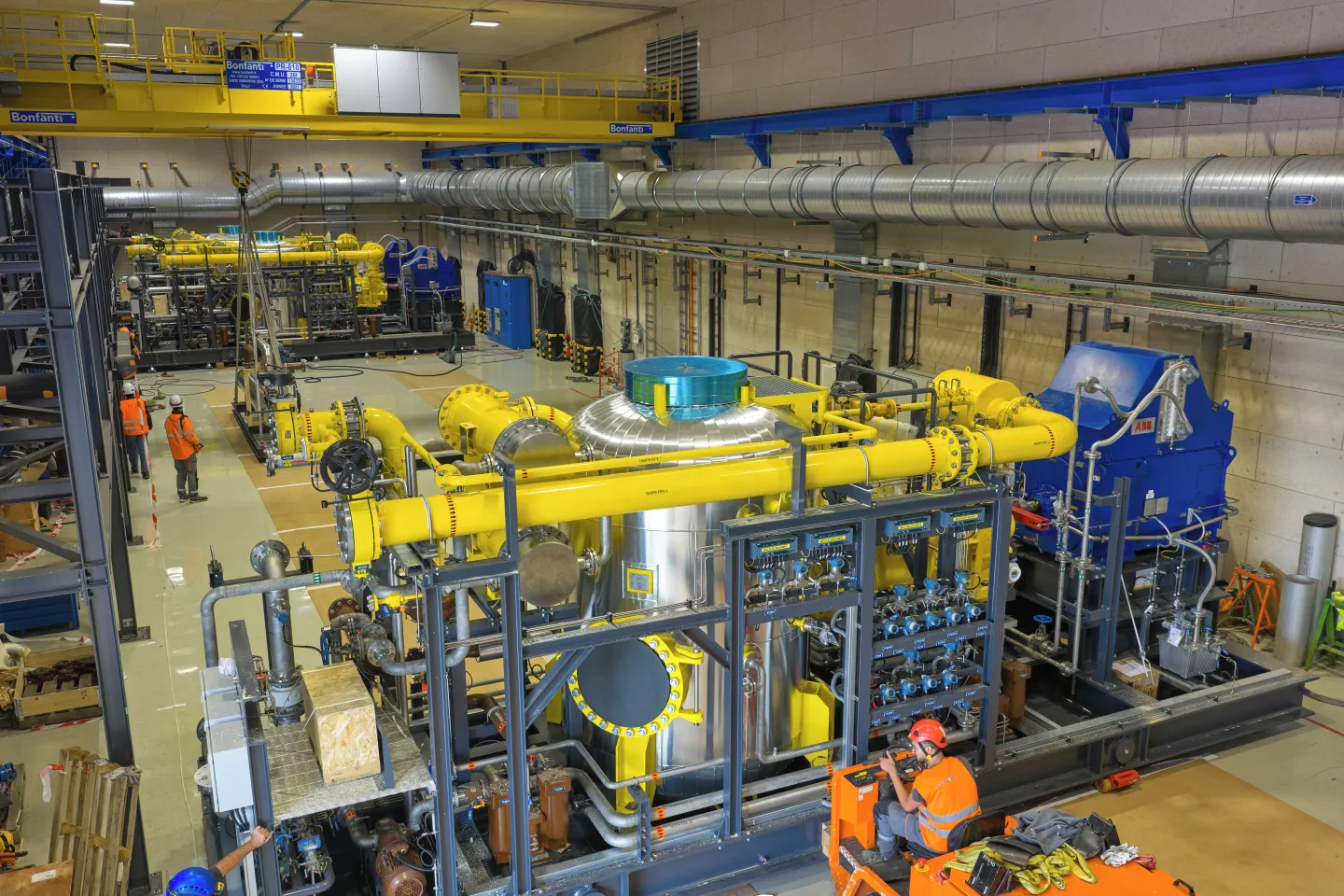
Helium can lift a balloon and serve as a liquid coolant for a giant magnet. Freezing water is nowhere near cold enough for this task. Some components need temperatures far below those reached with liquid nitrogen. Before comparing coolant prices, engineers must ask whether a substance can be used as a liquid at the required temperature.
Below the reach of liquid nitrogen
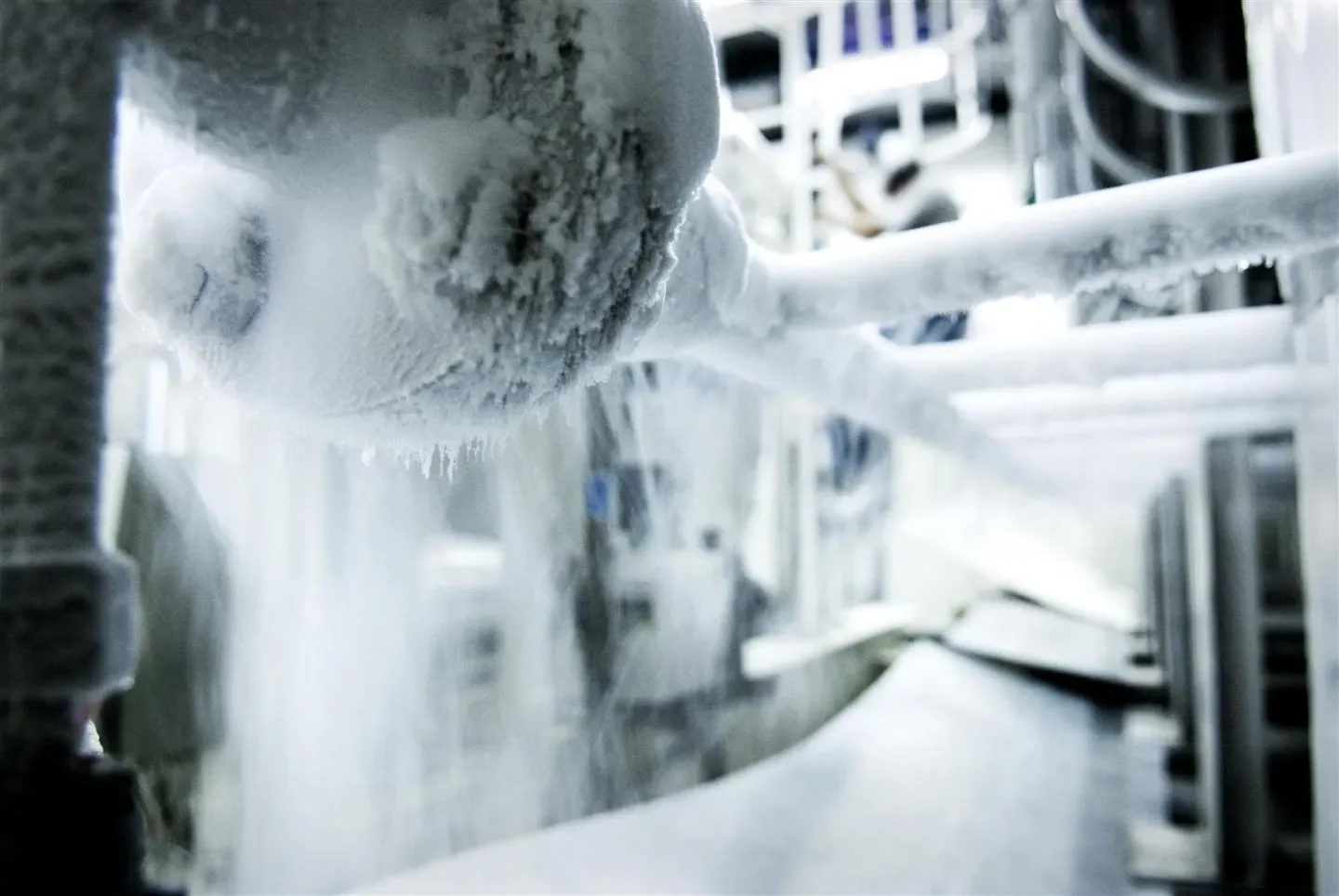
NIST lists normal boiling points of 77.36 kelvin for nitrogen and 4.21 kelvin for helium-4: approximately −196°C and −269°C. Both are cryogenic temperatures, but the fluids cannot simply exchange jobs. For a component operating at a few kelvin, liquid nitrogen is warm. The 4.21 K figure is a normal boiling point, not a boiling temperature at every pressure. NIST tables
Choosing a liquid for the magnet
The main coils of CERN's LHC magnets use niobium-titanium superconductors. Keeping the coils cold allows the large currents needed to bend particle trajectories. The magnets, rather than the particle beams themselves, are the cooling target. CERN electromagnets
CERN gives 1.9 K as the main magnets' operating temperature. Here the system also uses helium's superfluid properties, including its ability to transport heat effectively. The useful property is not simply a low temperature: the fluid must carry incoming heat away while maintaining the required conditions. CERN cryogenics

A coolant needs a whole installation
Helium does not become cold by itself. CERN's HL-LHC installation includes compressors, cold boxes containing heat exchangers and expansion turbines, and pipes connecting surface and underground equipment. The photographed machinery produces and distributes those cooling conditions. Compressor installation
In December 2025, CERN reported delivery of two new cold boxes, each 16 metres long. This is a historical installation record, not a new operating milestone today. The beam-pipe photograph shows part of the accelerator, not the inside of a liquid-helium circuit. Cold-box record
Fusion offers a comparison: ITER plans to cool its magnets with supercritical helium at around 4 K. The same element can be used in different states depending on temperature and pressure; the LHC's 1.9 K is not a universal requirement for superconducting equipment. ITER cryogenics
A balloon makes use of helium's low density. Cryogenic machinery makes use of other properties. For suppliers, the task extends from a gas vessel to the refrigerators, pipes and heat exchangers that maintain the chosen conditions in a real installation.

- NIST: normal boiling points of cryogenic fluids
- CERN: cryogenics and helium properties
- CERN: superconducting electromagnets
- CERN: HL-LHC helium compressor delivery (16 October 2025)
- CERN: HL-LHC cold-box delivery (17 December 2025)
- ITER: cryogenics (comparison)
Information checked as of:2026-11-21
Science explainer based on NIST tables and CERN documentation. Normal boiling points, operating temperatures and fluid states are distinguished. The 2025 deliveries are historical records. ITER is a comparison. CERN archive photographs show equipment, not the liquid itself.