Do not discard helium: recovery and reuse work that supports fusion
QST's October 14 announcement of an inter-institutional helium loop offers a way to examine industries around fusion. CERN and ITER cryogenic facilities illustrate practical issues of inventory, quality, reliquefaction and handovers that recovery volumes alone cannot explain.
Read the Japanese originalAnnouncement date:2026-10-14
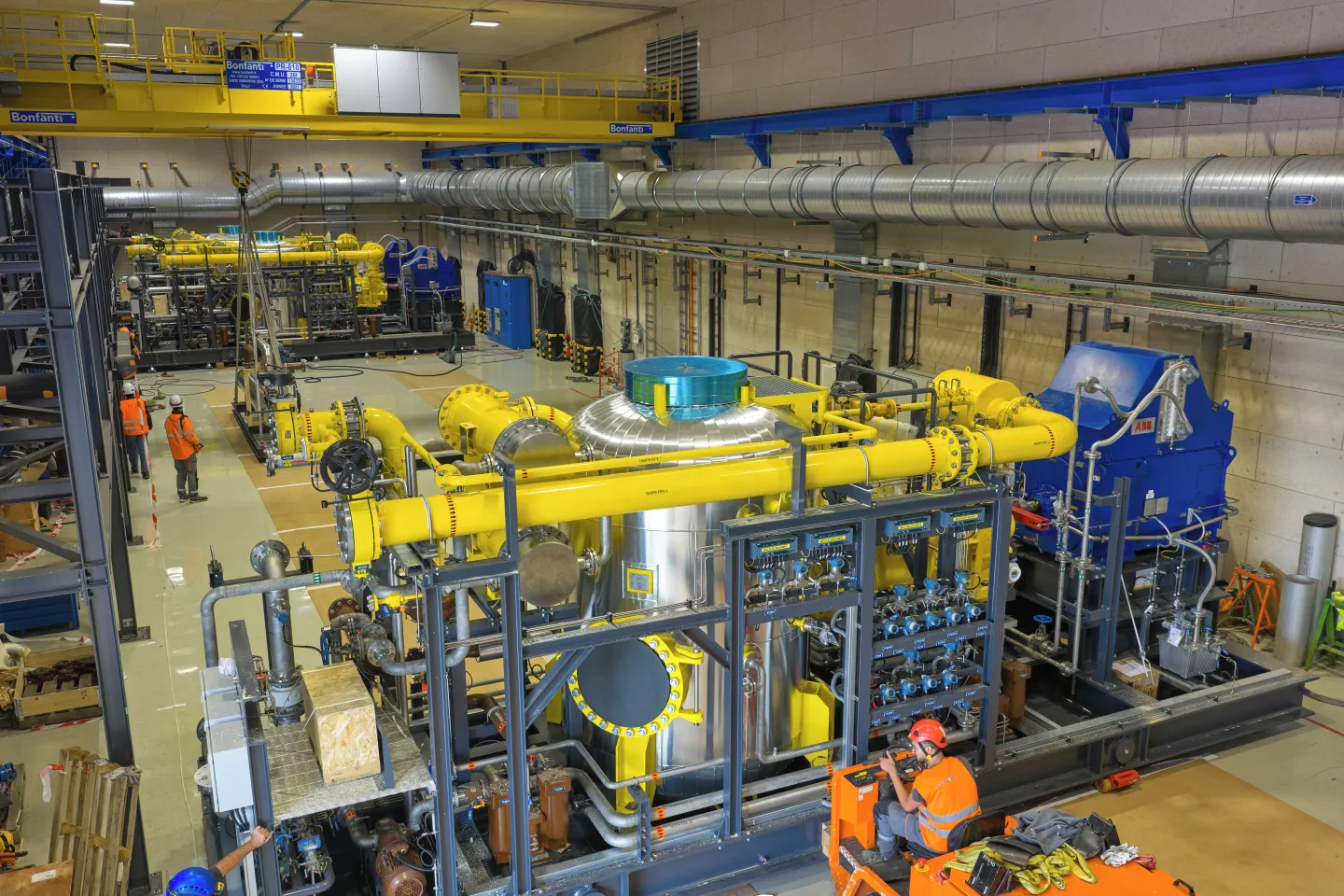
Liquid helium is purchased to cool a research machine. Beyond that purchase lies work to collect evaporated gas, return it to another facility and turn it back into usable liquid. When considering industries around fusion, look not only at refrigerator performance but also at the route by which this resource comes back.
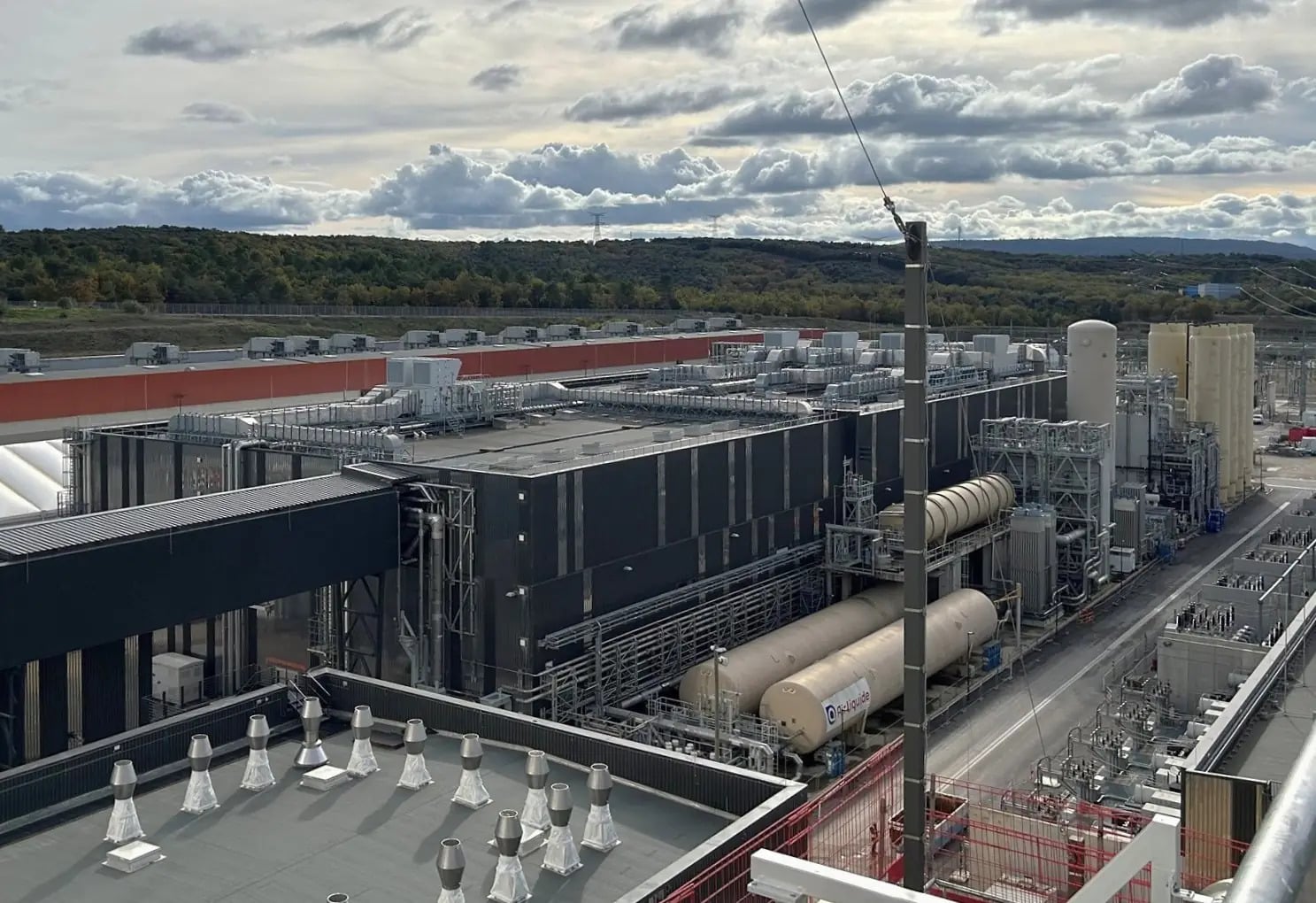
Starting with QST's inter-institutional initiative announced on October 14, 2026, this article examines what helium recovery, storage and reliquefaction mean for long-term use of research equipment. The photographs show related cryogenic equipment at CERN and ITER, not the site of QST's latest initiative.
Return gas across institutional boundaries
According to QST's October 14 announcement, the cryogenic laboratory in Chiba University's Faculty of Science, the nuclear physics experimental group in Osaka University's Graduate School of Science Department of Physics, and QST began full-scale liquid helium supply and evaporated-gas recovery in summer 2026. Helium used in shared experiments is collected and reliquefied at Chiba University for reuse.
This is not an achievement in fusion reactor operation. It concerns nuclear physics experiments using QST's shared facilities. Its significance lies in establishing a recovery flow alongside supply between an institution with liquefaction equipment and user institutions. It shows an alternative to installing new liquefaction equipment at every point of use: connect existing facilities.
The announcement does not provide enough information to compare annual recovery volumes or rates, total costs including transport, or electricity needed for reliquefaction. Starting a circulation system and establishing equivalent economics at every facility are different matters.
Fusion also has an inventory of cooling helium
The first connection to fusion is equipment cooling superconducting systems and similar components. ITER's description of cryogenics combines helium refrigerators, piping and distribution systems to supply low temperatures to magnets and vacuum pumping systems. The magnets are planned to use helium at approximately 4 K, and the helium inventory subject to storage and recovery is described as 25 tonnes.
Four kelvin is an absolute temperature, approximately −269°C. The helium discussed here cools equipment; this is not about recovering helium produced by fusion reactions as a commercial product. The 25 tonnes is ITER's stated equipment inventory, not annual consumption or a universal requirement for every fusion machine.
How much cooling capacity is needed and where the required helium should be held, in what state, are different questions. Selecting a refrigerator does not settle when a machine is filled, where helium is stored during shutdown or how it is returned at restart.
Connect cooling operations with shutdown periods
Particle accelerator operation provides a comparison. CERN's explanation of cryogenics describes the closed helium circuits cooling LHC superconducting magnets. Circulation in normal operation supports a design that does not assume the resource will simply be discarded outside the facility. A closed circuit does not, by itself, establish zero losses at all times.
Major maintenance does not necessarily involve keeping everything cold. CERN's August 5, 2026 account of warming up the LHC describes returning helium to the surface for liquefaction and storage during a long shutdown, then reusing it at restart. Inventory management across a long shutdown is part of the facility alongside the cooling circuit used in operation.
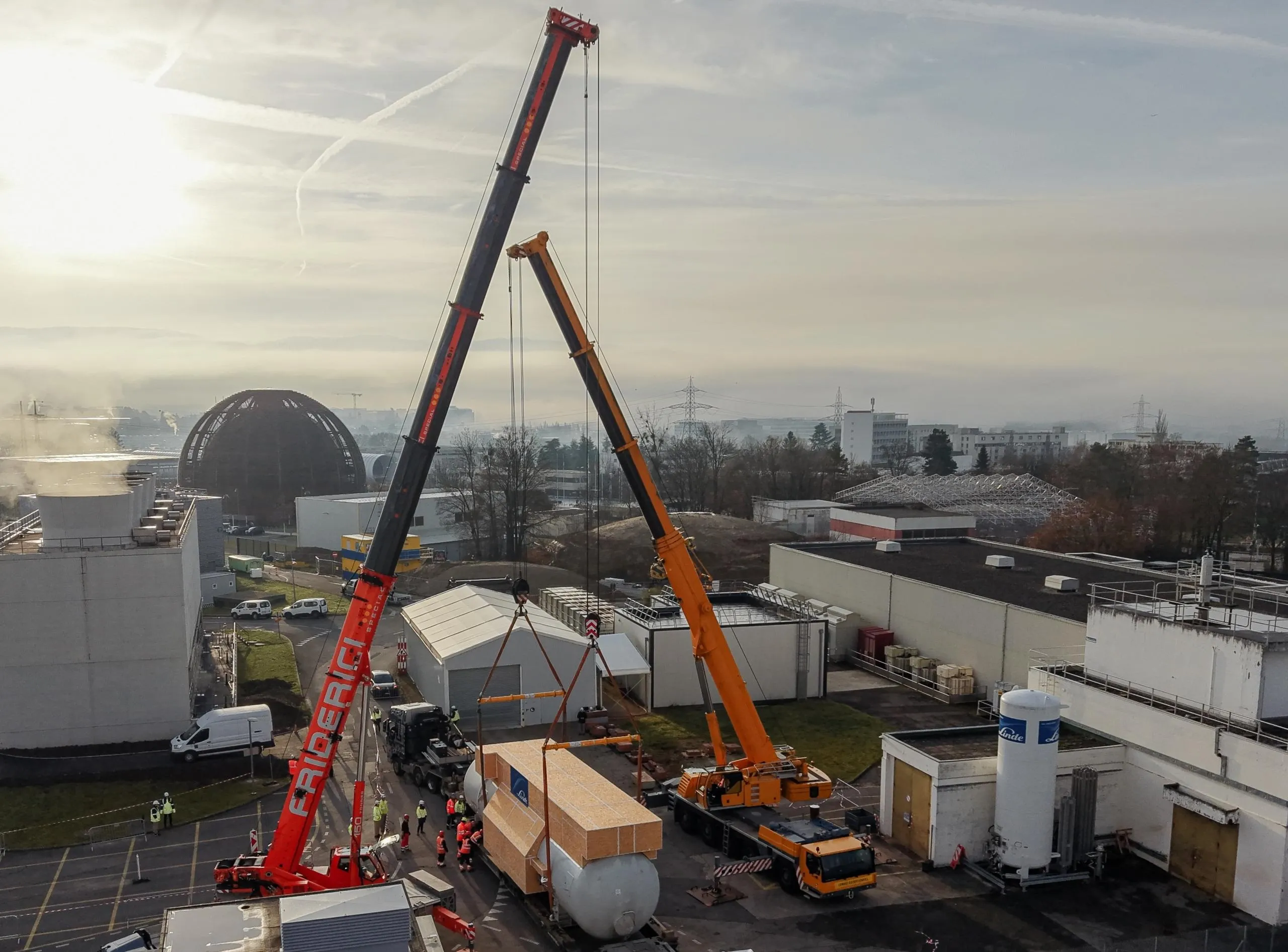
The LHC is not a fusion machine, and its temperatures and schedule cannot simply be transferred. Nevertheless, the point that resource management continues when operation stops is useful when considering future fusion facilities. The CERN photographs should likewise be viewed as examples of real equipment providing related capabilities.
Measure recovery separately from readiness for reuse
The following is editorial analysis of business issues drawn from public examples, not procurement specifications published by QST or ITER.
Evaluating a circulation system benefits from tracking purchased quantities, quantities delivered to the machine, quantities returned and quantities restored to usable condition over the same period and under the same conditions. A single high recovery-rate figure does not reveal which process boundaries were counted.
For example, clarify whether transport differences are included, how residues in containers are treated, and on what basis liquid and gas volumes are compared. Different units or reporting periods between facilities make improvements difficult to compare. Measurement accuracy and recordkeeping may be unglamorous, but they support contracts and operations.
Acceptance conditions for returned gas should also be established in advance. Without specified quality requirements, inspection methods, treatment of nonconforming gas and time to reuse, a return mechanism may not produce supply in time for the next experiment. Generic numbers should not be imposed without checking each facility's specifications.
Design the handovers before selling equipment
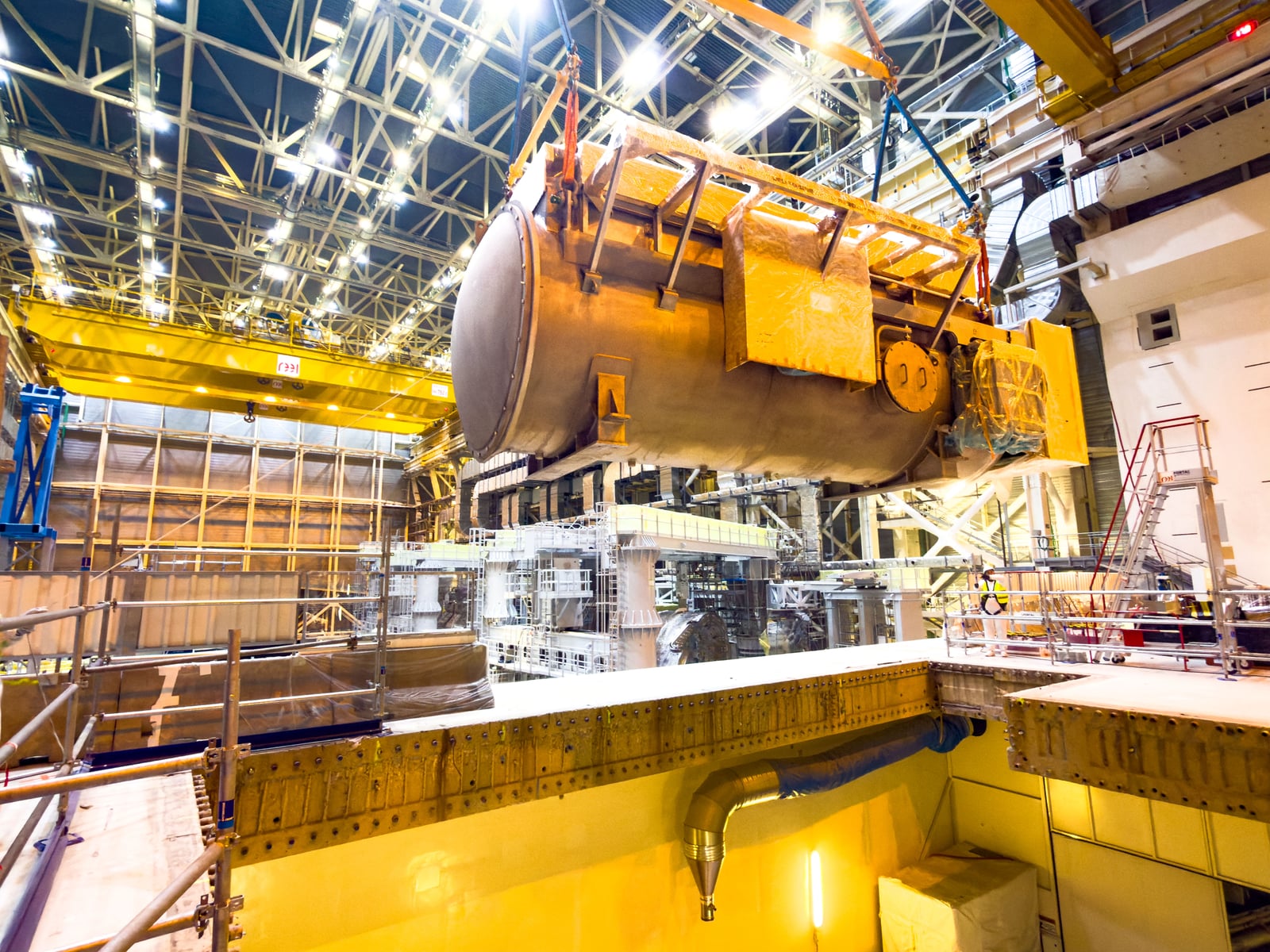
The ITER valve box shown is real equipment distributing cryogenic fluid for thermal shielding. It is not a photograph of a gas recovery business, but illustrates the role of connecting multiple components in a cryogenic system.
A company's first question cannot simply be which machine to supply. Map who collects gas, who manages containers, where quantity and quality are checked, and when resupply occurs. Across institutions, responsibility for handovers can matter as much as equipment performance.
Economics cannot be judged solely by reduced helium purchases. Recovery equipment, storage, transport, inspection, reliquefaction and maintenance costs must be considered together against experimental frequency and recovered volume. These cost categories form an assessment framework; they do not estimate unpublished costs of this initiative.
It is also worth checking how long reserve stocks can support operations if liquefaction or transport stops. A low price and the ability to perform an experiment on its scheduled date are different sources of value. Shared-facility models also need discussion of allocation when users' schedules overlap and coordination of maintenance periods.
Safe handling and transport conditions must be checked by facilities and specialist providers. An example from another facility does not establish that the same containers or procedures can be used unchanged.
Industries around fusion include keeping facilities running
QST's announcement does not report achieved fusion electricity generation. Even so, circulating a valuable resource between institutions shows concretely the work that supports large research facilities.
Companies considering fusion can compare their capabilities not only with core reactor components but with each stage of receiving, measuring, returning and restoring resources for reuse. This does not immediately guarantee new orders or a market size. The scope of a proposal becomes clear only after discussing operating plans, existing equipment and required quality and quantities.
Looking beyond how low a temperature cooling technology can achieve to whether the required resource can be returned on the required day provides a starting point for businesses that enable long-term use of experimental machines.
- QST: supplying liquid helium to external institutions and recovering evaporated gas (October 14, 2026)
- ITER: Cryogenics
- CERN: Cryogenics — Low temperatures, high performance
- CERN: warming the LHC for a long shutdown and recovering and storing helium (August 5, 2026)
- CERN: delivery of HL-LHC compressors (October 16, 2025; headline photograph)
- CERN: HL-LHC cold box (December 17, 2025; body photograph)
- ITER: construction image gallery (cryogenic equipment and valve box photographs)
Information checked as of:2026-10-19
Business and technology explainer prompted by news. QST announcement: October 14, 2026; full-scale circulation began in summer 2026. CERN warm-up article: August 5, 2026. Primary sources checked October 19, 2026 JST. QST's shared nuclear physics experiments are not treated as fusion achievements. ITER's 25 tonnes is its stated equipment inventory. Cost, quantity, quality and handover questions are editorial analysis, not procurement specifications or guaranteed orders.