JT-60SA's heating beam enters without electric charge
NBI first accelerates charged particles, then converts them into neutral atoms before injection. JT-60SA illustrates how acceleration, neutralization and plasma heating fit together.
Read the Japanese original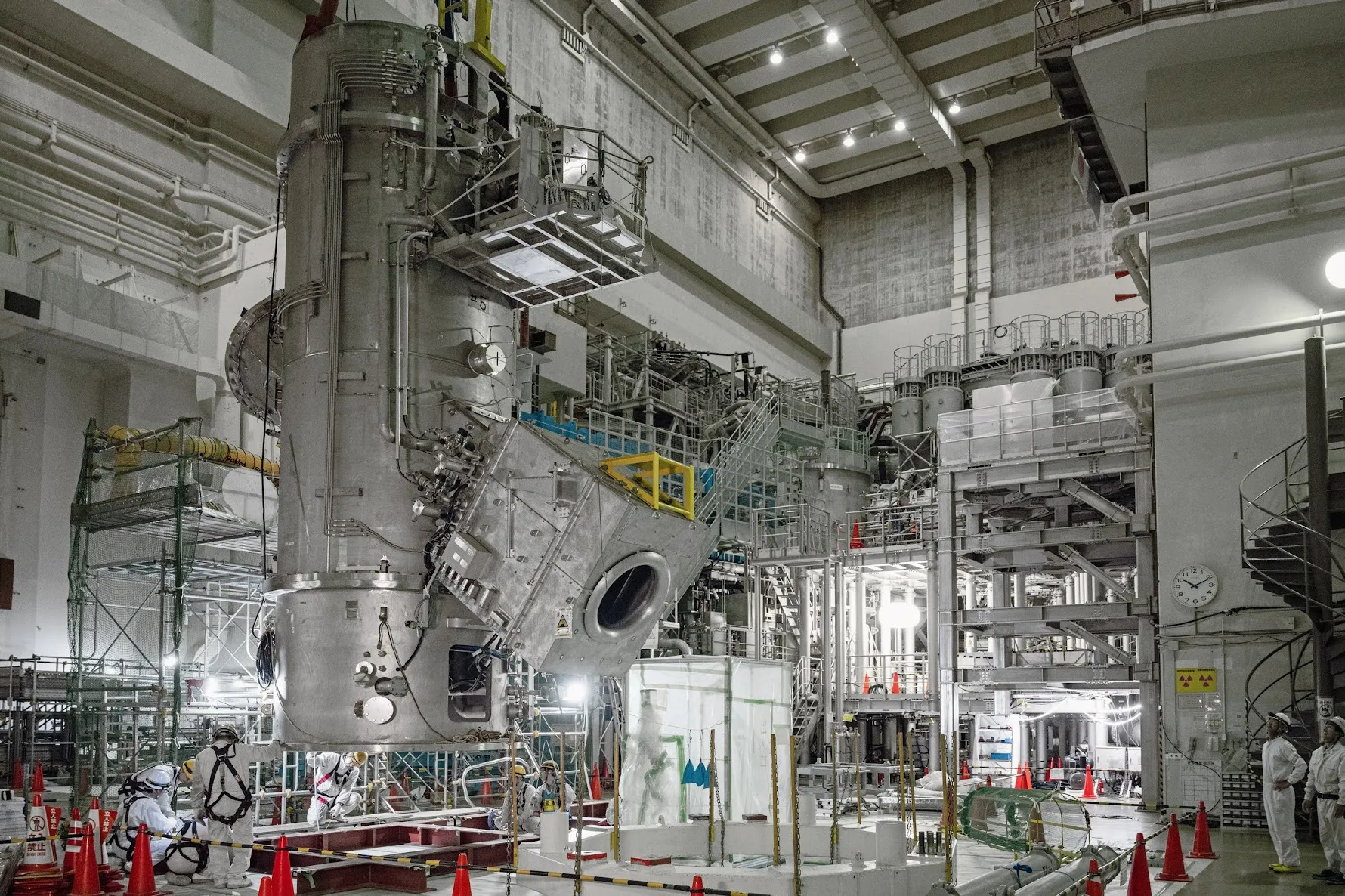
Particles are accelerated using electric fields, then deliberately stripped of their net charge before entering the plasma. That is the sequence used in neutral beam injection, or NBI, on machines such as JT-60SA. Charge helps accelerate a beam, but it also lets the confining magnetic field bend its path. Reaching the plasma requires a change along the way.
Acceleration and entry need different conditions
An electric field can accelerate charged particles. A magnetic field can bend their motion. The field that confines a plasma also changes the trajectory of incoming ions.
NBI separates these tasks. Ions gain speed first, then pass through gas that converts some of them into fast neutral atoms. Remaining ions are removed before the atomic beam enters the device. Neutral atoms are not neutrons: the injected particles are atoms of hydrogen or deuterium.
Inside the plasma, atoms become ions again
Collisions ionize the fast atoms inside the plasma, allowing the magnetic field to confine them. Further collisions transfer their energy to surrounding particles. This heating delivers particle kinetic energy rather than blowing hot gas into the vessel.
NBI can also drive plasma current. Where the atoms become ions and how they transfer momentum matter. Entry alone does not establish that the desired heating or current profile has been produced.
At higher energy, negative ions offer an advantage
Neutralization does not convert every particle. The conversion of positive ions into atoms becomes less efficient at high beam energy. For high-energy systems, a useful alternative is to accelerate negative ions carrying an extra electron, then remove that electron.
This choice brings its own engineering demands: sufficient ion production, high-voltage insulation, beam alignment and equipment to intercept residual ions. Beam energy must be assessed alongside losses through neutralization and delivery.
Equipment photographs and beam results show different stages
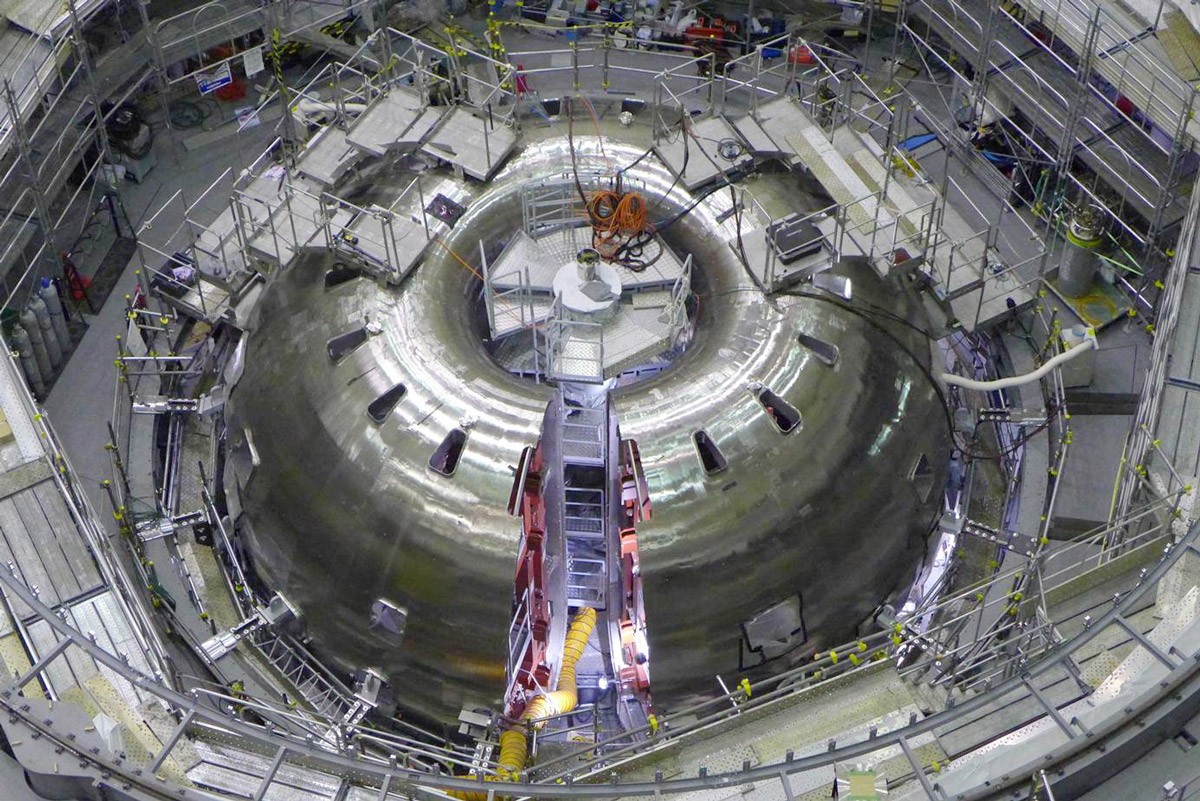
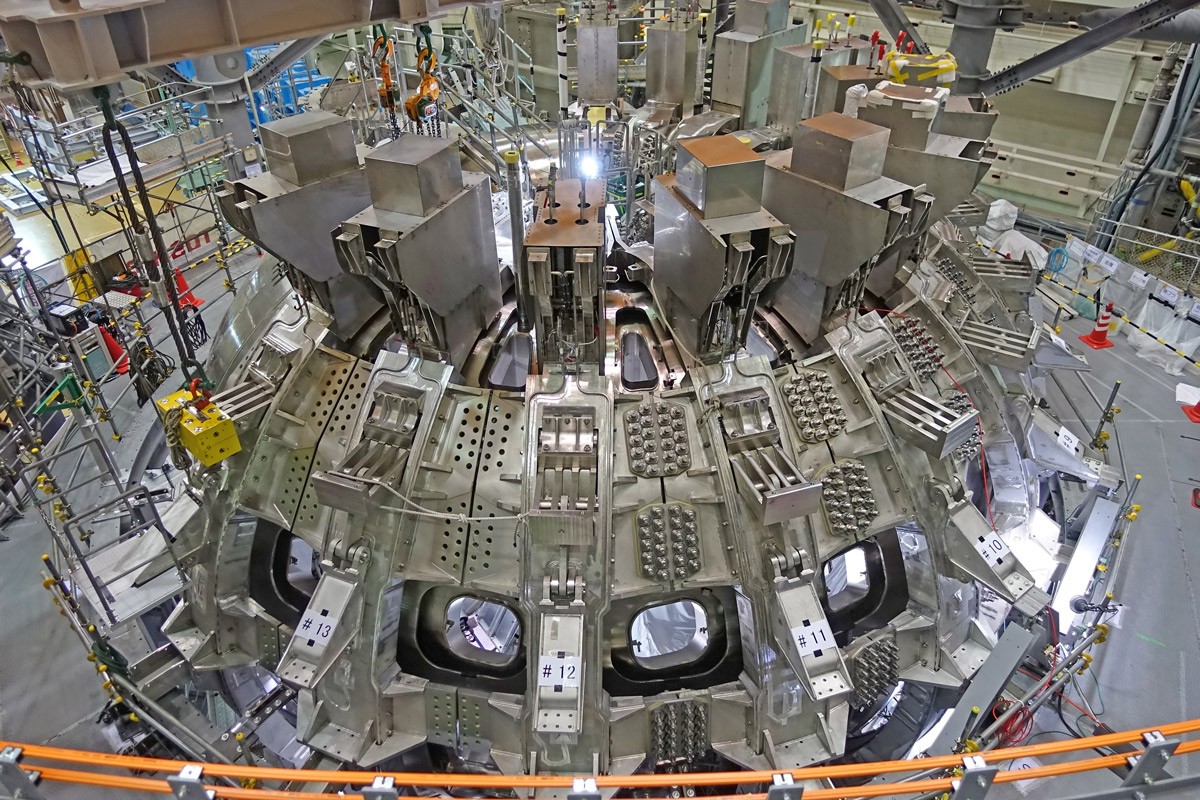
The lead photograph shows a perpendicular NBI unit being moved at JT-60SA in December 2024. It does not show the inside of a negative-ion source. The vessel and coil photographs document earlier assembly of the destination and its magnetic confinement system.
Likewise, QST's 2020 announcement of negative-ion generation lasting more than 100 seconds does not mean that a JT-60SA plasma was heated for that duration. Source tests, acceleration, neutralization, injection and plasma response are separate stages.
From the power supply to the plasma, NBI connects vacuum equipment, electrodes, cooling and precision alignment. The accelerator's output is one stage; the energy that ultimately reaches the plasma is what the complete heating system must deliver.
Sources
- IPP: Principle of neutral beam injection
- JAEA: Negative-ion sources and neutralization (2009)
- QST: Negative-ion beam generation beyond 100 seconds (22 January 2020)
- F4E: JT-60SA equipment upgrade (28 January 2025)
Information checked as of:2026-11-19
NBIの原理解説。2009年JAEA、2020年QST成果と2024年12月設備写真を現在の加熱達成実績として扱わない。垂直入射ユニットを負イオン源の内部写真と混同しない。