W7-X checked its magnetic field with an electron beam
An electron beam and fluorescent rod revealed magnetic surfaces before W7-X made its first plasma. The test connects component inspection with the behaviour of an assembled machine.
Read the Japanese original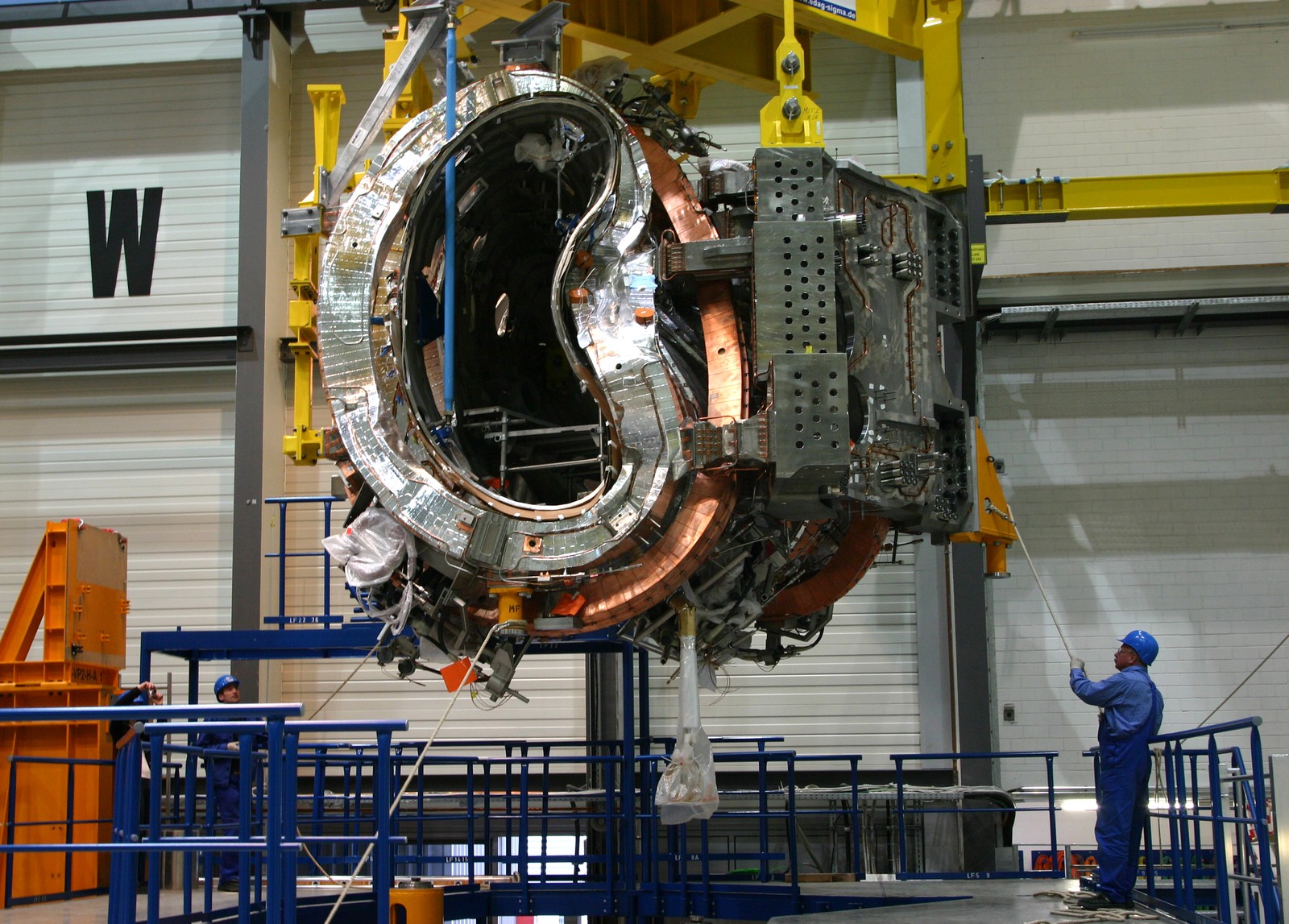
Before making its first plasma, Germany’s Wendelstein 7-X (W7-X) used light to examine the magnetic field intended to confine it. In 2015, an electron beam and a fluorescent rod revealed the field’s shape inside the vessel. Correct component dimensions were only part of the question: did the assembled, energised machine produce the intended field?
Turning electron paths into light
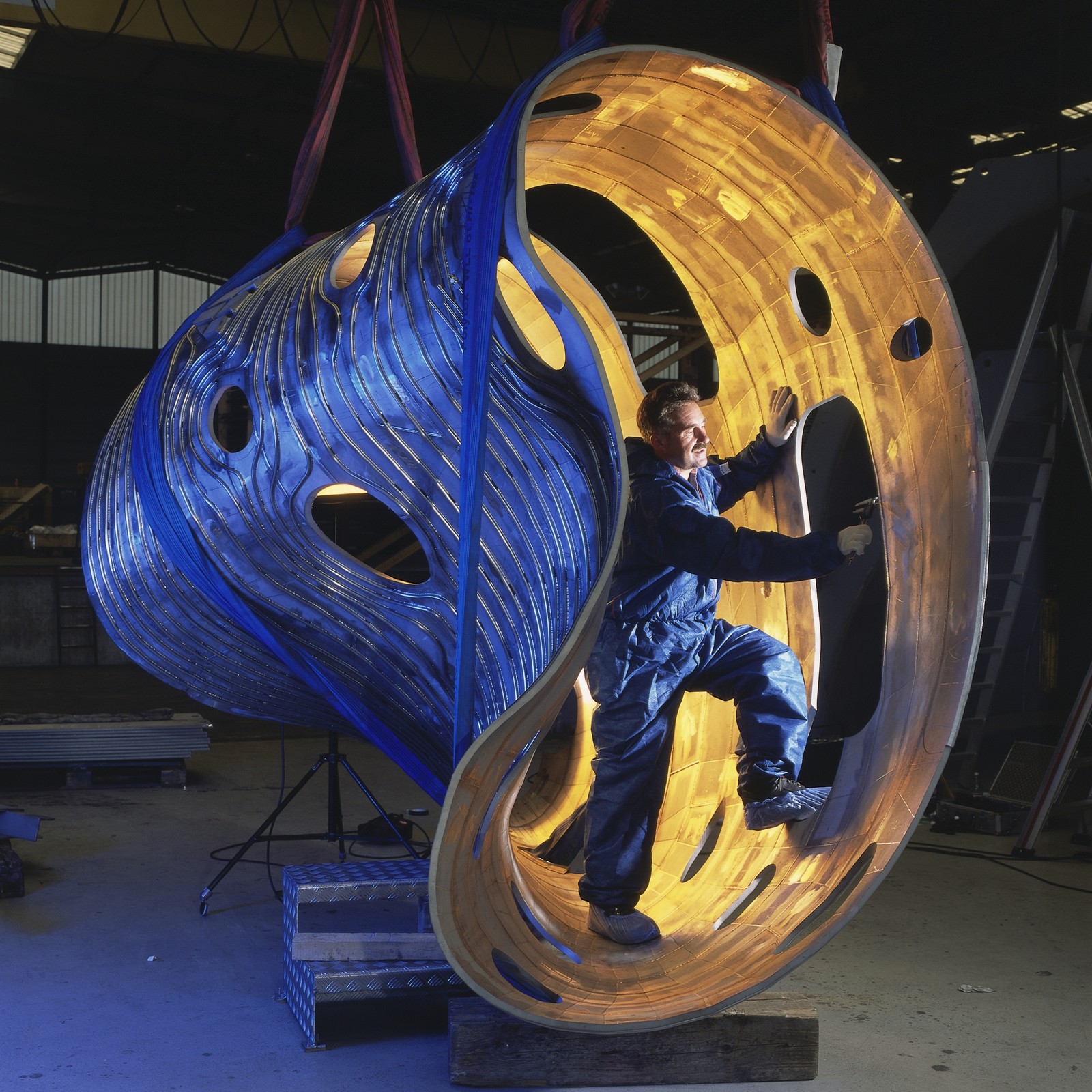
W7-X is a stellarator whose external coils create a twisted magnetic field. A thin electron beam travels along the field in the evacuated vessel. Collisions with residual gas leave a luminous trace; a fluorescent rod lights up where the beam strikes it. The camera records these signals, rather than photographing the magnetic field itself. IPP, 2015
Building a cross-section from points
Successive circuits carry the field line through different positions in a cross-section. Moving the rod and recording the light spots reveals nested contours. These help researchers examine magnetic surfaces relevant to confinement. IPP’s July 2015 announcement reported closed surfaces consistent with calculations, before the first plasma.
Checking what the assembled machine produces
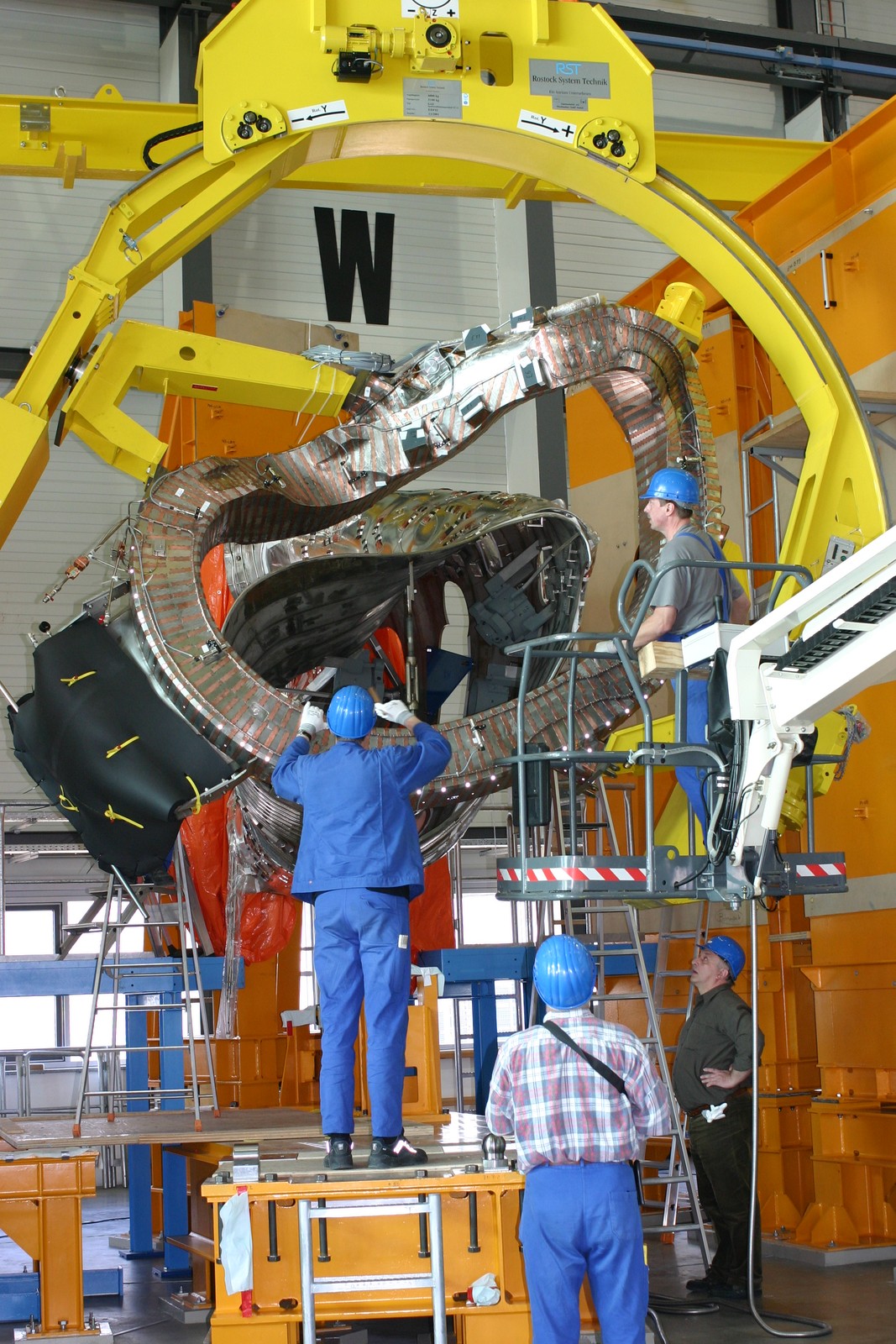
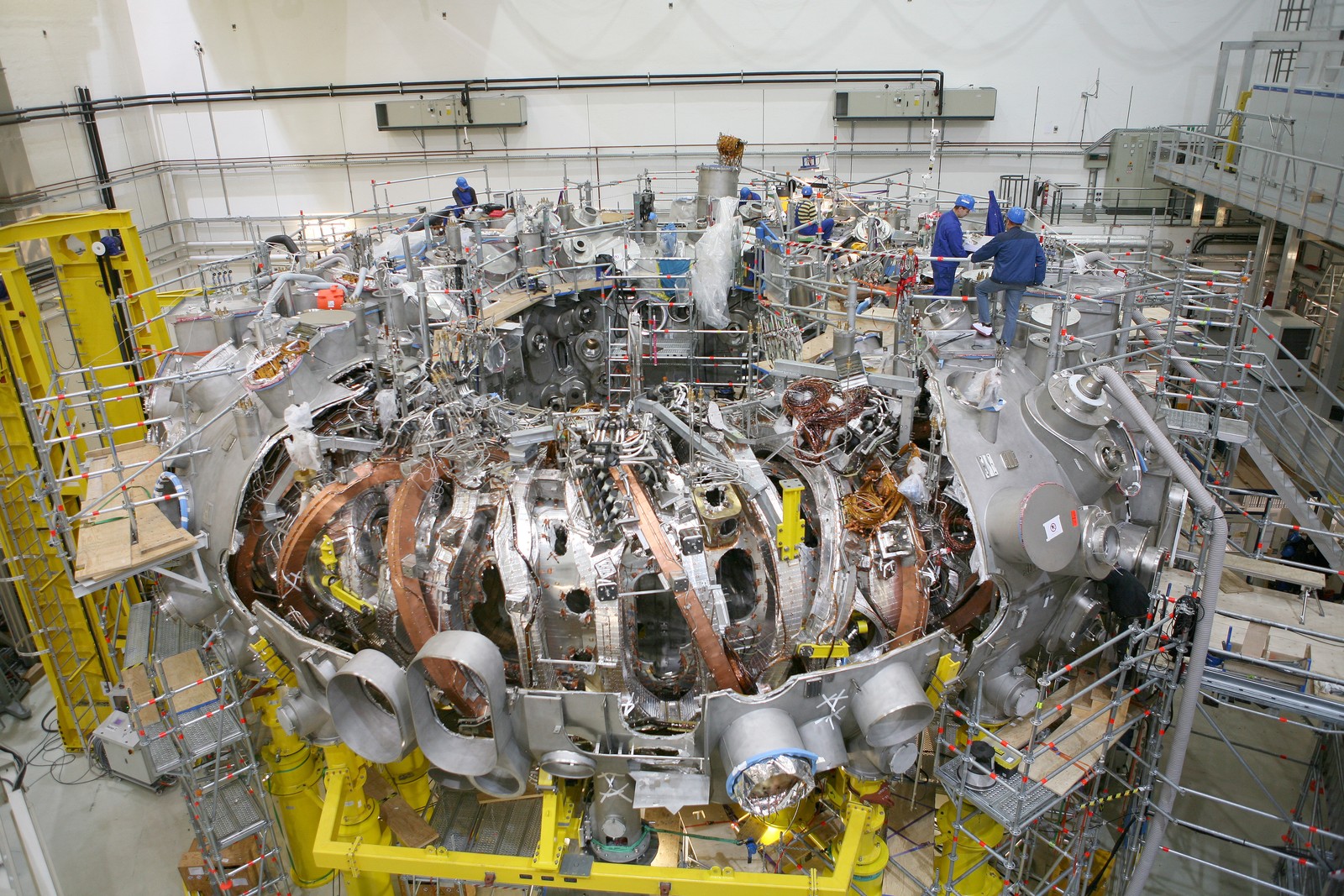
In November 2016, IPP reported a high-precision assessment of the field geometry. This did not demonstrate sustained hot-plasma confinement or electricity generation. IPP, 2016
The engineering lesson is to connect component dimensions with measured system behaviour. Inspection of fabricated metalwork is followed by a test of what the energised assembly actually does. When assessing commissioning, ask which property was measured to establish performance.
Sources
Information checked as of:2026-11-20
Historical technical explainer. IPP reported the measurements on 16 July 2015 and the field-precision assessment on 30 November 2016. These are not new 2026 results or demonstrations of sustained hot-plasma confinement or electricity generation. The link to manufacturing inspection is FI’s interpretation.