NIF measured the four shocks that compress its fuel
Liquid-deuterium surrogate targets and optical diagnostics helped NIF researchers tune shock timing. A 2012 study connects laser settings with measurements inside the compressing fuel.
Read the Japanese original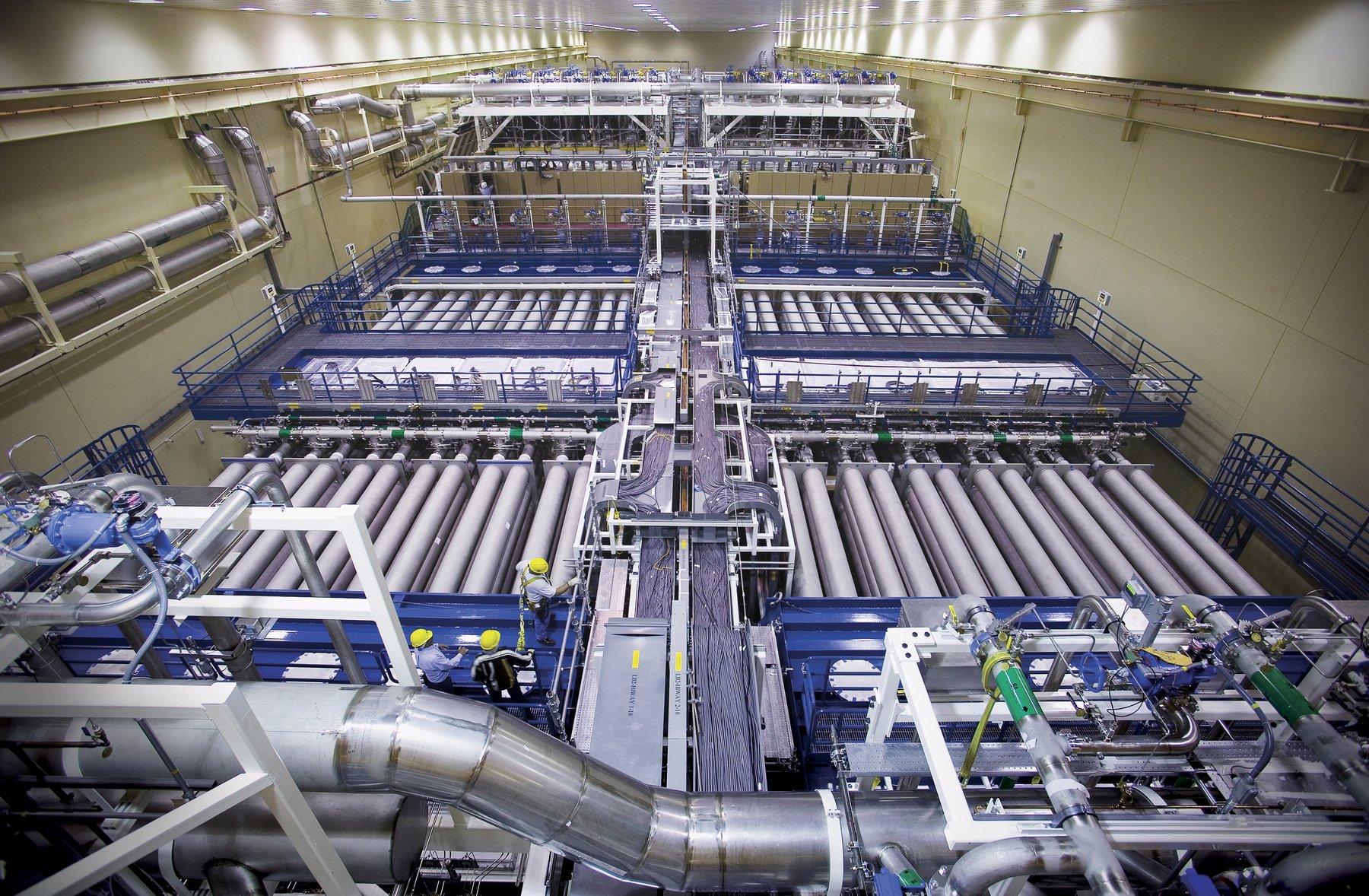
NIF experiments tune not only the laser's total energy, but also the sequence of shocks that compress the fuel. In a 2012 study, direct measurements of four shocks found that the last travelled 20% more slowly than simulations predicted. Delivering a specified laser pulse does not guarantee that the fuel responds exactly as calculated. How did researchers check the difference?
Tuning what reaches the fuel
In NIF's indirect-drive approach, lasers heat a metal enclosure called a hohlraum. Its X-rays drive the capsule inward. The 2012 paper examined a drive using four shocks: waves across which pressure and density change abruptly.
Their strength and timing must be controlled to keep the fuel readily compressible. Greater force alone is insufficient. The paper describes keeping the fuel entropy and adiabat low; the latter is a measure of its thermodynamic state during compression.
Making an optical route into the target
Researchers cannot simply watch the inside of a capsule as it implodes. They modified a cryogenic target and inserted a gold cone to provide optical access. The 2011 conference report describes using VISAR, an optical diagnostic, to measure the strength and timing of all four shocks travelling through liquid deuterium inside the capsule.
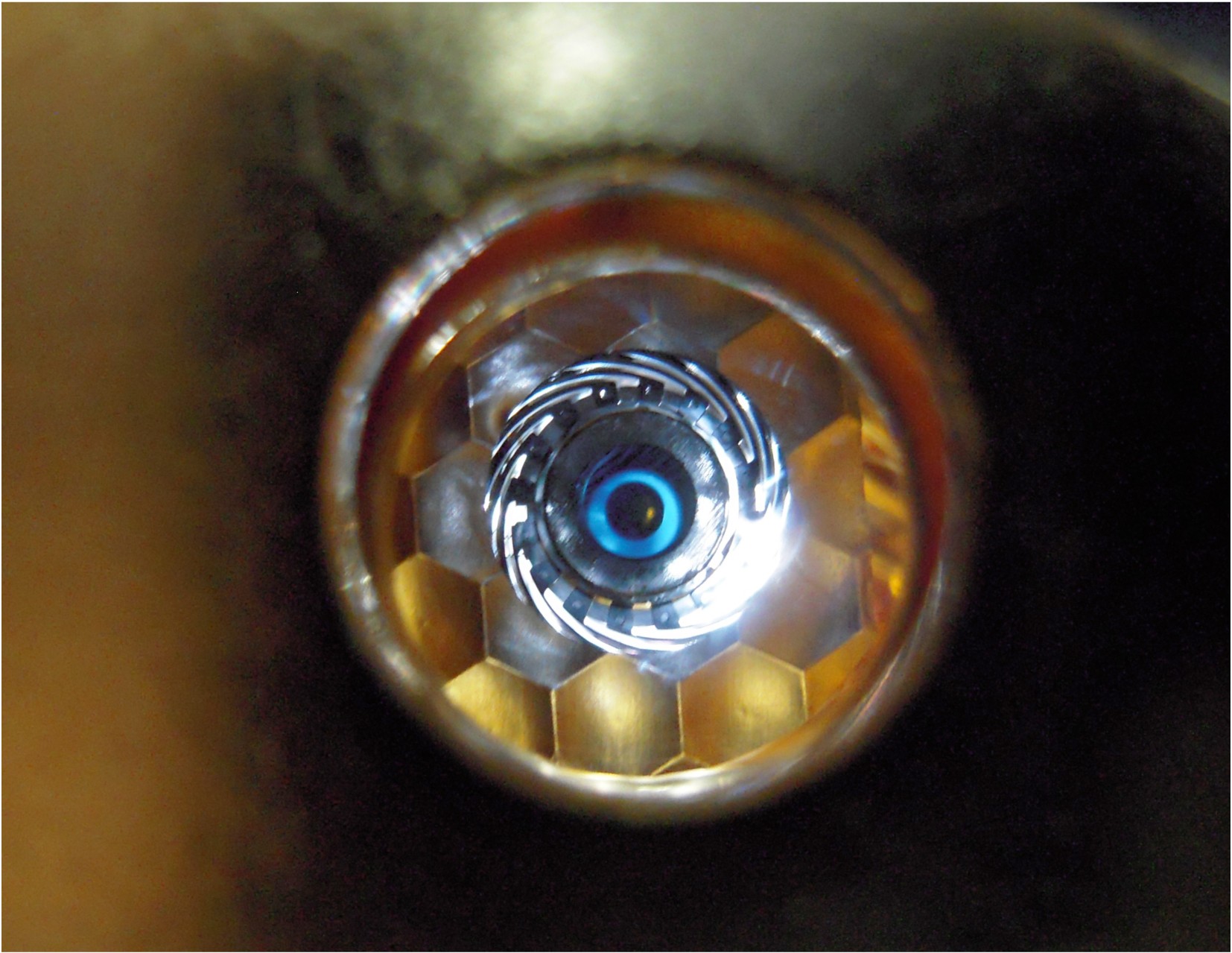
LLNL's platform description explains that liquid deuterium serves as a surrogate for the cryogenic fuel in an ignition capsule. VISAR uses light reflected from the shock front. This target was altered to make the measurement possible. The archive photograph of a conventional cryogenic target on this page does not show that particular diagnostic target.
The fourth shock exposed a modelling gap
The 2012 paper reports improved compression in related implosions of layered deuterium-tritium fuel using the tuned conditions, compared with earlier untuned conditions. It also identified the fourth shock travelling 20% more slowly than numerical predictions.
That was a result from a specific tuning study in 2012, not a general error rate for present-day NIF experiments. It nevertheless shows why setting a laser according to a calculation is only part of the process. Measuring intermediate shocks makes differences between intended compression and actual material response observable.
Target fabrication and diagnostics help define compression
FI's interest lies in the need to fabricate a target with an optical access route. The laser system, target-making techniques and instruments that extract time-dependent information from reflected light together form the tuning experiment.
Facility size and input energy do not describe all this work. Reproducible fusion experiments also require ways to turn intermediate physical processes into measurable quantities. This is FI's technical interpretation of the sources, rather than evidence of a particular company's contract or costs.
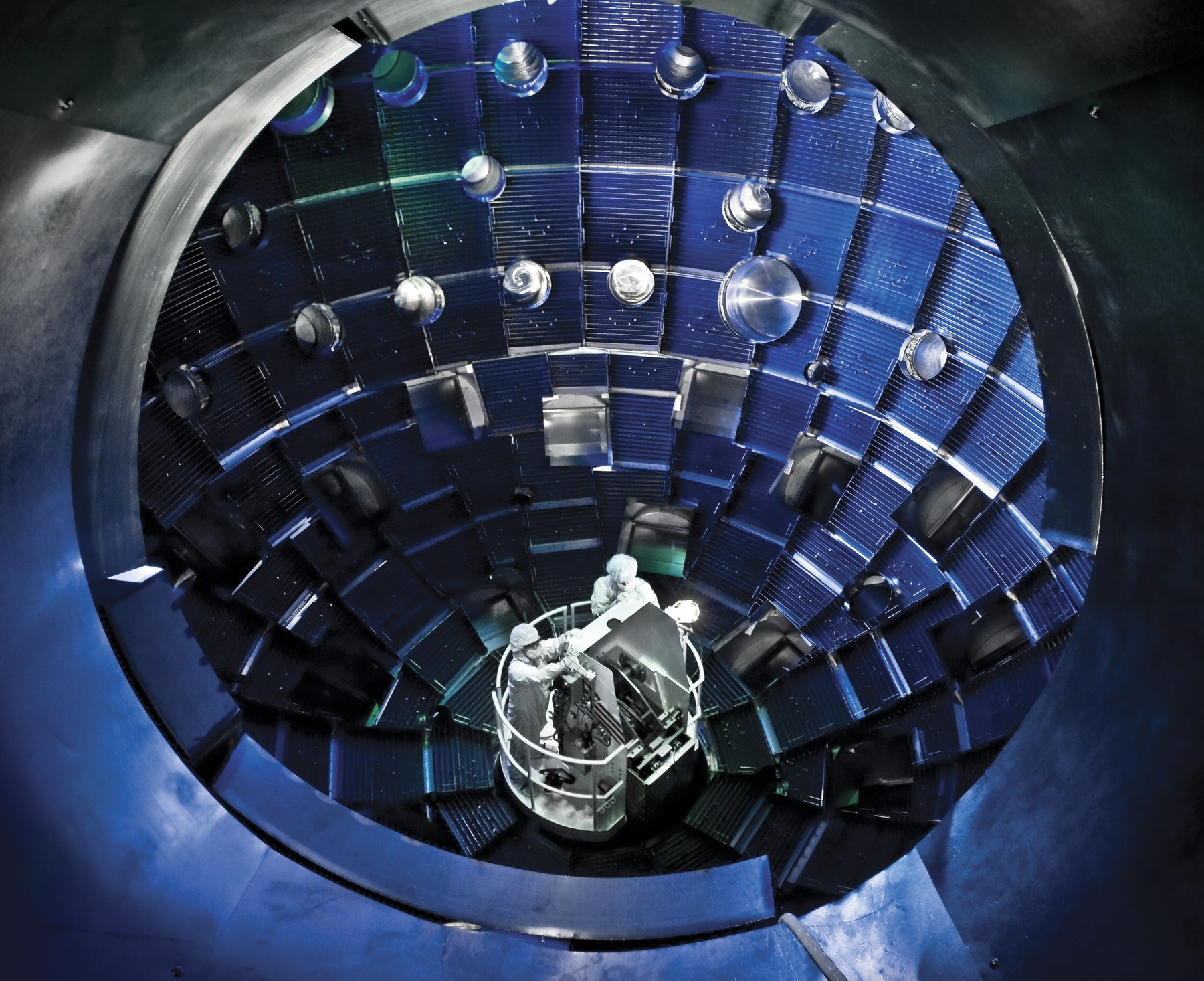
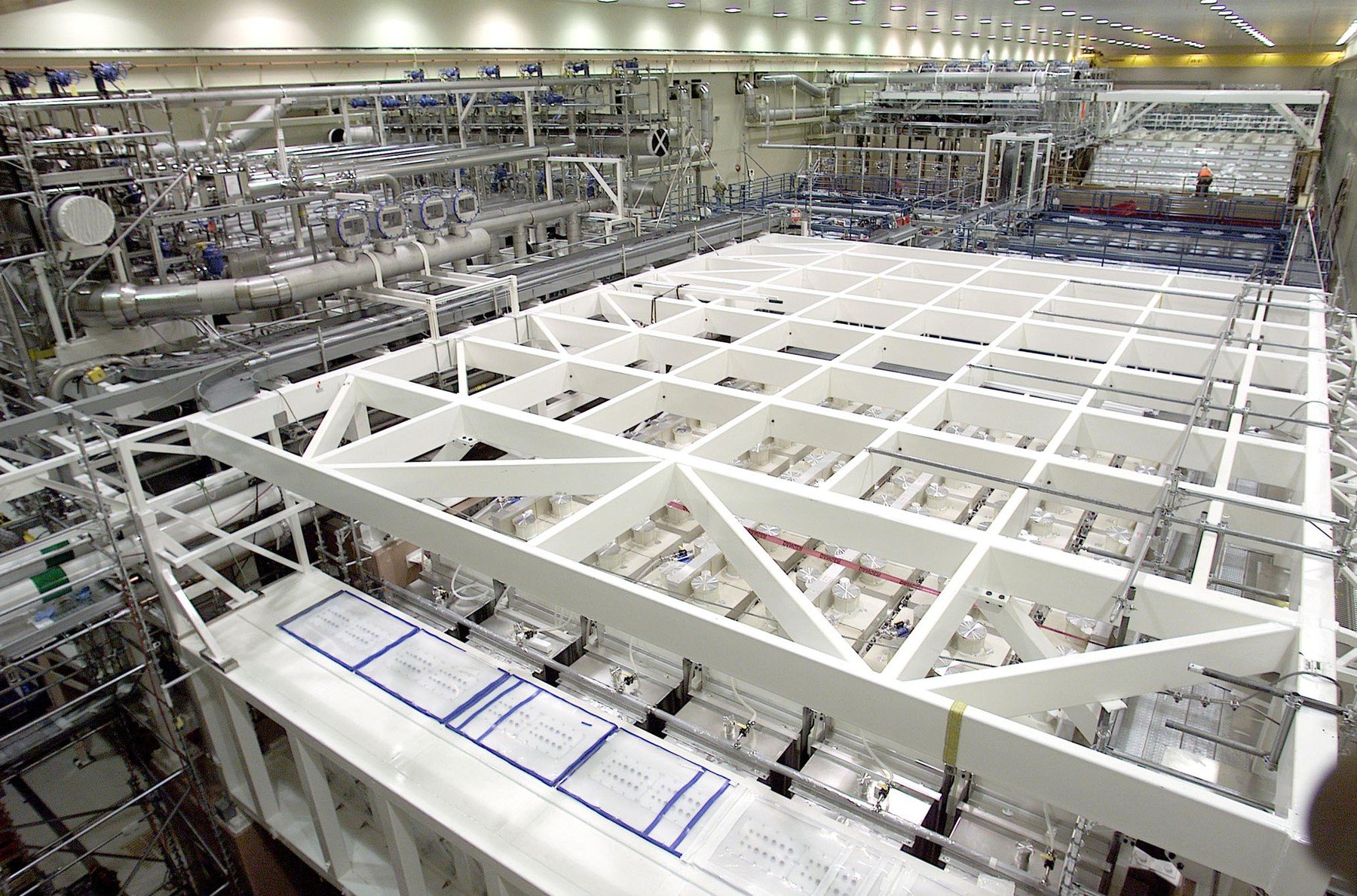
The photographs are archive views of NIF's cryogenic target, target chamber and laser facilities. They do not show VISAR itself or images recording the four shocks.
- LLNL Shock Timing:液体重水素を使う衝撃波計測プラットフォーム
- Robeyほか Precision Shock Tuning on the National Ignition Facility(2012年論文・公開要旨)
- Robeyほか Results from Recent NIF Shock Timing Experiments(2011年APS発表)
Information checked as of:2026-11-27
LLNL常設解説・2011年学会発表・2012年論文公開要旨に基づく基礎解説。20%は当時の特定実験と計算との差。最新成果ではない。