Tungsten in a fusion reactor can change its elemental composition
High-purity metal can change composition in service. Tungsten transmutation and the influence of surrounding coolant show why fusion materials must be designed for their operating environment.
Read the Japanese original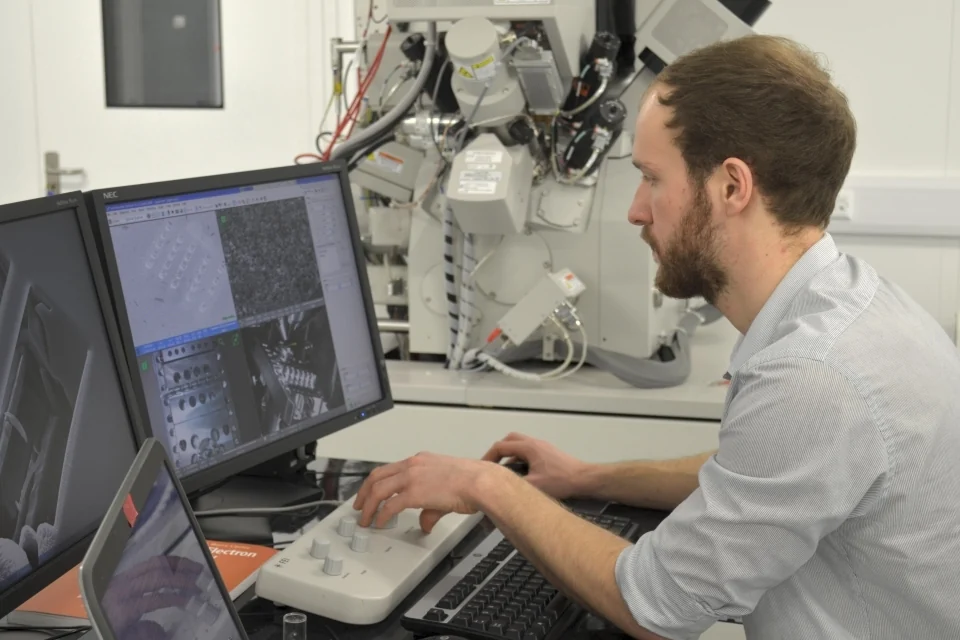
A wall made from high-purity tungsten may not retain that purity throughout its service. Fusion-reactor design studies calculate how neutron exposure turns tungsten into rhenium and osmium. A component can bend under heat or lose material from its surface. More fundamentally, even the elements it contains can change inside a reactor.
Neutrons change more than the atomic arrangement
Neutrons can knock atoms out of position in a crystal. They can also change the nuclei themselves through nuclear transmutation. In tungsten, one pathway involves unstable isotopes formed through neutron capture and other reactions, followed by beta decay into rhenium. This is a change within the material, rather than another metal being deposited on its surface.
A PPCS calculation predicted that the rear face of initially pure tungsten first-wall armour could reach approximately 91% tungsten, 6% rhenium and 3% osmium by atomic fraction at the end of service. Those results apply to particular conceptual plant models, A and B. They are predictions, not measurements of metal recovered from an operating power plant.
The same metal responds to its surroundings
Neutron numbers alone do not determine the change. Gilbert and colleagues investigated how surrounding steel and coolant, especially water, slow neutrons and alter local rhenium production. Some tungsten isotopes have energy ranges in which they readily capture low-energy neutrons.
A single condition averaged across a material can miss these spatial differences. Water installed to carry heat away also becomes part of the environment used to calculate transmutation. Reactor materials cannot be assessed entirely in isolation.
A calculated composition is not a measured service record
A changing elemental composition changes the conditions relevant to heat transport and mechanical behaviour. Yet a rhenium percentage alone cannot tell us how many years a component will last. Predictions of transmutation must be connected with measurements of irradiated microstructures and properties.
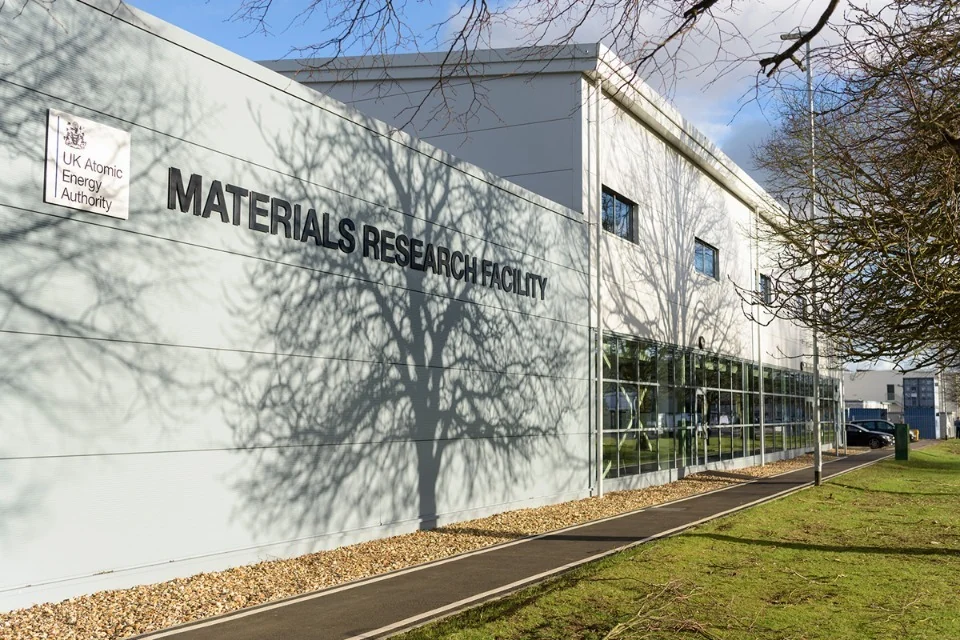
UKAEA's materials programme combines neutron-interaction modelling, nuclear inventory analysis and examination of irradiated materials to support design and qualification for STEP and EU-DEMO. Its Materials Research Facility, MRF, is one facility involved in that analysis. Preparing samples for measurement provides part of the basis for checking such predictions.
From delivery purity to material in service
FI's point of interest is when, in a component's life, its material specification is defined. The composition at the factory gate may differ from the composition after service. Connecting component placement, cooling and irradiation history with materials data remains work to do beyond manufacturing.
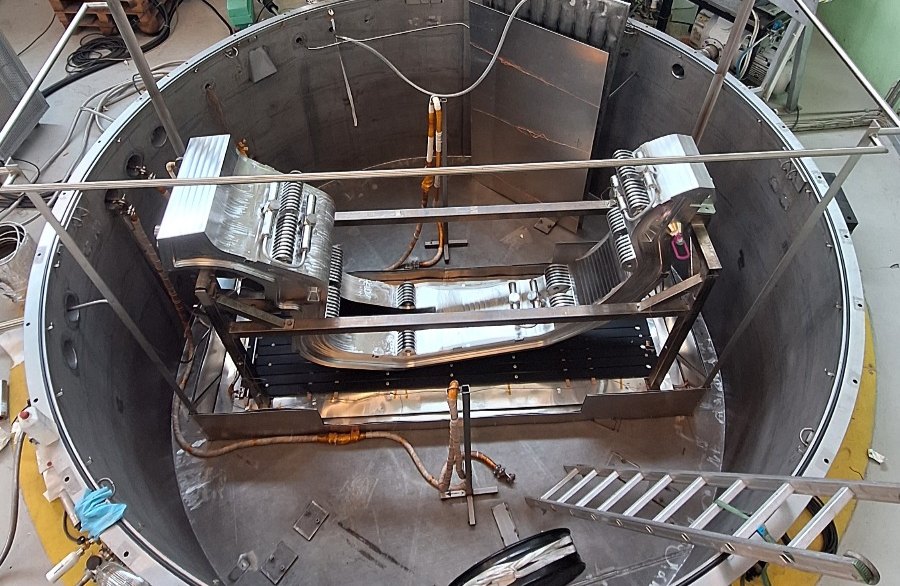
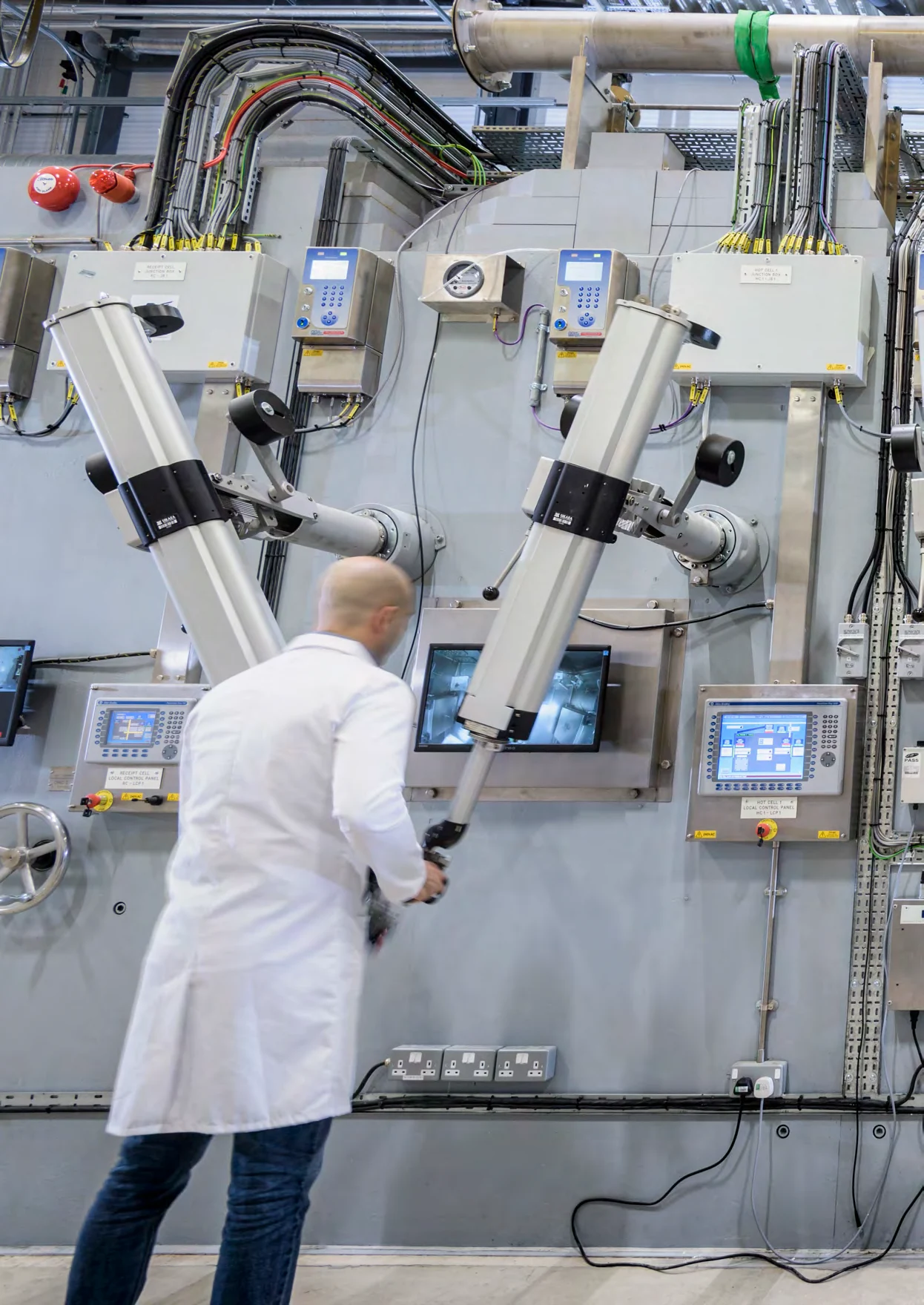
The photographs show materials-analysis facilities and a divertor support structure. They do not show the tungsten specimens or transmutation observations underlying these calculations. Choosing tungsten is one step; designing a component also means anticipating what the material may become in service.
- Cottrellほか Transmutation and phase stability of tungsten armor in fusion power plants
- Gilbertほか Spatial heterogeneity of W transmutation in a fusion device 2016年原稿・2017年論文
- UKAEA 材料研究のモデル・分析・核種評価
- UKAEA MRFの設備と試料分析
- F4E カセット本体資料写真・支持構造の説明
Information checked as of:2026-11-27
概念設計の計算と材料研究の解説。PPCSの91/6/3原子%はモデルA・Bの第一壁装甲裏面の使用期間末の予測。実炉の測定値・寿命実績へ一般化しない。