JT-60, JT-60U, and JT-60SA: tracing fusion through generations of machines
First plasma in 1985, JT-60U performance improvements, and the dismantling and replacement that led to a superconducting machine. Trace the similarly named devices to interpret their achievements and the industrial work that changes with each generation.
Read the Japanese original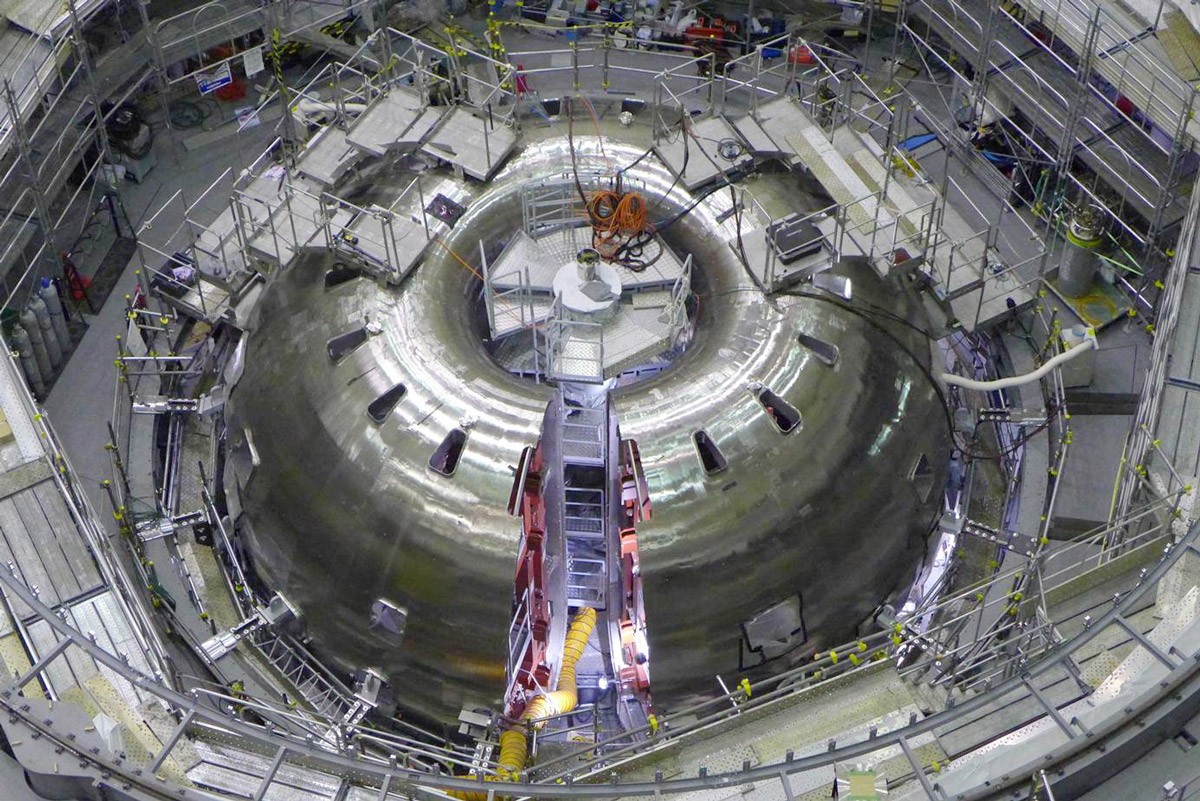
JT-60, JT-60U, JT-60SA. Their names look similar, but they are not three separate power plants operating simultaneously. They represent a history of carrying research questions forward by modifying and replacing equipment at the Naka research site. From first plasma in 1985 to a superconducting machine, what changed and what remained? Following past achievements also changes how we view today's research and development.
JT-60 began by producing plasma in a large machine
Design of JT-60 began in 1975. The machine was completed on April 3, 1985, and first produced plasma on April 8. The Atomic Energy Commission's monthly report at the time records the testing sequence: individual components, connections between components, and then the entire facility. 1985 record of completion and first plasma
A tokamak combines magnetic fields in a toroidal space to confine high-temperature plasma. Plasma is a state in which electrons have separated from atoms and electrically charged particles move around. Completing the machine does not immediately enable high-performance experiments. Vacuum, power supplies, controls, and other systems are checked in sequence, with first plasma serving as the starting point for expanding operating conditions.
Reading this first success as “the start of electricity generation” misses the subsequent story. What began here was experimental investigation of the high-temperature plasma needed for a fusion reactor.
JT-60U expanded the experimental range through modification
In 1989, JT-60 stopped operating for a higher-current upgrade, moving into the JT-60U research stage in 1991. This was not merely a name change: machine modifications enabled exploration of higher performance and new operating conditions. QST's research history
An ion temperature of 520 million degrees in 1996 and an energy gain factor of 1.25 in 1998 are representative achievements in that history. However, the temperature refers to ions in the plasma, not the entire vessel. Nor should records obtained under different conditions be combined into a single experiment that achieved everything simultaneously. JAEA's FY2008 performance report
In particular, 1.25 is a “D-T-equivalent” value. It was calculated using temperatures and densities obtained in JT-60 deuterium experiments to assess what would happen if some fuel were replaced with tritium. It does not mean fusion output actually produced with D-T fuel, or electricity generated after subtracting the entire facility's power consumption. QST's explanation of Q
Dismantling became technological development for the next machine
JT-60 completed its experiments on August 29, 2008. Moving to JT-60SA required removing the main machine to make room for installing its successor. Research knowledge was carried forward, while the hardware underwent extensive changes.
According to JAEA's 2014 report, dismantling began in 2009 and finished in October 2012. It involved equipment activated by neutrons from deuterium experiments and structures totaling approximately 5,400 tonnes. A diamond wire saw that required no cooling water proved useful for cutting the vacuum vessel and other components into sections. Record of JT-60 dismantling
This process is industrial work that is difficult to see in photographs of a completed machine. Experience combining cutting, lifting, storage, and safety management also provides a foundation for building the next generation of research facilities.
JT-60SA studies how to sustain high performance
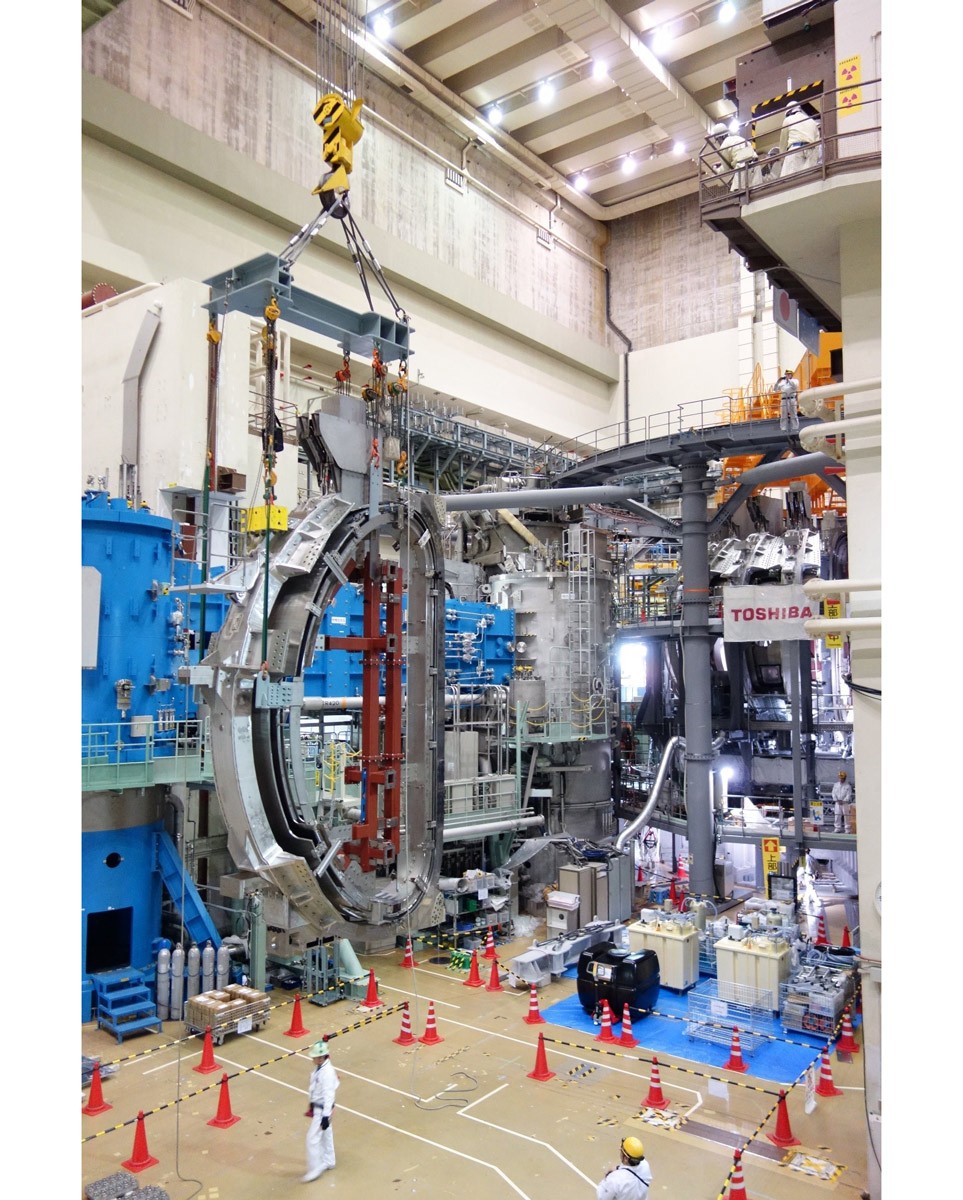
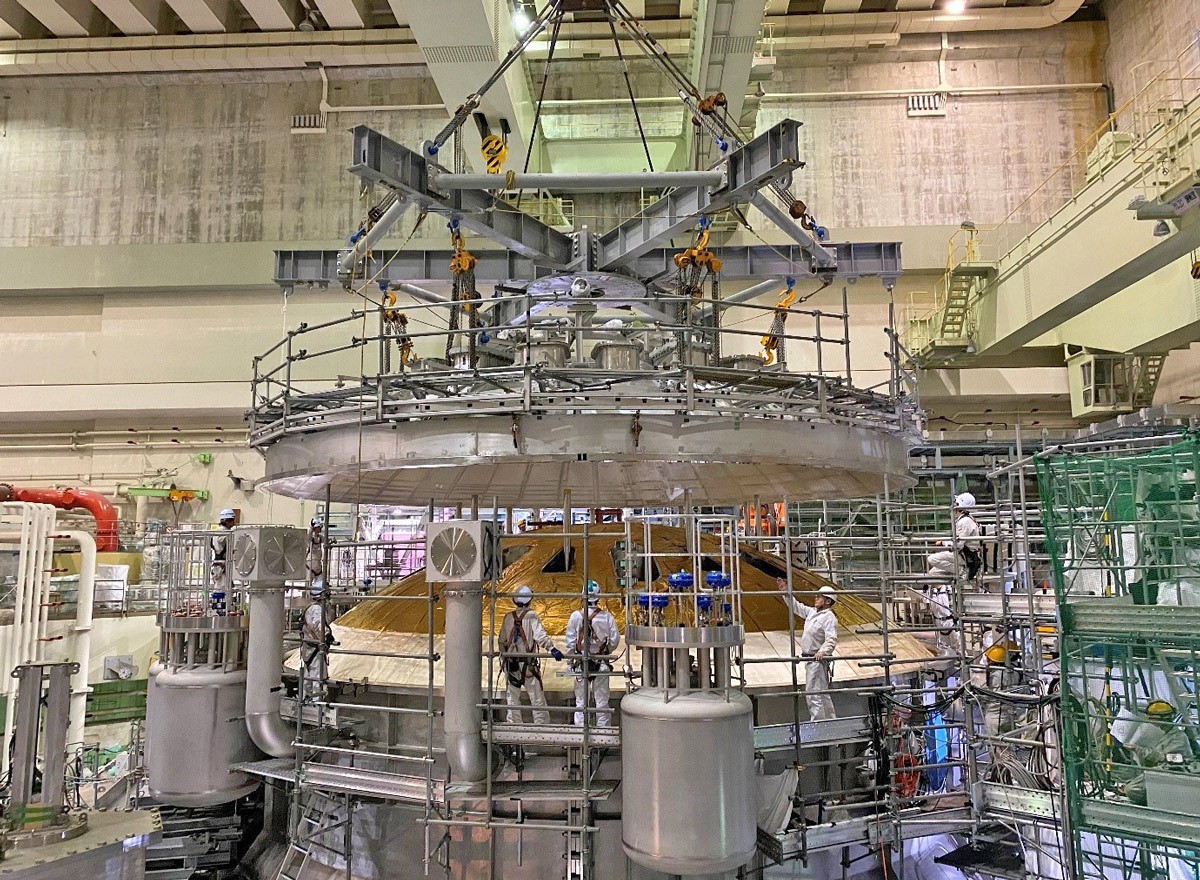
The Japan-Europe JT-60SA collaboration replaced the machine with one using superconducting magnets. F4E's 2020 assembly-completion report explains that existing on-site infrastructure was reused while many major components were newly designed and manufactured. F4E assembly-completion report
Superconductivity is the disappearance of electrical resistance when conditions such as sufficiently cooling a material are met. It is an important technology for operating magnets for long periods. It does not mean that the plasma itself becomes cold.
First plasma is the starting point for the next experiments
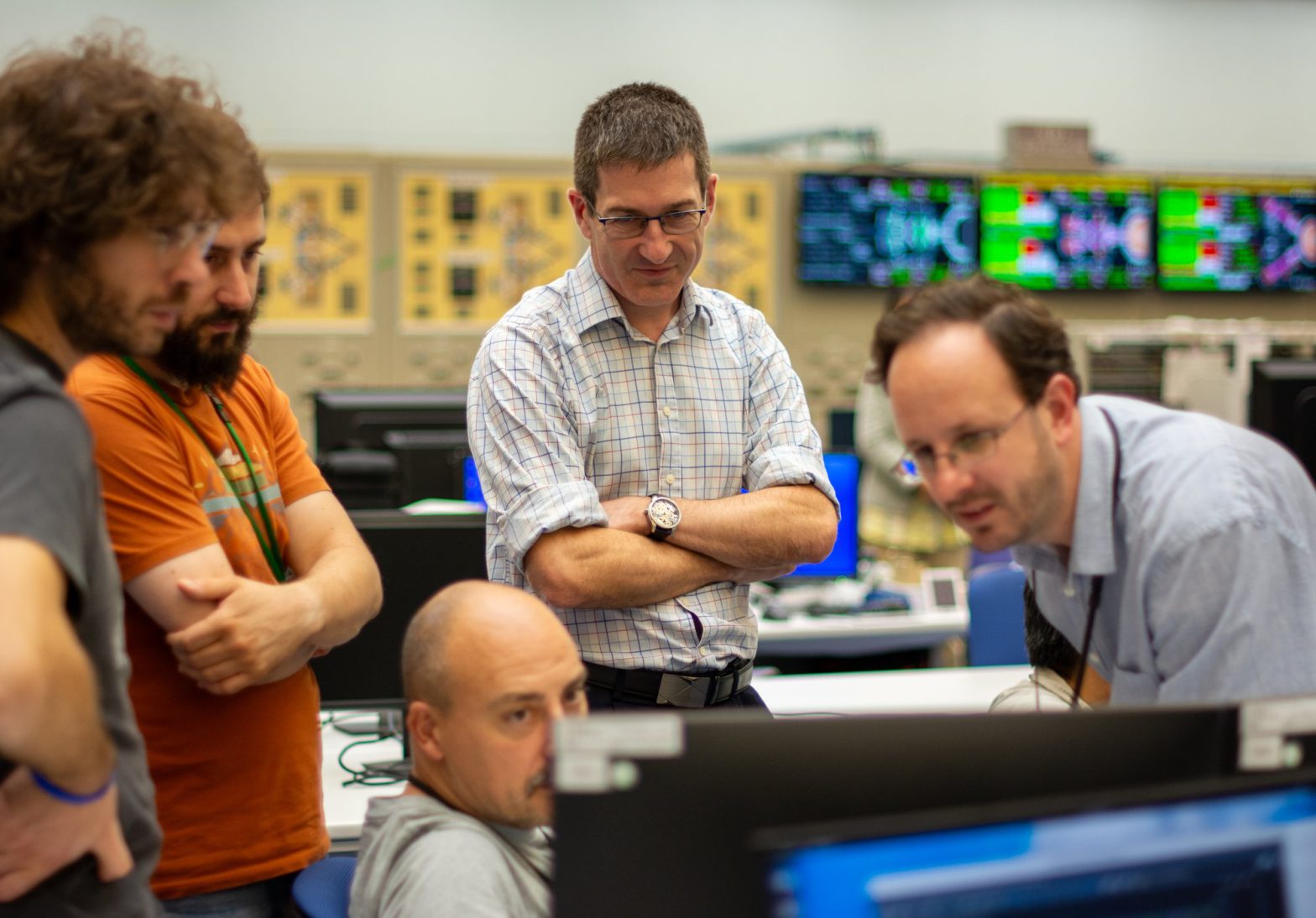
Assembly finished in 2020, and first plasma was produced on October 23, 2023. F4E first-plasma announcement
QST groups the objectives into three areas: supporting ITER, complementary research toward a demonstration reactor, and training people. Developing operating methods that maintain high-pressure plasma for around 100 seconds is a research goal; its inclusion in a description does not establish that it has been achieved. JT-60SA objectives and specifications
Simply placing JT-60U's historical peak temperature beside JT-60SA's first-plasma values does not determine which generation is superior. Their configurations, heating conditions, and target durations differ. For the current plan, also see our JT-60SA explainer.
Companies should examine how the work changes between generations
The editorial team's suggestion from this history is to ask “What stage is it at now?” as well as noting the machine's name. Construction emphasizes manufacture and installation; operation emphasizes diagnostics, maintenance, and improvements; replacement emphasizes dismantling and connections to existing facilities. Even at the same research site, the technologies required change.
Companies considering entry should clarify whether their products serve new equipment, upgrades to existing equipment, or replacement works. Then check the purchaser's documentation for specifications, test methods, the presence of radiation environments, and scope of work. Past procurement records do not guarantee current orders or contracts.
What has continued since JT-60 is not the unchanged use of a single machine. It is the transfer of experimental knowledge and technologies for building, operating, and renewing machines to the next generation. Understanding that accumulation allows us to read fusion progress without judging it from one record alone.
Official information from related companies and research institutions
Check each organization’s announcements for development progress and technical documentation.
- Atomic Energy Commission Monthly Report 30(4): JT-60 construction completion and first plasma (April 1985 issue; events 1985-04-03 and 04-08; contemporary government record); checked 2026-10-13
- QST: History of JT-60 fusion research and development (updated 2026-03-11; events in 1975, 1985, 1989, 1991, 2020, and 2023; official research history); checked 2026-10-13
- JAEA: FY2008 performance report, pp.67–68 (FY2008 report; events in 1996 and 1998, and 2008-08-29; official performance report, publication date unknown); checked 2026-10-13
- QST: FAQ 14, QDD and QDT (updated 2025-07-07; equivalent assessment of past experiments); checked 2026-10-13
- JAEA: R&D Review 2014, dismantling the JT-60 tokamak for JT-60SA (published 2014; events 2009–2012; official technical report); checked 2026-10-13
- F4E: Europe and Japan complete JT-60SA (announced 2020-06-25; event 2020-03-30; photographs from 2015, 2018, and 2020; official assembly-completion record); checked 2026-10-13
- F4E: First Tokamak plasma for JT-60SA (announced 2023-10-24; event 2023-10-23; official experimental report); checked 2026-10-13
- QST: What is the JT-60SA project? (updated 2026-04-21; standing explanation of research objectives, specifications, and goals); checked 2026-10-13
Information checked as of:2026-10-13
Historical explanation based on direct reading of official historical records, research reports, and objectives on 2026-10-13. Treats 1985 completion and first plasma, 1991 modification, 1996 temperature, 1998 equivalent Q, 2008 end of operation, 2009–2012 dismantling, 2020 assembly completion, and 2023 first plasma as distinct events. Q=1.25 is a D-T-equivalent assessment, not actual D-T burning or electricity generation. Around 100 seconds is a research goal. Business suggestions are editorial analysis. Photographs document JT-60SA construction and first-plasma periods; they are not presented as old JT-60/U experiment images or the situation in 2026.