Insulation and resin behind superconducting magnets: industrial roles in ITER coil manufacturing
Strong magnetic fields require not only conductors but integrated insulation and structure. ITER’s ring-coil manufacturing illustrates work for materials and equipment companies through dummy windings, resin impregnation and curing monitoring.
Read the Japanese original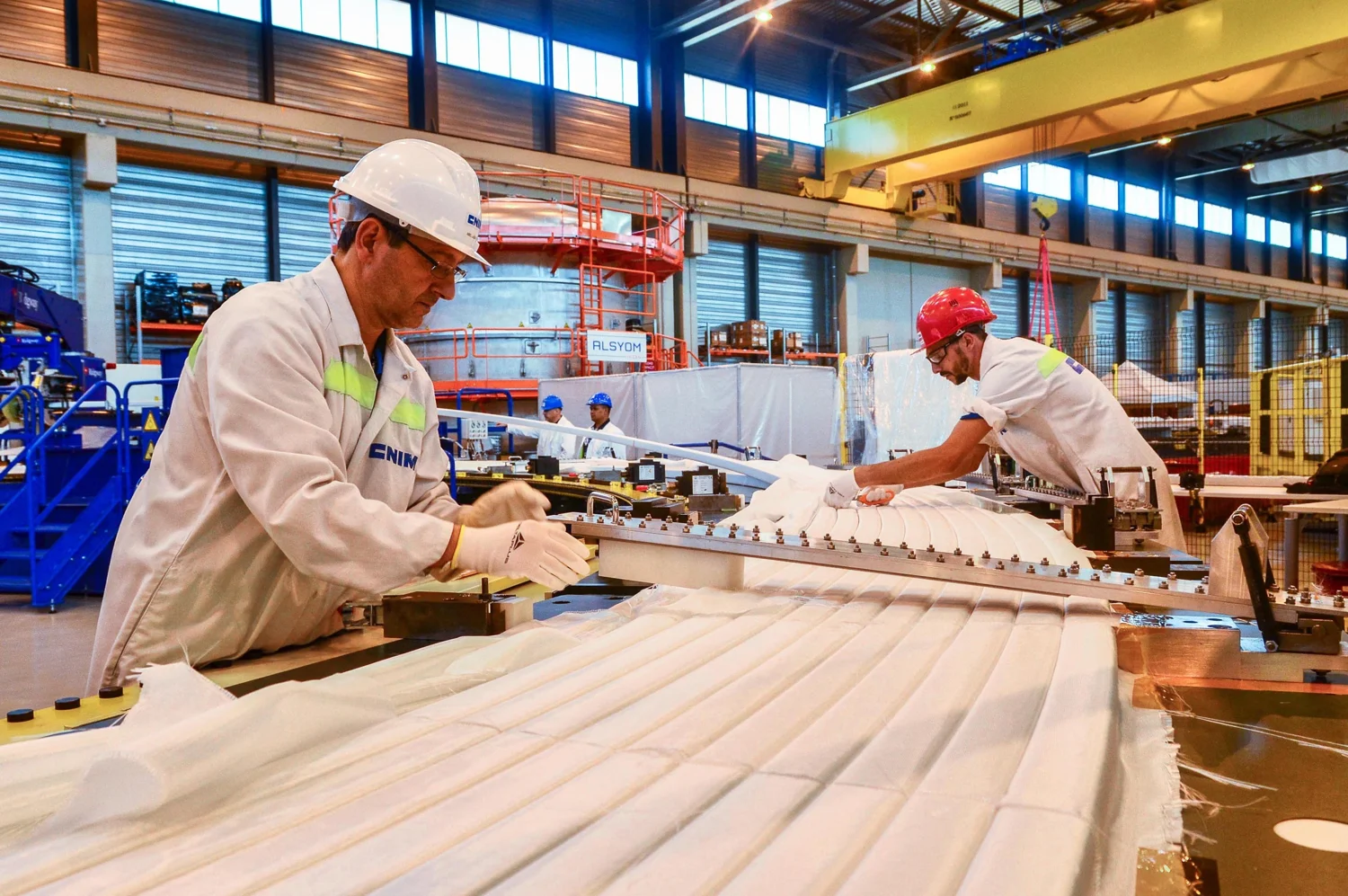
Fusion’s superconducting magnets naturally draw attention to the metallic materials that produce strong magnetic fields. But turning conductors into giant coils also requires insulating places where current must not flow and consolidating the windings into a single structure. ITER’s poloidal-field coil manufacturing records reveal interfaces for companies working with resins, insulating materials and manufacturing equipment.
Why wrap an electrical conductor in insulation?
Poloidal-field coils are ring-shaped magnets arranged horizontally around a tokamak to control the plasma’s shape and position. ITER’s superconducting conductors consist of bundles of fine strands enclosed in steel tubing and cooled internally with helium. ITER’s explanation of magnets
Although a conductor is intended to carry current, electricity must not flow freely between adjacent turns or other unintended paths. Manufacturing therefore includes wrapping glass-fibre insulating tape and impregnating it with resin. Superconducting wire alone does not make a finished magnet.
An ITER report of 23 July 2018 described winding the PF5 coil. Conductors were fed simultaneously from two spools onto a rotating table to form two layers of flat spirals. This unit is called a “double pancake.” The photograph shows the manufacturing work at the time, not work currently in progress. PF5 manufacturing process
Checking the process with a copper dummy winding first
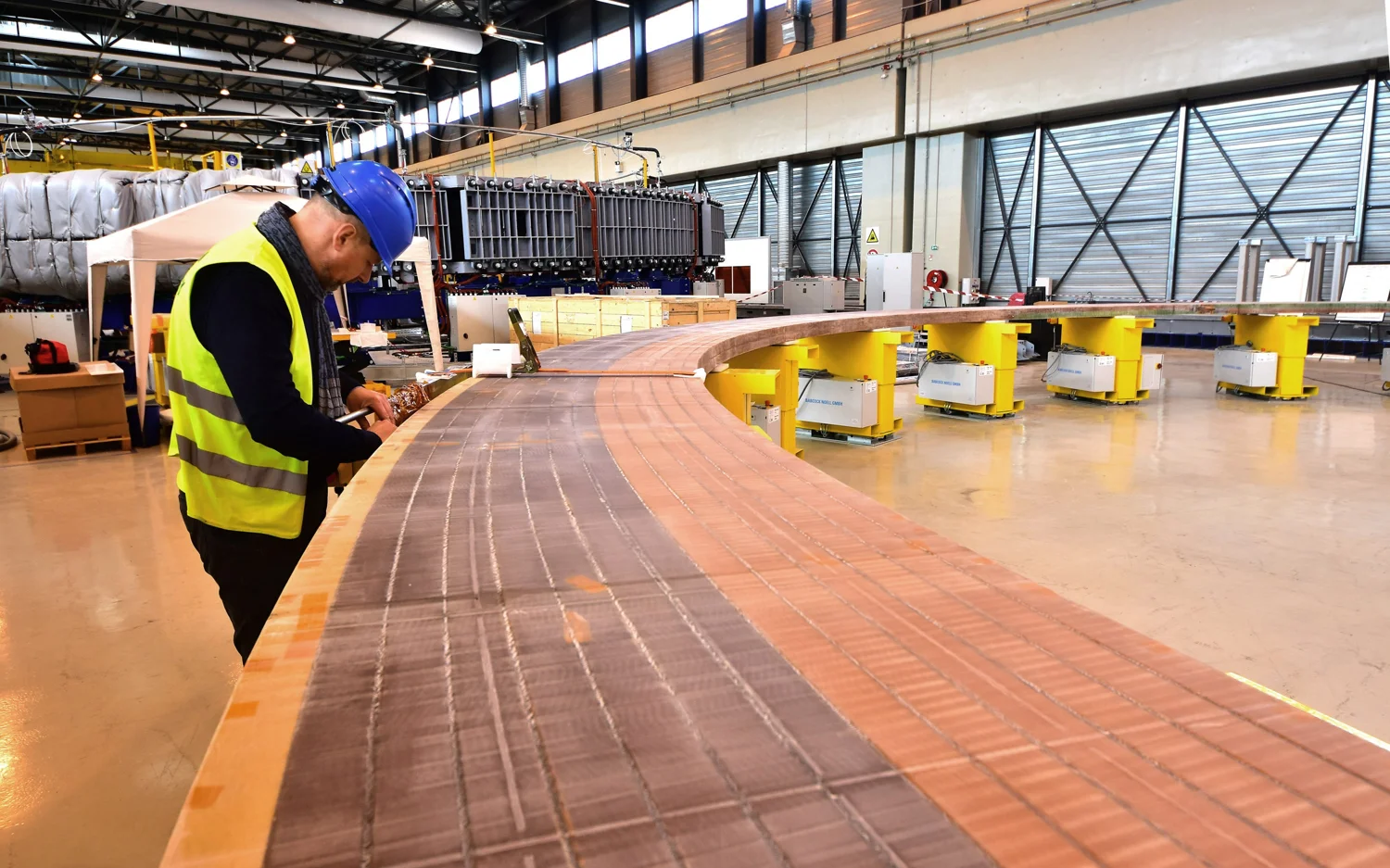
The equipment needed to make a large coil itself requires development. The PF5 dummy winding introduced by ITER on 9 April 2018 reproduced the actual size, but used copper rather than superconducting material to reduce costs.
The dummy winding was used to refine bending procedures, resin-injection time and other parameters and verify the manufacturing sequence. This is not a claim that product materials can simply be substituted; it is an example of designing a test article around the process to be verified. Process verification using a dummy winding
For resin and equipment manufacturers, the question is not just the material specification but whether it can be applied at the actual size and shape. Good results on a small specimen do not ensure that resin will reach every part of a giant winding equally. Test articles, fixtures and application conditions must be considered together.
Introducing resin to provide insulation and rigidity
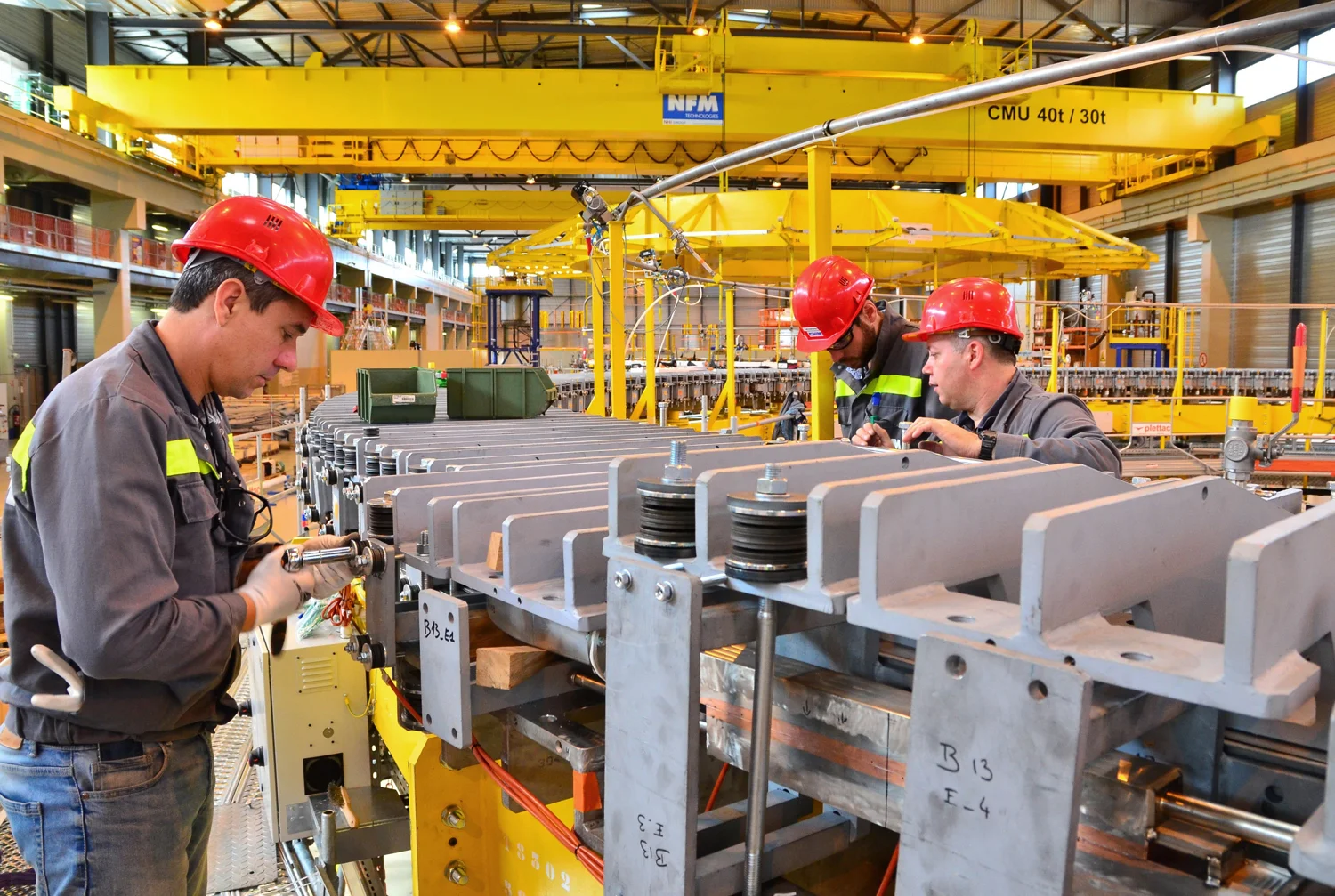
“Impregnation” means distributing a liquid into gaps in a material. In ITER’s manufacturing process, a winding is placed in a dedicated mould, impregnated with epoxy resin using vacuum and pressure, and then cured. This is called VPI, short for Vacuum Pressure Impregnation.
The resin fills gaps in the insulating tape, providing electrical insulation while consolidating the winding into a rigid structure. Individual double pancakes are treated, stacked and connected; the complete assembly is then also impregnated. Explanation of manufacturing equipment and processes
Not every area should be bonded solid, however. The 2018 PF5 description explains that conductor ends intended for later electrical connections received different treatment to prevent resin bonding there. Material, mould and joint design are interconnected tasks.
Monitoring continues through curing, not just injection
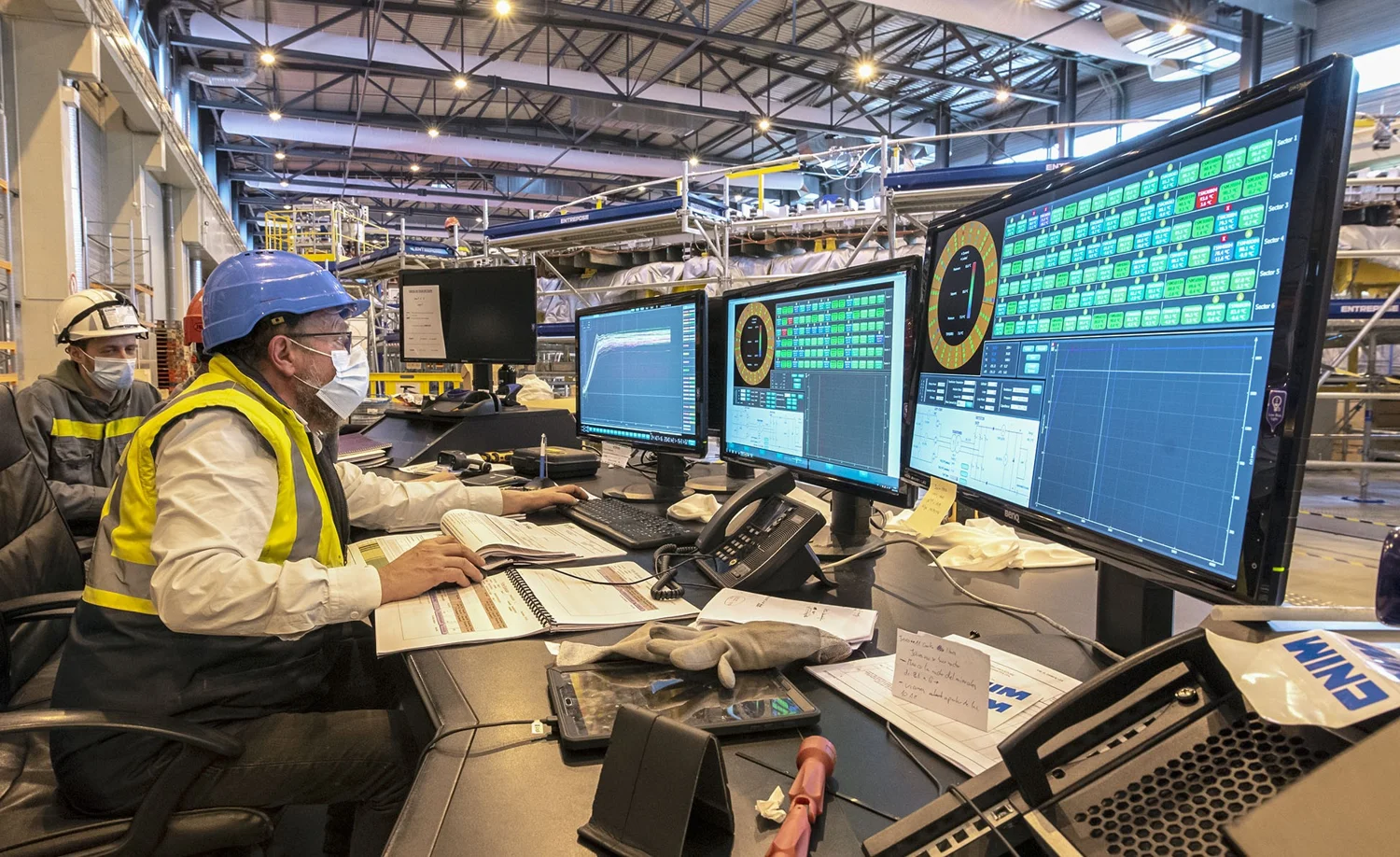
An ITER article of 25 January 2021 described monitoring the impregnation of a PF4 double pancake with around 100 sensors. The process tracked temperature, vacuum conditions inside the mould and injection pressure. Monitoring during impregnation
A later report on impregnation of the complete PF4 coil, dated 25 July 2022, stated that 2,700 litres of resin were used and curing was monitored by day and night shifts. These conditions applied to that particular coil; they are not a standard procedure that can be applied unchanged to other magnets. Record of the curing process
Manufacturing also includes cooling tests to check behaviour. Official manufacturing records describe tests at around 80 K, but these do not demonstrate superconducting operation itself at around 4 K. Temperature figures must be read alongside what the test is intended to verify.
Companies can connect materials with their application
The four large ring coils manufactured by Europe on site were completed in 2021–2024. The photographs and processes discussed here record that manufacturing experience; they are not announcements of new orders.
Possible business interfaces include insulating materials, resin mixing and injection equipment, dedicated moulds, heating and monitoring equipment, and management of process records. This is editorial analysis of public examples. Prospective entrants should check individual specifications for required dielectric withstand performance and service environments, material combinations, working time, inspection methods and responsibility for prototype costs.
Making fusion magnets requires both technologies that conduct electricity and technologies that reliably insulate it. Companies can apply their experience not only by supplying materials but also by applying them reproducibly to large components.
- ITER | Magnet configuration and roles (official technical explanation; publication date unspecified); checked 12 October 2026
- ITER | Turning tables and hot resin (published 23 July 2018; manufacturing processes at the time); checked 12 October 2026
- ITER | Hot resin before the deep cold (published 9 April 2018; dummy winding and process verification); checked 12 October 2026
- ITER | Coil Fabrication on Site (manufacturing record, 2017–2024; page publication date unspecified); checked 12 October 2026
- ITER | Keeping an eye on the hot (double) pancake (published 25 January 2021; monitoring process at the time); checked 12 October 2026
- ITER | In the slow cooker (published 25 July 2022; PF4 curing process at the time); checked 12 October 2026
Information checked as of:2026-10-12
Explanation based on ITER’s official manufacturing records from 2018–2024. Distinguishes completed manufacturing, plans at the time and editorial business analysis. This is not a current procurement solicitation.