W7-X's cooled divertor went through more than 60 prototypes
Plansee and IPP's W7-X divertor shows how bond inspection, alloy checks and receiving tests underpin repeatable industrial production.
Read the Japanese original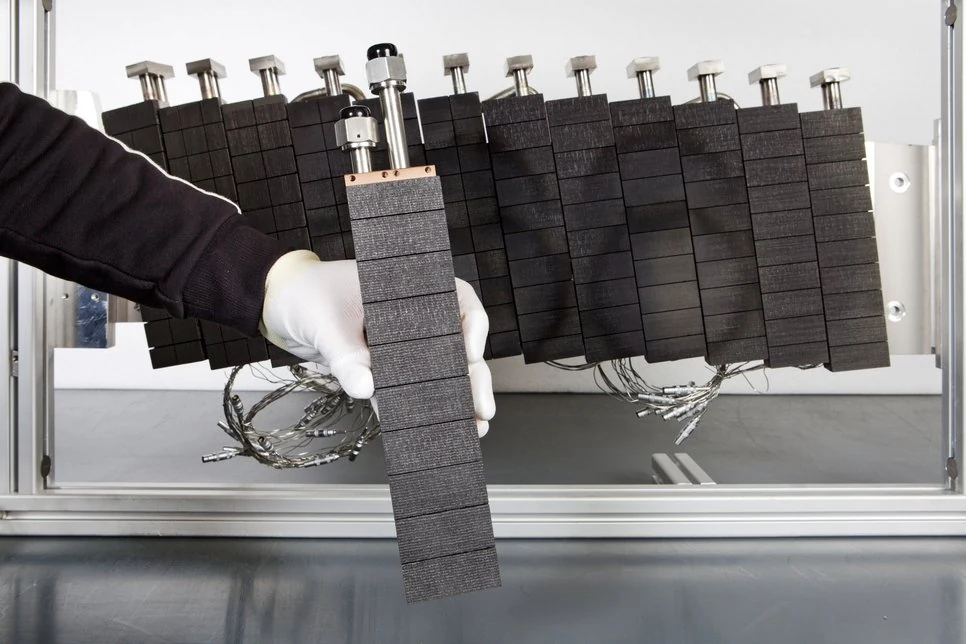
W7-X required more than 60 prototypes before series production of its cooled divertor elements began. The finished shape conceals much of the work: joining carbon to a copper alloy, carrying heat into water, and keeping that water contained. What did the manufacturer and the laboratory have to establish before they could deliver repeatable quality?
From more than 60 prototypes to series production
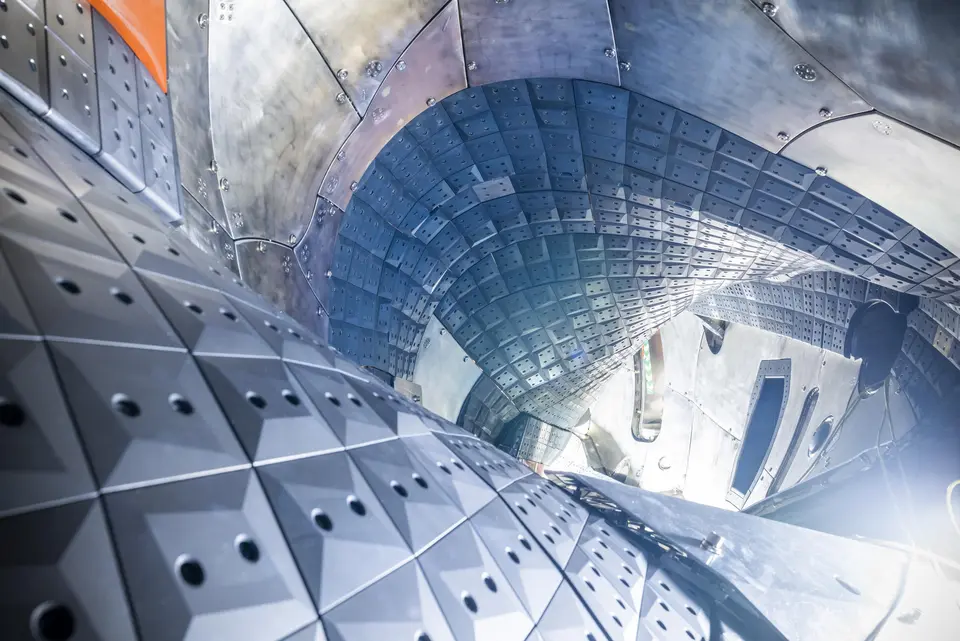
The water-cooled divertor of the German fusion experiment Wendelstein 7-X receives heat and particles leaving the plasma. IPP's 2020 manufacturing account traces a development and production contract in 2003, four pre-series and more than 60 prototypes, followed by five years of series production starting in 2009.
The project required 890 target elements. IPP reports 82 manufacturing steps and 44 tests for a completed element. These count manufacturing and verification operations, rather than plasma performance. IPP's manufacturing account
Inspecting the bond tile by tile
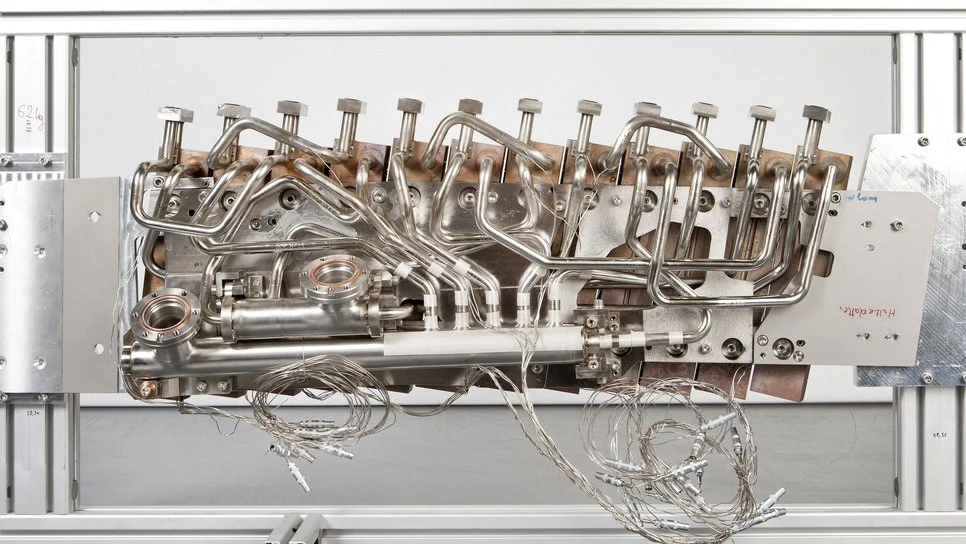
The plasma-facing surface is carbon-fibre-reinforced carbon (CFC); the heat sink beneath it is a copper-chromium-zirconium alloy, CuCrZr. Heat must cross the interface between these materials to reach the cooling water.
IPP's 2011 research report describes joint development with Plansee: laser structuring of the tile's joining surface, a copper alloy and a compliant copper layer. Making the thermal connection is a separate challenge from choosing a heat-resistant surface. Research report on the joint
A 2016 conference contribution by IPP and Plansee authors identifies bond reliability as the critical issue. Each tile was inspected by pulsed thermography after joining and before delivery. The temperature response to a short thermal input provides a way to assess the otherwise hidden interface.
Manufacturer checks and receiving tests
The 2016 report distinguishes quality assurance during Plansee's industrial production in Austria from W7-X's final assessment of delivered elements. Hardness and electrical conductivity measurements checked the copper alloy. Receiving tests included helium tightness under pressure and at different temperatures; high-heat-flux testing used a statistical approach. SOFT 2016 production report
Tile-by-tile inspection and statistically based heat-load testing were different operations. Treating them as an identical full heat test of every part would misrepresent the production strategy.
Supplying a component and a dependable process
A repeatable manufacturing process on the supplier's side and receiving tests on the laboratory's side provide different evidence. Together, they can help locate a problem in the material, joint, heat treatment or inspection process. FI sees this combination as part of the value delivered with a component.
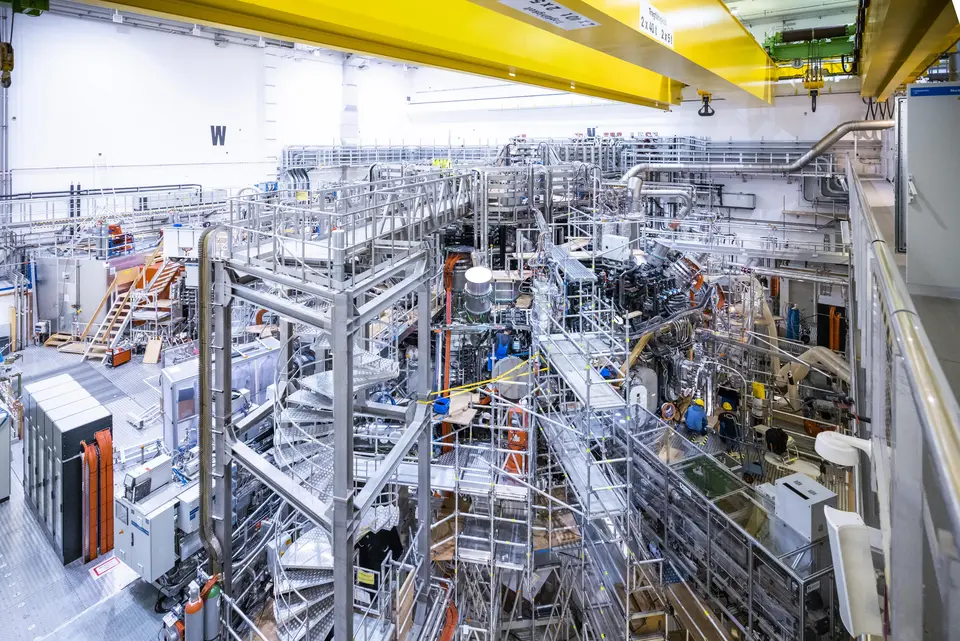
Making one successful prototype and repeatedly supplying consistent products are different tasks. The latter also requires measurement methods and acceptance procedures. For companies considering fusion products, W7-X poses a practical question: what manufacturing and inspection evidence accompanies the performance specification? This industrial analysis draws on development and production accounts from 2011–2020; the photographs show historical components and the device.
Information checked as of:2026-11-23
2011年研究報告、2016年会議報告、2020年製造史に基づく産業分析。新規発注や2026年の製造実績を報じる記事ではない。