TAE upgrades heating systems on its Norm fusion machine
On November 17, TAE detailed work on Norm’s fueling, neutral beams and radio-frequency heating. It targets 100 million °C in 2027; it has not reported reaching that mark.
Read the Japanese originalAnnouncement date:2026-11-17
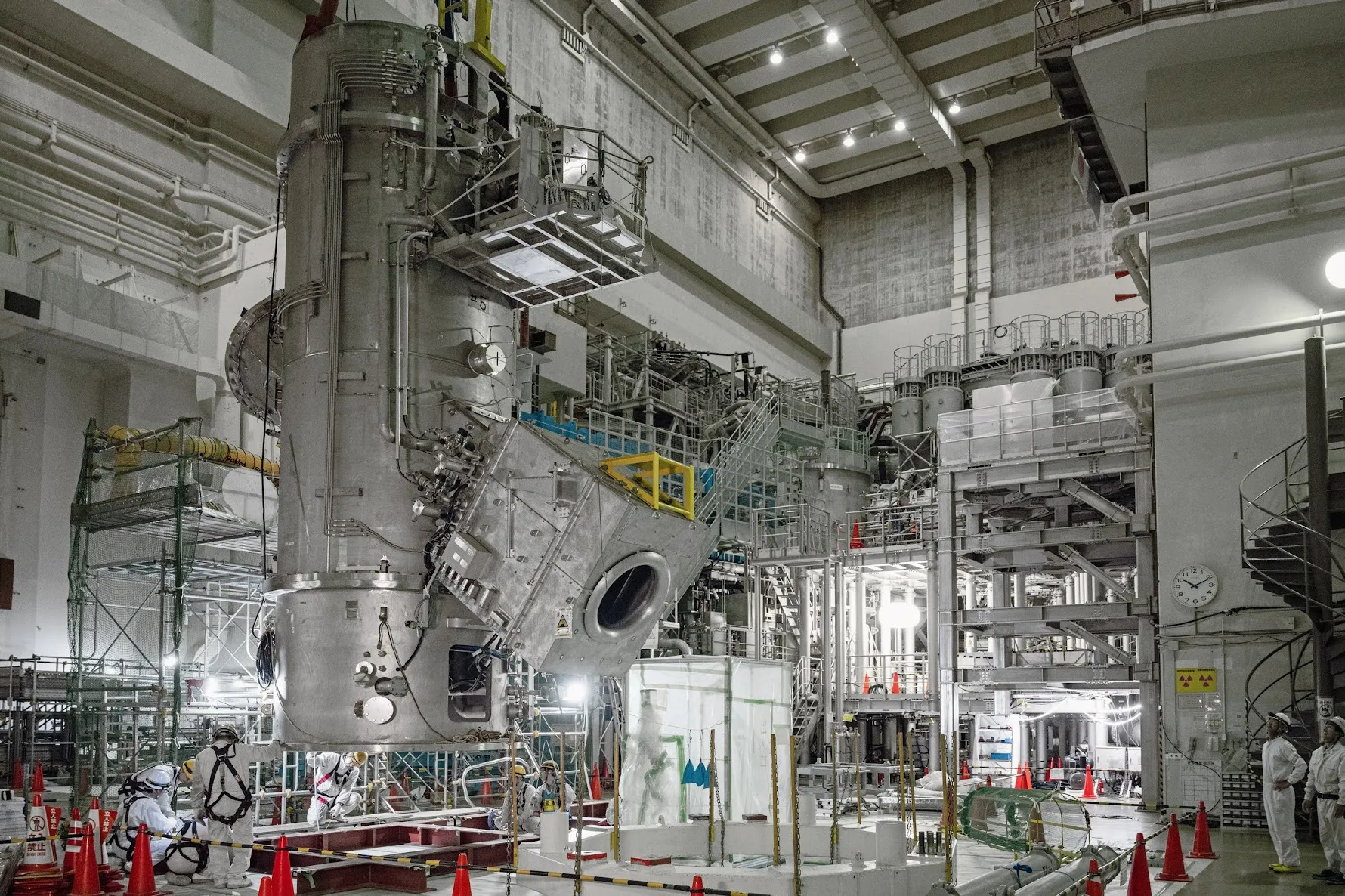
TAE Technologies detailed progress on three upgrades to its Norm fusion experiment on November 17: fueling, neutral particle beams and radio-frequency (RF) heating. The company aims to move from its previous operating temperature of about 70 million °C to 100 million °C in 2027, subject to installation and testing. Why adjust fuel delivery as well as heating?
Separating heat input from fuel delivery
Norm uses neutral beams from particle accelerators to form, heat and sustain a field-reversed configuration (FRC) plasma. The upgraded fueling system is intended to support denser, longer-lasting plasmas, while higher-power neutral beams will deliver more heat and particles. RF heating can supply additional energy without introducing more fuel. Together, these systems give operators different ways to control plasma temperature and density.
The 100-million-degree mark remains a target
TAE aims to reach 100 million °C in 2027 at fusion-relevant density and confinement, conditional on completing the installation and tests. Its November announcement does not claim that temperature has already been achieved. That temperature relates to deuterium–tritium fusion conditions, distinct from TAE’s longer-term hydrogen–boron fuel ambitions.
The company expects the three upgraded systems to carry over into its planned 50 MW Da Vinci demonstration plant. Its 2031 fusion-energy demonstration date is also a company target, not a measured result. Heating, fueling and confinement have to work together; the next meaningful evidence will be measured operating performance across the upgraded systems.
- TAE Technologies: Norm upgrade progress (November 17, 2026)
- TAE Technologies: Neutral-beam-only FRC result (April 15, 2025)
Information checked as of:2026-11-22
TAE reports upgrade progress and targets for 2027 and 2031; it does not report 100 million °C, a 50 MW electrical output or commercial operation as achieved.