SPARC’s test magnet left out turn-to-turn insulation
MIT and CFS tested a superconducting magnet without turn-to-turn insulation. Its current paths connect manufacturing choices to charging behaviour and quench protection.
Read the Japanese original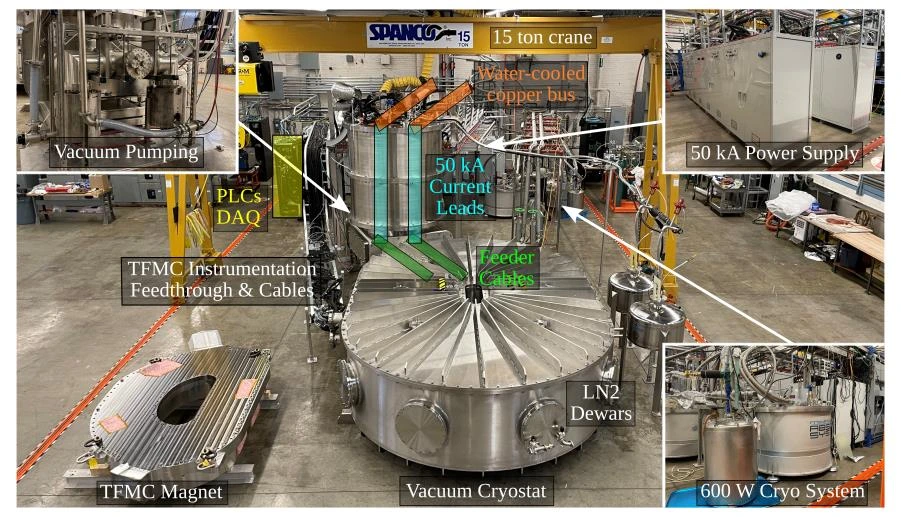
A coil normally keeps adjacent turns electrically separated. Yet MIT and CFS left out turn-to-turn insulation in a large test magnet for SPARC. They deliberately allowed current to take another route. What does that choice offer, and what becomes harder to control?
More than one route for current
Superconductivity removes electrical resistance within a range of temperature, field and current. Outside those conditions, resistance and heating can appear. A quench—the loss of superconductivity—therefore concerns protection of the whole magnet, not just tape performance.
In a no-insulation winding, current can move between neighbouring turns. If resistance develops in one region, that provides alternative paths. Those transverse paths have resistance too, and produce heat. Removing insulation does not remove the thermal problem.
Different conductors for different jobs
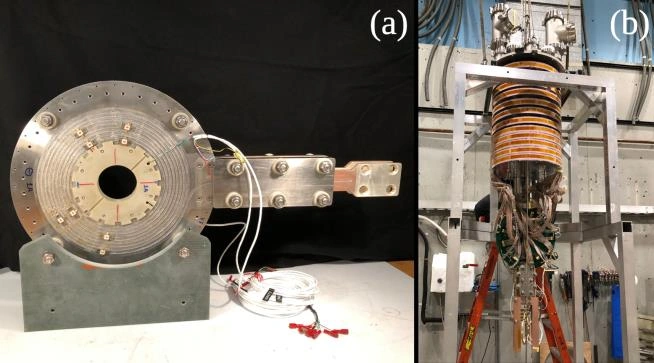
The NINT design places stacks of REBCO high-temperature superconducting tape in spiral grooves machined into metal plates and solders them in place. Coolant channels occupy the other side. Conductor, structure and cooling are designed together. Original paper, Section V
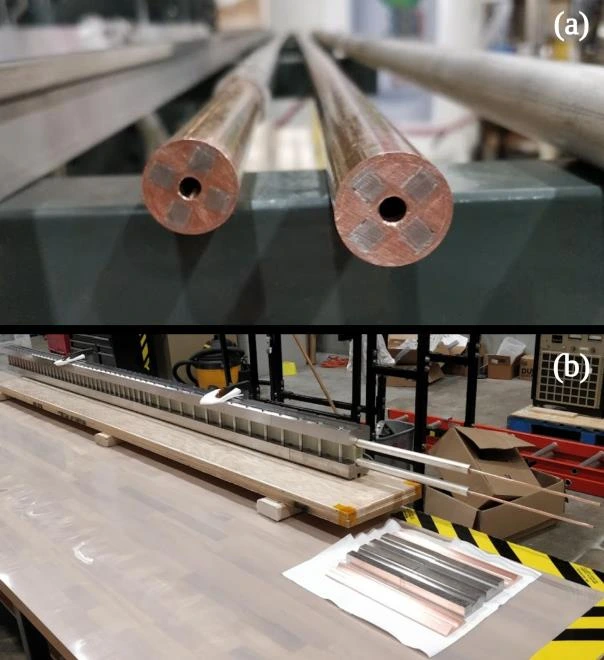
VIPER cables, developed in the same programme, use a different insulated configuration and also supplied current to the test facility. The paper assigns NINT to steady-field TF magnets because of its long charging and discharging time constant. Rapidly changing fields in a central solenoid impose different requirements. The pictured VIPER cable is not the TFMC winding.
Testing the idea at fusion scale
Small no-insulation coils had demonstrated protective behaviour by distributing stored magnetic energy through the cold mass. MIT and CFS tested whether that behaviour could extend to fusion-scale equipment in the Toroidal Field Model Coil, or TFMC. The pictured NINT coil is an earlier development specimen.
Separate from the normal-performance tests, the team intentionally opened the circuit at 31.5 kiloamperes of terminal current in 2021. The paper reports current, voltage and temperature measurements, followed by local thermal damage found after disassembly. Small-coil self-protection did not guarantee damage-free behaviour at large scale. Test results and examination, Section VI
MIT's 2024 account describes using the measurements to distinguish models of heating and damage location. These are historical magnet tests, not a report of SPARC's current operating performance. MIT account
The work that remains without insulation
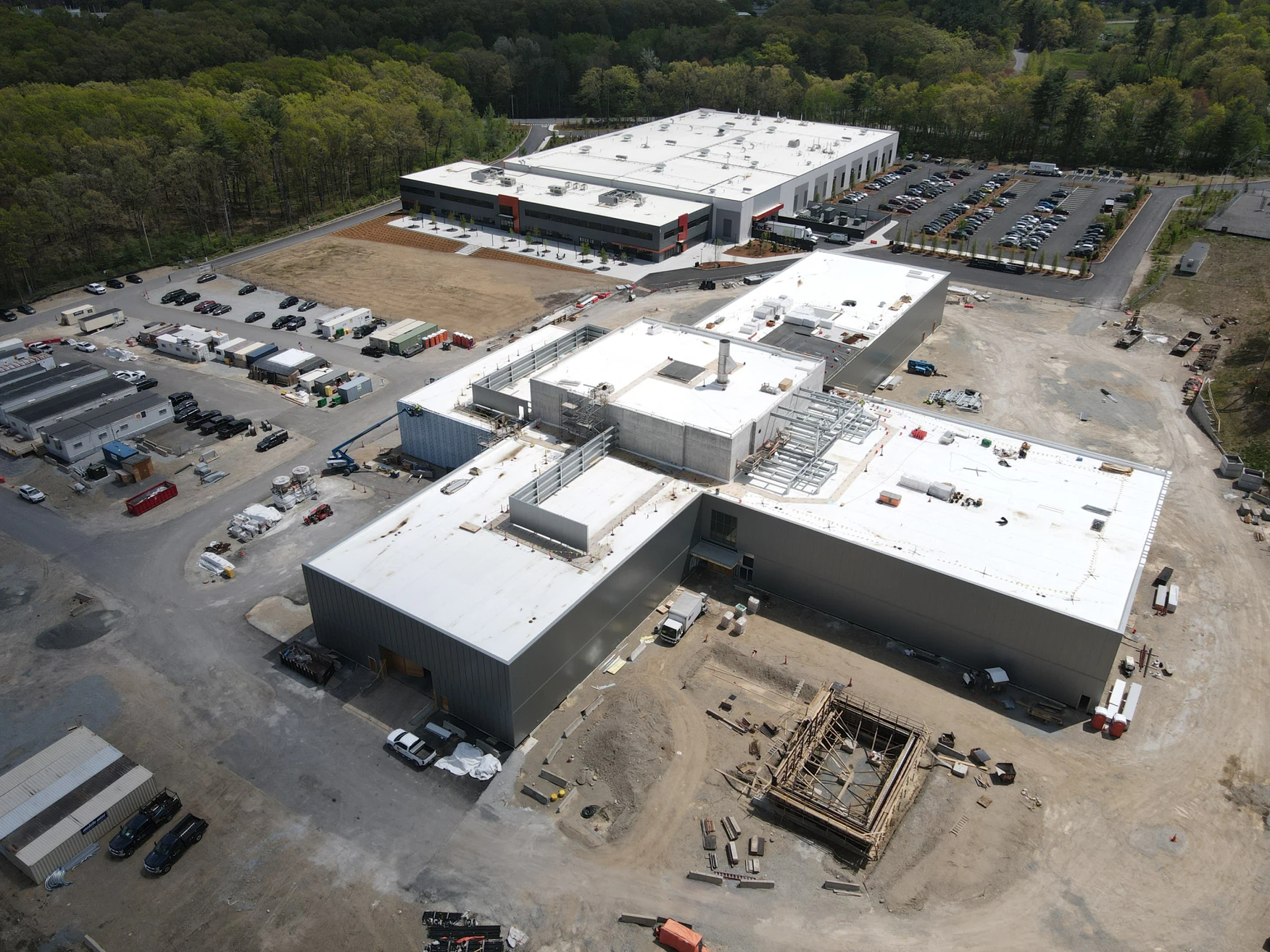
Removing insulation changes manufacturing and maintenance options. The paper explains how avoiding an epoxy-impregnated winding pack and using demountable joints aids disassembly. Designers must still determine where current flows and where heat accumulates, together with geometry and cooling. The site photograph records SPARC construction in May 2023; it is not the MIT test facility.
FI's reading is that omitting one material changes inspection and operation as well. Producing a strong field and accommodating stored energy during abnormal events are both jobs for the same magnet. Removing one component can add another path that must be understood.
Sources
- Hartwig et al., The SPARC Toroidal Field Model Coil Program(原著・2023年、v1)
- MIT:2021年の磁石試験と試験後の分析(2024年3月4日)
- LaBombard:TFMCの失超応答(2024年10月、著者講演要旨)
- Creely et al.:SPARC開発と建設(敷地写真、2023年)
Information checked as of:2026-11-23
Historical TFMC tests in 2021, reported in 2023 and 2024. These results do not establish SPARC’s current operating performance, damage-free performance of completed magnets, or a general guarantee of self-protection.