Realta Fusion explained: pursuing fusion energy with magnetic mirrors
Explore Realta Fusion through WHAM experiments, direct energy conversion, future tandem mirrors, heat and fuel systems, and collaboration with CFS, Kyoto Fusioneering and a utility. Separate experimental achievements from development plans.
Read the Japanese original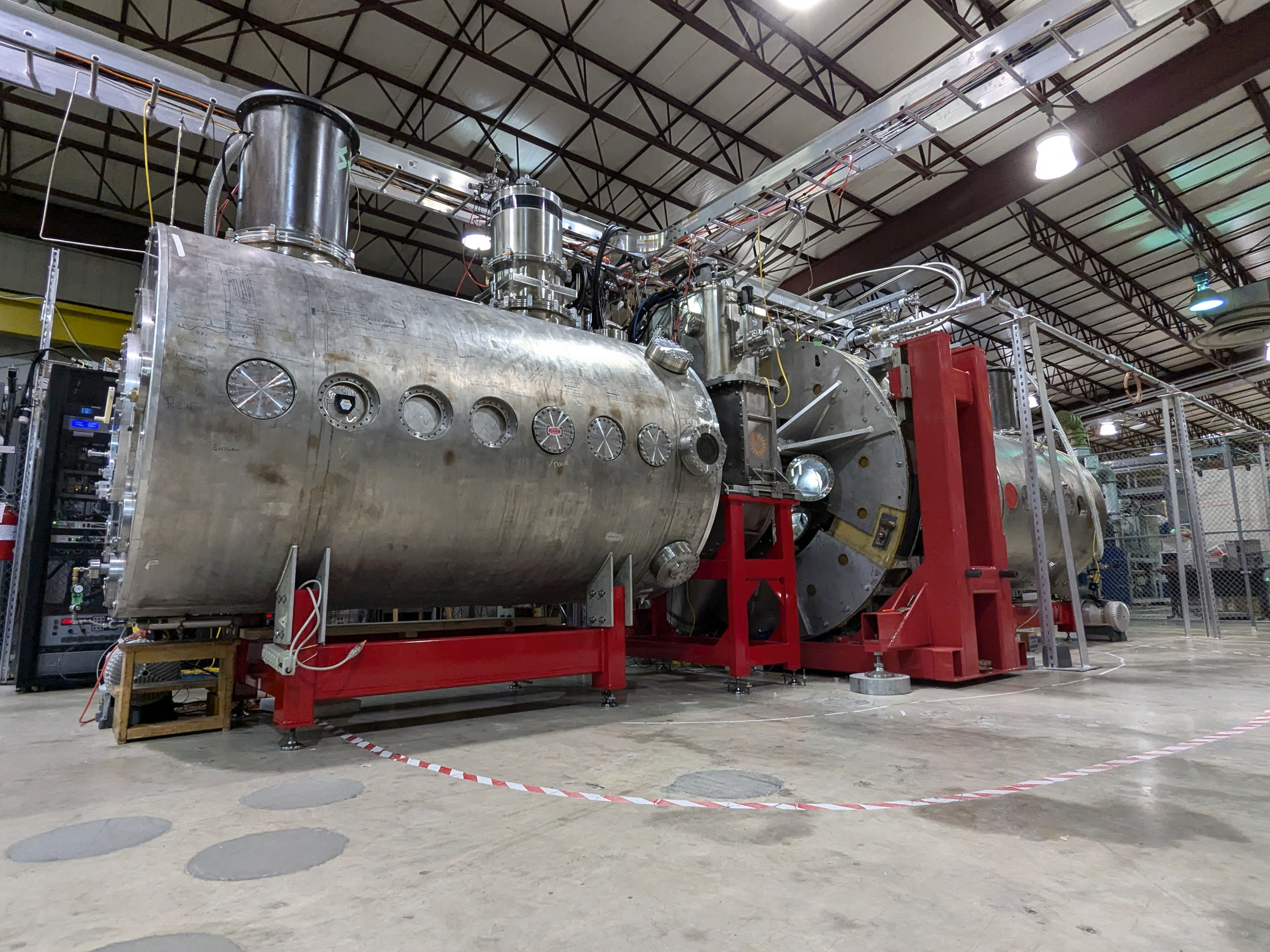
Wisconsin-based Realta Fusion is developing fusion systems to supply industrial heat and electricity using a straight, magnetic mirror configuration. Founded in 2022 out of research at the University of Wisconsin–Madison, the company has expanded its work with equipment manufacturers and a local utility while advancing high-field plasma experiments, energy recovery and the design of future devices.
The story extends beyond how the plasma is confined. How can heating, fuel, heat extraction and maintenance work together to deliver energy that factories and electricity grids can actually use? Looking at the whole system helps explain both Realta’s ambitions and the questions still to be answered.[1][3][7][16]
The heat and electricity industry needs
Chemical processing and metals recycling depend on heat for manufacturing. Data centers, by contrast, primarily need electricity. Realta identifies these industries, along with remote mines, as potential future users.
The company’s term “CoSMo fusion” stands for compact, scalable and modular. It also emphasizes continuous operation, ease of maintenance and equipment upgrades. These are development goals, however, rather than capabilities already demonstrated in full at a commercial facility.
If heat is part of the product, the question is broader than how many watts a system can generate. How will it deliver heat or electricity at the temperatures and operating conditions its customers require? Thinking about an energy system from the demand side is a distinctive part of Realta’s approach.[2][3]
How a magnetic mirror confines particles
A magnetic mirror typically uses a stronger magnetic field at both ends of an elongated plasma. Unlike a tokamak, whose plasma forms a ring, it has a broadly linear arrangement with open ends. The word “mirror” does not mean that a physical reflecting surface bounces the plasma back.
Charged particles spiral around magnetic field lines while also moving along them. When a particle with a suitable direction of motion enters a stronger field, its velocity along the field decreases until it reverses direction. Strong fields at both ends can return many particles toward the center, allowing them to bounce back and forth inside the device.
Particles moving almost parallel to the field lines, however, can escape more readily through the ends. The range of directions associated with this escape is called the loss cone. Collisions between particles can also scatter previously confined particles into directions from which they can escape. Controlling these losses of particles and energy is a central challenge in magnetic-mirror research.
High-temperature superconducting magnets can help. Increasing the mirror ratio, the ratio of the magnetic field at the ends to that at the center, narrows the loss cone and can improve confinement. Magnetic field strength alone does not determine performance, though. Radio-frequency and neutral-beam heating, as well as plasma stability, must be considered together.
Charged particles leaving the open ends also offer an opportunity to recover energy. Realta is pursuing advances in both confinement and recovery.[3][4]
WHAM connects university research with company development
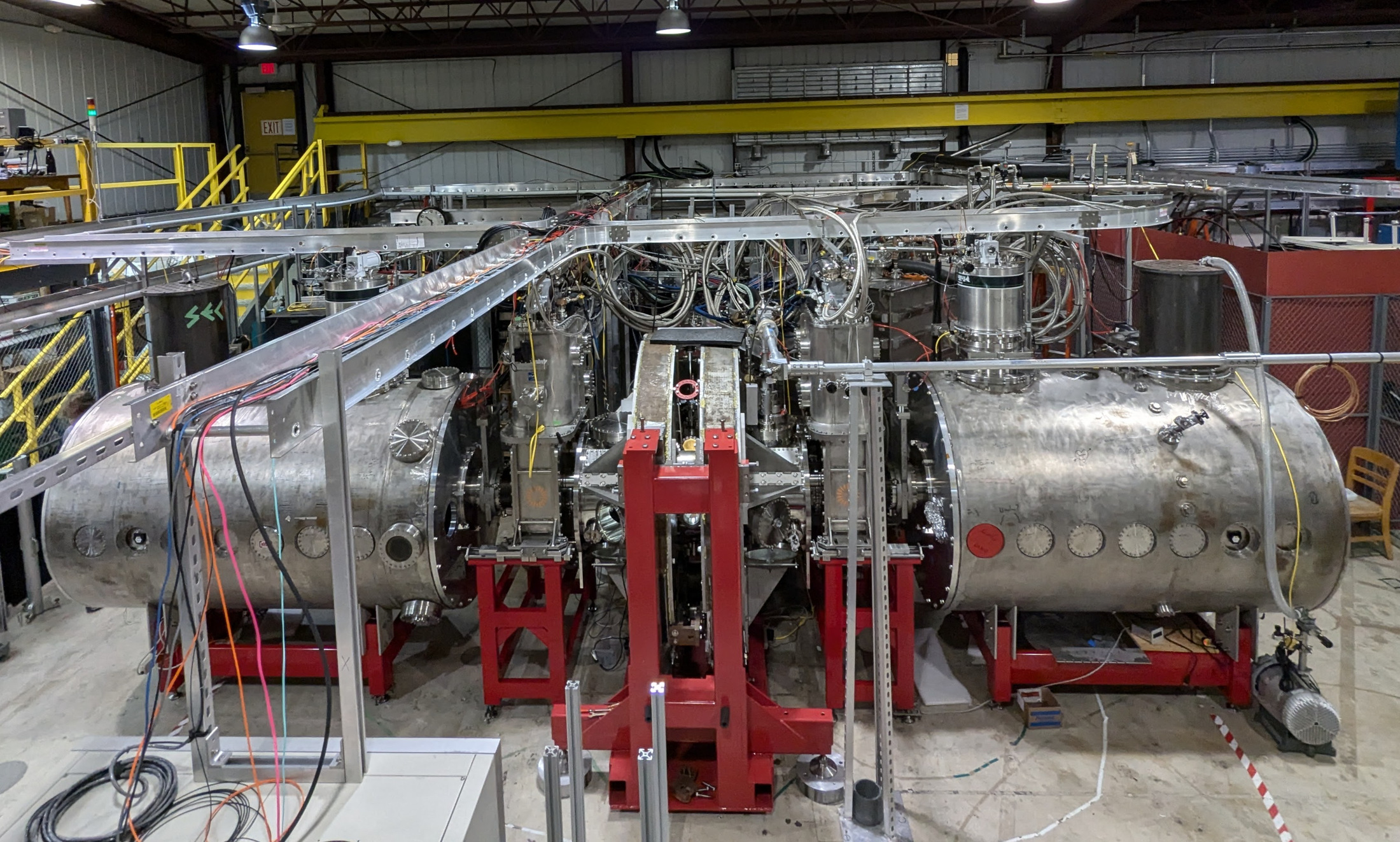
At the center of this research is the Wisconsin HTS Axisymmetric Mirror, or WHAM. It is a simple magnetic-mirror experimental device at the University of Wisconsin–Madison’s Physical Sciences Laboratory.
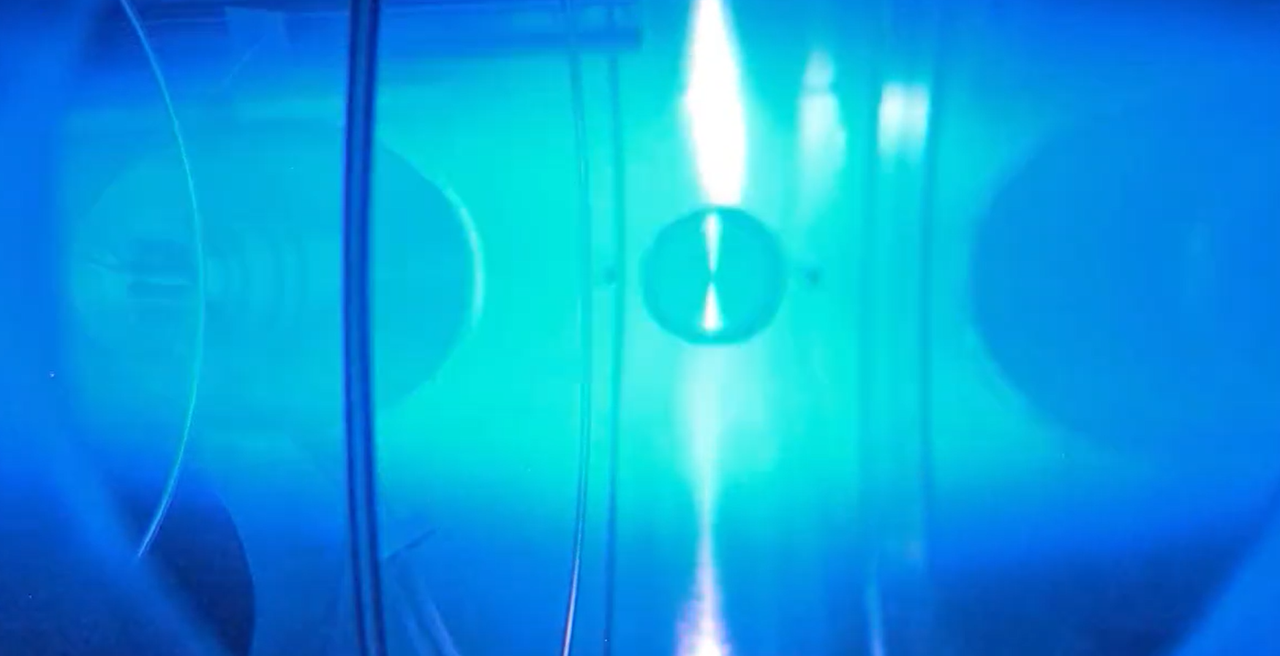
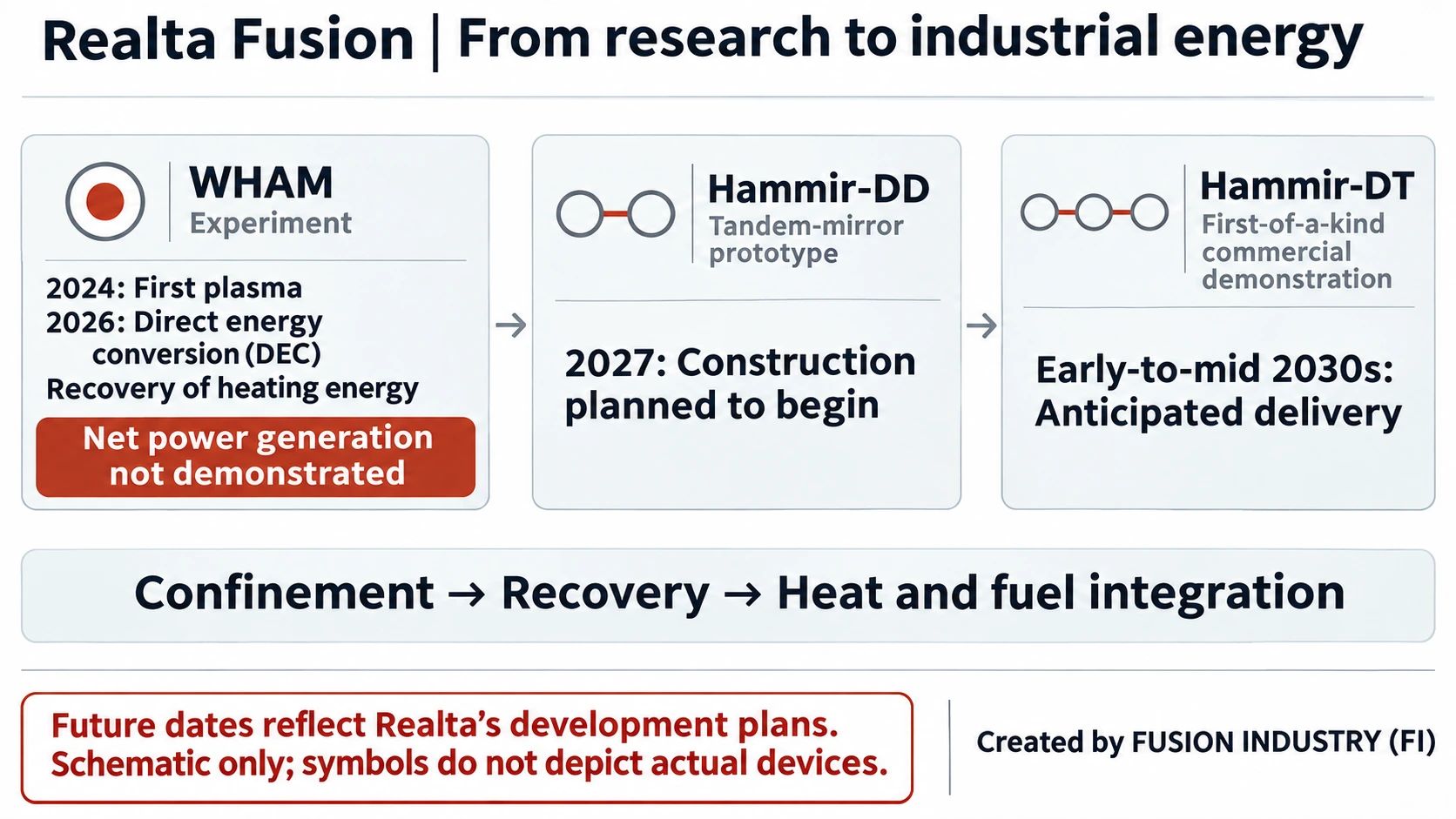
Development began in 2020 through research funding for the university, MIT and Commonwealth Fusion Systems (CFS). WHAM achieved first plasma in July 2024. CFS supplied its high-temperature superconducting magnets.
The university states that the two mirror coils can produce fields of up to 17 tesla. CFS’s 2026 account also describes achieving 17 tesla during first plasma in 2024. This figure refers to the strong field generated by the mirror coils. It does not mean that the entire plasma sits in a uniform 17-tesla field: the difference between the end and central fields is part of the confinement mechanism.
According to Realta, its collaboration with the university operates under a comprehensive research agreement, with Realta as WHAM’s sole research sponsor and the two organizations operating the device jointly. WHAM is an experimental platform connecting university research infrastructure with company development.[1][5][6][R]
Recovering escaping particles’ energy directly as electricity
On June 19, 2026, the Realta and university team demonstrated direct energy conversion (DEC) on WHAM. According to the June 30 announcement, the initial prototype produced approximately 100 volts at several amperes.
DEC uses electrostatic potentials to slow escaping charged particles and recover their kinetic energy as electricity. It provides a route to electrical energy distinct from first converting energy into heat and then generating electricity with a heat engine.
The origin of the recovered energy matters. WHAM is an experimental device using deuterium, and most of the energy recovered in this experiment had been supplied externally to heat and sustain the plasma. The demonstration did not show electricity from fusion reactions exceeding the device’s electricity consumption.
Recovering some of the energy used for heating could nevertheless improve the energy balance of future facilities. The next questions concern conversion efficiency, scaling up output, durability and operation alongside other equipment.
[4][7]
Fuel delivery and diagnostics behind the experiments
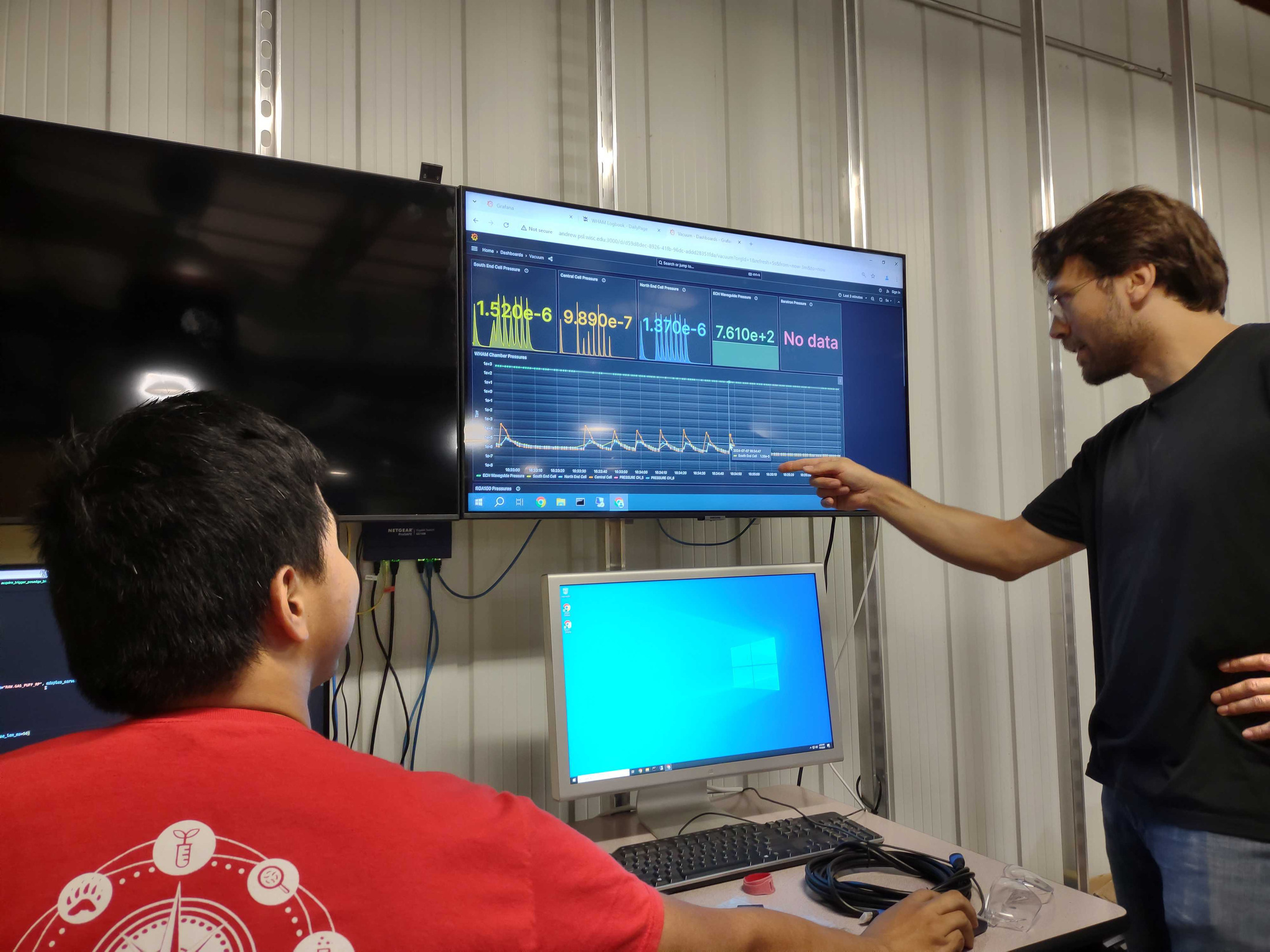
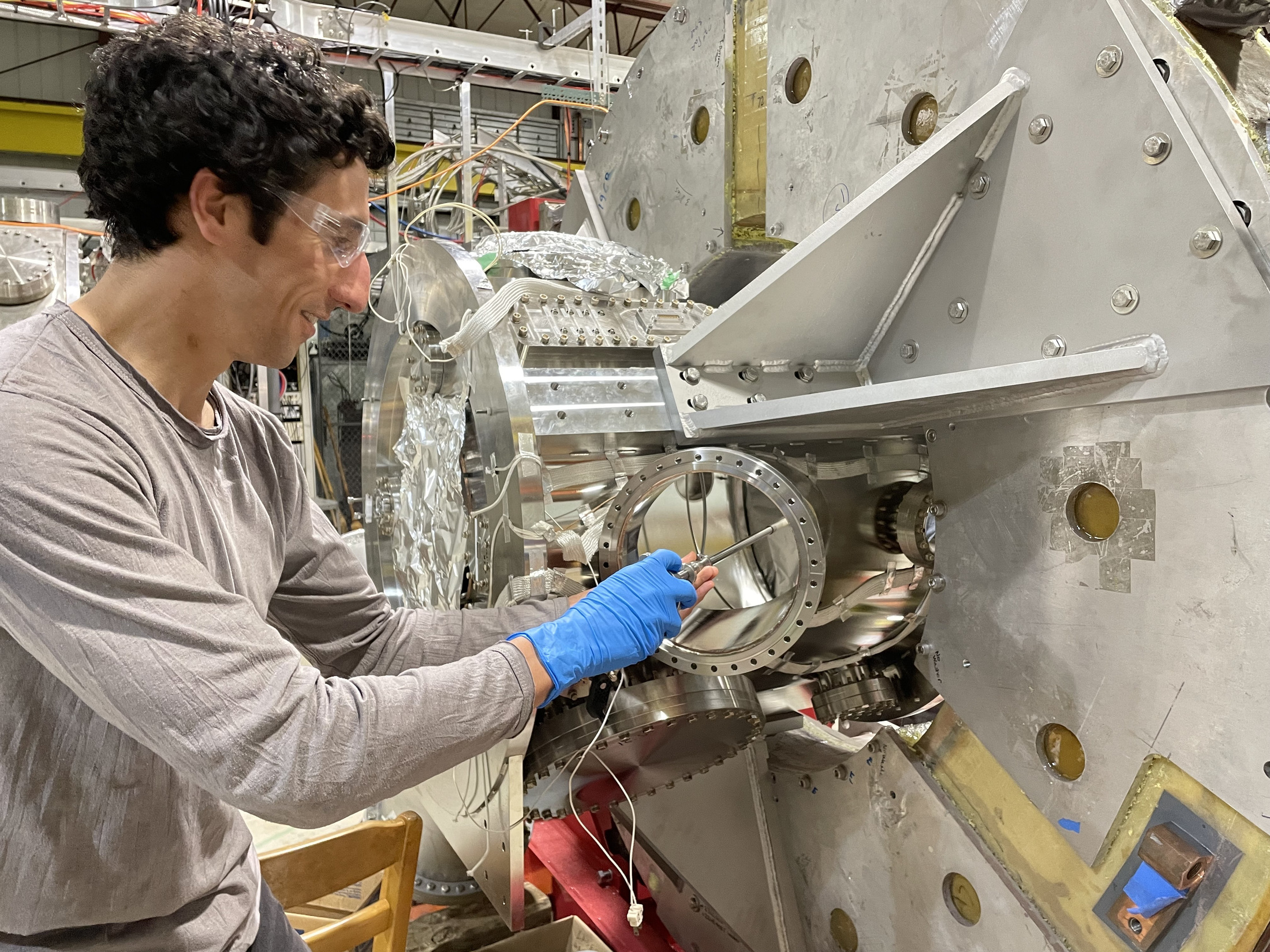
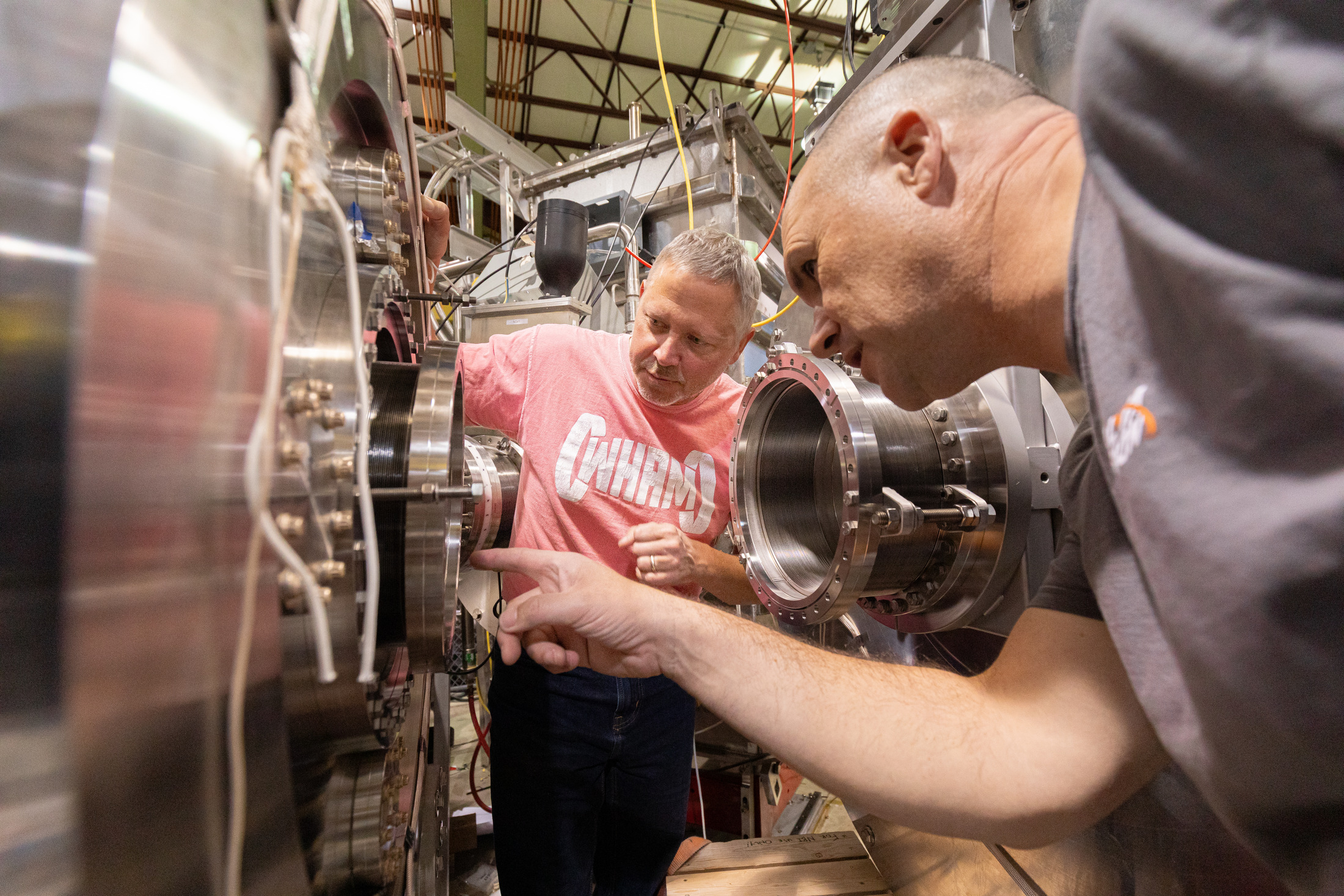
The WHAM photographs show some of the work behind the research. The university’s Mason Yu and Realta’s Elliot Claveau calibrate the gas injection system, while Doug Endrizzi adjusts plasma diagnostics. Reproducible fuel delivery and measurements of what happens inside the device provide the basis for subsequent experiments and designs.
A 2026 equilibrium-reconstruction study combines measurements and calculations to infer the plasma state inside WHAM. In some experiments, it indicates the presence of fast ions bouncing along the device’s axis. A diagnostics paper published in July of the same year describes measuring plasma light through multiple channels to track large-scale motion. Such measurements are essential for comparing model predictions with the behavior of the actual device.[9][10]
The team’s expertise also extends beyond the plasma. Alongside co-founder and CEO Kieran Furlong and Founding Chief Scientist Cary Forest, founding scientists include Jay Anderson, whose expertise covers heating and stability; Ben Lindley, who works on blanket design; and Oliver Schmitz, who specializes in plasma-facing components. The current team page lists Derek Sutherland as Chief Scientific Officer. Expertise in structures, fuel and heat is needed alongside confinement physics.[8]
Future devices move toward the tandem mirror
For future devices, Realta is researching a configuration called a tandem mirror. End cells sit on either side of a long central cell, using electrostatic potential differences in addition to magnetic confinement. The aim is to retain particles and energy more effectively in the central region where fusion reactions occur.
A 2025 paper predicting confinement performance and its corrigendum dated July 10, 2026, identify calculated operating points with fusion gain Q above 5. Here, Q is fusion power divided by the external power supplied to heat the plasma. It is not a measure of net electricity generation that includes the entire plant’s electricity consumption and conversion losses.
The correction addressed an error in the solution-finding procedure that had produced an invalid power balance. The corrected, self-consistent operating points still predict Q above 5. WHAM has not, however, already achieved that gain. Experimental validation, including stability studies, is needed to turn calculated operating points into a realizable device.[11][12]
According to Realta, the next device, Hammir-DD, is a tandem-mirror prototype planned for The Realta Forge, with construction intended to begin in 2027. The company positions Hammir-DT as its first commercial demonstration unit and expects delivery in the early to mid-2030s. Both are company development plans, not completed construction or operating milestones.[R]
Heat recovery and the fuel cycle in deuterium–tritium fusion
Realta says its first commercial systems will focus on deuterium–tritium (D–T) fusion. In D–T fusion, neutrons carry most of the reaction energy. Because neutrons have no electric charge, magnetic fields cannot confine them. Recovering energy directly from charged particles therefore cannot, by itself, make the entire facility work.
A blanket surrounding the plasma absorbs neutron energy as heat and breeds tritium from lithium. Heat extraction, fuel production and protection of the magnets must be considered together. Changes to materials and geometry affect several of these functions at once.
In August 2026, the university described joint research with Realta using an analysis tool called ParaTAN to compare magnet shielding and tritium-breeding blanket designs. This research investigates trade-offs in materials and geometry; it does not demonstrate fuel self-sufficiency at an operating power plant. It is design work toward future devices that can extract heat while sustaining their fuel supply.[4][13][R]
A supply chain that includes Japanese industry
The relationship with CFS goes beyond supplying WHAM’s magnets. A partnership announced on April 2, 2026, covers the design and manufacture of high-temperature superconducting magnets for future prototypes and commercial plants.
Japan’s Kyoto Fusioneering (KF) also announced a strategic partnership with Realta on March 16 of the same year. According to KF, it is supplying gyrotrons for future devices at the planned Realta Forge. A gyrotron generates high-power electromagnetic waves used to heat plasma.
Beyond heating systems, the collaboration includes work on magnetic-mirror neutron sources, blankets and fuel-cycle systems. It is a concrete example of Japanese fusion engineering connecting with US device development through equipment and systems.[1][14]
A development site and utility partnership prepare the next steps
On July 15, 2026, Realta announced that it had selected OM Station, the former Oscar Mayer site in Madison, for its new headquarters and research and development facility, The Realta Forge. The company plans to break ground on Forge in the fourth quarter of 2026 and begin commissioning test equipment in the first quarter of 2027, ahead of Hammir-DD construction. Selecting a site, breaking ground, bringing test equipment online and completing a prototype are separate milestones.[15][R]
On September 2, Realta announced a partnership with Madison Gas and Electric (MGE) and its parent, MGE Energy, to explore jointly developing a 200 MWe fusion power plant in Wisconsin. Alongside a direct investment by MGE Energy, the partnership includes support for technology, siting, permitting, grid interconnection and financing.
The public materials did not specify whether 200 MWe meant net or gross output. According to Realta, the intended figure is net electrical output. The partnership remains at the stage of exploring potential joint development, however. It is not a plant order, a decision to build a 200 MWe facility or a commitment to supply electricity.[16][R]
The financing instruments also need to be distinguished. In 2025, Realta completed a $36 million Series A led by Future Ventures. Separately, on February 17, 2026, Silicon Valley Bank announced a $9.5 million growth capital facility. Equity investment and a lending facility are different financing instruments, not the same fundraising round.[2][17]
Turning research results into usable energy
Assessing Realta’s progress means looking at how individual achievements connect. Confinement measurements provide evidence for testing models. Energy-recovery results need to be evaluated alongside the power required for heating, magnet cooling and other systems. Blanket and shielding design is inseparable from material durability, tritium handling and component replacement.
Long-duration operation must also fit maintenance needs and customers’ operations. For a factory, supply temperature, response to changes in demand and predictable downtime all affect how useful an energy source will be.
Around the magnetic-mirror approach, Realta is bringing together university research, specialists from different fields, equipment manufacturers and a utility. It is currently building an increasingly concrete path toward industrial energy systems through experiments and design. Following both the plasma results and the supporting technologies that convert them into heat and electricity gives a more accurate view of that challenge.[3][4][13][16]
Photographs supplied and use authorized by Realta Fusion. This article was prepared with factual clarification from the company. Individual photographers are credited with each image.
---
Sources
Numbers in the text correspond to the following materials.
[1] CFS: magnet partnership with Realta (April 2, 2026) https://cfs.energy/news-and-media/realta-fusion-and-commonwealth-fusion-systems-form-strategic-partnership-to-commercialize-magnetic-mirror-fusion-energy/
[2] Silicon Valley Bank: $9.5 million growth capital facility for Realta (February 17, 2026) https://www.prnewswire.com/news-releases/realta-fusion-secures-9-5-million-growth-capital-facility-from-silicon-valley-bank-a-division-of-first-citizens-bank-302689285.html
[3] Realta Fusion: Technology https://realtafusion.com/technology/
[4] Realta Fusion: DEC technical explanation (June 30, 2026) https://realtafusion.com/insight/a-fusion-first-realta-demos-direct-energy-conversion/
[5] UW–Madison: WHAM facility overview https://ignitingfusion.wisc.edu/facilities/wham/
[6] UW Physical Sciences Laboratory: WHAM https://uwpsl.wisc.edu/projects/fusion-energy/wham-fusion/
[7] Realta Fusion: DEC demonstration announcement (June 30, 2026) https://www.prnewswire.com/news-releases/realta-fusion-becomes-first-commercial-fusion-company-to-convert-plasma-energy-into-electricity-302813632.html
[8] Realta Fusion: About / Team https://realtafusion.com/about/
[9] WHAM equilibrium-reconstruction study: author-posted manuscript https://arxiv.org/html/2509.17288v4
[10] WHAM multichannel emission diagnostics paper: public abstract (July 2026) https://pubmed.ncbi.nlm.nih.gov/42439717/
[11] Confinement performance predictions for a high field axisymmetric tandem mirror (2025) https://www.cambridge.org/core/journals/journal-of-plasma-physics/article/confinement-performance-predictions-for-a-high-field-axisymmetric-tandem-mirror/E449D8C02AB9115173939B5C4649BD5E
[12] Corrigendum to the same paper (July 10, 2026) https://www.cambridge.org/core/journals/journal-of-plasma-physics/article/confinement-performance-predictions-for-a-high-field-axisymmetric-tandem-mirror-corrigendum/1721170FA043DFF371E5565DBB8960DD
[13] UW–Madison: mirror-fusion shielding and blanket design research (August 21, 2026) https://engineering.wisc.edu/blog/university-industry-partnership-identifies-new-solutions-for-mirror-fusion-devices/
[14] Kyoto Fusioneering: strategic partnership with Realta (March 16, 2026) https://kyotofusioneering.com/en/news/2026/03/16/3812
[15] Realta Fusion: Wisconsin R&D site selection (July 15, 2026) https://www.prnewswire.com/news-releases/realta-fusion-selects-wisconsin-for-fusion-energy-rd-facility-302824440.html
[16] Realta Fusion and MGE: exploring a 200 MWe plant (September 2, 2026) https://www.prnewswire.com/news-releases/realta-fusion--madison-gas-and-electric-announce-strategic-partnership-to-explore-200-mwe-fusion-energy-power-plant-in-wisconsin-302865022.html
[17] Cooley: Realta’s $36 million Series A (May 13, 2025) https://www.cooley.com/news/coverage/2025/2025-05-13-realta-fusion-announces-36-million-series-a
[R] Written responses from Robb Hughes, Head of External Affairs at Realta Fusion, received November 2, 2026. Responses cover development plans, the definition of MGE output, WHAM’s operating arrangements and photograph descriptions. Listed separately from publicly available materials.
- CFS: magnet partnership with Realta (April 2, 2026)
- Silicon Valley Bank: $9.5 million growth capital facility for Realta (February 17, 2026)
- Realta Fusion: Technology
- Realta Fusion: DEC technical explanation (June 30, 2026)
- UW–Madison: WHAM facility overview
- UW Physical Sciences Laboratory: WHAM
- Realta Fusion: DEC demonstration announcement (June 30, 2026)
- Realta Fusion: About / Team
- WHAM equilibrium-reconstruction study: author-posted manuscript
- WHAM multichannel emission diagnostics paper: public abstract (July 2026)
- Confinement performance predictions for a high field axisymmetric tandem mirror (2025)
- Corrigendum to the same paper (July 10, 2026)
- UW–Madison: mirror-fusion shielding and blanket design research (August 21, 2026)
- Kyoto Fusioneering: strategic partnership with Realta (March 16, 2026)
- Realta Fusion: Wisconsin R&D site selection (July 15, 2026)
- Realta Fusion and MGE: exploring a 200 MWe plant (September 2, 2026)
- Cooley: Realta’s $36 million Series A (May 13, 2025)
Information checked as of:Not recorded