 Realta Fusion
 connects magnetic-mirror experiments, industrial heat and electricity ambitions, and a growing supply chain; explore WHAM, DEC, Forge and its development roadmap.
Official company website ↗Read the Japanese originalWHAM experiments and DEC tests; tandem-mirror design and development
- COUNTRY
- United States
- TECHNOLOGY
- Magnetic mirror / tandem mirror
- FOUNDED
- 2022
- FUNDING
- $36 million Series A in 2025; separate $9.5 million growth-capital debt facility announced in February 2026
This is a general development-stage reference. This company's or project's precise stage is unconfirmed, so no position is assigned. Development pathways vary by technology and business.
Hammir-DD construction planned from 2027; Hammir-DT delivery anticipated in the early-to-mid 2030s
Bringing fusion to industrial heat and electricity
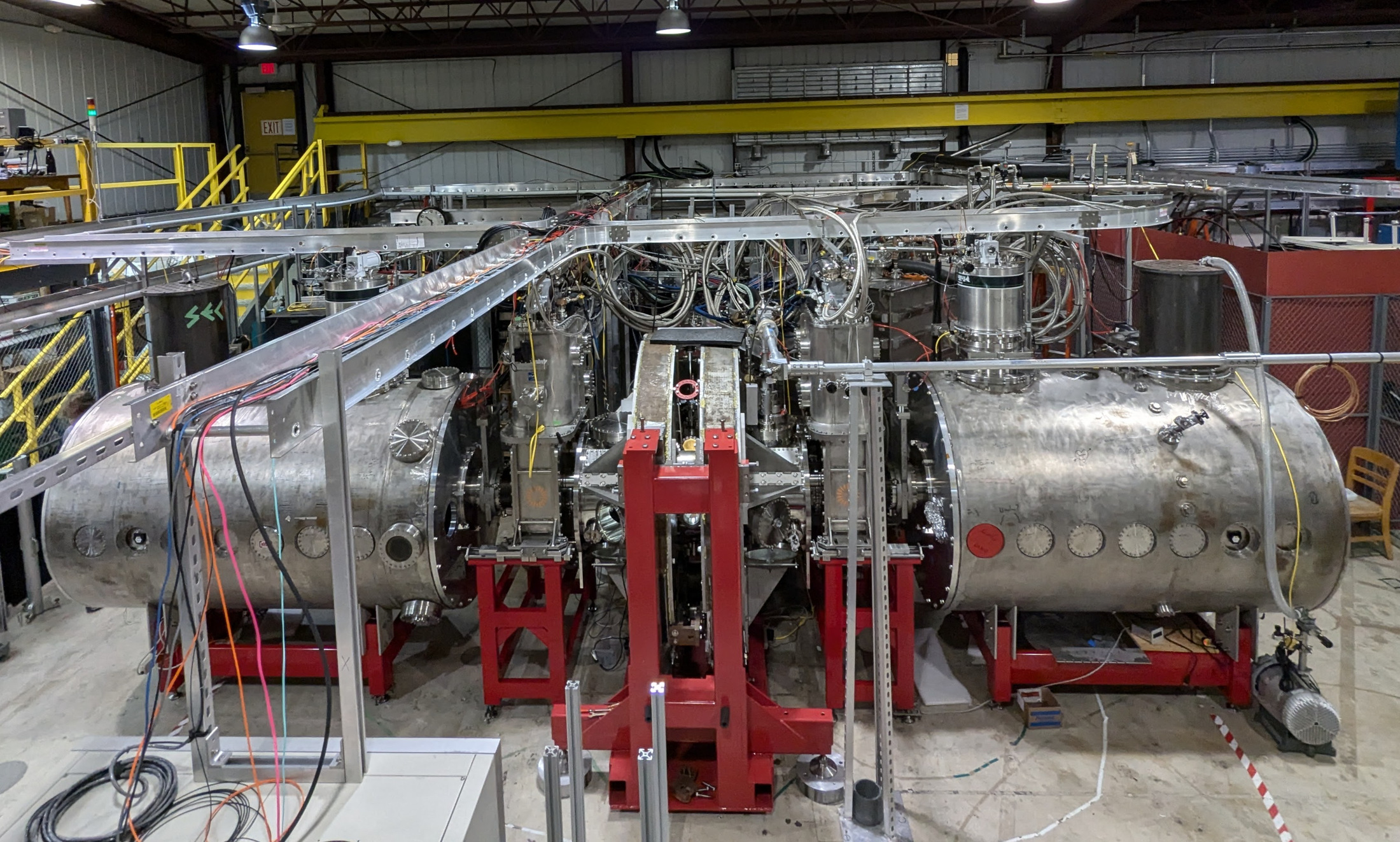
Realta Fusion is a Madison, Wisconsin company developing magnetic-mirror fusion systems. Founded in 2022 out of University of Wisconsin–Madison research, it connects plasma experiments on WHAM with the design of future energy facilities and the development of their supply chains.
Its “CoSMo fusion” means compact, scalable and modular. Electricity is not the only intended product. The company also identifies process heat for chemical production and metals recycling, electricity for data centers, and energy for remote mines as potential applications. These are development objectives, not services it currently supplies commercially.
How can a linear machine be assembled, maintained and deployed to match demand? Realta’s challenge is to connect plasma-confinement experiments with the design of energy systems that factories can use. Technology and applications / Company origins and magnet development
Photographs supplied and used with permission from Realta Fusion. This profile was prepared with factual verification from the company. Individual photographers are credited with each image.
Magnetic mirrors and high-temperature superconducting magnets
A magnetic mirror strengthens the field at each end of an elongated plasma, turning charged particles with suitable directions of motion back toward the center. It uses particle motion and changes in magnetic field, not a physical reflecting surface. Unlike a tokamak’s closed toroidal configuration, its ends are open, making the escape of particles and energy an important consideration.
The range of velocity directions that allows escape is called the “loss cone.” Increasing the “mirror ratio”—the ratio of the end field to the central field—can narrow this range. Collisions and instabilities also affect confinement, however. Strong magnets alone do not deliver the necessary performance: radio-frequency and neutral-beam heating, diagnostics and stability control must work together. Realta’s technology explanation
WHAM: connecting a university experiment with company development
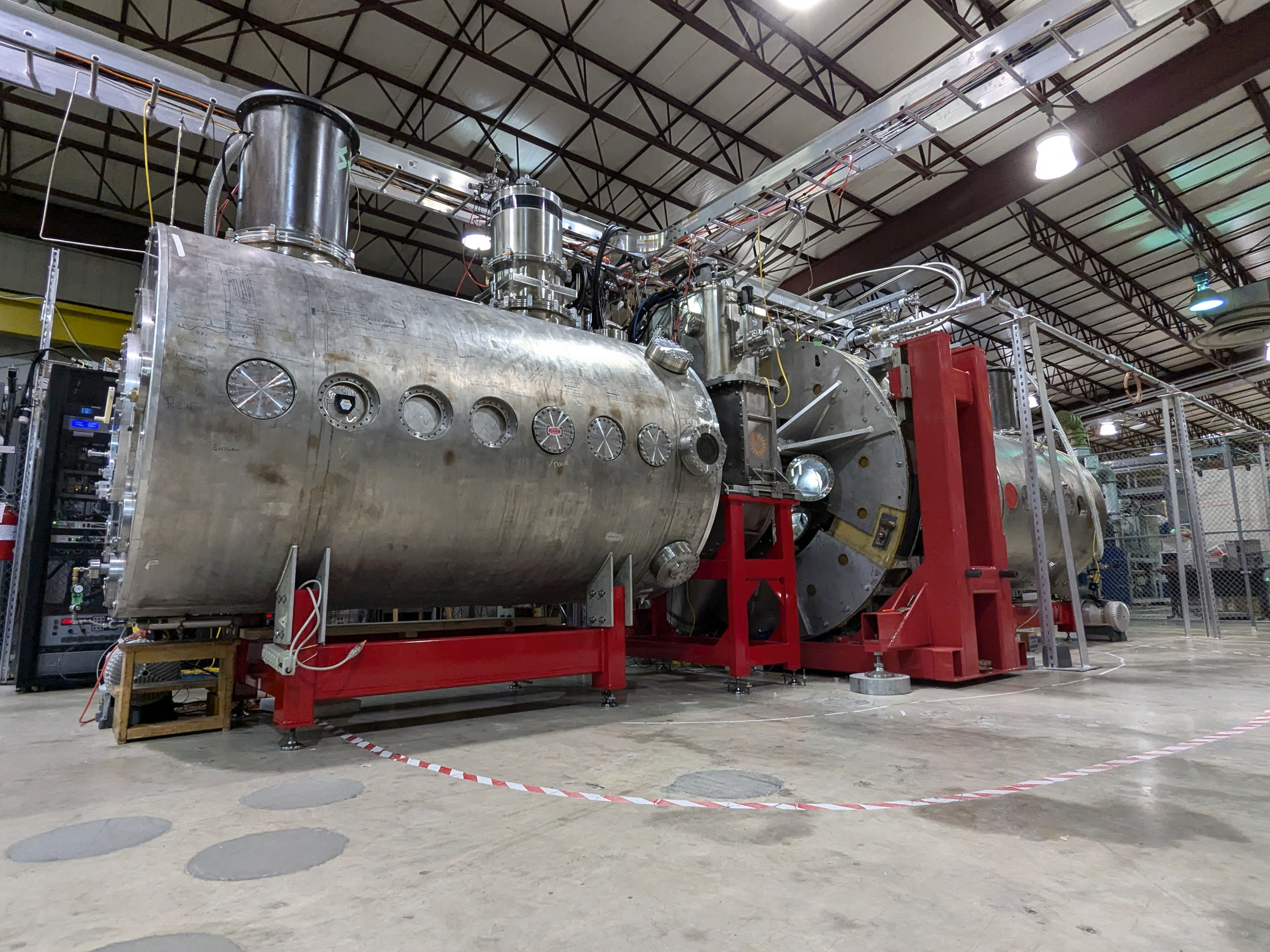
WHAM stands for Wisconsin HTS Axisymmetric Mirror. It is a simple magnetic-mirror research device at the university’s Physical Sciences Laboratory. Development began in 2020 through a research award to the university, MIT and CFS; first plasma followed in July 2024. It uses high-temperature superconducting magnets supplied by CFS.
The university describes its two mirror coils as capable of producing fields of up to 17 tesla, while CFS also reports reaching 17 tesla at first plasma. This is the high field produced by the coils, not a uniform 17-tesla field throughout the plasma. First plasma is an operational milestone, not a demonstration of net electricity. University facility overview / Physical Sciences Laboratory
In its factual review, Realta explained that it is WHAM’s sole research sponsor under a master research agreement and operates the machine in partnership with the university. The experiment connects university research infrastructure with the performance the company seeks for future machines.
Direct energy conversion: putting escaping particles to work
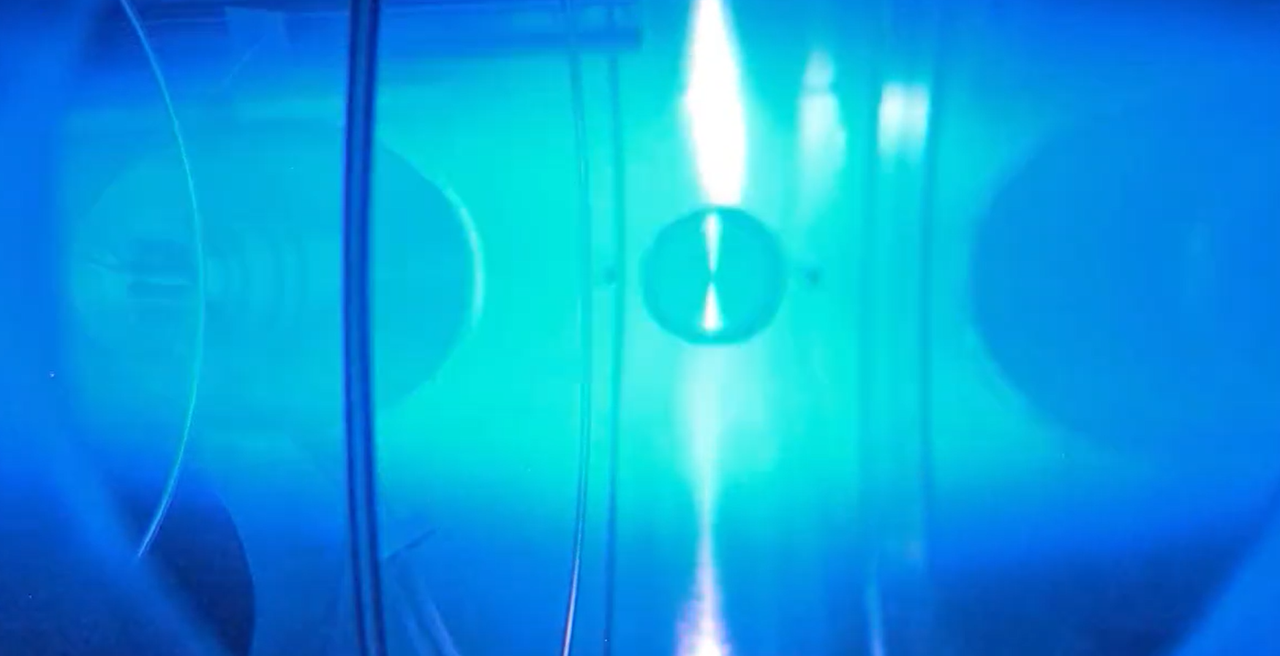
On 19 June 2026, Realta and the university team demonstrated direct energy conversion (DEC) on WHAM, announcing it on 30 June. The initial prototype reportedly produced several amperes at around 100 volts. An electrostatic potential slows escaping charged particles, recovering their kinetic energy as electricity.
Most energy recovered in this experiment had been supplied externally to heat and sustain the plasma. It was not a demonstration of fusion-generated electricity exceeding the entire facility’s consumption. Nevertheless, recovering part of the heating energy could improve the energy balance of future facilities. Recovery efficiency, durability, power scale and integration with other equipment are the next evaluation points. The company’s account of the experiment and its limits
Fuel delivery and diagnostics behind the experiment
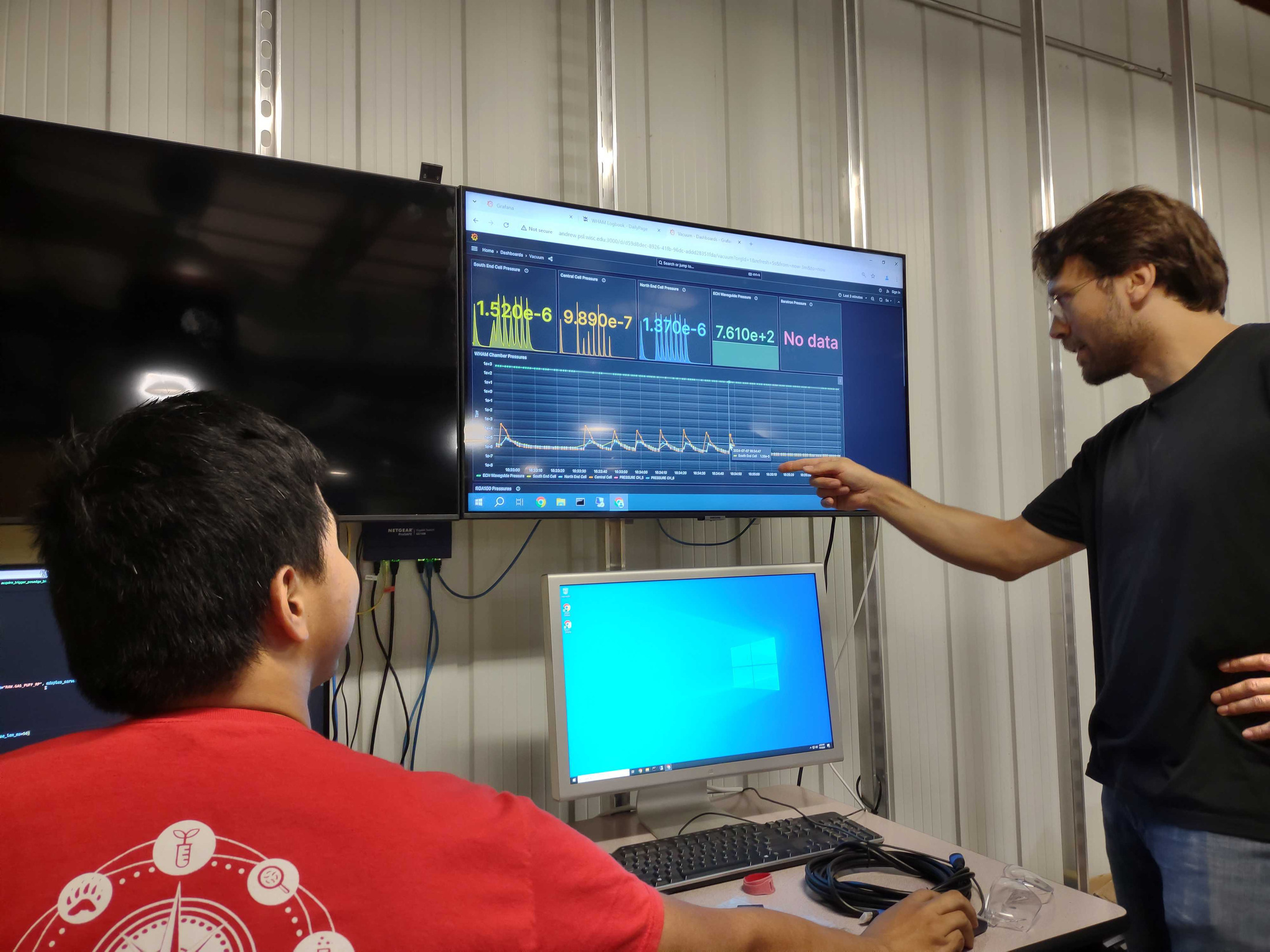
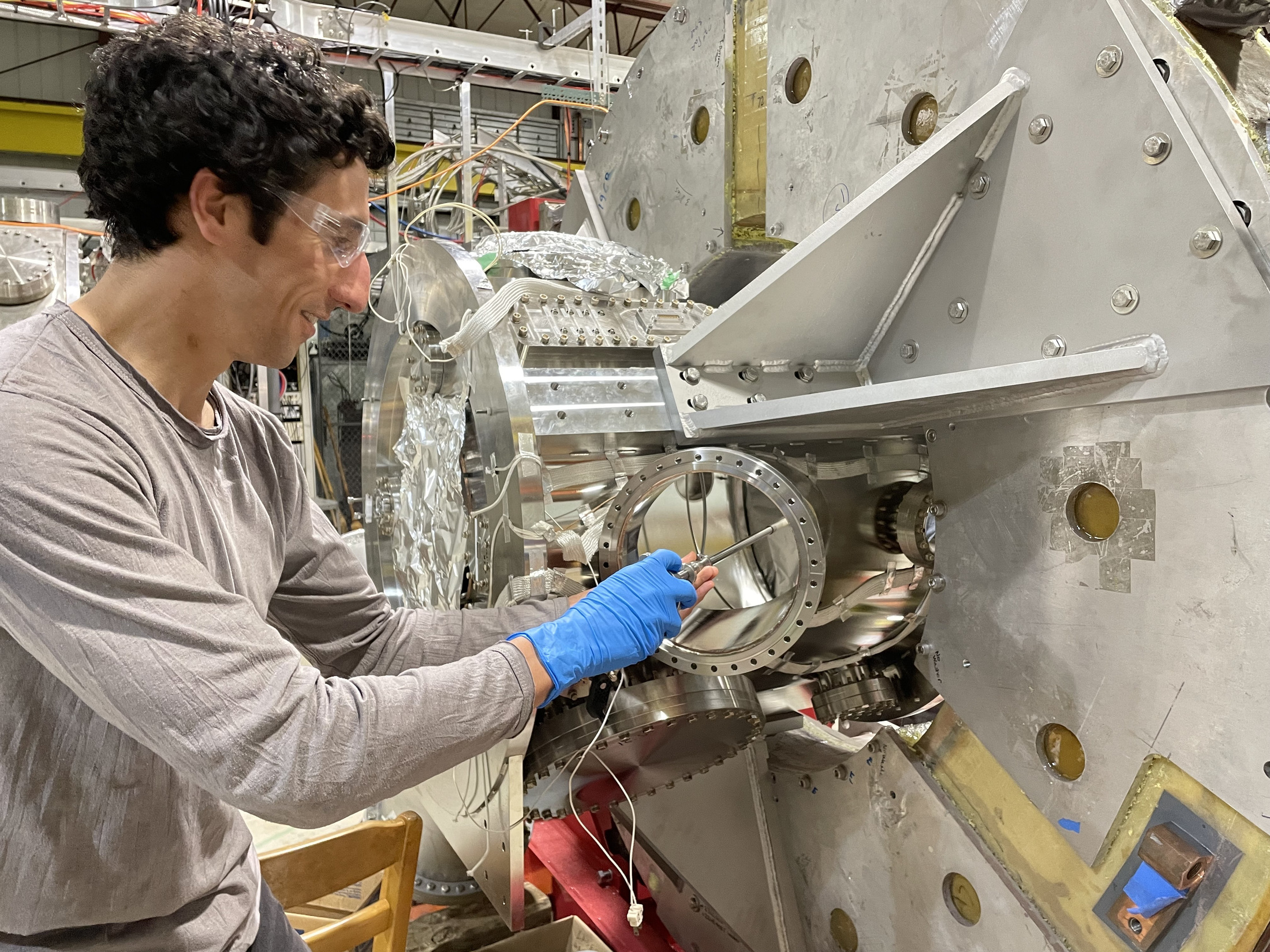
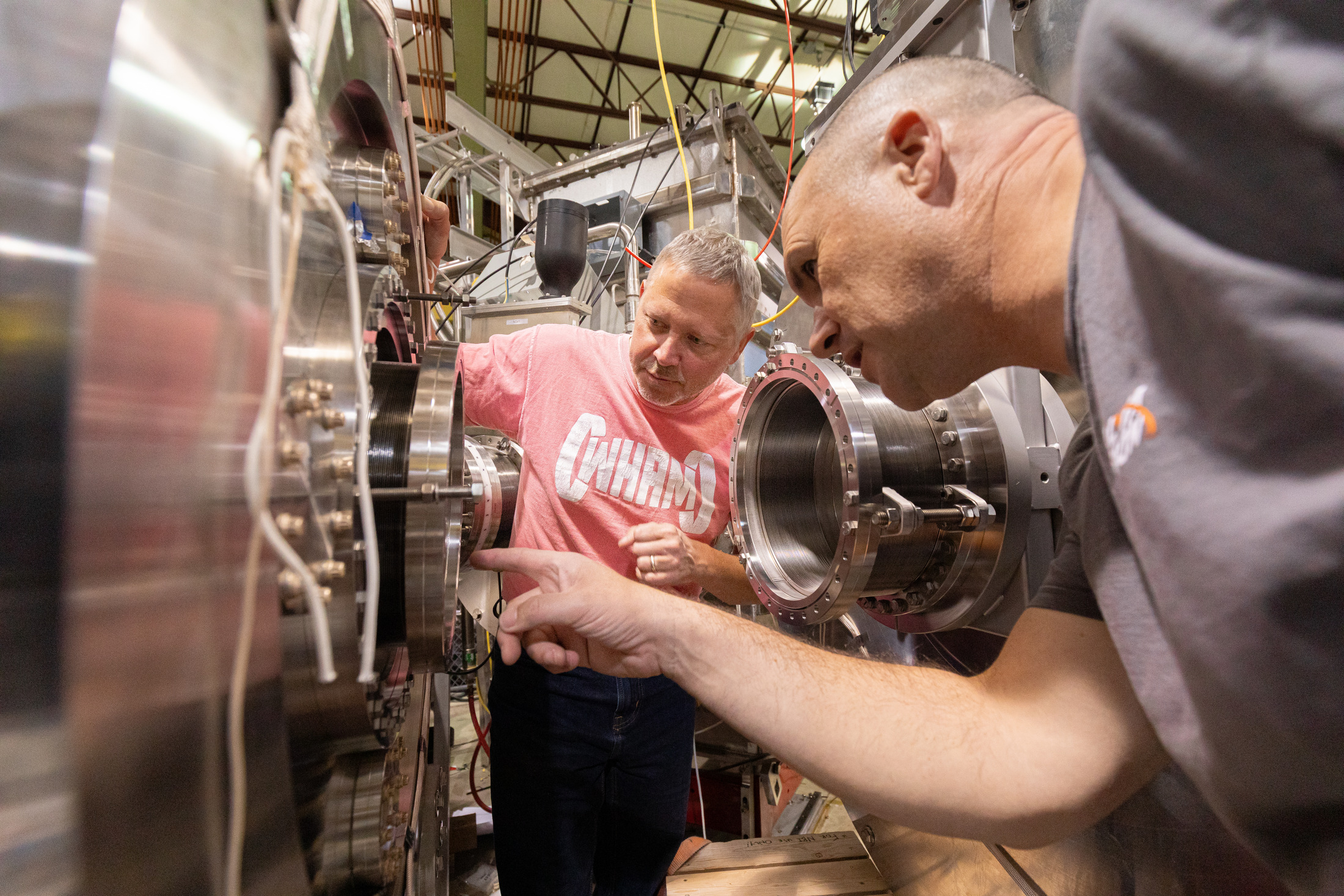
Calibrating gas injection, aligning plasma diagnostics and reproducing experimental conditions: work visible outside the machine establishes the basis for understanding what happens inside. The supplied photographs show the university’s Mason Yu and Realta’s Elliot Claveau calibrating the gas-injection system, and Doug Endrizzi aligning diagnostics.
Operating a machine and verifying its intended confinement performance are not the same achievement. Comparing measurements with design models and identifying what needs improvement connects today’s experiments to future devices.
A team spanning confinement, heat and fuel
Alongside co-founder and CEO Kieran Furlong, the team brings together Founding Chief Scientist Cary Forest, Jay Anderson’s expertise in heating and stability, Ben Lindley’s work on blanket design and Oliver Schmitz’s expertise in plasma-facing components. The company’s team page lists Derek Sutherland as Chief Scientific Officer.
A fusion facility requires more than plasma expertise. Its design must encompass heat extraction, fuel circulation and component replacement. The founding scientists’ specialties reflect that breadth. Company team
From Forge to Hammir: understanding each device’s role
On 15 July 2026, Realta announced the selection of OM Station, the former Oscar Mayer site in Madison, for its headquarters and R&D facility, The Realta Forge. In its factual confirmation on 2 November, the company said Forge groundbreaking was planned for the fourth quarter of 2026, with test-stand commissioning starting in the first quarter of 2027. Official site announcement
- WHAM: the simple magnetic-mirror experiment currently used for research.
- Hammir-DD: a tandem-mirror prototype to be located at Forge, with construction planned to begin in 2027.
- Hammir-DT: the first-of-a-kind commercial demonstration machine, with delivery anticipated in the early-to-mid 2030s.
A tandem mirror combines a long central cell with cells at both ends, using electrostatic potential differences as well as magnetic fields. Commissioning test facilities, constructing Hammir-DD and delivering a commercial demonstrator are separate stages; the future dates above are company plans. The relationship between Anvil, discussed in an earlier presentation, and the current device names remains unconfirmed, so this profile does not treat it as a straightforward renaming.
Cooperation with CFS, Kyoto Fusioneering and MGE
CFS supplied WHAM’s high-temperature superconducting magnets and announced a long-term magnet partnership with Realta on 2 April 2026. It covers design and manufacturing for future prototypes and commercial plants. Magnets already supplied to WHAM should be distinguished from agreements and development plans for future machines. CFS announcement
Kyoto Fusioneering (KF) announced its strategic partnership with Realta on 16 March that year. In addition to supplying gyrotrons for future machines at Forge, the cooperation covers heating, mirror-based neutron sources, blankets and fuel cycles. Gyrotrons generate high-power electromagnetic waves for heating; supply, on-site installation and operation on a machine are different stages. KF announcement / FI’s KF company profile
On 2 September, Realta announced a partnership with Madison Gas and Electric (MGE) and MGE Energy to explore joint development of a 200-MWe fusion plant in Wisconsin. It includes a direct equity investment by MGE Energy and support with technical work, siting, permitting, grid connection and financing. Realta confirmed that the 200-MWe figure envisages net electrical output. It is not a confirmed order, construction decision or commitment to supply electricity. Partnership announcement
Financing: distinguishing equity from a debt facility
Realta completed a $36 million Series A led by Future Ventures in 2025. On 17 February 2026, Silicon Valley Bank separately announced a $9.5 million growth-capital debt facility. The MGE partnership also includes a direct equity investment by MGE Energy.
These are distinct financing arrangements, not amounts within one funding round. A debt facility is not equity, and its announced size should not be read as revenue or as funding already drawn in full. Series A / Debt-facility announcement
What comes next: making the complete energy facility work
A 2025 tandem-mirror performance-prediction paper and its 10 July 2026 corrigendum identify modeled operating points with fusion gain Q above five after correction. Here Q is fusion power divided by externally supplied plasma-heating power—not a measured WHAM achievement or the net electricity of an entire power plant. Paper / Corrigendum
With the D–T fuel prioritized for the first commercial system, neutrons carry most of the reaction energy. Alongside DEC, a plant needs blanket heat recovery and tritium breeding, magnet shielding and fuel circulation. An August 2026 university report describes a ParaTAN comparison of shielding and breeding-blanket designs, not a demonstration of fuel self-sufficiency in an operating facility. University account of the joint research
Industrial users also need suitable delivery temperatures, continuous operation, response to changing loads, predictable maintenance outages and connections to existing equipment. Can confinement, energy recovery, materials and fuel, operation and maintenance work together in one facility? Realta’s progress is best followed as the process of connecting each of these requirements from research to industry.
Companies DATA
- Country
- United States
- Region
- North America
- Location
- Madison, Wisconsin
- Year established
- 2022
- Company category
- Fusion system developer
- Approach / reactor type
- Magnetic mirror / tandem mirror
- Fuel
- WHAM: deuterium / initial commercial system: D–T planned
- Development stage
- WHAM experiments and DEC tests; tandem-mirror design and development
- Funding scale
- $36 million Series A in 2025; separate $9.5 million growth-capital debt facility announced in February 2026
- Key investors
- Future Ventures / MGE Energy
- Partners
- UW–Madison / CFS / Kyoto Fusioneering / MGE / MGE Energy
- Development roadmap
- Hammir-DD construction planned from 2027; Hammir-DT delivery anticipated in the early-to-mid 2030s
- Commercialization target
- Aiming for a commercial demonstration supplying industrial heat and electricity (plan, not an established commercial supply record)
Check the official information
Realta Fusion Logo source and rights ↗
- Realta’s technology explanation
- CFS announcement
- University facility overview
- Physical Sciences Laboratory
- The company’s account of the experiment and its limits
- Company team
- Official site announcement
- KF announcement
- Partnership announcement
- Series A
- Debt-facility announcement
- Paper
- Corrigendum
- University account of the joint research
Checked:2026-11-03