352 wheels, nearly 800 tonnes: how do ITER’s giant components navigate the roads of southern France?
Before ITER can assemble its giant fusion components, they must travel from the Mediterranean coast along a specially adapted 104-kilometre road route. Bridge tests, overnight motorway crossings and a five-night cryostat journey reveal the engineering behind these extraordinary deliveries.
Read the Japanese original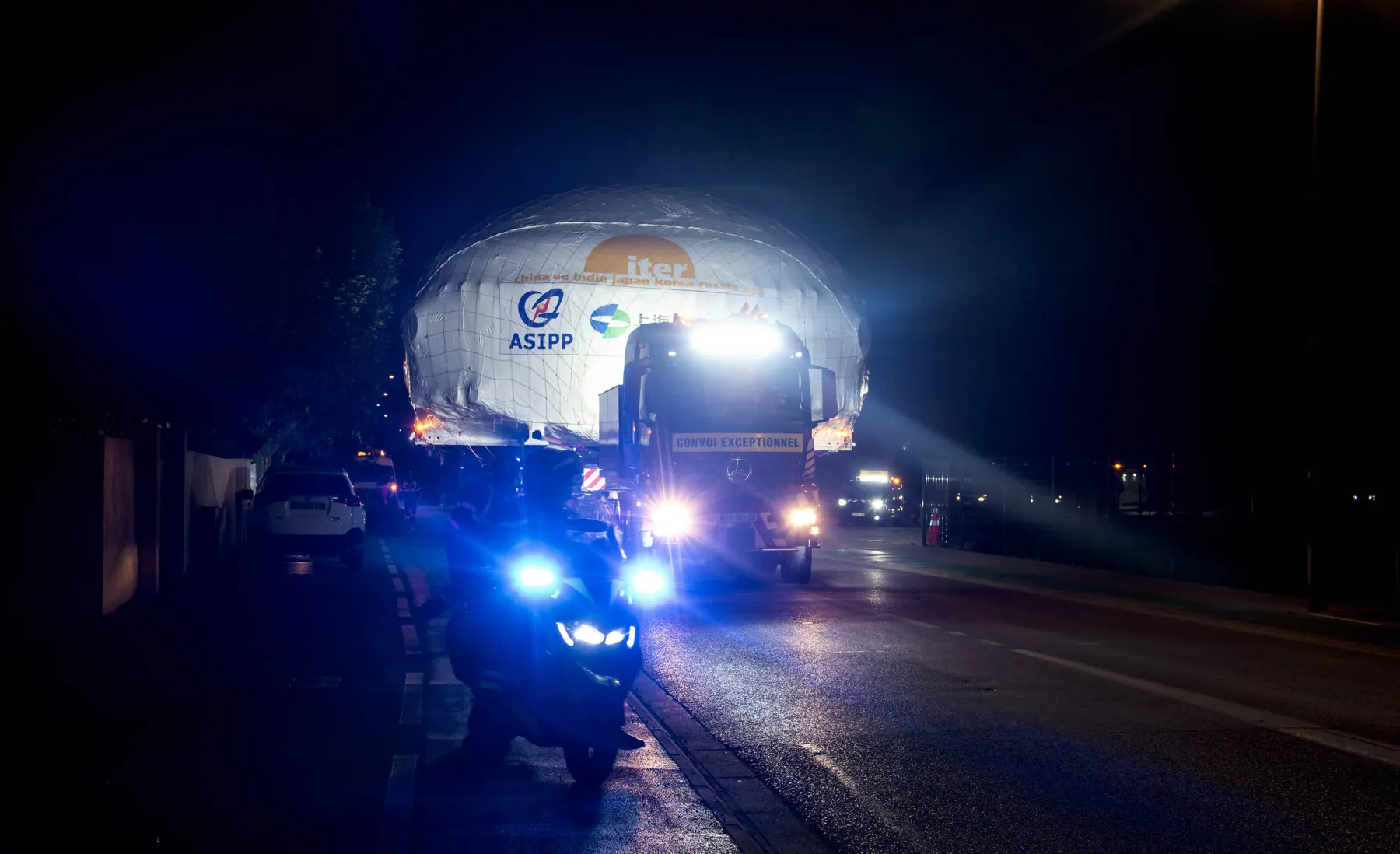
Beneath the streetlights, a load the size of a house inches past. For components heading to the ITER fusion research facility, this is a real scene. Before experiments can begin, parts manufactured around the world must arrive safely at the construction site in southern France.
352 wheels. Around 800 tonnes. These are the figures ITER gives for the scale of its largest transport operations. That roughly 800-tonne total includes a 200-tonne transporter. It does not mean every shipment weighs the same or uses the same vehicle. Starting with ITER’s transport overview, let’s follow the journey from the sea to the roads at night.
Beyond the port: connecting water and road
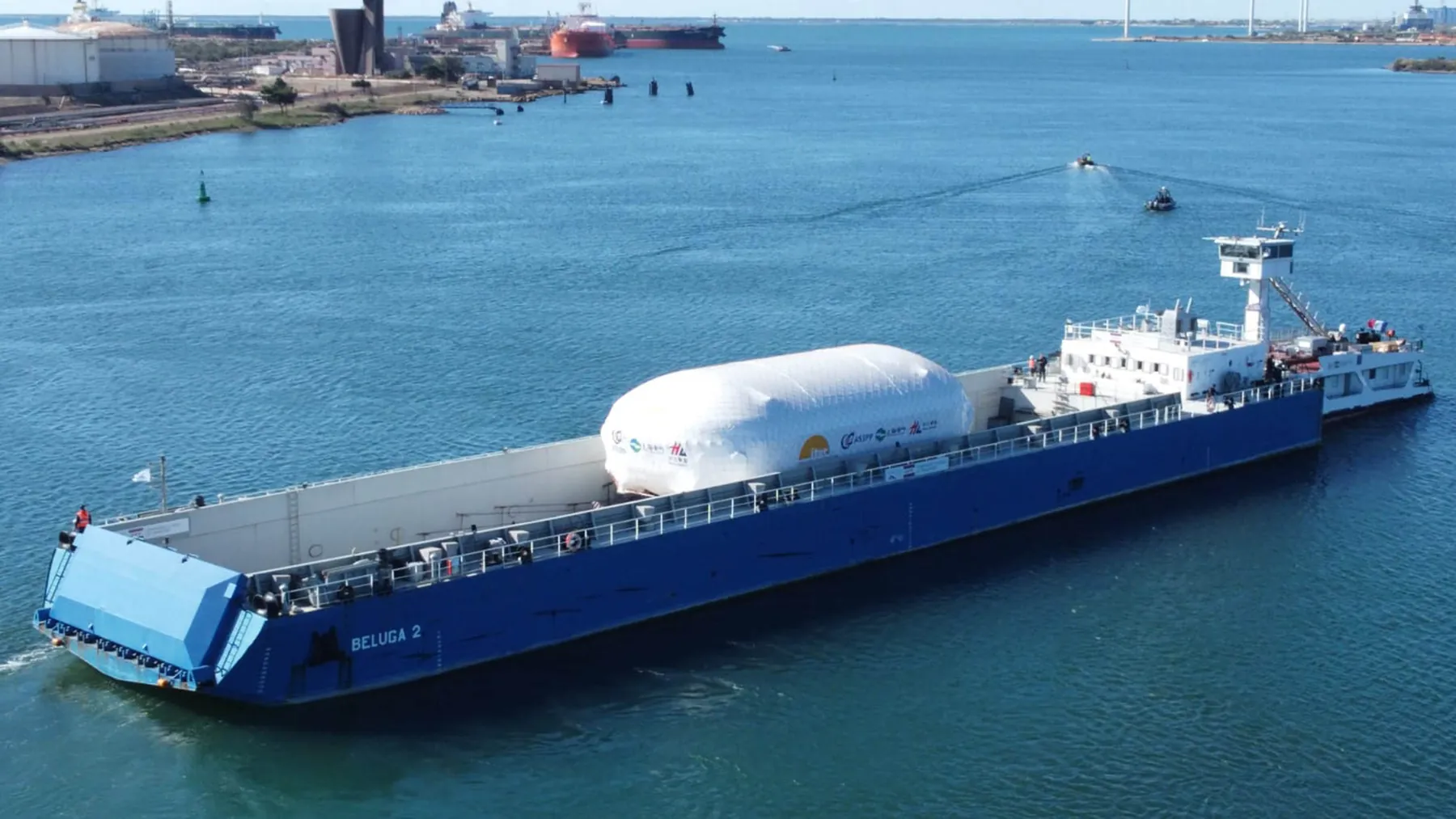
Large components first arrive at the Mediterranean port of Fos-sur-Mer. They are then taken from the port to a loading point on the Étang de Berre, where a dedicated barge carries them across the lagoon. At Berre-l’Étang, the long road journey begins. The specially adapted road route to ITER is the 104-kilometre “ITER Itinerary.” That figure is the length of the road route, not the entire journey including the sea crossing.
On a map, the route runs from Berre-l’Étang through Pélissanne, Charleval and Peyrolles-en-Provence to ITER in Saint-Paul-lez-Durance. Agence ITER France’s official guide and route map show how local roads connect to the research facility in one transport route. Diversions are provided for residents while convoys pass.
Testing the calculations, on a real bridge
A powerful vehicle is not enough. Can the bridges bear the load? Can the convoy turn at junctions? Will it clear roadside structures? France began adapting the roads before the actual components arrived.
According to a 2013 F4E report, preparations included widening 35 kilometres of road, building or reinforcing 26 bridges, and modifying 19 roundabouts. These figures describe the infrastructure work undertaken at the time, not the total number of bridges on today’s route. F4E’s transport test report
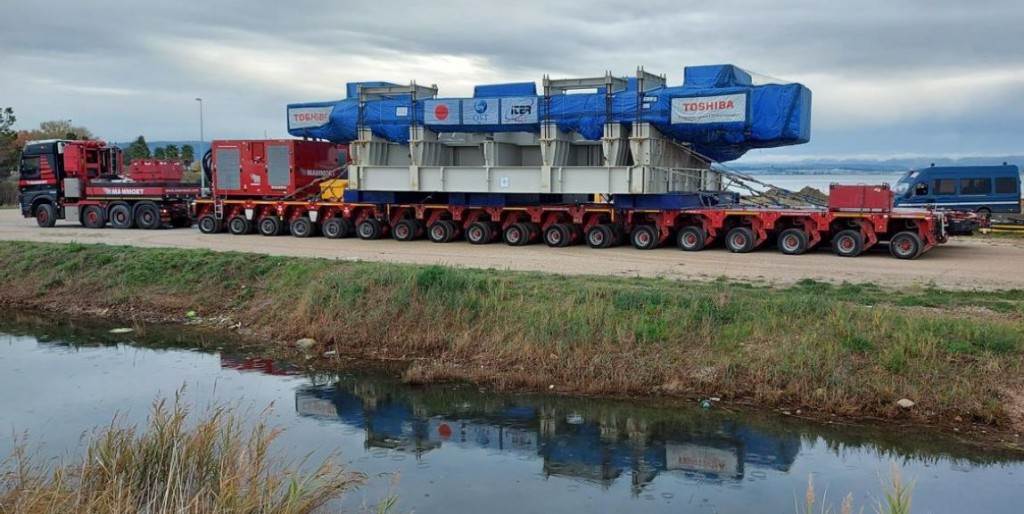
In September 2013, a test convoy with 352 wheels travelled the route carrying a dummy load in place of a real fusion component. On a bridge in Rognac, measured deflection was 30 millimetres, against a calculated 32 millimetres. The team also checked room to manoeuvre and clearances at bends and roundabouts. Behind the spectacle of these huge transports lies verification down to the millimetre. ITER’s account of the test
Across a motorway at night: reading a four-night schedule
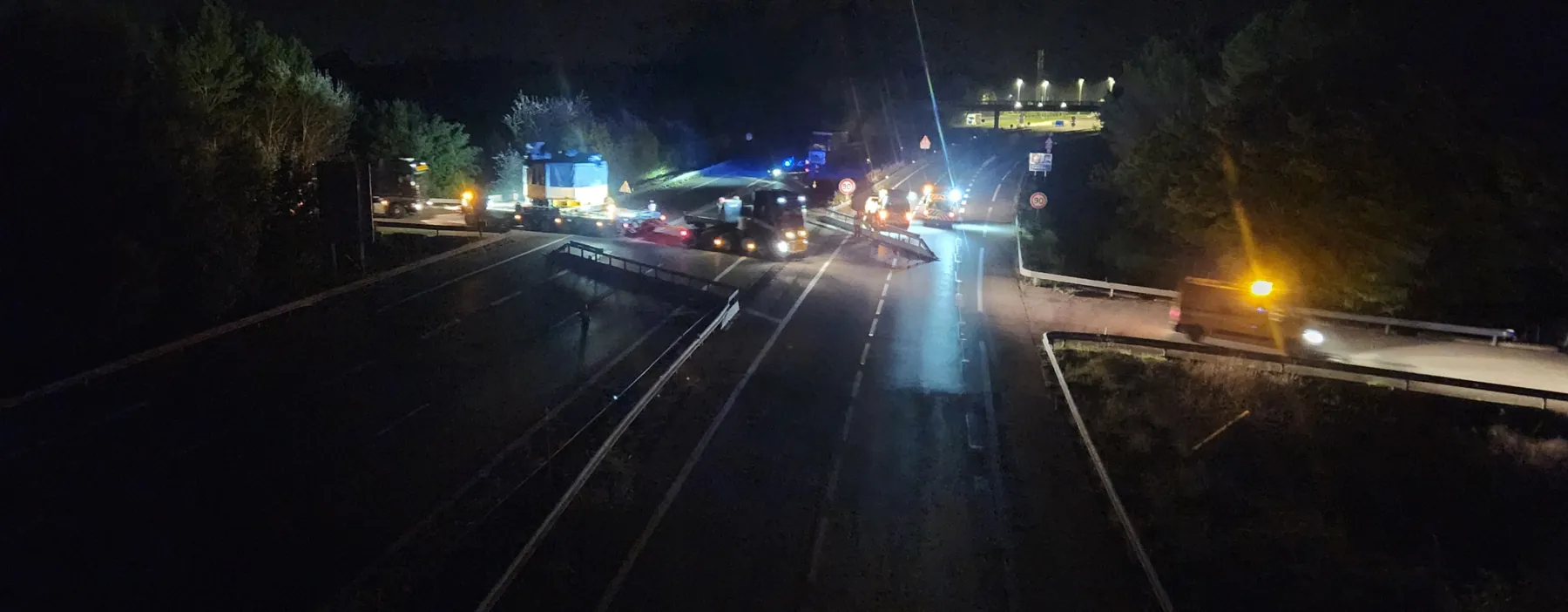
Oversized loads travel at night to reduce disruption to everyday life and traffic. Even so, crossing a motorway requires coordination to stop ordinary traffic.
The transport plan for the final vacuum vessel sector, published in September 2026, divided the journey into four nights. The first leg ran from Berre-l’Étang to Pélissanne, the second to Charleval, and the third to Peyrolles. On the fourth night, the convoy would head to ITER. Traffic restrictions on the A51 motorway were also built into the schedule.
These were the planned times announced then, subject to weather, rather than a record of when the convoy actually passed each location. The detailed timetable reveals the scale of a job that coordinates residents’ journeys, road management and security as well as vehicles. Agence ITER France’s 2026 transport plan
Weight is not everything: a giant vessel’s five-night journey
Weighing less than 800 tonnes does not necessarily make a load easy to move. In autumn 2025, a 330-tonne cryostat for the magnet cold-test facility took five nights to reach its destination. ITER reported that the component was approximately 22 metres long and 11 metres wide. Here, 330 tonnes refers to the component alone, unlike the roughly 800 tonnes quoted earlier, which includes the transport vehicle.
One difficult stretch was a narrow passage alongside a cliff between Mirabeau Bridge and ITER. Width alone might suggest a load cannot pass, but measuring its transport height against the cliff’s profile makes it possible to assess clearance. This shipment also required time to negotiate bends carefully.
Streetlights, road signs and bus-stop structures were among the items temporarily removed and then reinstated after the convoy passed. Preparation and restoration are part of the transport operation too. The lead photograph shows this cold-test cryostat being transported in 2025, not the 352-wheel, roughly 800-tonne test convoy itself. ITER’s account of the five-night journey
Building fusion takes work beyond the research buildings
The magnets and vacuum vessels in ITER photographs do not simply appear at the research facility from wherever they were made. Manufacturing, packing, loading aboard ships, surveying roads, restricting traffic and delivering to the site all have to connect. If any link is missing, the next stage of assembly cannot proceed.
Seen from an industry perspective, these journeys show how much of the work supporting fusion happens beyond the reactor itself. Expertise in handling heavy loads safely, measuring terrain accurately and coordinating with local communities is also part of turning the machine into reality.
The next time you see a photograph of an enormous fusion component, ask not only how it was made, but how it got there. That question leads to another kind of engineering at work, moving slowly through the night in southern France.
For ITER’s research goals and an overview of its construction, see FI’s guide to ITER.
For the work that follows arrival, see our guide to connecting component transport with on-site assembly.
Check the official information
- ITER | Component transport
- Agence ITER France | Convoys and route map
- F4E | The ITER convoy: 800 tonnes crossing the south of France (28 October 2013)
- ITER | The monster that pulled people out of their homes (17 September 2013)
- Agence ITER France | 93rd ITER convoy: planned schedule published 11 September 2026
- ITER | A 5-night journey for ITER’s longest and widest component (6 October 2025)
Information checked as of:2026-11-05