Rokkasho Institute for Fusion Energy
- Official name
- Rokkasho Institute for Fusion Energy
- ENGLISH
- Rokkasho Institute for Fusion Energy
QST's institute in Rokkasho, Aomori connects fusion to power systems through research on demonstration-reactor design, materials, neutron sources, blankets and fuel.
Read the Japanese original
Name and place in the organization
The Rokkasho Institute for Fusion Energy, commonly called the Rokkasho institute, is QST's research site in Rokkasho Village, Aomori. QST is the National Institutes for Quantum Science and Technology; Rokkasho is one of its research locations. Official institute website / English name and address
Its main role is researching how to turn fusion energy into a usable power system. Beyond conditions for fusion reactions, it studies heat-extraction equipment, fuel-circulation systems, neutron-resistant materials and integrated device design. The place name Rokkasho should not lead readers to confuse it with other nuclear-related facilities there.
Designing a demonstration reactor as one system
A fusion demonstration reactor needs plasma, superconducting magnets, blankets, fuel systems, electricity-generating equipment and remote maintenance. Strong individual performance is not enough: dimensions, heat, power and maintenance requirements must fit together. Reactor design aligns these conditions to assess overall feasibility.
Rokkasho hosts the Joint Special Design Team linking academia and industry. Building on earlier JA DEMO studies, a conceptual design for the ITER-sized Q-DEMO has now been published. Locating design work at Rokkasho does not mean a physical Q-DEMO reactor has been completed there. Q-DEMO and design activities
LIPAc: accelerator research for materials testing
High-energy neutrons change material properties in fusion reactors. Predicting strength and lifetime requires research under relevant conditions. Rokkasho researches accelerator technology for the necessary neutron sources through Japan–Europe cooperation. Materials research
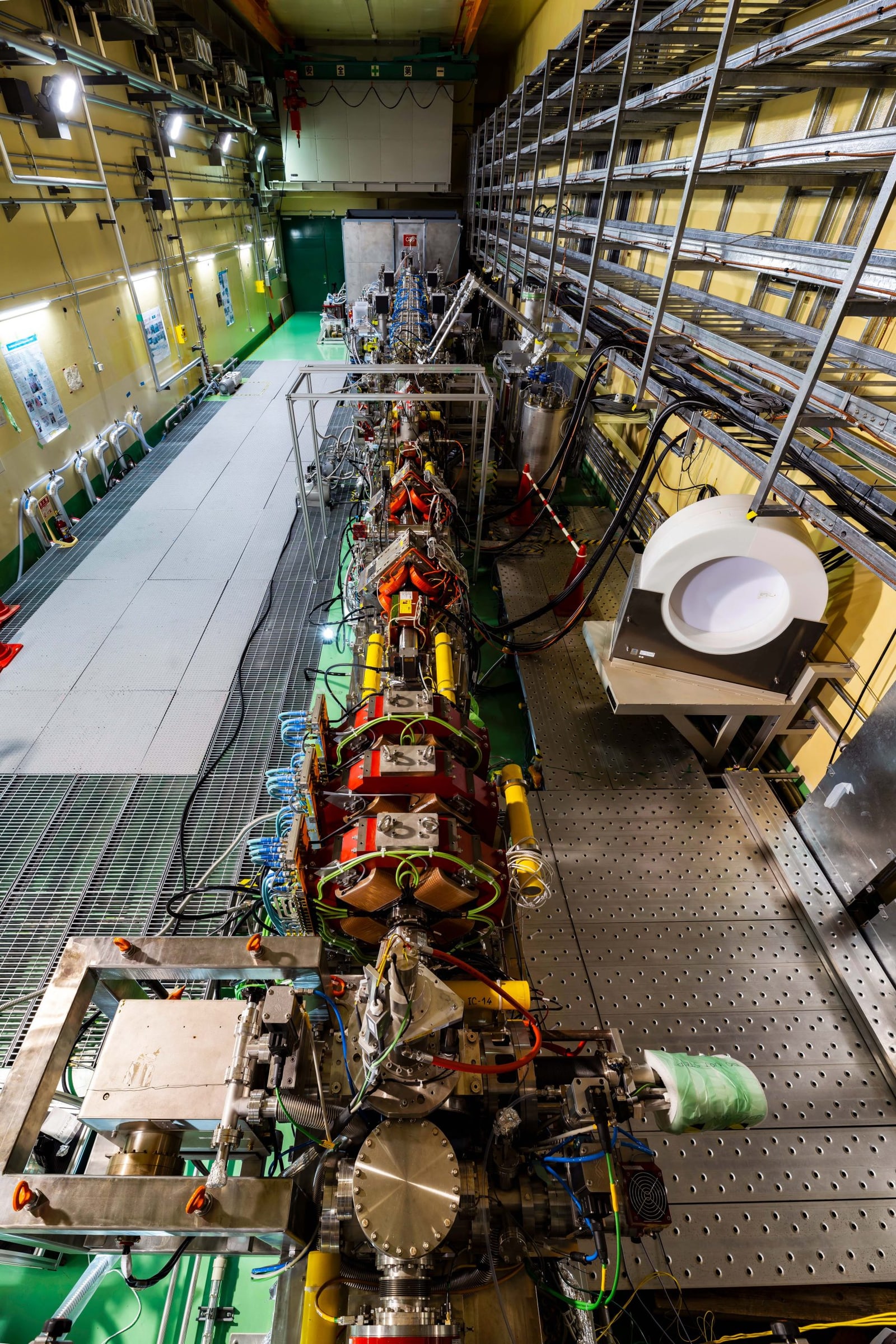
LIPAc stands for Linear IFMIF Prototype Accelerator. IFMIF is the proposed International Fusion Materials Irradiation Facility; IFMIF/EVEDA is its engineering-validation and engineering-design activity. LIPAc validates the accelerator's low-energy section, and is distinct from a completed IFMIF facility or a power reactor. Official LIPAc explanation
The goal is continuous operation of a 9 MeV, 125 mA deuteron beam. F4E's September 2026 announcement said all components had been integrated that spring and commissioning was under way. Full assembly and continuous operation at target beam parameters are different milestones. September 2026 progress
Blankets: heat, fuel and shielding
A blanket is an important component surrounding the plasma in future fusion reactors. It recovers neutron energy as heat, produces tritium fuel from lithium and reduces radiation reaching outer equipment. Rokkasho studies its structure, materials and fuel recovery.
This includes development for ITER's test blanket modules (TBMs). These test functions for future reactors; they do not mean ITER will achieve commercial power generation or fuel self-sufficiency. Blanket research / ITER breeding tests
Circulating fuel safely
Producing tritium and recovering, purifying and resupplying it are different technologies. Systems must also account for inventories and limit leakage. Rokkasho researches demonstration-reactor fuel cycles and safe tritium handling. These are questions of feasibility, not claims that fuel self-sufficiency has already been achieved.
Computing and remote experiments also support reactor development
The International Fusion Energy Research Centre (IFERC) is a Japan–Europe undertaking covering demonstration-reactor design and R&D, computer simulation and preparations for remote ITER experiments. Predicting phenomena computationally before testing everything in hardware, then comparing predictions with experimental data, improves designs and operating methods. Official IFERC introduction
The July 1, 2026 organization chart lists demonstration-reactor project promotion, fusion-reactor materials R&D and blanket R&D divisions. Older research pages retain former department names, so check organization updates separately from research-topic updates. Current organization chart
Connections with Naka
Naka's JT-60SA experiments and component development complement Rokkasho's reactor-design, materials and fuel research. Changing plasma conditions, for example, changes heat loads on walls and fuel requirements. QST has stated a policy of operating both institutes in an integrated matrix structure from April 2026.
Related terms and further reading
Information verification date
October 8, 2026. Organization names, roles, plans and achievements were checked against publicly available official sources.
Check the official information
- QST | Rokkasho Institute for Fusion Energy
- QST | Locations and contact
- QST | Quantum-energy research and Q-DEMO conceptual-design report
- QST | Fusion-reactor materials R&D activities
- IFMIF/EVEDA | Accelerator facility
- Fusion for Energy | LIPAc gets ready to operate
- QST | Blanket R&D activities
- ITER Organization | Tritium breeding
- QST | International Fusion Energy Research Centre
- QST | Rokkasho institute organization chart
Checked:2026-10-08