How far can AI control fusion? Rokkasho's Sousei supercomputer and the state of research
What has AI changed in fusion research? Sousei at Rokkasho, shape control on TCV and instability avoidance on DIII-D help distinguish physics simulation from machine learning, demonstrated results from remaining challenges.
Read the Japanese original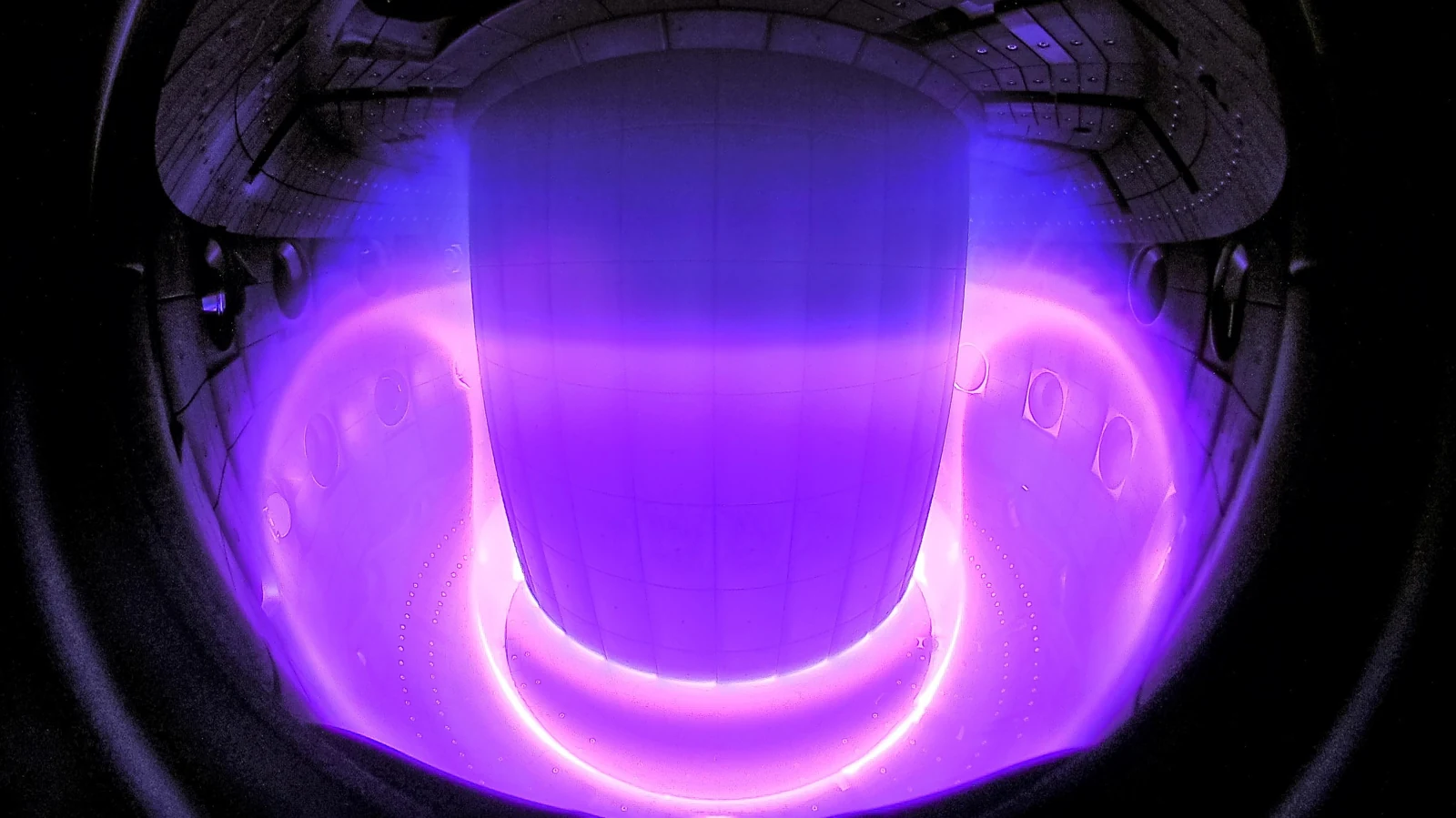
Magnetically confined, extremely hot plasma can change too quickly for a person to watch a screen and respond. Would handing operations to AI therefore bring fusion energy dramatically closer?
To answer, distinguish calculating physics, learning from data and operating real equipment. Following the Sousei supercomputer in Rokkasho, Aomori, and overseas AI control experiments reveals that the interesting work lies less in an all-purpose artificial intelligence than in connecting these three activities.
Supercomputing and AI are not the same thing
A supercomputer processes large numbers of calculations in parallel. Numerical simulation using high-performance computing (HPC) calculates changes in temperature, density and magnetic fields from equations representing physical laws. It is a tool for investigating why something occurs and what happens when conditions change.
Machine learning, by contrast, learns predictive or decision rules from data or trial outcomes. Reinforcement learning, for example, rewards actions that approach a target and learns an operating policy through trial and error. AI that generates prose and AI that controls plasma do not serve the same purpose.
The two approaches are partners rather than rivals. A physics simulation can provide an AI training environment, after which the trained system selects actions quickly. Conversely, machine-learning models built from simulations and experiments can approximate computationally demanding processes. Computing speed, predictive reliability and control achievements must be assessed separately. EPFL's explanation of the research
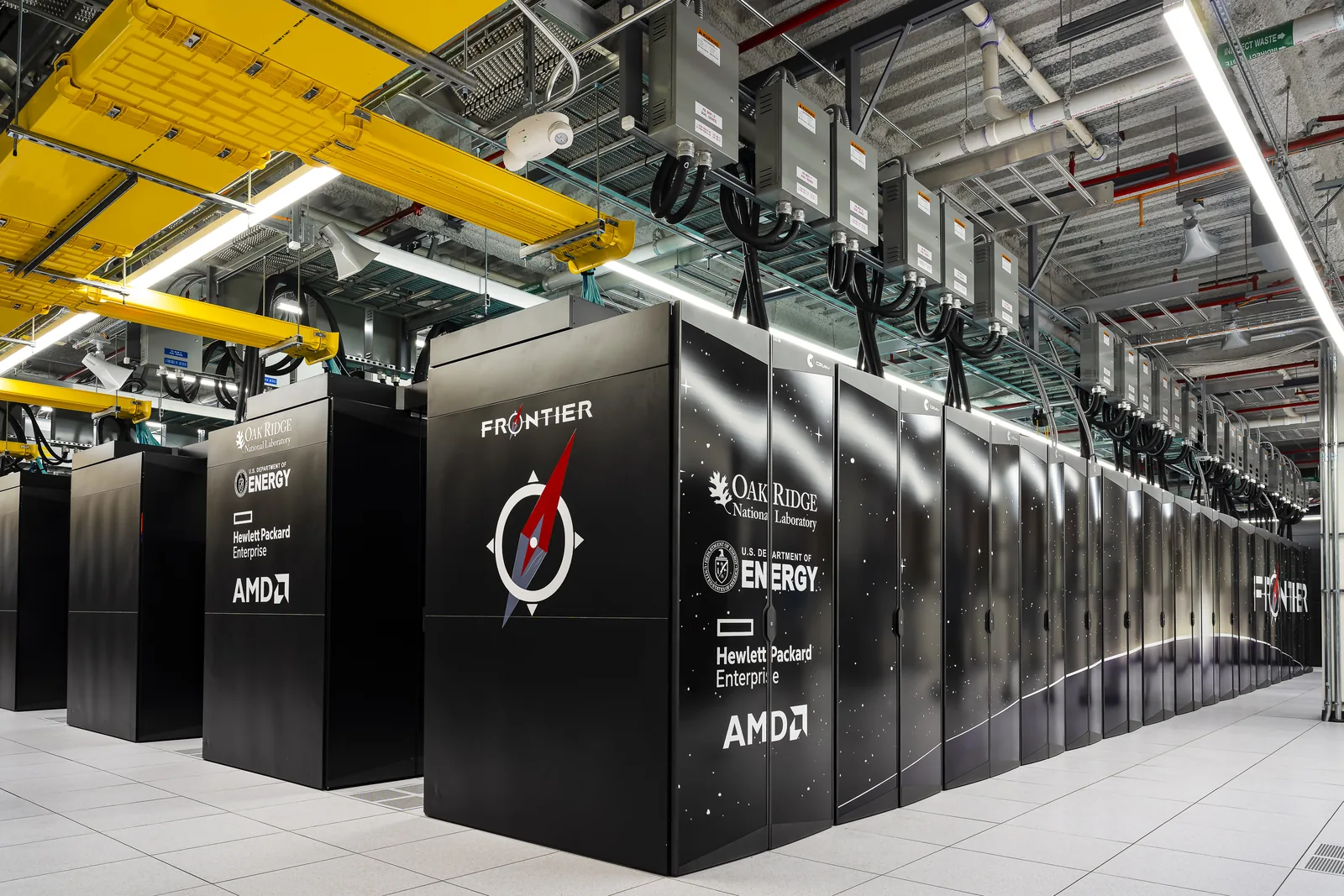
The photograph of Frontier shows a real HPC installation at Oak Ridge National Laboratory in the United States, not Sousei at Rokkasho. Official introduction to Frontier
What does Sousei at Rokkasho calculate?
QST's Rokkasho Institute for Fusion Energy hosts the Plasma Simulator jointly operated by QST and the National Institute for Fusion Science (NIFS). It began operation on July 1, 2025 and received the nickname Sousei in December that year. The name evokes two stars, representing the two collaborating institutions. Operations announcement / Nickname announcement
Its combined theoretical computing performance is 40.4 petaflops. It comprises three systems with different strengths: a CPU-centered system, an APU system combining CPUs and GPUs, and a large-memory system. This is a measure of computing capability, not AI accuracy or fusion electricity output. Current system specifications
QST describes uses including predicting ITER and JT-60SA experiments, examining operating scenarios and designing a demonstration reactor. It provides a basis for comparing options before testing them in a machine and comparing experimental results with calculations. Having GPUs does not make every calculation AI; large-scale physics-model calculations are also important. NIFS's joint announcement
Has AI actually controlled plasma?
The answer is yes, provided the controlled quantities and conditions are specified.
In research published in Nature in 2022, EPFL and DeepMind demonstrated magnetic control using deep reinforcement learning on Switzerland's TCV experimental machine. A policy learned in simulation was transferred to the real machine to control multiple plasma shapes, including elongated shapes and specialized configurations. Peer-reviewed paper
The interesting point is that AI did not discover fusion physics from scratch. A simulator incorporating accumulated physics research served as its training environment, and it learned actions toward targets set by researchers. This was not a choice between AI and physics, but a combination using existing knowledge for learning.
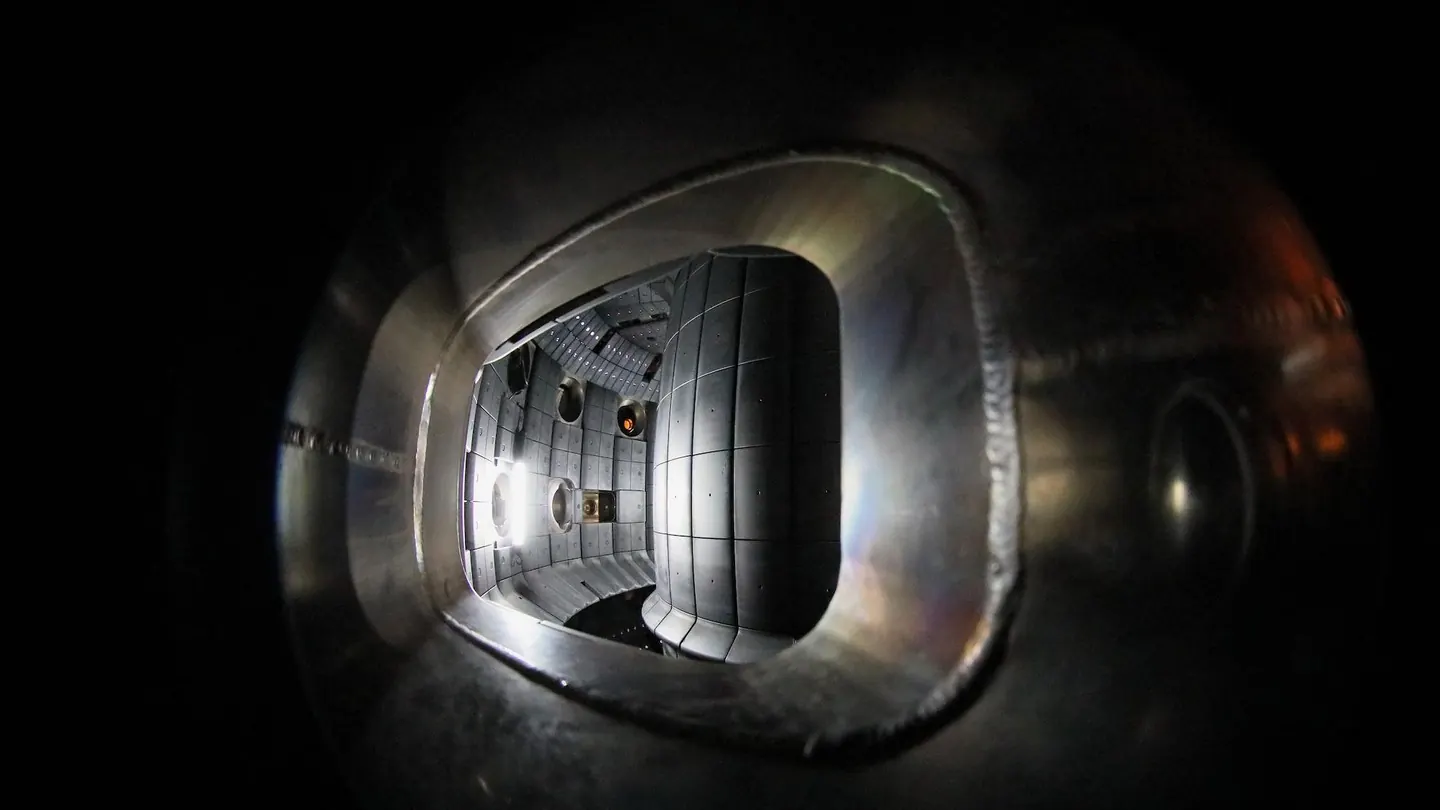
The opening and body photographs show TCV plasma and the inside of its vacuum vessel respectively. Shape control is important, but the study did not demonstrate autonomous power plant operation or electricity delivery to the grid.
Predicting danger is different from avoiding it
A study on the US DIII-D machine published in Nature in 2024 illustrates a further step. It addressed tearing instability, which disrupts confinement. A predictive model built from past experiments served as a learning environment, and reinforcement learning produced a policy adjusting heating-beam power and plasma shape. PPPL's research explanation
The aim was not simply to keep lowering power whenever danger appeared. It was to avoid paths toward instability while maintaining high plasma performance. The paper demonstrates avoidance in a real machine but describes the work as a proof of concept requiring further experiments and adjustment.
The paper also includes a case where avoidance failed. Although the system predicted risk and tried to reduce heating, it reached a separately imposed lower power limit and could go no further. Prediction alone does not solve the problem if it is incompatible with the range of actions available to equipment. The same issue arises when applying AI to factories or robots. Experimental results and limitations in the peer-reviewed paper
Controlling plasma a thousand kilometers away from Rokkasho
Rokkasho has also explored using computation for more than analysis after experiments. A December 2025 joint announcement by NIFS, QST and partners reported remote control linking the Large Helical Device (LHD) in Toki, Gifu, with the Plasma Simulator approximately 1,000 kilometers away through the SINET6 academic network.
The approach used data assimilation, which updates a model with observations, and predictive computation. Reserving 20,000 CPU cores, the system incorporated measurements from LHD and returned commands for heating and particle supply. The announcement described a demonstration of multivariable real-time predictive control targeting temperature and density. QST's joint announcement
This should not be grouped indiscriminately with reinforcement learning. A digital twin uses a model corresponding to a real system; the term itself is not synonymous with machine learning. The achievement here was coordinating observation, calculation, communication and action in time. It was not a demonstration of a remote supercomputer autonomously running an entire commercial power plant.
Smarter AI increases the need for verification
Success on one experimental machine does not guarantee unchanged operation on another. Sensors, available actuators and plasma conditions differ. The DIII-D paper also notes that future ITER and power reactors will have different diagnostic and actuator conditions and need suitable control policies.
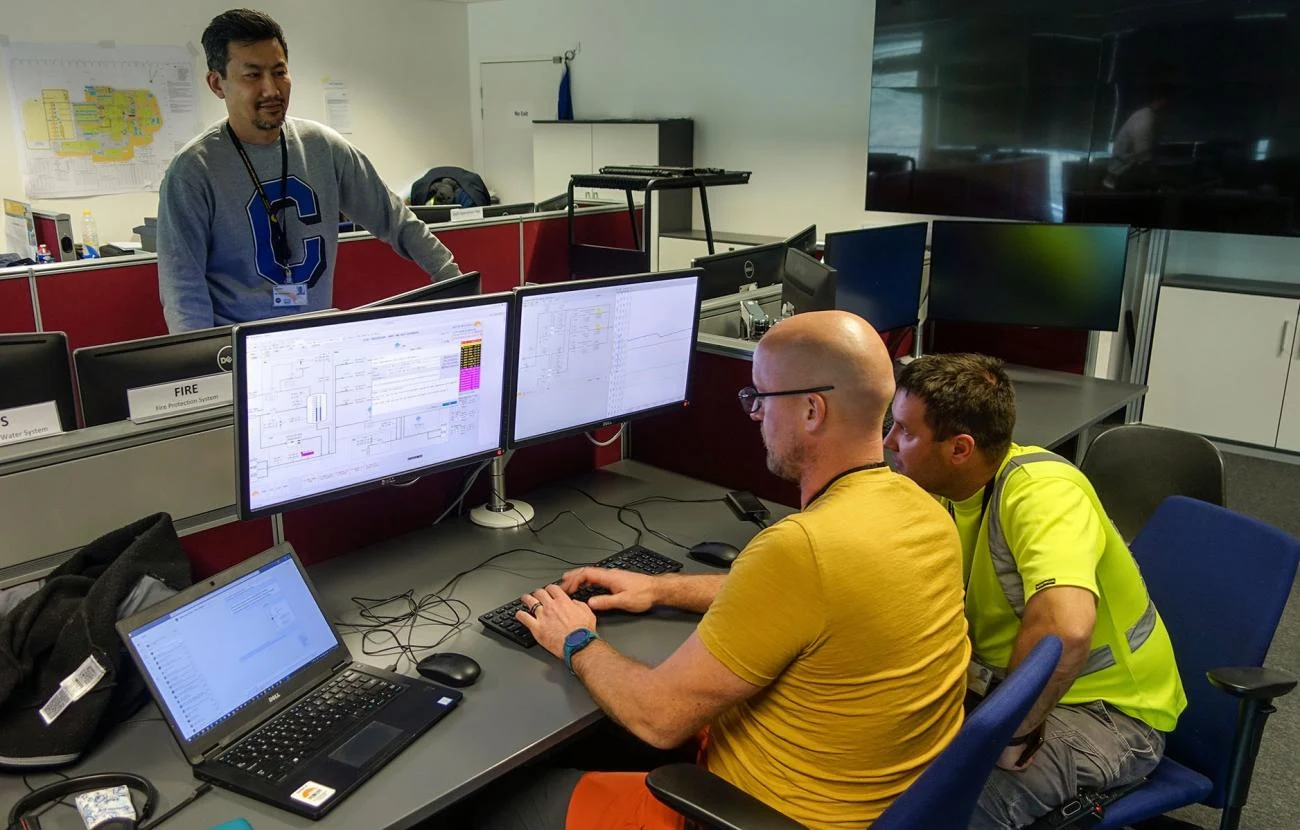
Facility control extends beyond plasma operations. ITER's architecture, for example, includes plant protection and safety systems separate from normal operational control. The photograph records ITER's temporary main control room, not the site of the AI experiments described here. Introducing an AI model and ensuring protection of the whole facility are separate tasks. ITER's control architecture
The following is business analysis. AI companies need to answer more than an average claim of high accuracy. Under what conditions was the system tested, how does it behave in unfamiliar states, and what takes over if decisions are late or measurements missing? Diagnostics and control suppliers can also contribute synchronized data, test procedures and connections to existing equipment.
When reading a research result, check three things: what was predicted or controlled, under which conditions it was tested in real equipment, and what it has not yet demonstrated. AI has not simultaneously solved material lifetimes, fuel cycles and electricity costs. Even so, by increasing the options that can be tested and speeding responses to change, it is beginning to alter how fusion research is conducted.
- NIFS: new supercomputer begins operation (announced August 5, 2025; operations began July 1)
- QST: Plasma Simulator nickname Sousei (December 17, 2025)
- NIFS: current Plasma Simulator specifications (checked October 20, 2026)
- NIFS: joint operation and applications (December 17, 2025)
- Degrave et al., Nature: TCV magnetic control with deep reinforcement learning (February 16, 2022)
- EPFL: plasma control research with DeepMind (February 16, 2022)
- Seo et al., Nature: tearing-instability avoidance on DIII-D (February 21, 2024)
- PPPL: AI prediction and avoidance of instability (February 21, 2024)
- QST and partners: remote real-time predictive control between LHD and Rokkasho (December 19, 2025)
- ITER: control architecture (checked October 20, 2026)
- ORNL: official introduction to Frontier (checked October 20, 2026)
- ITER: operating the temporary main control room (February 20, 2023)
Information checked as of:2026-10-20
Explainer cross-checking peer-reviewed papers from 2022 and 2024, official NIFS/QST announcements from 2025 and current specifications on October 20, 2026. Not news of newly achieved electricity generation. Distinguishes HPC, machine learning and data assimilation.