Earn while learning a fusion trade: understanding UKAEA apprenticeships
Postgraduate research is not the only route into fusion work. UKAEA's published examples show how apprenticeships combine employment and learning: what participants study, the work they experience and what to check before applying. This is a career guide to established programs and historical examples, not a guarantee of current vacancies.
Read the Japanese original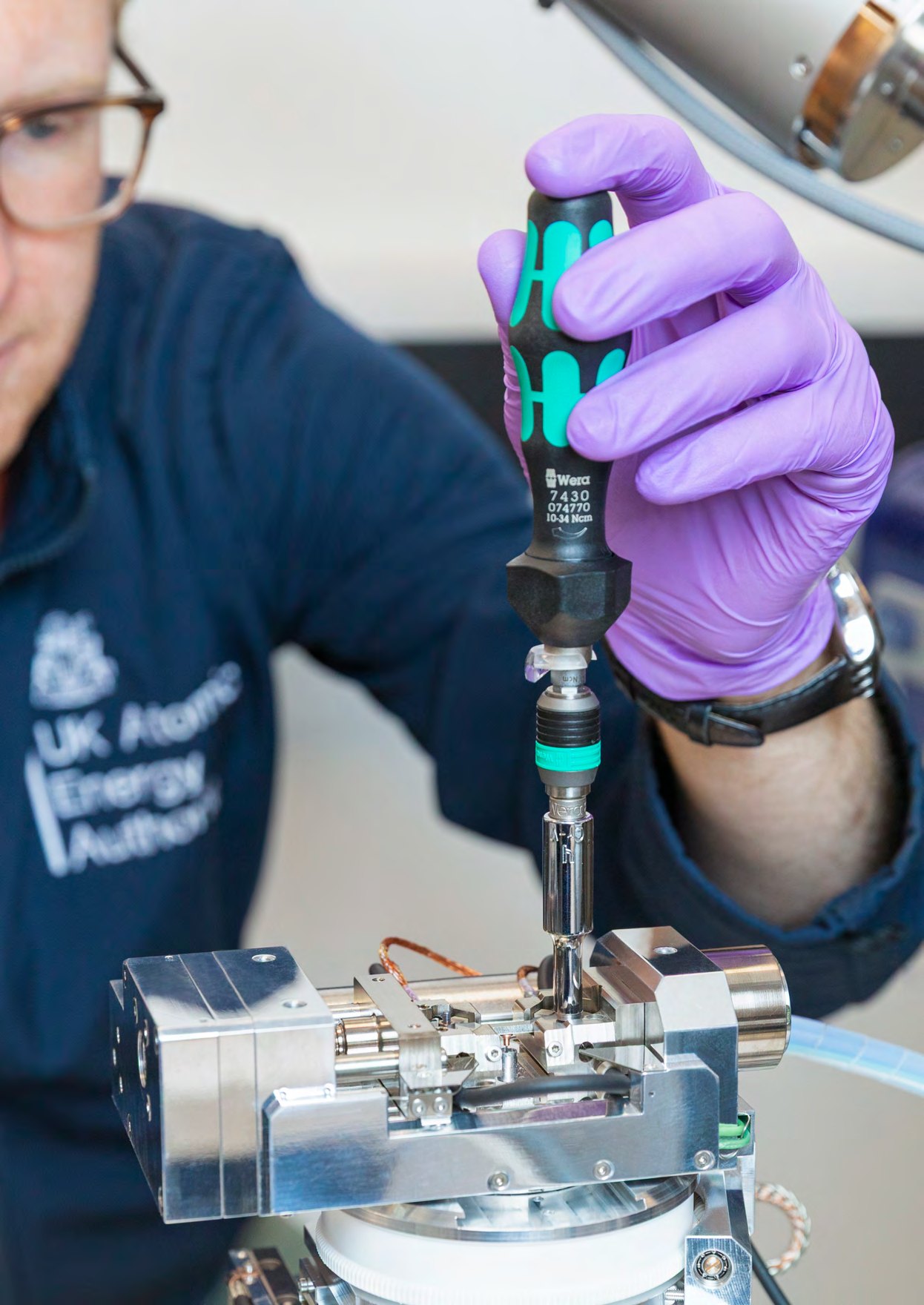
Operating fusion facilities requires more than physics research. People must build machines, connect electrical systems, make measurements and manage work. This raises a practical question: is there a route to gaining knowledge and qualifications after beginning work in a specialist occupation?
The UK Atomic Energy Authority (UKAEA) offers apprenticeships, through which people earn a wage while learning at work and with education providers. An apprenticeship is not the same as a brief work-experience placement. British examples help illustrate how to choose learning and job content together. The related photographs also show differences between operating equipment, electrical work, assembly and inspection.
Combine employment and learning in one pathway
The UK government's guidance for England describes an apprentice as a paid employee who works alongside experienced staff and undertakes training and study related to the job. Alongside the route of studying first and finding employment afterward, this embeds learning in the working process.
The same name does not mean every course is at the same level. Government guidance ranges from Level 2 to degree apprenticeships at bachelor's and master's level. Applicants need to examine not only whether they can learn about fusion but whether the occupation, qualification and curriculum match their goals. UK government guidance
UKAEA lists engineering, science, business and professional support among the fields covered. These routes may be missed if fusion careers are viewed solely through research roles. Graduate schemes, student placements and postgraduate research are presented as separate pathways, whose purposes and eligible groups should be compared. UKAEA's early-career pathways

An electrical apprentice enters a robotics research workplace
UKAEA's published account of Will Hall describes his joining as an electrical engineering apprentice in September 2021. He considered university and learning while working, then chose to gain experience in a real workplace.
His workplace was RACE, the robotics and remote-handling research center. The article describes his involvement in equipment for arranging robotic work bays efficiently and learning job-related software after joining. It illustrates how someone can contribute to fusion by building the infrastructure for experiments and development without working directly on plasma.
The account refers to work expected to be completed during 2022. It cannot be treated as evidence of his current position or completion of those plans. Its value is in showing concretely how electrical fundamentals connect to tasks in a particular workplace. Will Hall's published case study
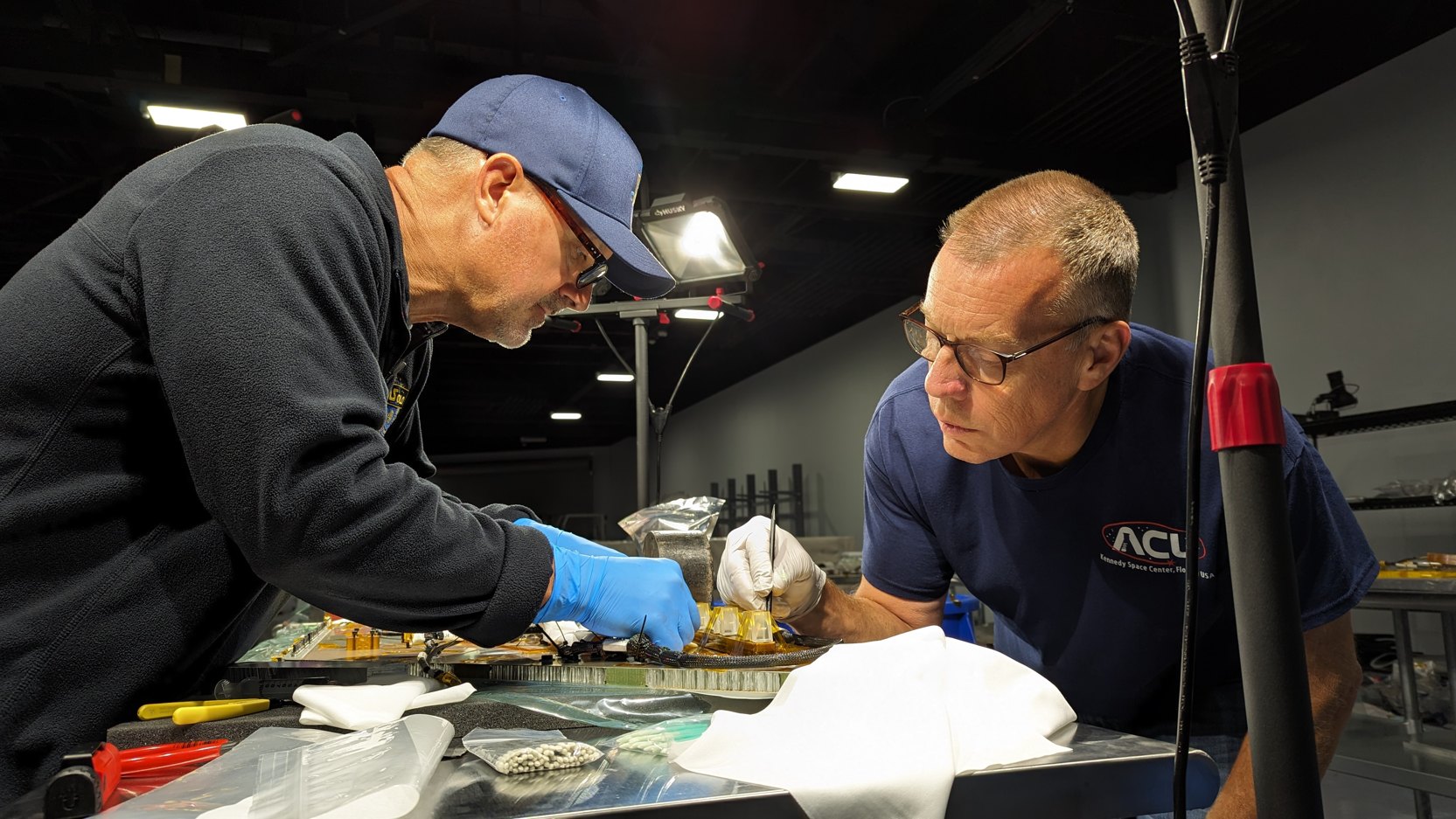
Electrical skills are also used in other advanced technology fields. The reference photograph shows electricians handling equipment at NASA's Kennedy Space Center in the United States. It does not show the British program or its training site, but helps illustrate detailed practical work with equipment. NASA's electrician career introduction
Connect machining and design through experimental equipment
Oxfordshire Advanced Skills' (OAS) case study of Matthew Dearing offers an example for people considering mechanical work. He describes participating in design, manufacturing, installation and testing on UKAEA's small heat-load experimental facility, HIVE. Experience making parts also helps him consider designs that are easier to assemble.
The important feature is experiencing several processes on one product or facility. Understanding what designers, machinists and installers need makes the purpose of one's own process clearer. Inspecting completed equipment and checking that it works as intended are further stages of the work.
At the time of publication, he also expressed an intention to pursue a mechanical engineering degree. Learning a skilled occupation and subsequent higher education are not necessarily separate paths. An intention to study, however, cannot be reinterpreted as an achieved degree. Matthew Dearing's published case study

Check the training provider and employer separately
On November 11, 2025, UKAEA and MTC Training announced two Level 2 courses at OAS relating to radiation protection and decommissioning. The announcement described an initial intake of 36 people and an intention to develop skills shared by fusion and adjacent sectors.
Subjects include selecting, using and recording results from radiation monitoring equipment, and assembling and dismantling equipment during decommissioning. This shows an approach to training organized around occupations that are not confined to fusion alone.
A training facility located on UKAEA's site does not mean every participant is employed by UKAEA. Distinguish the education provider, day-to-day employer and workplaces experienced. A statement that the 2025 intake was full also cannot establish application availability in 2026 or later. Announcement of the two courses
Before applying, compare work, qualifications and conditions
UKAEA's general guidance describes assessment through assignments, practical work and examinations. It also does not guarantee employment at UKAEA after completion. An attractive learning opportunity should not be mistaken for an automatic promise about the next career step. UKAEA's apprenticeship guidance
The following is an editorial comparison framework based on these examples.
- Work: Which equipment is used during training, and what tasks are assigned by the employer?
- Learning: Which qualification and level are targeted, and how are they assessed?
- Supervision: Who provides workplace guidance, and how is study time protected?
- Practical conditions: What are the duration, workplace, pay and travel or commuting requirements?
- After completion: What paths lead to further work or study? Distinguish guarantees from historical outcomes.
The UK government's general guidance includes conditions such as residence in England. People living in Japan may not be able to participate on the same basis. Individual eligibility, the right to work and recognition of educational qualifications require separate checks. This article alone cannot determine whether travel or an application is possible.
For corporate recruiters, the examples also suggest designing work and learning together rather than only recruiting already fully trained specialists. Rather than transplanting the British system unchanged to Japan, begin with which processes a company can offer experience in and who can provide training. Broadening routes into fusion requires showing not only job titles but how people can reach them.
- UK government apprenticeship guidance
- UKAEA early-career pathways
- Will Hall's published case study
- NASA's electrician career introduction
- Matthew Dearing's published case study
- Announcement of two courses
- UKAEA apprenticeship guidance
- UKAEA Annual Report and Accounts 2025/26 (original photograph source; OGL stated)
Information checked as of:2026-10-17
Career explainer based on UKAEA, OAS, UK government and NASA primary sources checked October 17, 2026 JST. Not a new announcement. The example of joining in 2021 and the 2025 course announcement are historical records; no inference is made about 2026 applications, completed degrees or eligibility from Japan. Related work photographs are not asserted to show the named individuals or apprenticeship sessions.