The research infrastructure behind Britain's fusion industry: connecting experiments, materials testing and skills
STEP's power plant plans depend on more than plasma experiments. UKAEA's 2026 strategy and facilities at Culham show how materials assessment, remote handling and skills training support Britain's industrial capabilities.
Read the Japanese original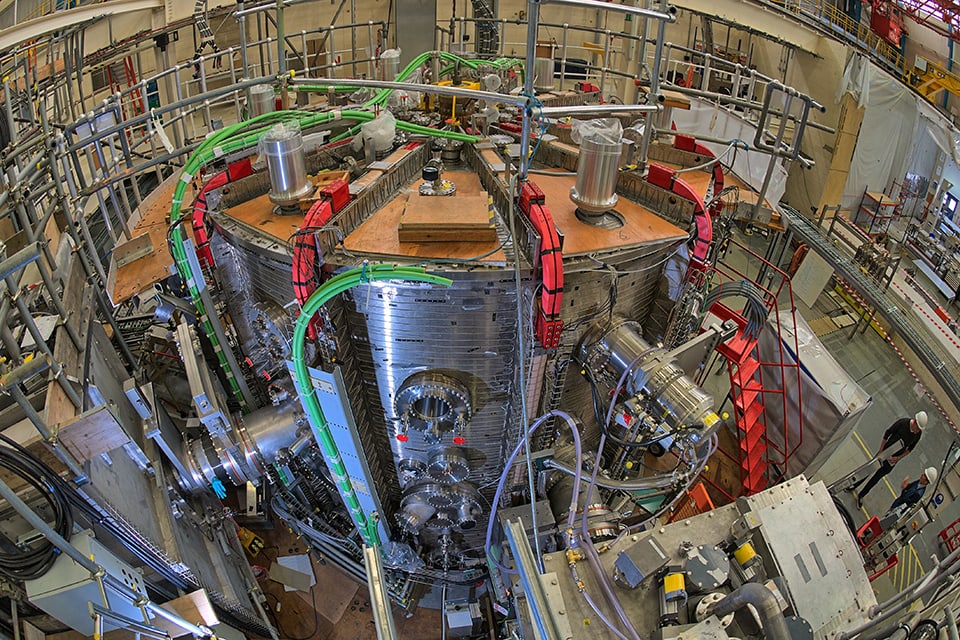
Following only future power plant plans can obscure the foundations of Britain's fusion industry. Culham brings together plasma experiments, materials testing, robotics and skills training. UKAEA's 2026 strategy reveals a division of responsibilities between the organization developing a power plant and the research infrastructure supporting its design.
Separate power plant development from the role of research infrastructure
The UK Atomic Energy Authority's 2026–2030 strategy, published on April 14, 2026, sets out its role as a national fusion laboratory. Its subsidiary, UK Fusion Energy Ltd, is developing the STEP prototype power plant. The company was renamed from UK Industrial Fusion Solutions in March 2026.
Meanwhile, UKAEA's research organization builds knowledge and testing capabilities in plasma, fuels, materials and robotics. Alongside technical support for STEP, it supports research with industry and universities and the commercialization of technology. Understanding what can be tested, and where, is as important to understanding Britain's industrial foundations as following the power plant completion schedule.
The document sets out policies and targets through 2030; it does not report that all the challenges have been solved or that commercial electricity generation has been achieved. This article is likewise a country overview revisiting existing official material, not an announcement of new developments in October. UKAEA's 2026 strategy
MAST Upgrade and spherical tokamak experiments
The opening photograph shows MAST Upgrade at Culham. This spherical tokamak began operating in 2020 and studies plasma and heat exhaust relevant to future compact, high-performance machines. A spherical tokamak has a more rounded shape and a smaller central hole than a conventional tokamak.
In 2021, UKAEA reported that tests of its Super-X exhaust configuration had substantially reduced the heat reaching materials. What matters is the process of testing an internal configuration experimentally and feeding the results into future designs. Results from an experimental machine cannot simply be treated as proof of the durability or economics of an entire power plant.
Materials facilities are also available to industry
The Materials Research Facility (MRF) opened in 2016. Its current official information describes hot cells for handling neutron-irradiated specimens and equipment for examining material properties, with access for fusion, fission and other research.
For materials suppliers, having a place to discuss specimen preparation, analytical methods, transport and handling is valuable. The facility bridges university and industrial laboratories and larger nuclear facilities. Access is not universally free, however. The official guidance explains that costs depend on the materials, their radioactivity and the work and equipment required. MRF access information
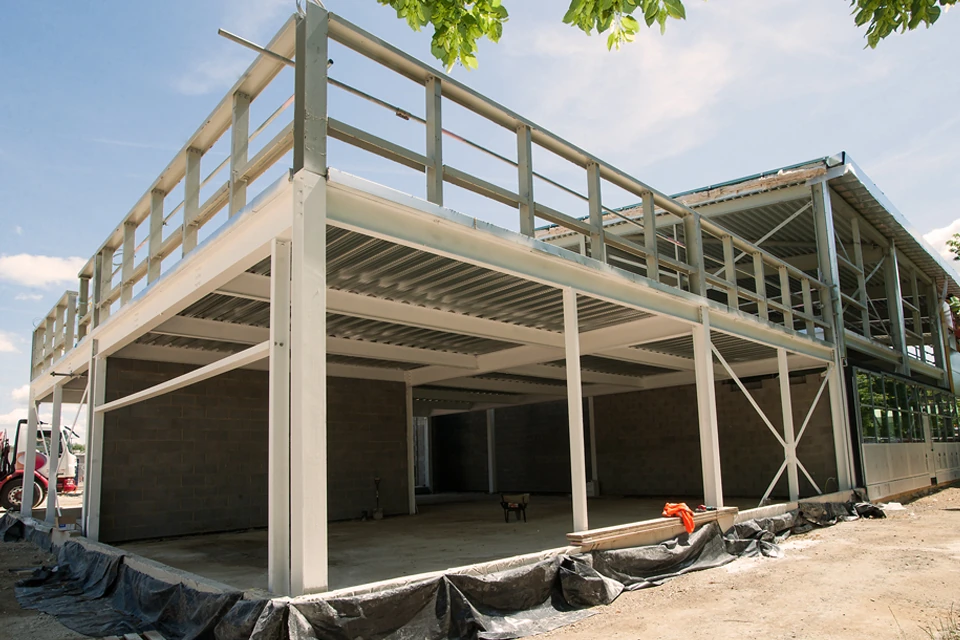
The photograph records construction in 2015. It does not mean that the facility is still being built; it illustrates how these testing capabilities have been developed over many years.
Feed remote-handling experience into operations and maintenance
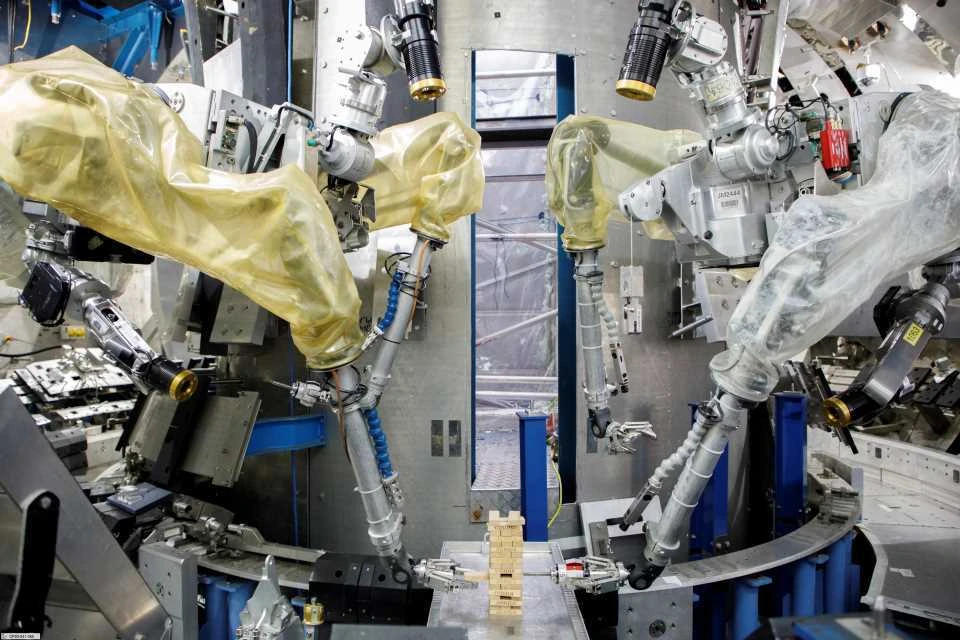
RACE is a center for robotics and remote handling in environments where direct human work is difficult. An official article in 2022 described training with two MASCOT units in JET's mock-up vessel, including rescuing one unit if it became immobilized. The building blocks in the photograph are also used to develop operating skills. MASCOT training
Developing a working robot is only part of the task: operators must train, and the equipment must be recoverable after a failure. This perspective is essential to long-term use of fusion facilities. JET's plasma experiments ended in late 2023, so the photograph should not be read as showing current experimental operations. Applying accumulated knowledge to maintenance and decommissioning is another part of Britain's research infrastructure.
Develop people alongside facilities
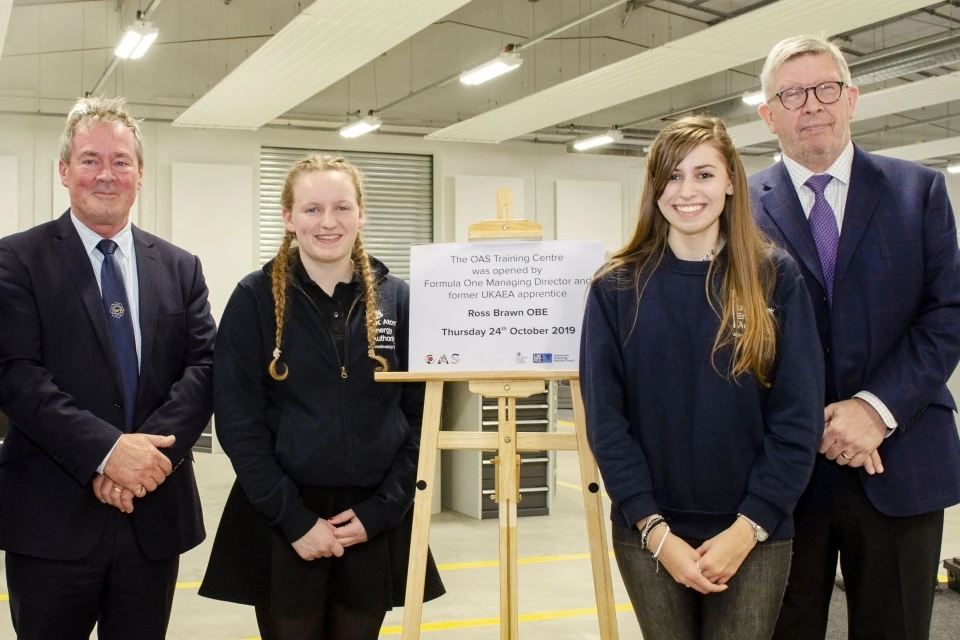
Oxfordshire Advanced Skills (OAS) is a skills training center developed through collaboration between UKAEA and the Science and Technology Facilities Council (STFC). Its dedicated facility, opened in 2019, trains technicians for the region's advanced technology businesses. The photograph records its opening. The opening of OAS
A distinctive feature of Britain's approach is the sustained development, in one region, of both the testing facilities behind research results and the people who use them. The 2026 strategy likewise addresses research capabilities alongside industrial and workforce growth.
Japanese companies seeking collaboration can look beyond supplying STEP equipment and choose partners according to goals such as testing their materials, jointly developing remote operations or improving workforce skills. This is editorial analysis, not a guarantee of access or contracts. Checking current contacts and contractual terms, and specifying what needs to be verified, provides a starting point for cooperation.
Official information from related companies and research institutions
Check each organization’s announcements for development progress and technical documentation.
- UKAEA | UK Atomic Energy Authority strategy 2026 to 2030 (updated April 14, 2026); checked October 13, 2026 JST
- UKAEA | UKAEA unveils 2026–2030 fusion roadmap (announced April 14, 2026); checked October 13, 2026 JST
- UKAEA | Initial heat-exhaust experiments on MAST Upgrade (announced May 26, 2021; updated June 16); checked October 13, 2026 JST
- UKAEA | The Materials Research Facility (current facility and access information; no update date stated); checked October 13, 2026 JST
- UKAEA | New research facility takes shape (July 28, 2015; historical record of MRF construction); checked October 13, 2026 JST
- UKAEA | Robotic superhero meets identical twin in fusion energy machine (July 29, 2022; record of MASCOT training); checked October 13, 2026 JST
- UKAEA | Oxfordshire Advanced Skills centre officially opened (announced October 30, 2019; event held October 24); checked October 13, 2026 JST
Information checked as of:2026-10-13
Country overview based on UKAEA's April 2026 strategy and current facility information. Policies through 2030 are distinguished from achieved results. Photographs are records from 2015, 2019, 2021 and 2022, not current construction or events. Business opportunities are editorial analysis.