From testable to ready for adoption: how fusion suppliers can build a validation plan
Passing a high-temperature test is not the same as being selected for a fusion power plant. Using UKAEA’s MRF and CHIMERA as examples, this article examines the sequence of validation from materials to components, costs and facility availability, and the limits of applying test results.
Read the Japanese original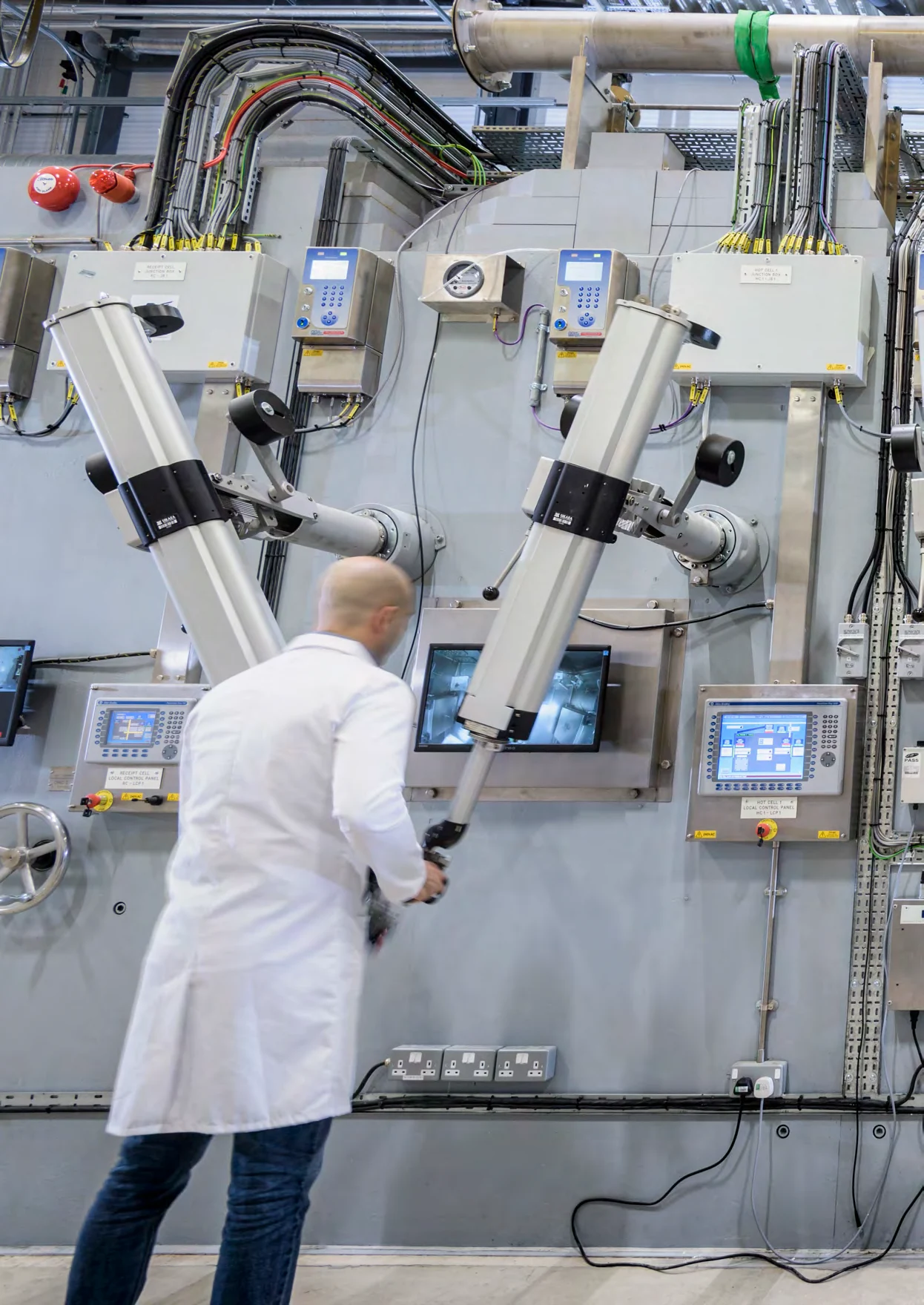
A material that withstands high temperatures does not automatically become a component selected for a fusion power plant. Test specimens and actual components differ in size and joints, as do their exposure to heat, magnetic fields, cooling and radiation. Suppliers need to connect the performance customers want to understand with tests that can substantiate it, rather than simply list impressive testing facilities. Using the UK's Materials Research Facility (MRF) and combined-load testing machine CHIMERA as examples, this article outlines a path toward using tests to inform business decisions.
Start with the performance to demonstrate, not the equipment
“Can it be used for fusion?” is too broad a question. The evidence customers require differs depending on whether a company sells materials, supplies joined components or provides maintenance services. For a cooled in-vessel component, for example, the question extends beyond the properties of the material itself to how its joints and geometry behave under anticipated conditions after manufacturing.
UKAEA's published guide for small and medium-sized enterprises highlights the importance of aligning early with customer requirements for standards and quality assurance, and planning data such as material certificates, non-destructive testing and functional tests before bidding. The guide's content was compiled in November 2025. The April 2026 date in its URL alone should not be taken to mean that all its information on relevant arrangements is up to date.
In practice, putting the “target component,” “anticipated operating conditions,” “performance to assess” and “assessment method” in a single table helps clarify the purpose of testing. This is FI's editorial framework, not an application form specified by a particular procurement process. The starting point is to confirm each customer's specifications, applicable standards and acceptance criteria.
Use small-scale material tests to identify manufacturing differences
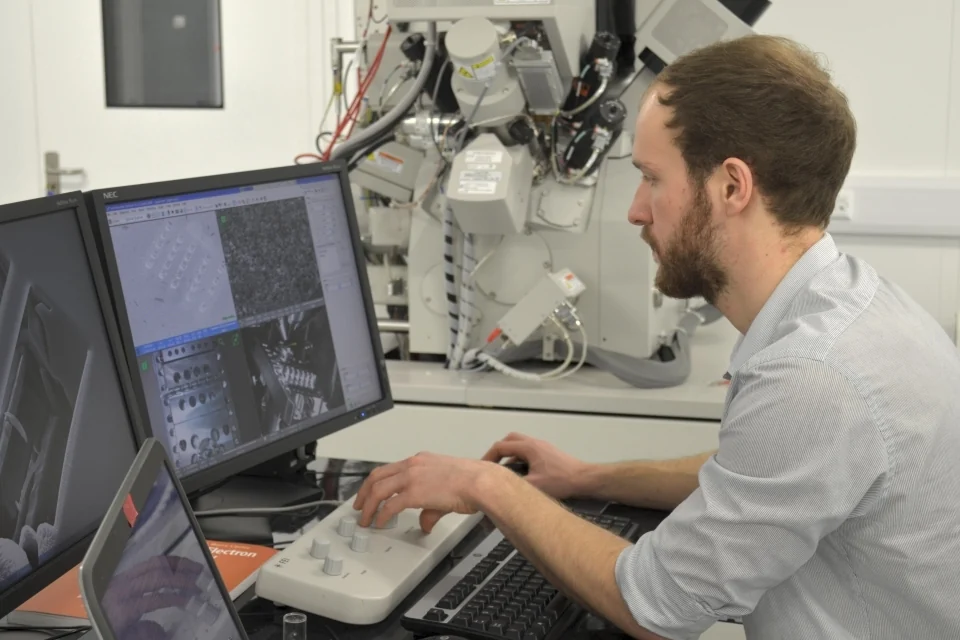
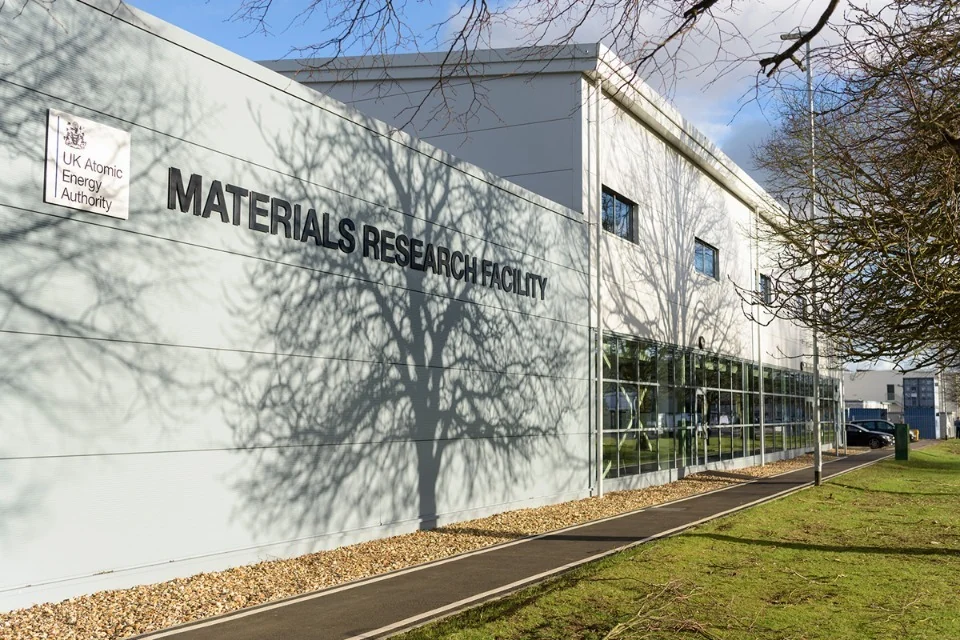
UKAEA's Materials Research Facility (MRF) processes and analyses samples that have undergone neutron irradiation. Its current service information lists sample preparation, microstructural analysis, mechanical testing and assessment of thermal properties. It also describes working with customers to determine preparation and assessment methods, testing methods on non-radioactive samples and comparing them with irradiated materials.
The output is information about materials under the conditions tested. Results from small samples alone do not establish the overall performance of a large component or its lifetime in a power plant. Suppliers need to explain which material, processing condition and measurement method each result corresponds to.
It is also necessary to distinguish between the existence of a facility and the immediate availability of a particular instrument. MRF's announcement of 19 January 2026 states that thermal desorption analysis equipment is available, while describing expanded hot-cell capabilities in terms of preparations. An official information session scheduled for 30 November also distinguishes current capabilities from those to be added in 2027. The availability date for a specific instrument cannot be determined from its name alone.
Check combinations of loads, not just heat
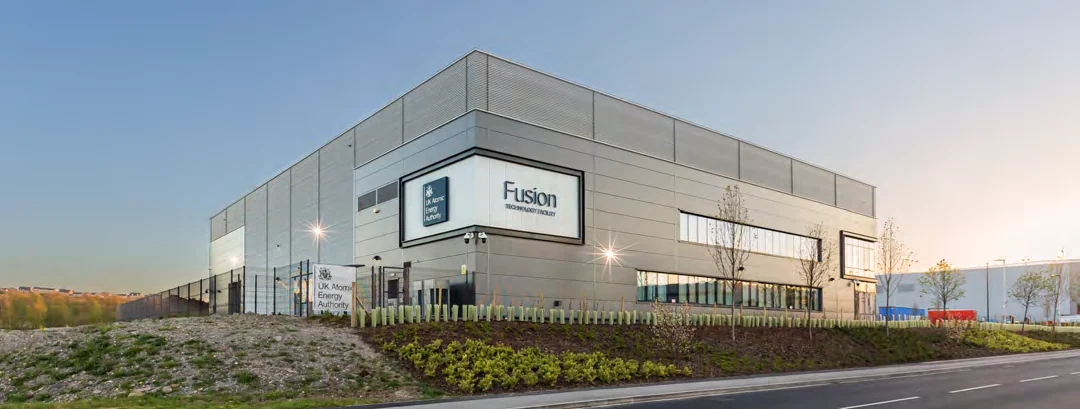
CHIMERA is a machine intended to test prototype components such as first walls, blankets and divertors under combined thermal and magnetic loads. UKAEA's current page describes capabilities for simultaneously applying high temperatures, high heat fluxes, static and time-varying magnetic fields, and cyclic thermal loads. “Heat flux” is the amount of heat transferred per unit time per unit area.
Unlike testing a material in isolation, an assembled component involves geometry, constraints, cooling and joints. A further stage is needed to examine not only resistance to heat but also deformation and damage when multiple loads act together.
However, the current CHIMERA information still includes future-tense descriptions. A paper published in 2023 also describes a design under construction and a planned testing programme. In addition, UKAEA's technical report for 2024–2025 records the decision not to proceed with construction of CHIMERA's pressurised water loop and the resulting shortfall in heat-removal capacity. A general facility description and the progress of individual plans are not the same thing.
This article does not treat all listed capabilities as operational and validated. Before incorporating them into a supplier's schedule, it is necessary to confirm the actual availability of the required functions, as well as the combination of loads, specimen dimensions and measurement methods.
Iterate between modelling and testing, and show where results apply
The CHIMERA paper describes an approach in which computational models are built from the geometry and measurements of as-manufactured specimens and checked against physical tests. Calculations before testing help select conditions, while test results provide evidence for assessing how well the calculations represent the physical object.
A digital twin in this context is more than an attractive 3D model on a screen. Its relationship to the state of the real object and to test data matters. Creating an illustrative model alone does not validate strength or lifetime.
FI sees value in separately identifying what has been calculated and what has been measured. Agreement under one set of temperature and load conditions should not simply be extended to different conditions or manufacturing methods. Identifying areas that need further testing also helps make a technical proposal credible. Results from a testing facility are distinct from a commercial power plant's operating record or proof of net electricity generation.
Budget for more than time on the testing machine
MRF does not publish a standard indicative price, explaining that costs vary with factors such as material type, radioactivity, hot-cell work, analytical equipment and waste management. Bringing in a specimen does not mean that every customer will incur the same cost.
A validation plan should therefore cover sample preparation before testing, the measurements to be taken, compilation of results and what needs to be checked again after a design change. Scheduling should also work backwards from when results must be available for design decisions, rather than focusing only on the test date. This approach to planning is an editorial recommendation, not a confirmation of facility quotations or available booking dates.
MRF also introduces access support through organisations such as Royce and Innovate UK, but this does not mean unconditional free access for every company. The 30 November information session lists researchers at UK universities and employees of UK companies as its audience. Eligibility, contracts, costs and transport arrangements for Japanese companies require individual confirmation; this article does not assert that access is available to them.
Turn “tested” into evidence customers can use
What matters for suppliers is not amplifying the fact that a test has been completed, but reducing the unanswered questions that stand in the way of adoption. Material tests, near-full-scale component tests and comparisons with calculations each answer different questions.
At the end of a validation plan, suppliers should at least retain a record of “which specification was tested against,” “which specimen and manufacturing conditions were involved,” “what was and was not measured” and “what needs to be checked again if the design changes.” This does not replace customer acceptance decisions or certification. It is an approach to producing explainable evidence that helps both parties move forward with their next design and contractual decisions.
FI's Research infrastructure supporting the UK's fusion industry (Japanese edition) sets out the broader picture of the country's research and testing infrastructure. After learning about facilities, the next step is to identify precisely what needs to be established about a company's own product to advance a customer's decision. Repeatedly doing so turns access to research facilities into industrial value.
- UKAEA Global Fusion Guide for SMEs (content compiled November 2025; published file April 2026)
- UKAEA Materials Research Facility — current services, access and cost conditions
- UKAEA MRF expands capabilities (19 January 2026)
- UKAEA MRF Webinar — current capabilities and plans for 2027; scheduled for 30 November 2026
- UKAEA CHIMERA — current aims, capabilities and specifications
- Barrett et al., CHIMERA Fusion Technology Facility: Testing and Virtual Qualification (2023)
- UKAEA Fusion Technology Year in Review 2024–25 (change to the CHIMERA pressurised water loop plan, printed p. 43)
Information checked as of:2026-11-04
Industry analysis based on primary sources. Material tests, component tests and customer acceptance are distinguished. Planned capabilities are not treated as operating results; business recommendations are editorial analysis.