Type One Energy raises $200 million: how far has power plant commercialization progressed?
Read the October 6 Series B separately from industrial partnerships, prototype validation, an initial license and TVA's decisions. Questions equipment suppliers should clarify before commercial discussions.
Read the Japanese originalAnnouncement date:2026-10-06

Type One Energy announced on October 6, 2026 that it had completed a $200 million Series B financing. Breakthrough Energy Ventures and Clutterbuck Capital led the round, with participants including Siemens Energy Ventures. Uses include technology development and design and development of Project Infinity at Bull Run, Tennessee. The company's financing announcement
For business readers, the amount is not the only important question. Who develops technology, who builds equipment, and which decisions lead to a power plant? This announcement helps examine those responsibilities.
Combine industrial partners rather than own every factory
Type One Energy describes a partner-centered OEM model using existing industrial companies' manufacturing, design and operating capabilities. Here, OEM means a supplier of fusion technology and key designs and equipment. The financing announcement presents this division of work as the company's business model. Business-model explanation in the financing announcement
Our editorial focus is the boundary of work undertaken by outside companies. Specifications from a technology supplier do not automatically resolve manufacturing challenges or on-site maintenance. Suppliers need to propose not only what they can make but how far they will contribute to design improvement through prototypes, quality evidence and failure investigation. Participation as an investor should not be reinterpreted as an order to that company or a performance guarantee.
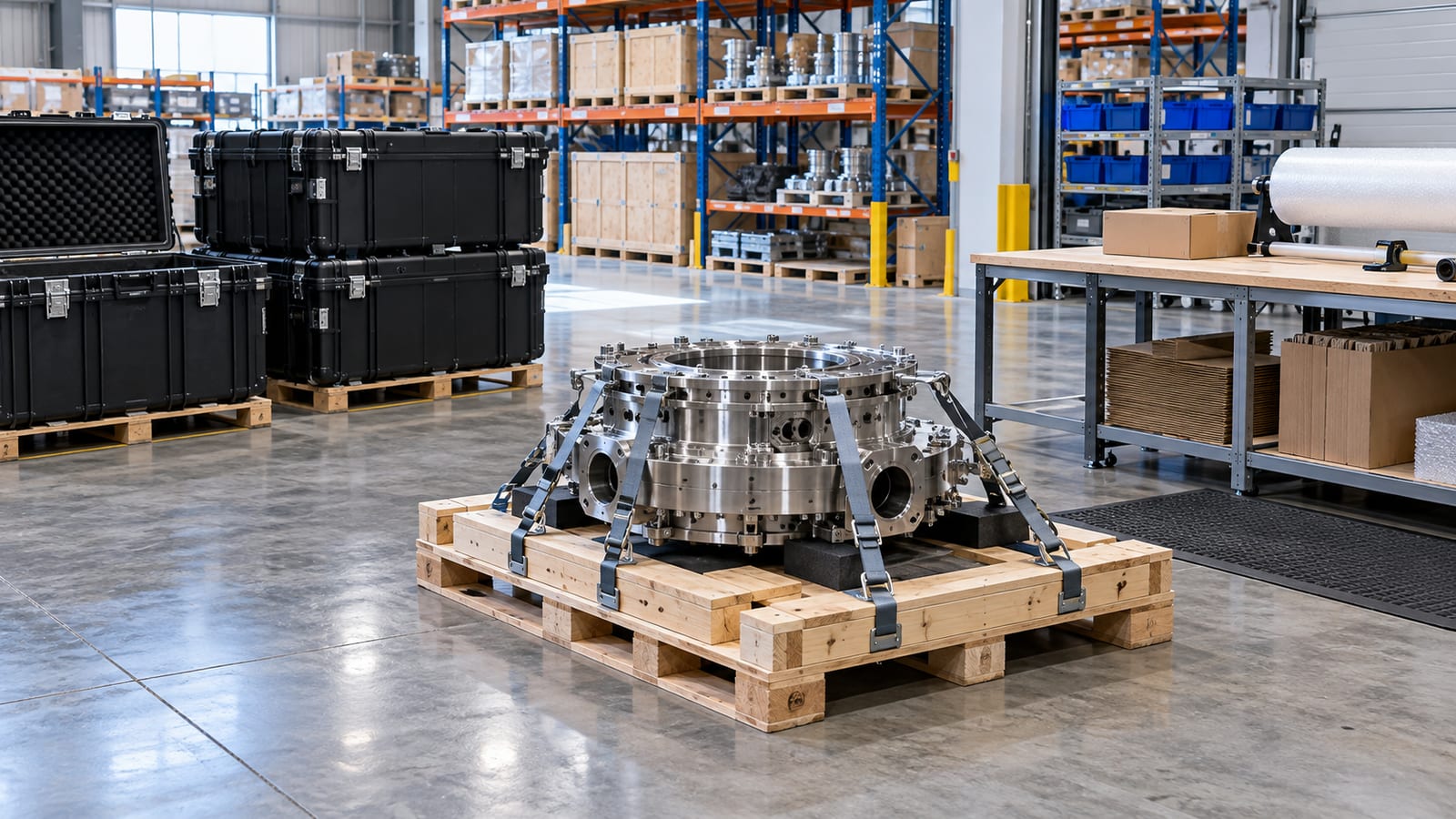
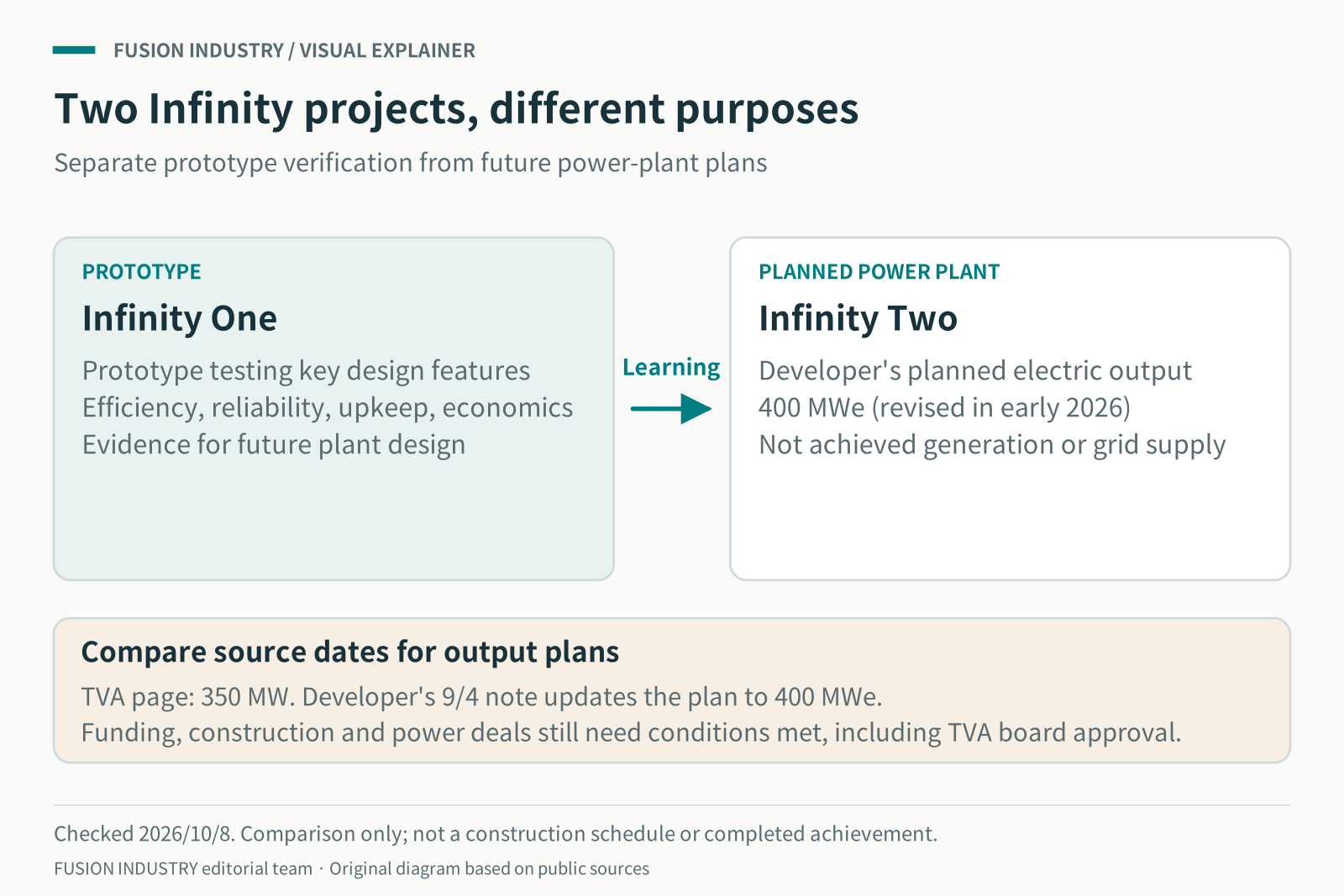
Infinity One and Infinity Two have different roles
Utility TVA describes Infinity One as a prototype for validating critical design features, including efficiency, reliability, maintainability and economics. Separating prototype validation from outcomes expected of the future Infinity Two power plant helps clarify component order timing and test purposes. TVA's explanation
Infinity Two's output plan has been revised. An editorial note dated September 4 added to an earlier Type One Energy announcement states that planned electrical output was revised in early 2026 from 350 MWe to 400 MWe. TVA's introduction still stated 350 MW as of October 8. The developer's current planned figure is 400 MWe. This is not achieved electricity generation; the discrepancy reflects different document dates. Note on the revised plan
Separate $200 million, an initial license and a power plant decision
The announcement establishes completion of corporate financing. It does not establish that all Infinity Two construction costs are funded or that a sales price for its electricity has been agreed. Corporate R&D funding and financing to build and recover investment in a particular power plant involve different assessments and counterparties.
On regulation, Tennessee announced on August 31 that it had issued Type One Energy a fusion-specific radioactive byproduct material license. This is progress, but the announcement describes full operation in 2034 as a future outlook. Licensing must not be confused with startup or achieved net generation. Tennessee's announcement
The official announcement concerning the letter of intent with TVA also states that final financing and construction decisions and a power purchase agreement are subject to TVA board approval, regulatory review and alignment with TVA's plans. A letter of intent indicates the direction of cooperation and should be distinguished from final commitments to build or purchase. TVA and Type One Energy's joint announcement
Checks for companies considering a transaction
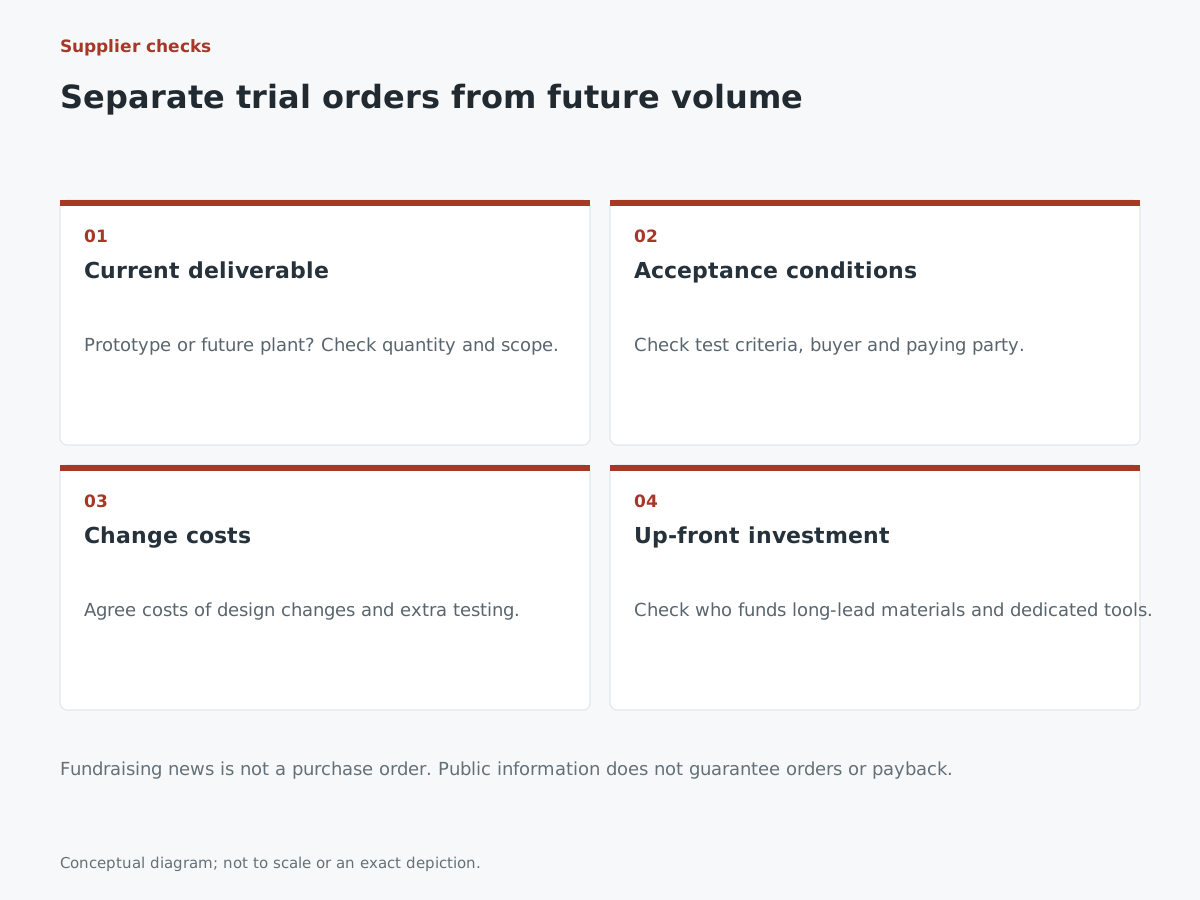
Before converting a news headline's amount into a revenue forecast, clarify these points in commercial discussions.
- Is the request for the prototype or the future power plant?
- Who places the order and who pays?
- What are the performance acceptance criteria and additional costs following design changes?
- Who bears contractual costs if long-lead materials are secured early?
Even when considering dedicated equipment in anticipation of future series production, first clarify the quantity of evaluation pieces, acceptance tests and results needed for the next purchasing decision. Investment news can prompt investigation of a potential customer, but it is not a purchase order. These are checks for establishing commercial premises from public information, not a credit assessment of a particular company or an investment recommendation.

Follow contract content rather than amounts alone
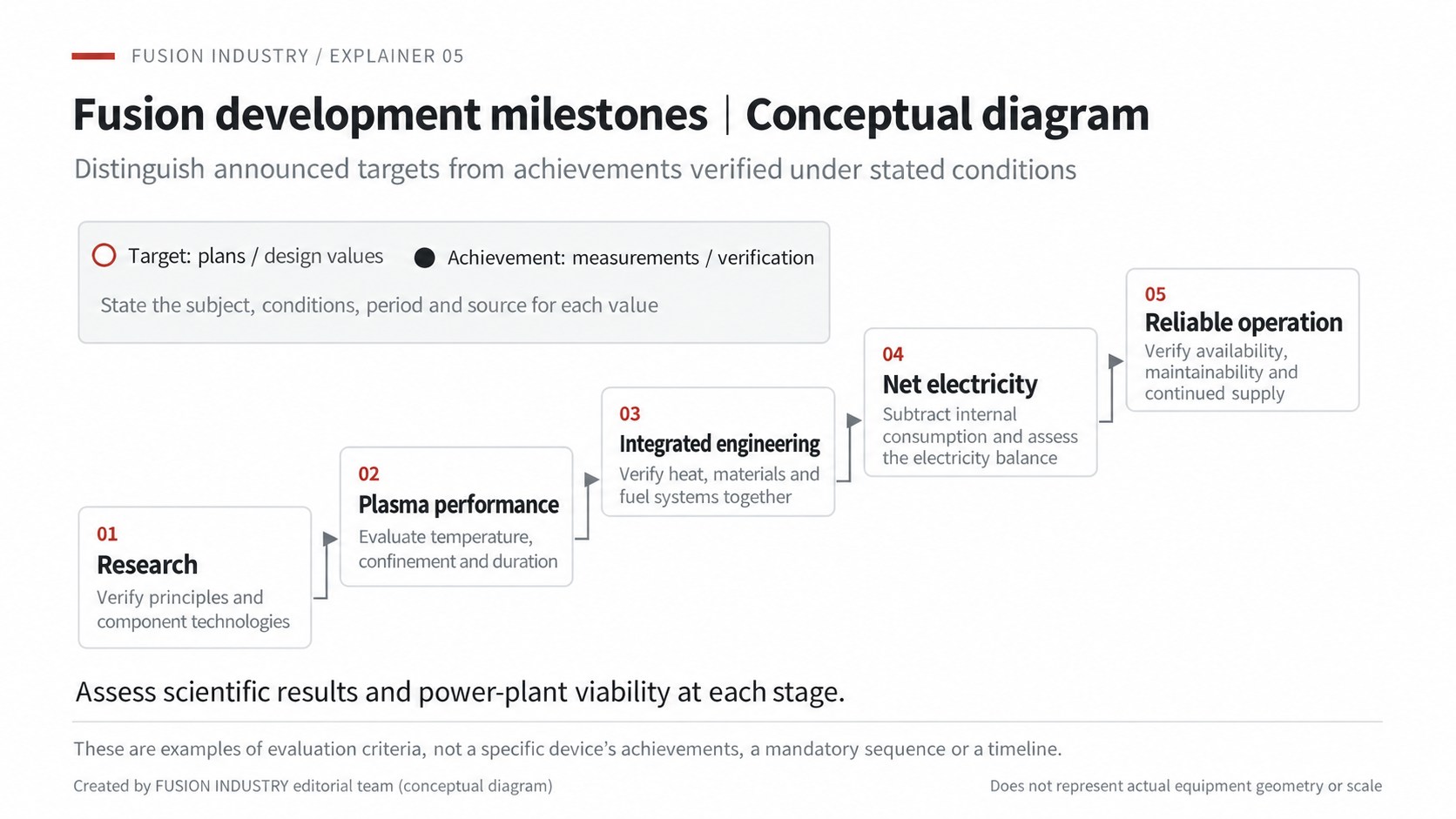
This announcement shows funding for technology development and an intention to use external industrial capabilities. Next, track separately what the prototype validates, who wins which system contracts and how far final power plant agreements progress. Keeping finance, technology, licensing and customer decisions distinct rather than compressing them into “commercialization” makes entry timing and work scope easier to assess.
- Type One Energy: completion of $200 million Series B (October 6, 2026)
- TVA: Fusion Technology (Infinity One and Infinity Two)
- TVA and Type One Energy: letter of intent and conditions for final decisions (September 19, 2025; update note September 4, 2026)
- Tennessee: fusion-specific license issued (August 31, 2026)
Information checked as of:2026-10-08
Series B completion and an initial license have been announced. Infinity Two output is a developer's planned figure; final construction and power purchase decisions have separate conditions.