How to Read Fusion Milestones: Japan’s Two Stages of Power Demonstration
A target year means little without a defined result. Japan’s distinction between an initial electricity demonstration and a later pre-commercial demonstration offers a useful framework for reading global fusion roadmaps.
Read the Japanese original 日本語
Fusion announcements often lead with a decade. The more revealing words sit beside it: experiment, power demonstration or commercial operation. Each describes a different result and demands different evidence. A roadmap is best read as a sequence of unresolved questions and proposed tests, rather than a guaranteed timetable for electricity sales.
For international researchers, suppliers and investors following Japan, terminology is particularly important. Translating several Japanese development stages simply as “commercialization” hides the engineering work that separates them.
Japan distinguishes two power demonstrations
A Cabinet Office expert council adopted its approach to fusion deployment on 8 April 2026. It distinguishes a power-generation demonstration in the 2030s from a subsequent pre-commercial power-generation demonstration. The former must show the technical feasibility of a system with credible market potential and systematically establish basic knowledge needed for commercialization. The latter must demonstrate the integrated technologies needed for a viable business, including sustained operation, durability, maintenance, tritium handling and waste treatment. Cabinet Office policy document, pp. 6–8
These are different requirements, not necessarily two separately constructed plants. The document allows an initial demonstration plant to be improved for the later stage. It also places safety and engagement with the host community alongside technical development.
The distinction matters when reading an English-language pitch. “Power demonstration” should not silently become “commercial operation.” The first result can be important while still leaving fuel management, component replacement and operating economics to be demonstrated.
One record cannot complete the whole plant
A high-field magnet test demonstrates something about a magnet. A plasma record demonstrates something about confinement, heating or control under particular conditions. Neither automatically establishes fuel supply, usable heat extraction or maintainability. Construction completion, machine assembly, commissioning and fusion operation are also separate milestones.
For each announcement, write two paired statements: what has been demonstrated, and what remains untested. This simple discipline prevents a photograph of completed hardware from becoming evidence of performance it has not yet delivered.
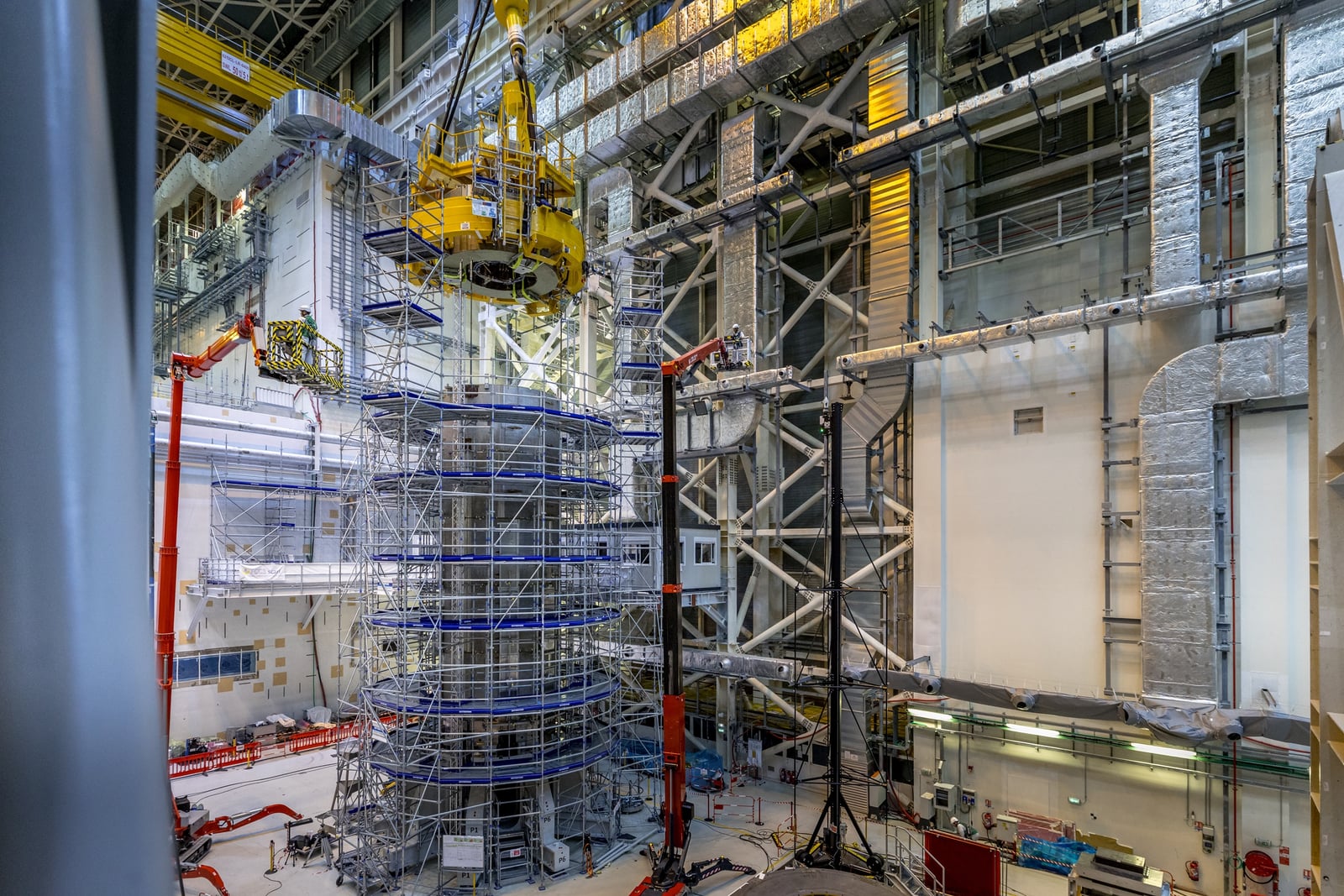
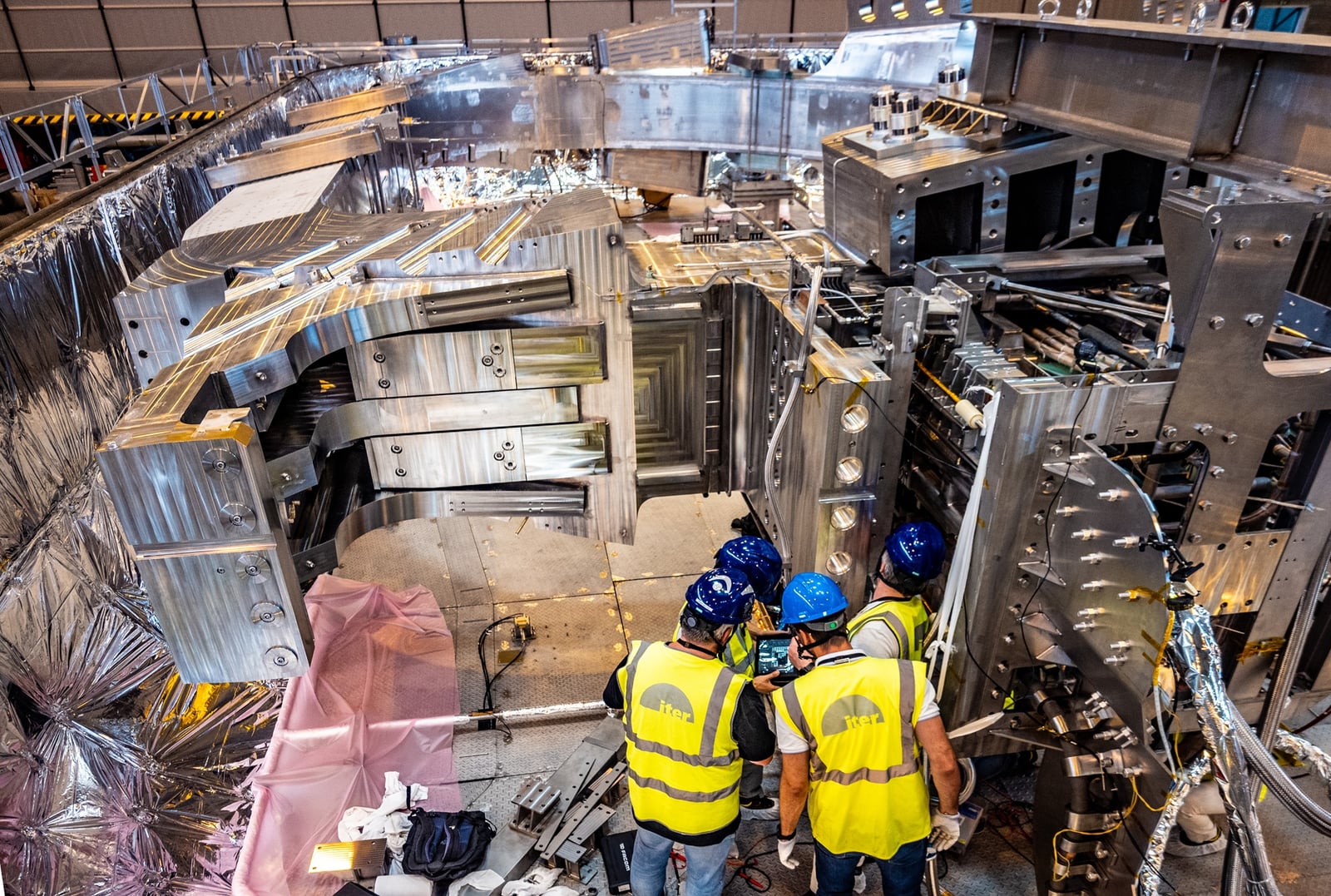
The ITER construction photographs accompanying this article illustrate assembly and testing work. They are not photographs of commercial power production, nor evidence that Japan’s national demonstration goals have already been met.
A roadmap and a funded opportunity are different documents
The U.S. Department of Energy describes its Fusion Science & Technology Roadmap as a strategy identifying scientific and technological gaps and milestones toward commercial fusion. DOE roadmap overview
For business development, a strategic priority, a budget allocation, a funding call, an award and an executed contract should be checked separately. This is an editorial reading framework: support expressed in a policy document does not, by itself, tell a supplier whether a relevant competition is open or whether it is eligible to participate.
Japan’s accompanying pathway diagram likewise places public support around several stages, with both the QST-centered demonstration-reactor effort and private-sector initiatives feeding toward deployment. QST is the National Institutes for Quantum Science and Technology. The diagram also identifies organizational capability, finance, siting and safety as necessary conditions. It is a development pathway rather than a list of contracts available today. Cabinet Office pathway
Put the announcement into three columns
Take a hypothetical statement: a test building has been completed and component performance testing will begin next year. The demonstrated result is the building. The plan is the start of testing. The unconfirmed result is the component’s performance. None of those categories should absorb the others.
Apply the same approach to a proposed electricity demonstration. Does the stated scope include a generator and electrical output, or only the extraction of heat? What is the measurement boundary? If the document leaves the meaning unclear, record the uncertainty rather than filling it in optimistically.
Five questions make comparisons more useful:
- Is the number a measurement, a design value or a target?
- Does the test cover a component, a subsystem or the entire plant?
- How closely do duration and operating conditions resemble the intended application?
- Are the facilities, people and funding for the next step identified?
- Are safety, siting and maintenance included in the plan?
This is not a scoring system for declaring one fusion approach the winner. Different approaches must resolve different risks in different orders.
Supplier decisions come before commercial operation
A manufacturer’s relevant dates can precede the proposed start of electricity sales by years. Specification studies, prototype evaluations and decisions about manufacturing processes can all create work. A customer comparing designs may need a credible test method more urgently than a volume-production price.
A useful opening question is therefore: what technical decision comes next, and what evidence will support it? Knowing the decision immediately upstream of a supplier’s proposed role makes the required samples, engineering explanation and development resources more concrete.
Read schedule changes together with changes in scope
A revised year can reflect a newly discovered technical problem, a different procurement sequence or an expanded objective. Conversely, keeping the year unchanged does not mean that the promised result is unchanged. Compare the old and new definitions of success as carefully as the dates.
The next evidence worth seeking is usually a disclosed test condition and result, not another repetition of a target. Japan’s two-stage language is valuable precisely because it makes the distance between generating electricity and running a durable electricity business visible. Neither stage should be reduced to a calendar label.
Sources & verification
- Cabinet Office: Approach to the deployment of fusion energy, 8 April 2026
- Cabinet Office: Backcast pathway toward fusion deployment
- U.S. DOE: Fusion Energy and the Science & Technology Roadmap
- Cabinet Office: Fusion Energy Innovation Strategy official resources
Information verified: 2026-10-07
Policy targets, funding decisions, construction, measured performance and commercial operation are different stages. The current DOE page was checked on 18 October 2026; the older Japanese article’s specific attribution of a funding disclaimer is not repeated because that wording is not exposed on the current page.
Saved to the same reader account as the Japanese edition. Sign-in and saved-item screens use a Japanese interface.