Why Is NTT Working on Fusion? Testing 100-Microsecond Communication Cycles at JT-60SA
Sending data 400 metres at intervals of 100 microseconds or less. NTT and QST’s communication test highlights the importance of getting distant equipment to work on time. It reveals a role for communications in fusion, and the challenges of putting it to work in actual plasma control.
Read the Japanese originalAnnouncement date:2026-03-25
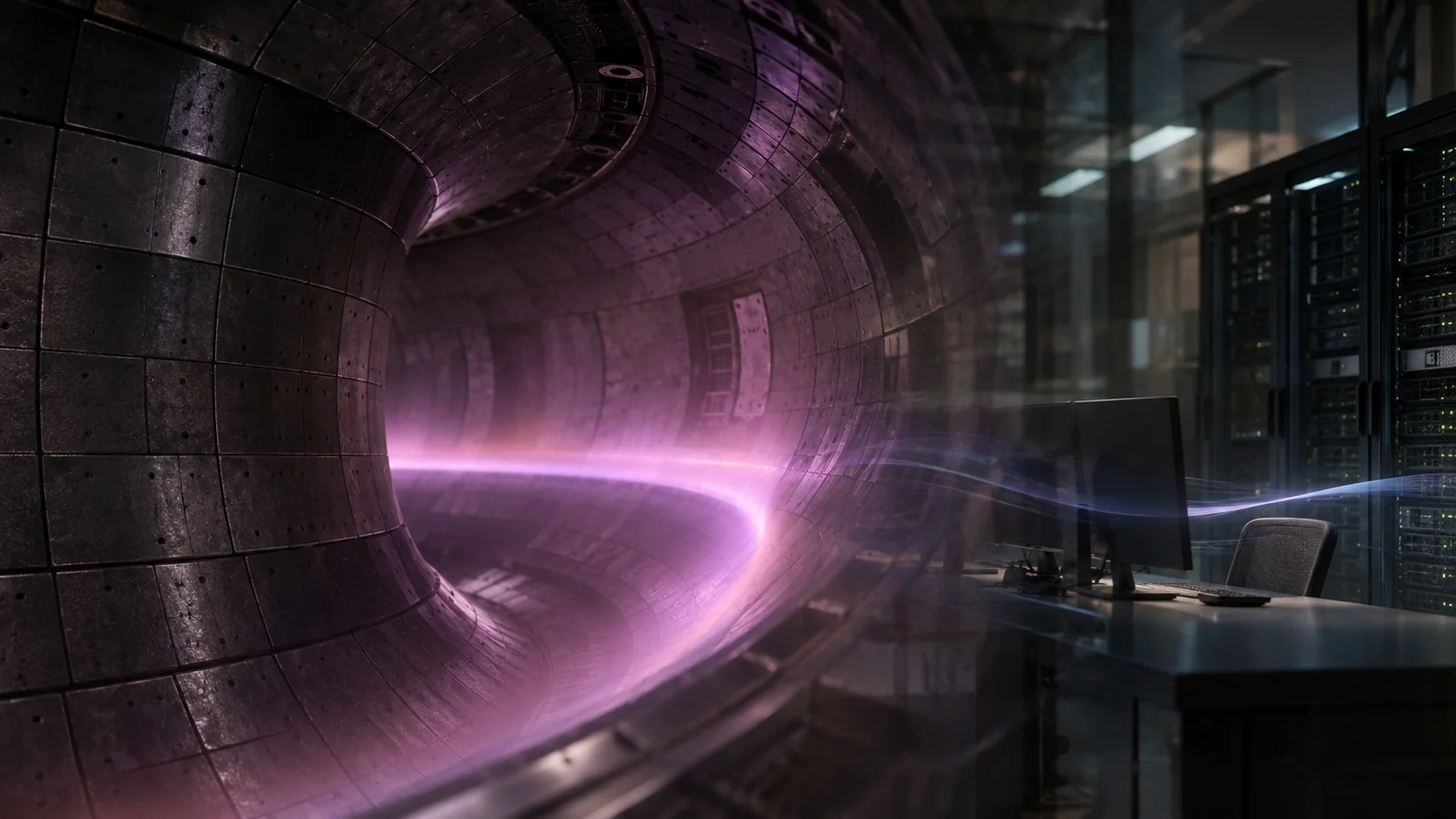
Even an accurate measurement of the plasma can arrive too late: by the time a command is issued, the plasma may have changed. In a fusion device, data has deadlines, too. This is the communications problem NTT and Japan’s National Institutes for Quantum Science and Technology (QST) addressed at JT-60SA.
The partners announced on March 25, 2026 that they had tested communication between computers 400 metres apart within the control network of JT-60SA, a superconducting tokamak plasma experimental device. They demonstrated communication at intervals of 100 microseconds or less for approximately one kilobyte of data. That is one ten-thousandth of a second.
The question worth asking is which jobs a telecommunications company’s technology can take on inside a fusion device: carrying measurements and connecting a computer’s decisions to the next action. Alongside a fast link, this requires each data handoff to finish on schedule, cycle after cycle. Joint announcement
A large machine carrying small clues
In a tokamak, instruments measure the plasma, computers assess its condition, and commands go to equipment such as coil power supplies. Measurement, calculation and action repeat to address position, shape and instabilities.
The data volume is not a score to maximize. The roughly one-kilobyte payload represents information needed for predictive control, passed at short intervals. However fast a calculation may be, a decision using a measurement cannot begin before that measurement arrives.
As facilities grow, computers can be hundreds of metres apart. Coordinating equipment across a large installation within a short time allowance is a different problem from connecting two adjacent desktop machines. NTT's technical explanation
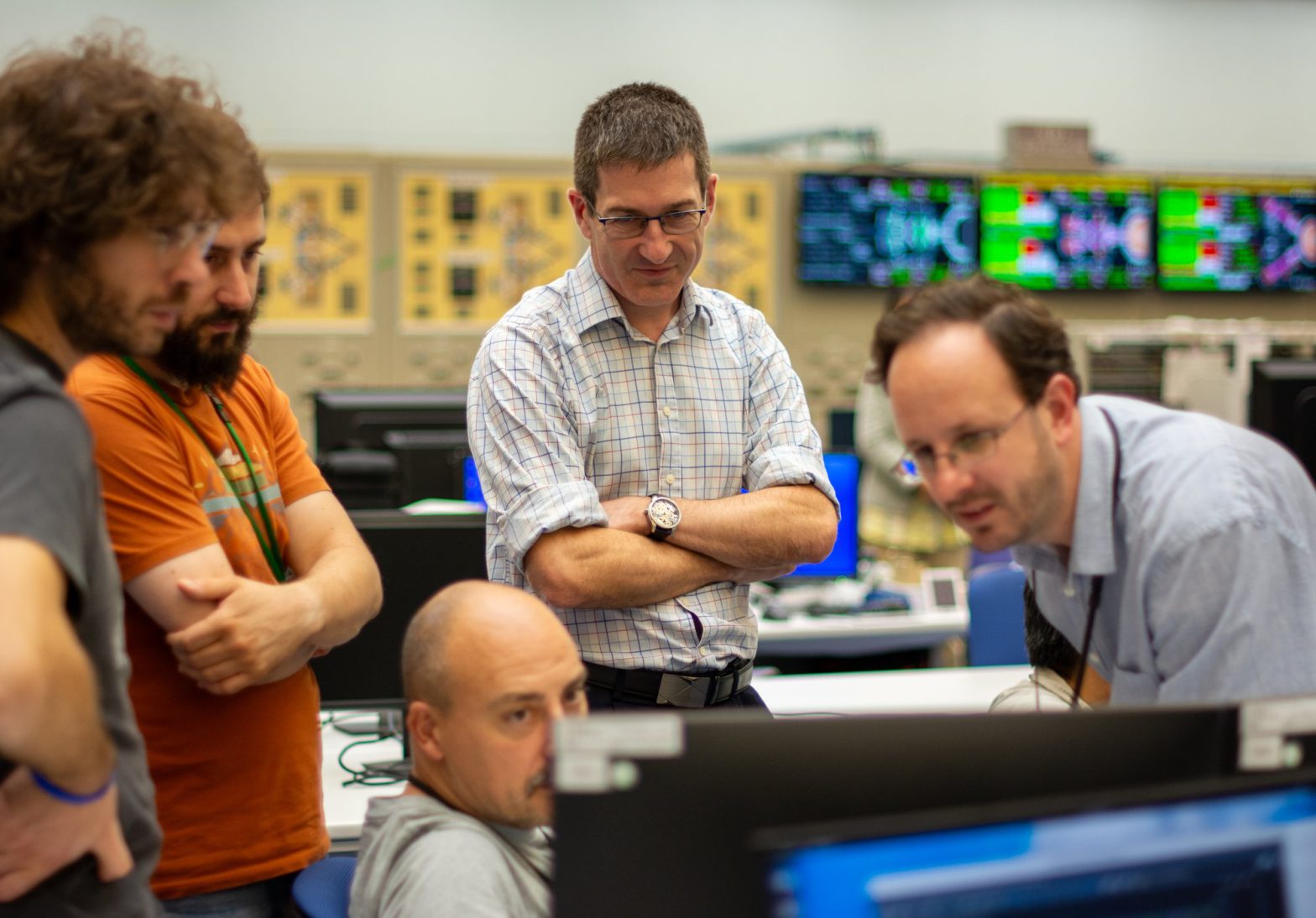
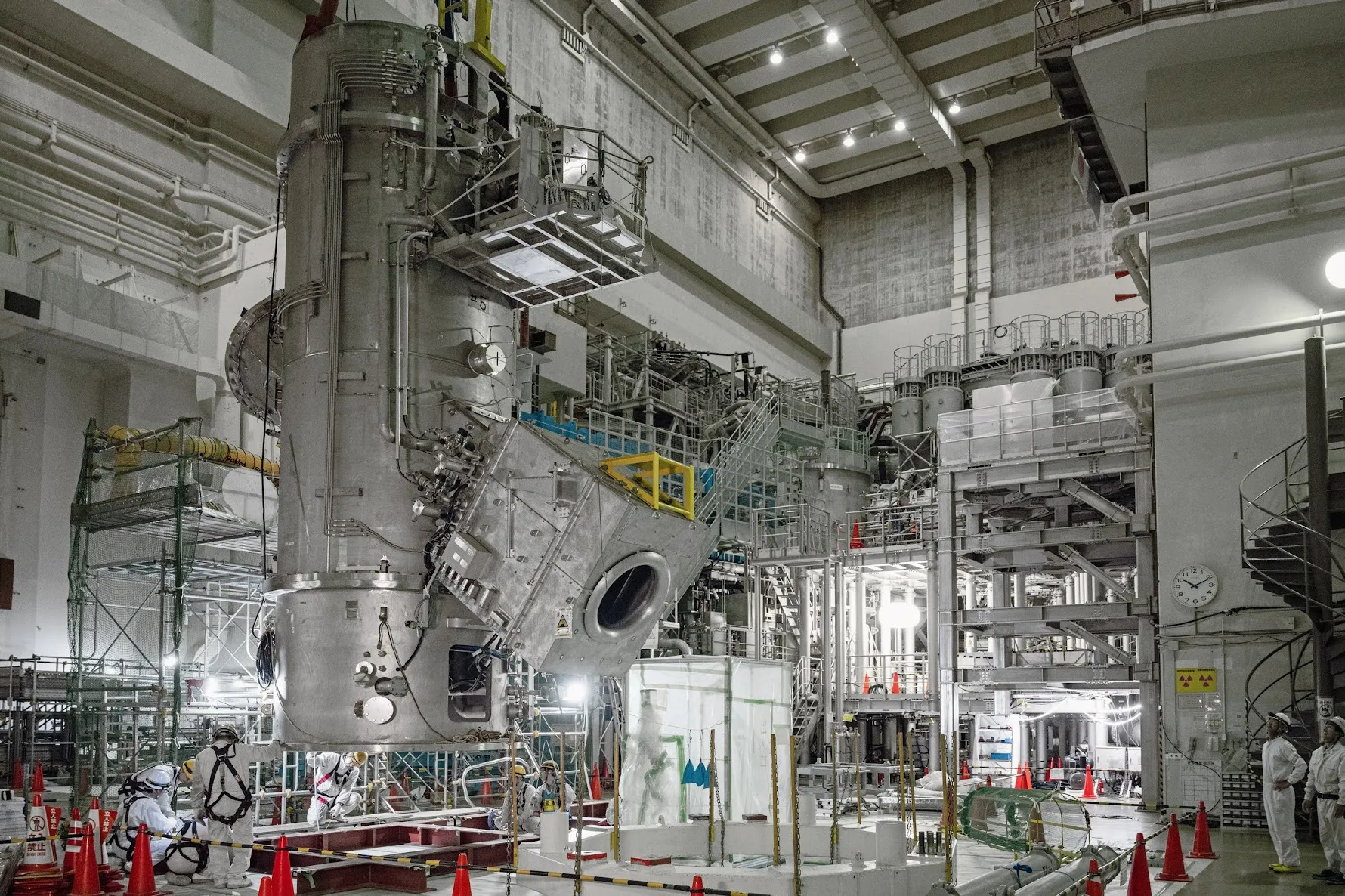
Design for delay variation as well as average speed
The key word is deterministic: completing data transfer reliably within a specified time. Variable arrival times also vary the time left for calculation and action.
Communication has a deadline because the plasma can change while the system waits. If measurements arrive late, the computer may issue commands based on a state that has already changed. The requirement is not only a fast link, but predictable arrival times from one cycle to the next.
QST and NTT exploited the repetitive nature of control communication. Rather than exchange necessary control information immediately before each transmission, an acknowledgment carries information for the following cycle. Preparing earlier reduces waiting.
Where streams converge, queues can introduce timing variation. Mechanisms such as Time-Sensitive Networking control transmission timing to reduce that variation. The work concerns when data moves, rather than simply replacing a link with a higher-bandwidth one. Method
A communication test is one part of plasma control
The result must retain its scope. The joint announcement evaluated communication; its timing figure is not an achieved duration for the complete process of measurement, prediction, power-supply response and plasma response.
At the announcement, evaluation with more computers and application to high-pressure plasma control in JT-60SA heating experiments remained ahead. Establishing the network and maintaining the desired plasma require different verification.
Putting the communication test to work in controlling the machine requires checking whether measurement, computing and power supplies perform as intended when combined. Turning a network benchmark into a technology the whole device can use is the engineering work that lies beyond this result. Original NTT release
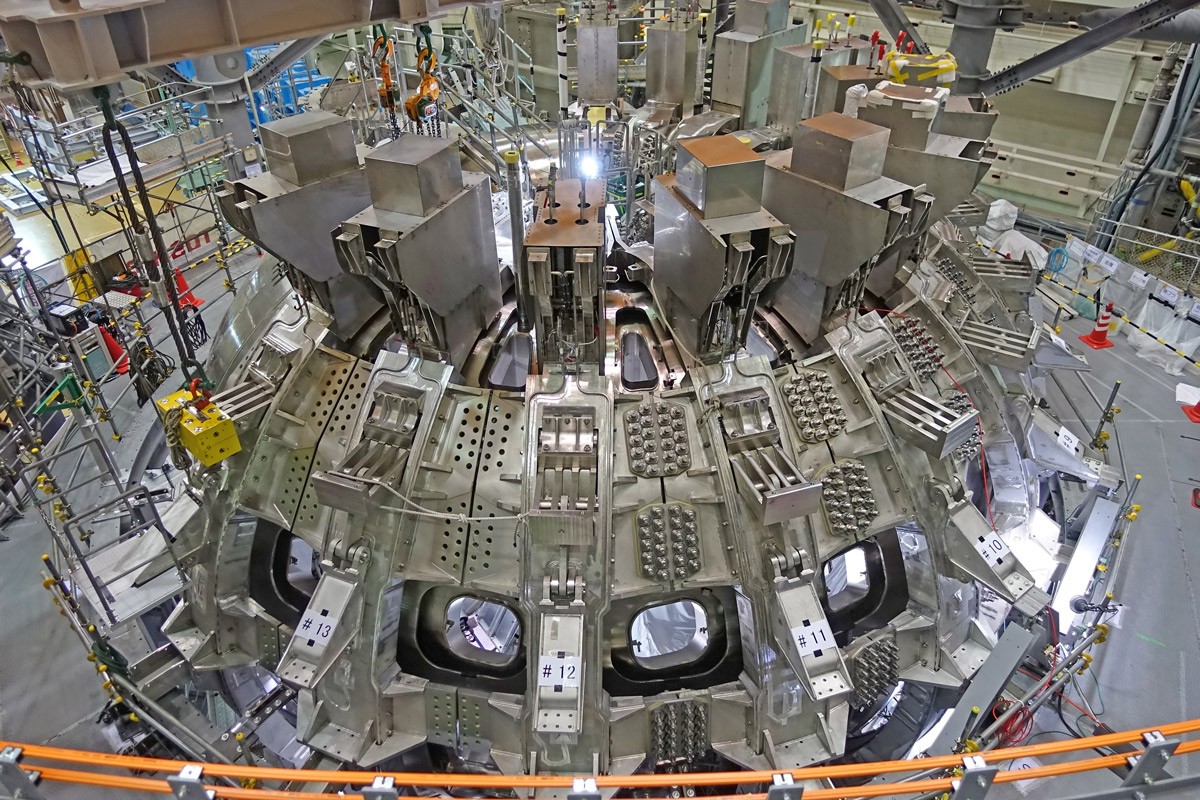
What makes communications an industrial technology for fusion
The collaboration dates to a 2020 agreement linking observation-data infrastructure and predictive plasma control. NTT's June 2026 explainer also discusses potential applications in industrial automation and robotics. It does not establish adoption or performance in every such application. Agreement · NTT explainer
For companies considering a role in fusion, this research also suggests how to find work to do. Which data must cross what distance, by what deadline? Define those requirements with researchers, then connect instruments, computers and power supplies to test them. Translating fusion’s communications needs into testable specifications is itself work that can support industrial development.
The next questions are whether the network can meet its deadlines as more computers are connected, and whether it can support actual plasma control in heating experiments. These were the next steps identified in the March announcement. Both must be tested to connect a communication benchmark to operation of the device.
The work needed to build a fusion industry extends beyond the plasma. It also lies in getting distant equipment to exchange information and operate as a single control system. Alongside temperature and plasma sustainment duration, progress in designing and testing those connections deserves attention.
NTT joint release, March 25, 2026 (Japanese) · QST publication of the same joint release (Japanese) · NTT release (English)
These are publications of the same joint research announcement, not independent verification.
- NTT and QST joint announcement, March 25, 2026, published by NTT
- The same joint announcement, published by QST; not independent verification
- NTT joint announcement in English
- QST technical explanation in English
- NTT and QST collaboration agreement, 2020
- NTT technical explainer, June 2026
Information checked as of:2026-11-09
Technical explainer based on the NTT–QST joint announcement. Communication testing is distinguished from full plasma control, and results from future plans.