JET’s remote handling upgrade took over 400,000 hours of work
JET’s upgrade covered development, installation, testing, commissioning and training. UKAEA’s MASCOT and RACE sources show how the job extends beyond delivering a robot, and what that means for suppliers.
Read the Japanese original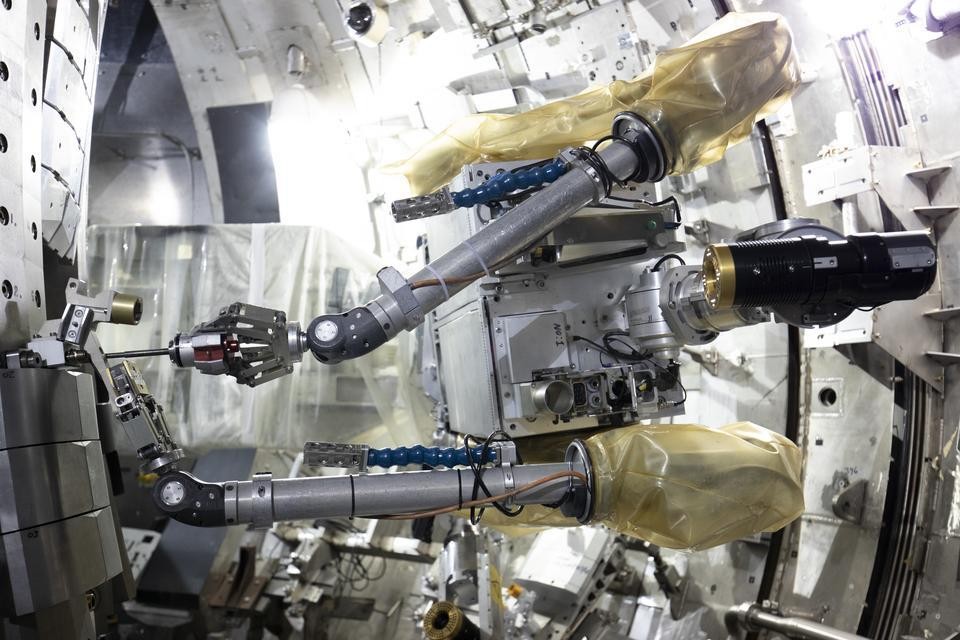
Upgrading JET’s remote handling systems involved more than 400,000 hours of work, according to a 2024 announcement by the UK Atomic Energy Authority (UKAEA). That total covered research and development, installation, testing, commissioning and training. Delivering a robot arm leaves substantial work before a fusion facility can use it.
The total includes operator training
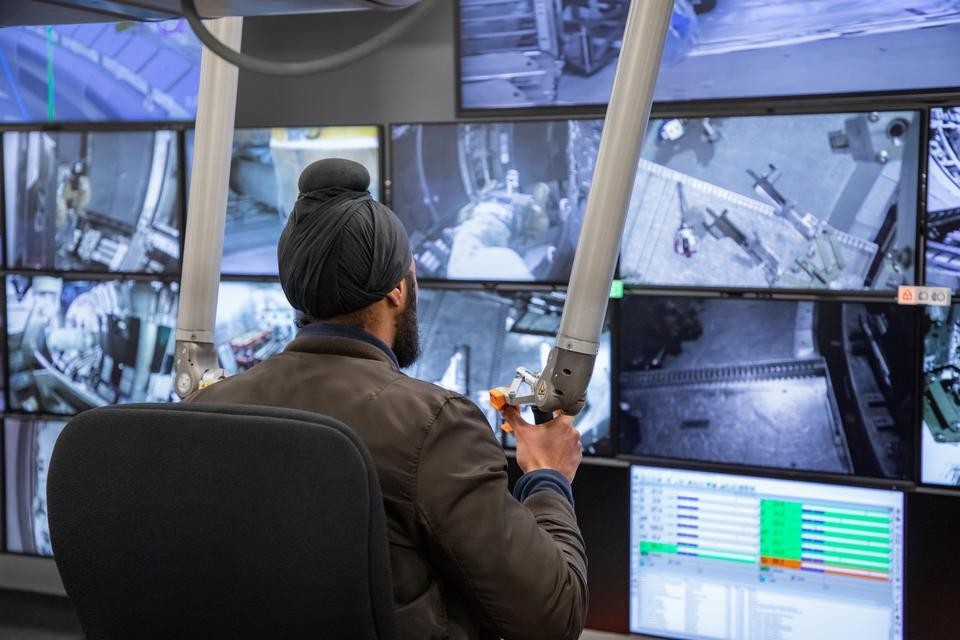
UKAEA’s February 2024 announcement described upgrades to JET’s remote handling control room and its two-arm MASCOT manipulator. The total spans work from development through training; it is neither continuous robot operating time nor a measure of training alone. The upgrade announcement
MASCOT provides force feedback to its operator. It conveys the feel of carrying a component or tightening a bolt to someone in a separate control room. Seeing position on a screen and controlling contact forces are different tasks. This equipment connects people and machines for both.
Delivering a robot does not finish the job
UKAEA’s current robotics description covers design, construction and operation. It also identifies remote maintenance as an important design consideration because of its relationship with downtime. UKAEA’s robotics work
A buyer needs to know more than how much weight the arm can lift. Aligning tools with components, operating from camera views and completing a specified procedure involve a combination of systems. Who will connect the tools, cameras and control room, and take responsibility for completing the task? That scope needs to be settled before an order is placed. This is FI’s interpretation of the sources, rather than a description of JET’s contract terms or cost breakdown.
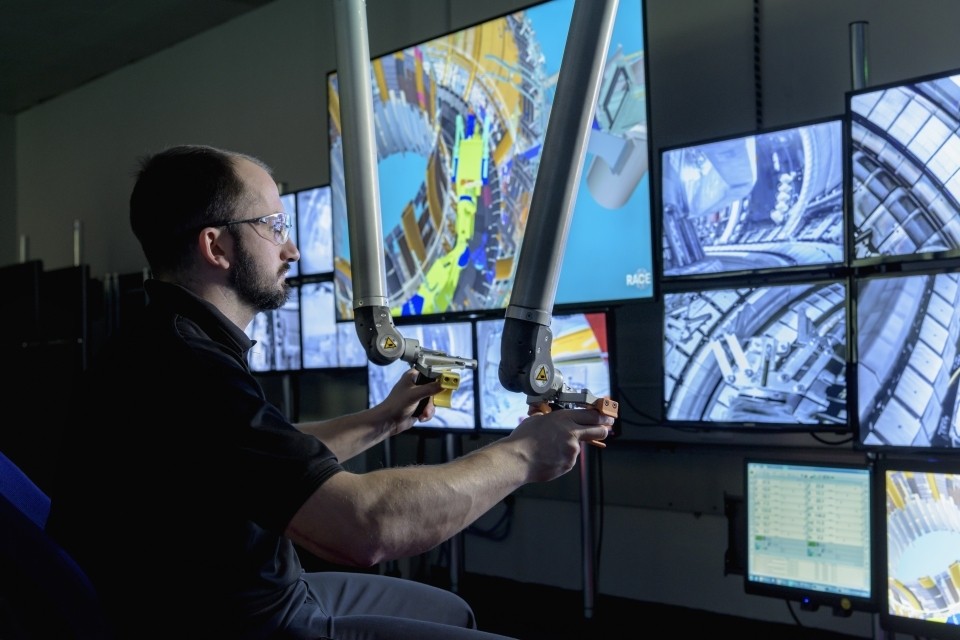
The photographs show the control room and in-vessel training facility presented in 2024, alongside an archival remote handling photograph published in 2017. They do not document a newly conducted operation.
Feeding test results back into component design
A 2017 announcement about an ITER remote handling test facility at RACE illustrates another role. The plan was to test compatibility with maintenance tasks and feed operational experience into final component designs. The announcement at the time
The significant point is that improvement is not confined to the robot. A replaceable component also needs a place to grip it, space for a tool and a feasible approach direction. Where maintenance testing can inform the component’s design, a supplier’s work may extend from manufacturing to a drawing to incorporating test results. This is a reading of the relationship between design and maintenance in the 2017 plan, not a claim about current contracts or completion.
A place to test is part of the industrial base
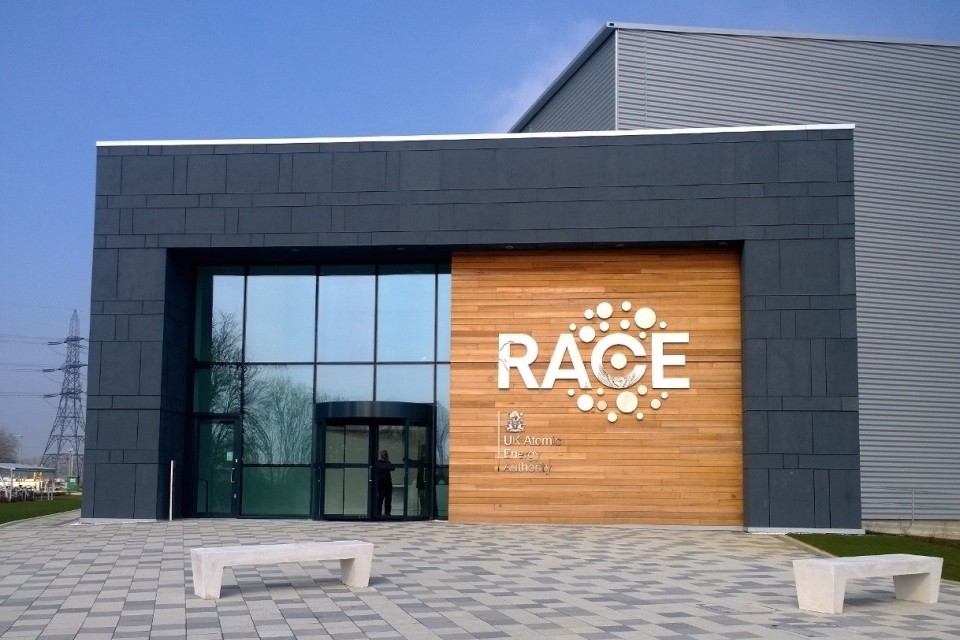
RACE’s current facilities information lists a 2,000-square-metre work hall, two 20-tonne overhead cranes, reconfigurable robotic cells and control rooms. It also describes test lanes for evaluating attributes including mobility, dexterity, load and reliability. Facilities information
The 2,000-square-metre figure refers to the work hall, rather than the entire building. The exterior photograph was published in 2016.
The sources do not say that every component manufacturer must build such an environment. There is scope for component makers, tool suppliers, control specialists and training providers to work towards the same replacement task. Which component will be handled, by what procedure, and against what completion criteria? Once those questions become specific, remote maintenance extends beyond comparing the prices of individual robots.
Our earlier explanation of JET’s LIBS measurements examined how lasers investigate fuel left in the wall. Here, the focus is the work required to make equipment usable, and the supply chain that can carry it out.
- UKAEA: JET remote handling upgrades (26 February 2024)
- UKAEA: Robotics design, construction and operation
- UKAEA: RACE robotics facilities
- UKAEA: ITER remote handling test facility (7 April 2017)
Information checked as of:2026-11-25
The February 2024 total covers development, installation, testing, commissioning and training. It is not a cost, continuous operating time or training-only figure. The 2017 announcement is treated as a historical plan; current RACE information describes facilities. Procurement and supplier implications are FI’s analysis, not reported contract terms or prices.