Google cuts quantum computing resource cost for fusion fuel by nearly 12-fold
On November 23, Google DeepMind and Google Quantum AI announced an AI-optimized quantum circuit for calculating stopping power in fusion fuel, reducing the computational resource metric by a factor of 11.8 against the comparison method.
Read the Japanese originalAnnouncement date:2026-11-23
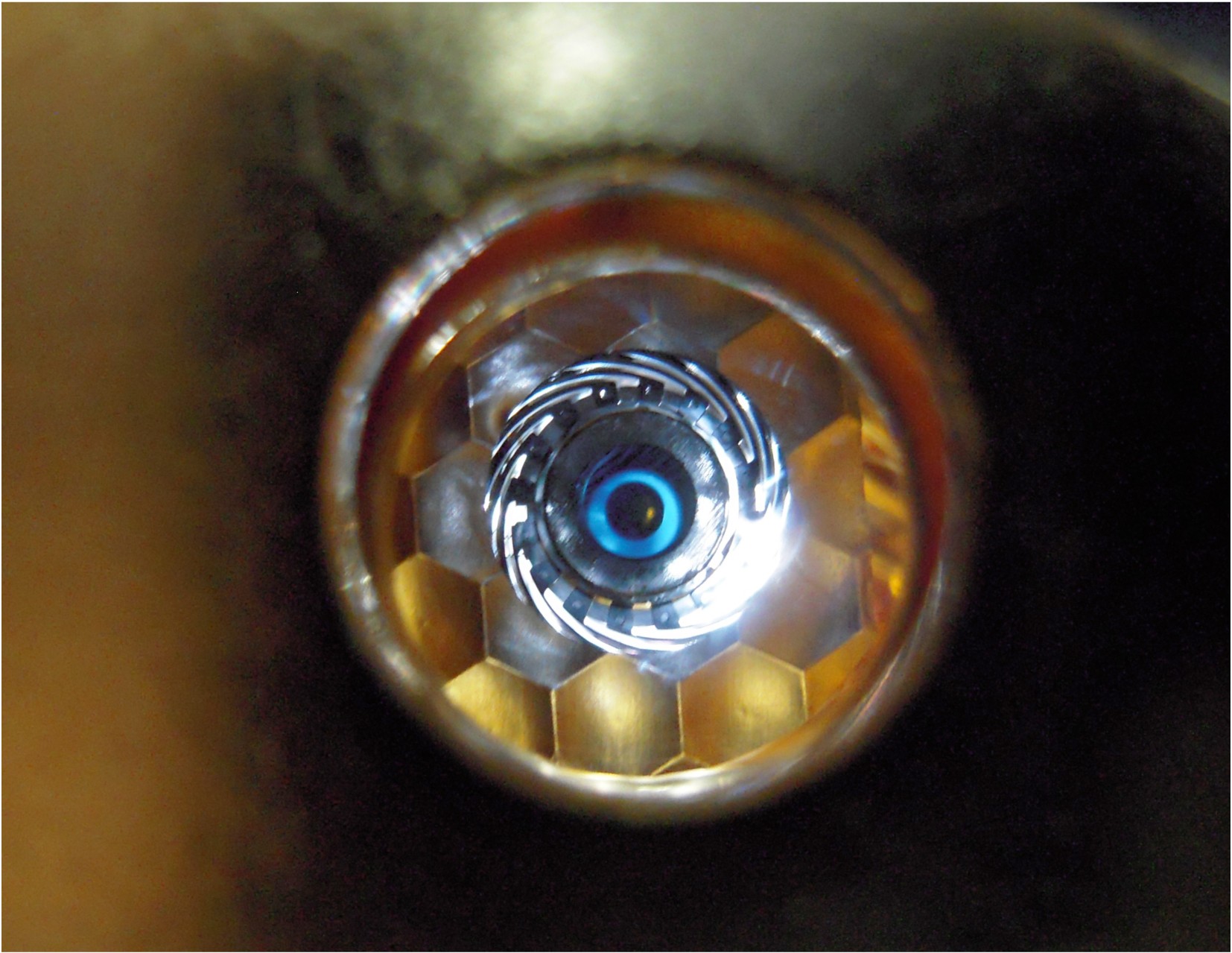
On November 23, Google DeepMind and Google Quantum AI announced that a quantum algorithm for investigating energy loss by particles in inertial confinement fusion fuel reduced a computational resource metric by a factor of about 11.8 relative to the comparison method. Multiple Gemini 4 agents optimized the circuit, and mathematical proofs verified the result.
What happens inside the fuel?
Energy deposited back into the fuel by alpha particles produced in fusion reactions is important for understanding ignition in inertial confinement fusion. The researchers focused on stopping power, which describes how much kinetic energy a particle loses as it travels through the fuel. Calculating such microscopic processes requires substantial computational resources.
Before scaling up quantum computers
The work improved a circuit for simulating the time evolution of a physical system on a quantum computer. The required number of logical qubits decreased from 5,650 in the comparison method to 4,338. A resource metric combining logical qubit and T-gate counts fell by a factor of about 11.8. The team used the Lean theorem prover to verify circuit correctness and resource upper bounds.
The achievement is a design improvement for future error-corrected quantum computers, not a fuel calculation performed on current hardware. The paper was released as a preprint and revised on November 16. Code and verification libraries are also available. The approach reduces the resources needed while hardware performance continues to improve.
- Google DeepMind, Finding faster quantum algorithms with agents and formal verification (2026-11-23)
- Discovering formally verified quantum programs with AI, arXiv v3 (2026-11-16), section 2.3
Information checked as of:2026-11-24
Design and formal verification results from a preprint. The factor of 11.8 is a composite resource metric, not a measured runtime or experimental cost.