NSTX-U’s magnet joins 36 copper conductors with resin
NSTX-U’s magnet manufacturing spans copper conductors, resin impregnation and dedicated equipment. A look at the work between supplying materials and delivering an integrated magnet.
Read the Japanese original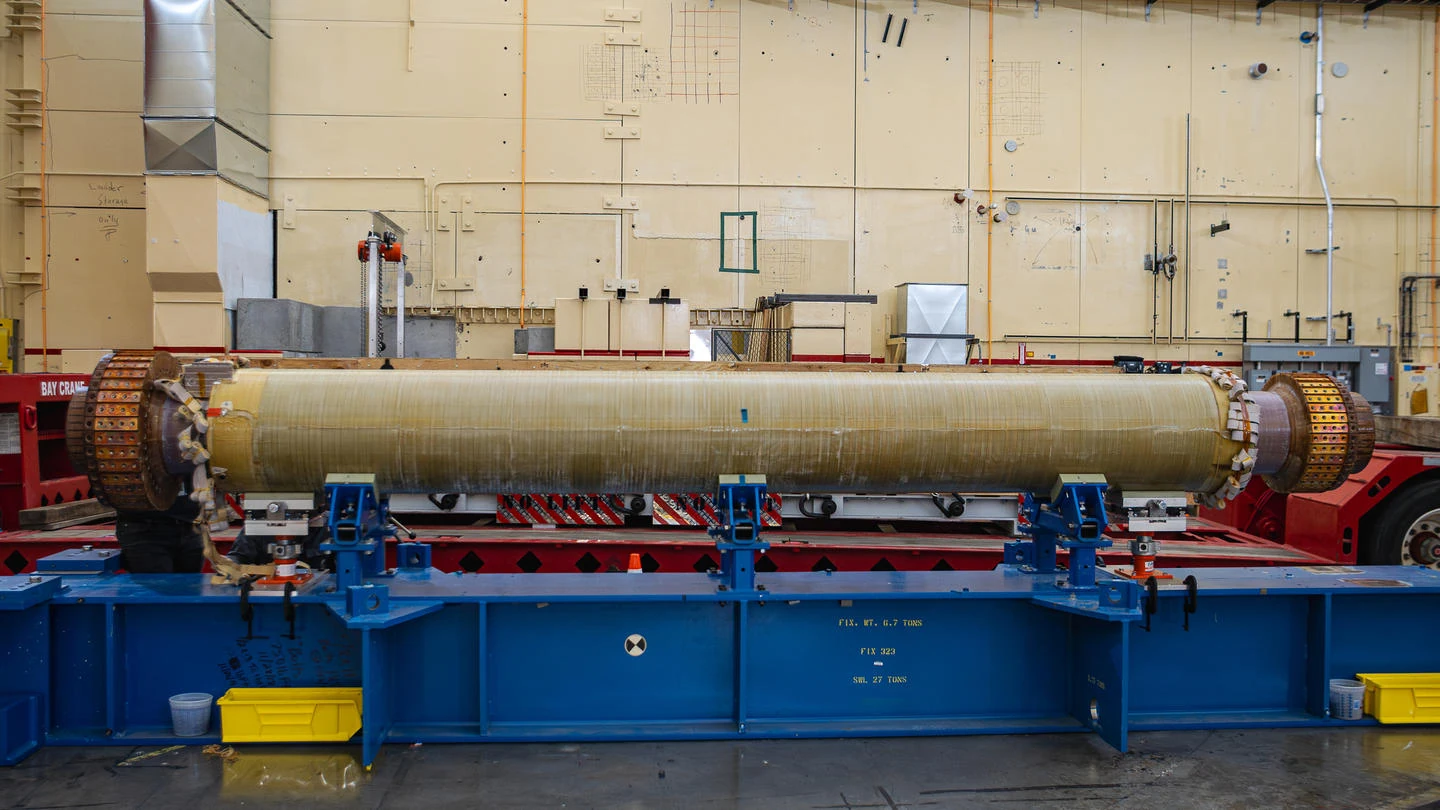
Thirty-six copper conductors, each about 5.8 metres long, became part of the central magnet for the NSTX-U fusion experiment. Fiberglass and resin helped turn separate conductors into a single unit. Delivering machined copper alone would not have completed the job. PPPL’s records describe the manufacturing steps behind the magnet built in Spain.
Making one magnet from 36 conductors
PPPL’s June 8, 2026 account describes a central bundle containing parts of two magnet systems: the toroidal-field, or TF, system and the ohmic-heating, or OH, system that induces current in the plasma.
The TF magnet combines 36 copper conductors, each 19 feet long, using fiberglass tape, resin and vacuum-pressure impregnation, or VPI. Copper conductor for the OH magnet was then wound around the TF magnet. Insulating resin and another VPI process bound the components together. Manufacturing account
VPI is a resin-impregnation manufacturing process. The materials and work that unite the conductors are part of the finished equipment, alongside the paths that carry electric current.
Moving from four sections to the whole
Elytt Energy in Bilbao manufactured the bundle. PPPL’s March 19, 2025 report described four TF quadrants, each containing nine copper conductors. The final quadrant was completed in early March, with measurement and analysis to precede joining the four sections.
The report outlined assembly, fiberglass wrapping and placement in a larger vacuum mold, followed by resin injection, baking and cooling. The process progressed from sections to the full magnet. 2025 manufacturing record
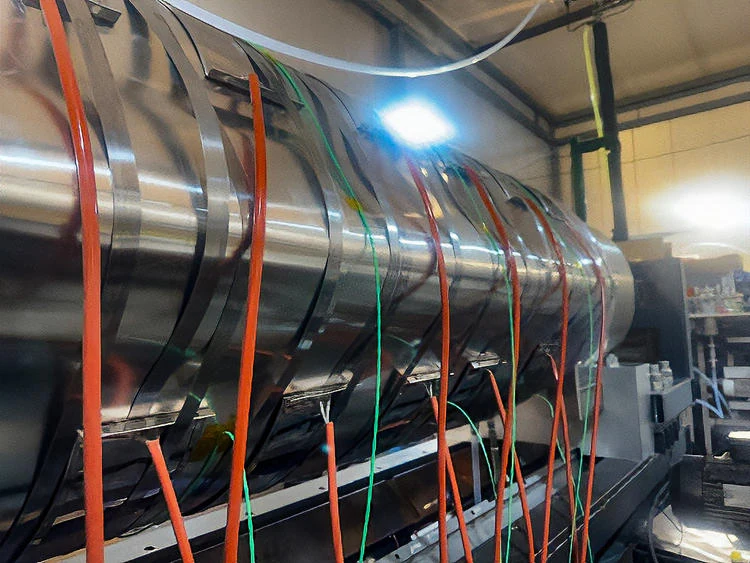
The manufacturing fixture pictured here was used to rehearse OH-coil work. It is not a photograph of the 36 TF conductors being impregnated. The protective casing is also a different component from the impregnation mold.
Making the process work with dedicated equipment
Engineers at Elytt Energy and PPPL mapped the stages and used mock-ups to rehearse manufacturing and test custom equipment. Some equipment was sent from PPPL to Spain. FI’s November 17 article examined pre-fitting and procurement responsibilities; this article focuses on making the manufacturing process work at full scale.
FI’s interpretation is that procurement categories such as copper, resin and machining do not fully describe the delivery scope. Section measurements, the full-size mold, impregnation and thermal-processing equipment, and process validation form a connected chain. Several operations stand between supplying materials and delivering a magnet bundle.
The published records do not disclose the impregnation settings, yield or cost of each stage. A resin grade or equipment specification alone is insufficient to establish the ability to reproduce this magnet.
A finished magnet still has a next stage
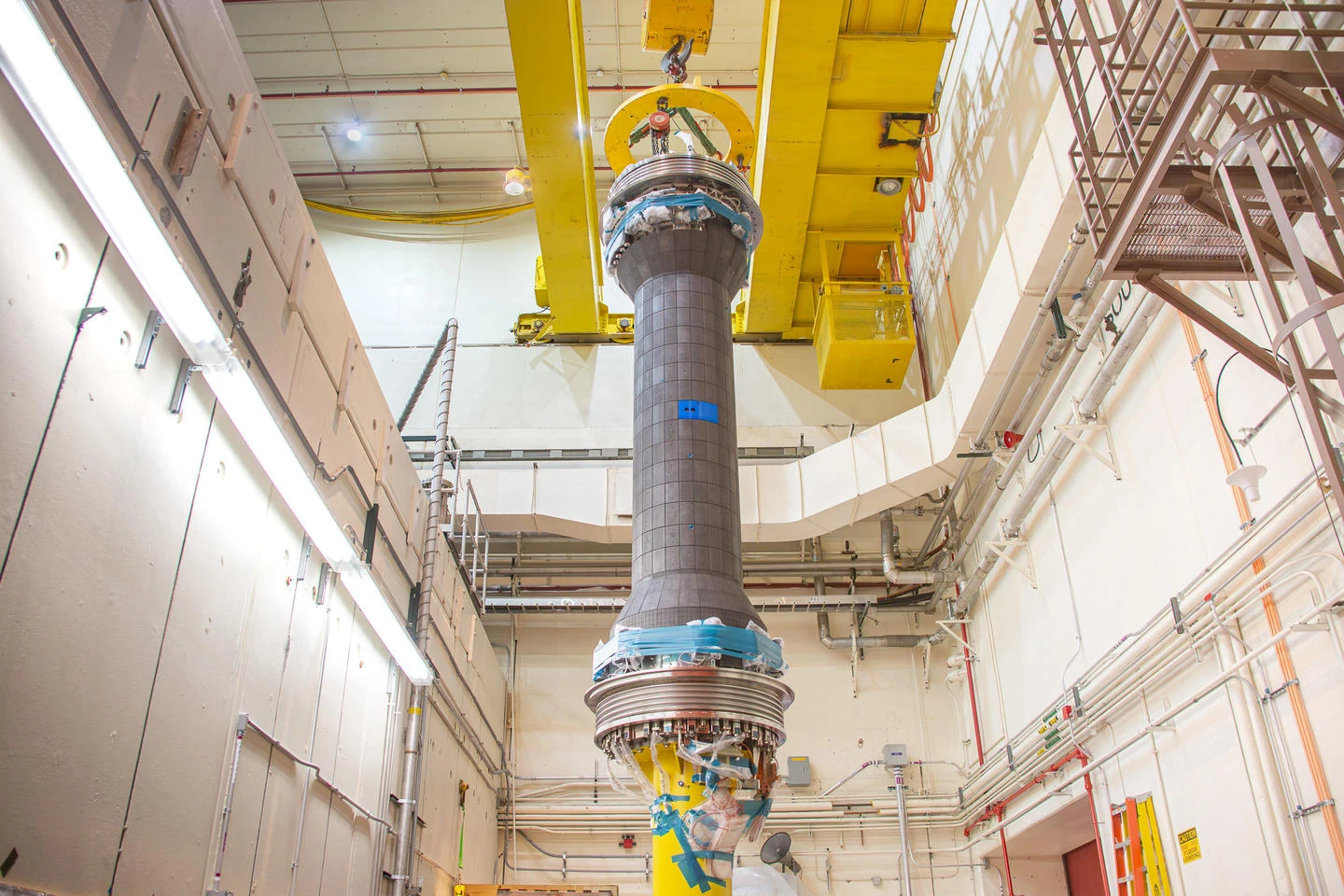
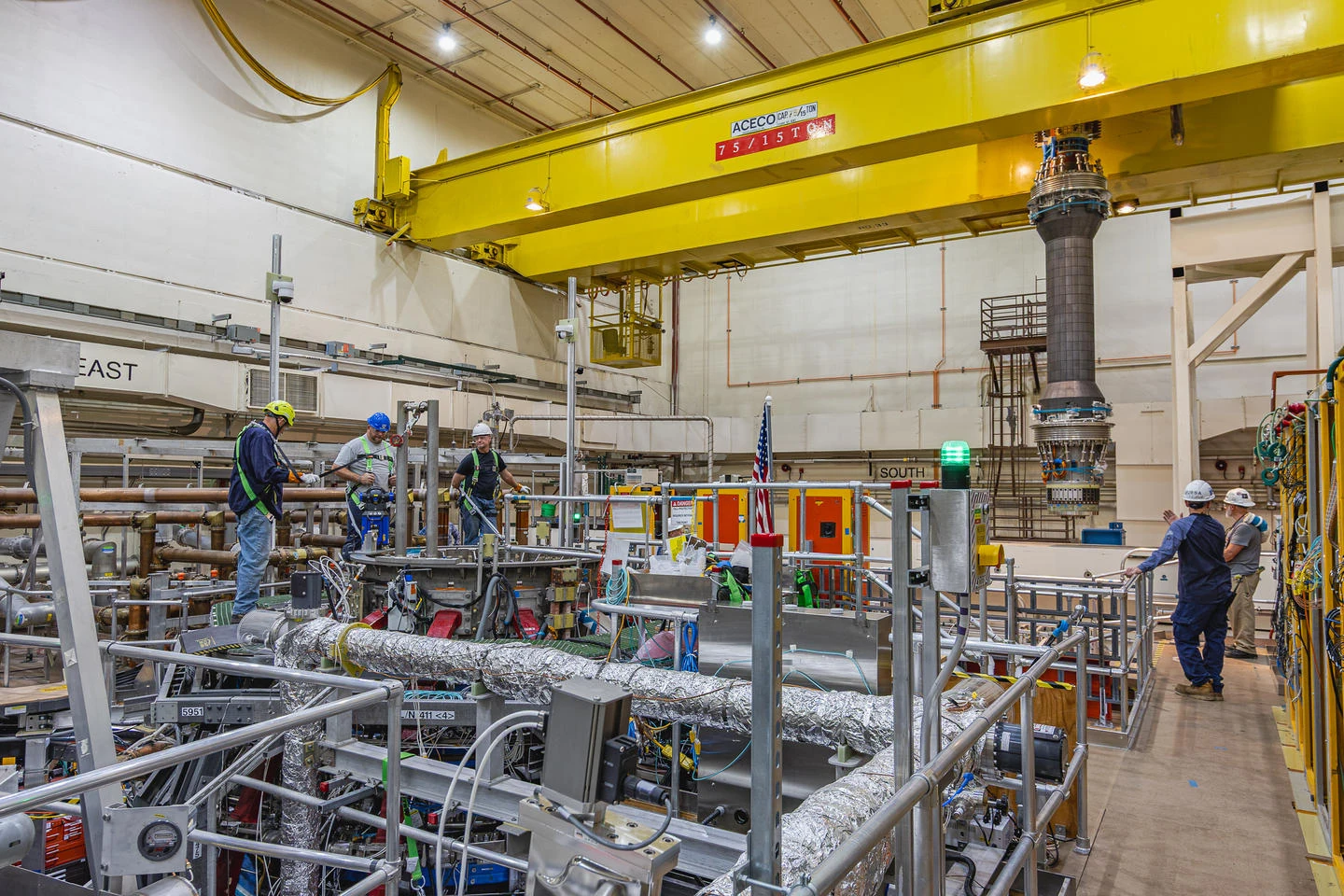
The bundle reached PPPL on June 3, 2026. Cooling systems, structural components and a protective casing were added before the assembly was lowered into NSTX-U on October 27. PPPL’s November 10 report described centering and vacuum-seal checks still ahead, with experimental operations expected in the latter part of 2027. Those plans are not treated here as completed work. Assembly stages
A magnet bundle delivered by a manufacturer and an experiment-ready research device are different milestones. This case shows the manufacturing capability required after materials are selected: bringing multiple components together as one piece of equipment. Understanding a fusion supply chain includes examining the processes hidden inside the completed machine.
- PPPLが公表した仮組みとElytt Energyでの製造準備(2025年3月19日)
- PPPLが公表した中央磁石束の納入(2026年6月8日)
- PPPLが公表した中央磁石組立体の実機への吊り込み(2026年11月10日)
Information checked as of:2026-11-24
PPPLの2025年3月/2026年6月/11月の一次資料を照合した既報深掘り。36導体はTF側、OHは周囲の別巻線。含浸条件/歩留まり/費用は未公表。製造供給範囲への含意はFIの分析。