W7-X lets its magnet supports slide
Supporting a powerful magnet does not always mean locking every joint. W7-X illustrates how controlled movement becomes part of a fusion machine.
Read the Japanese original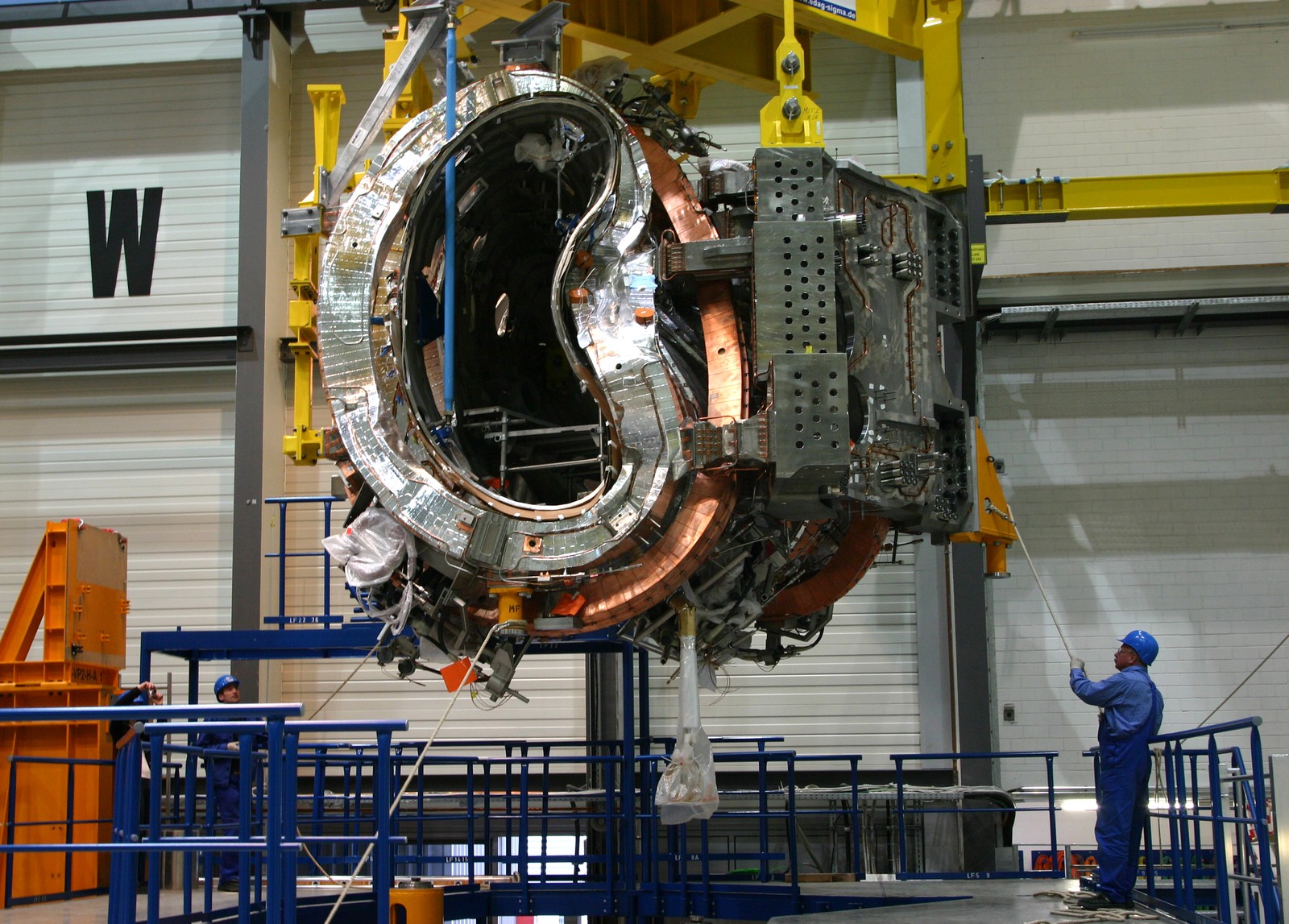
A massive magnet seems to call for an equally rigid mounting. Yet some supports in Germany’s W7-X fusion experiment allow neighbouring coils to move under load. A solid lubricant coats the sliding surfaces. Holding the structure and permitting movement are both engineering requirements.
Different connections do different jobs
W7-X is a stellarator: shaped coils create the magnetic field that confines its plasma. Electromagnetic forces pass through a central support ring and connections between coils. A construction-era IAEA report distinguishes bolted or welded connections from contacts that permit sliding and tilting.
Avoiding a sudden slip
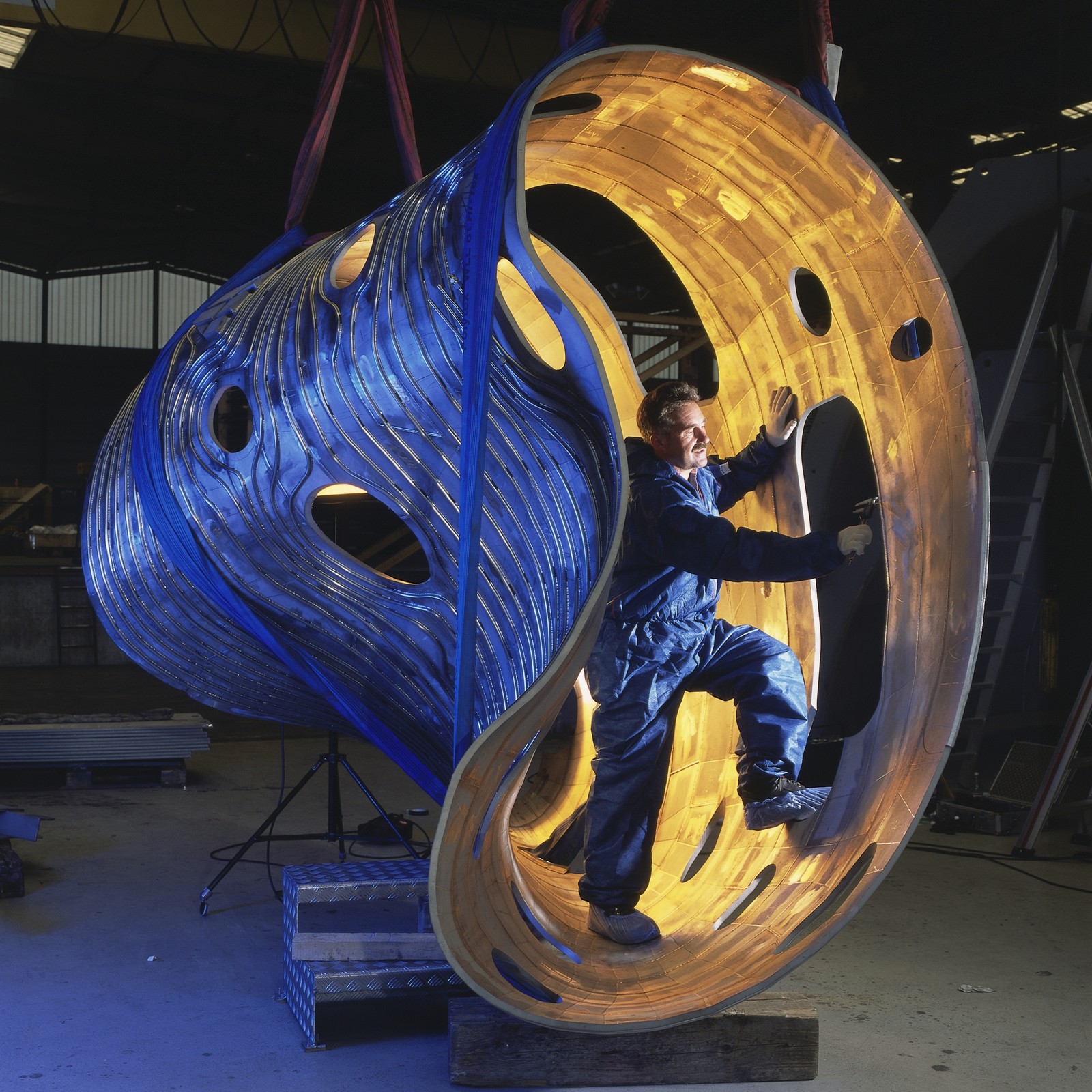
Narrow support elements, or NSEs, fit between closely spaced coils. Stick-slip means a contact sticks and then moves abruptly. An IPP study developed molybdenum disulfide, MoS₂, coatings and examined their behaviour at room and cryogenic temperatures. Smooth motion under load was intended to help avoid a superconducting quench.
Storage matters too
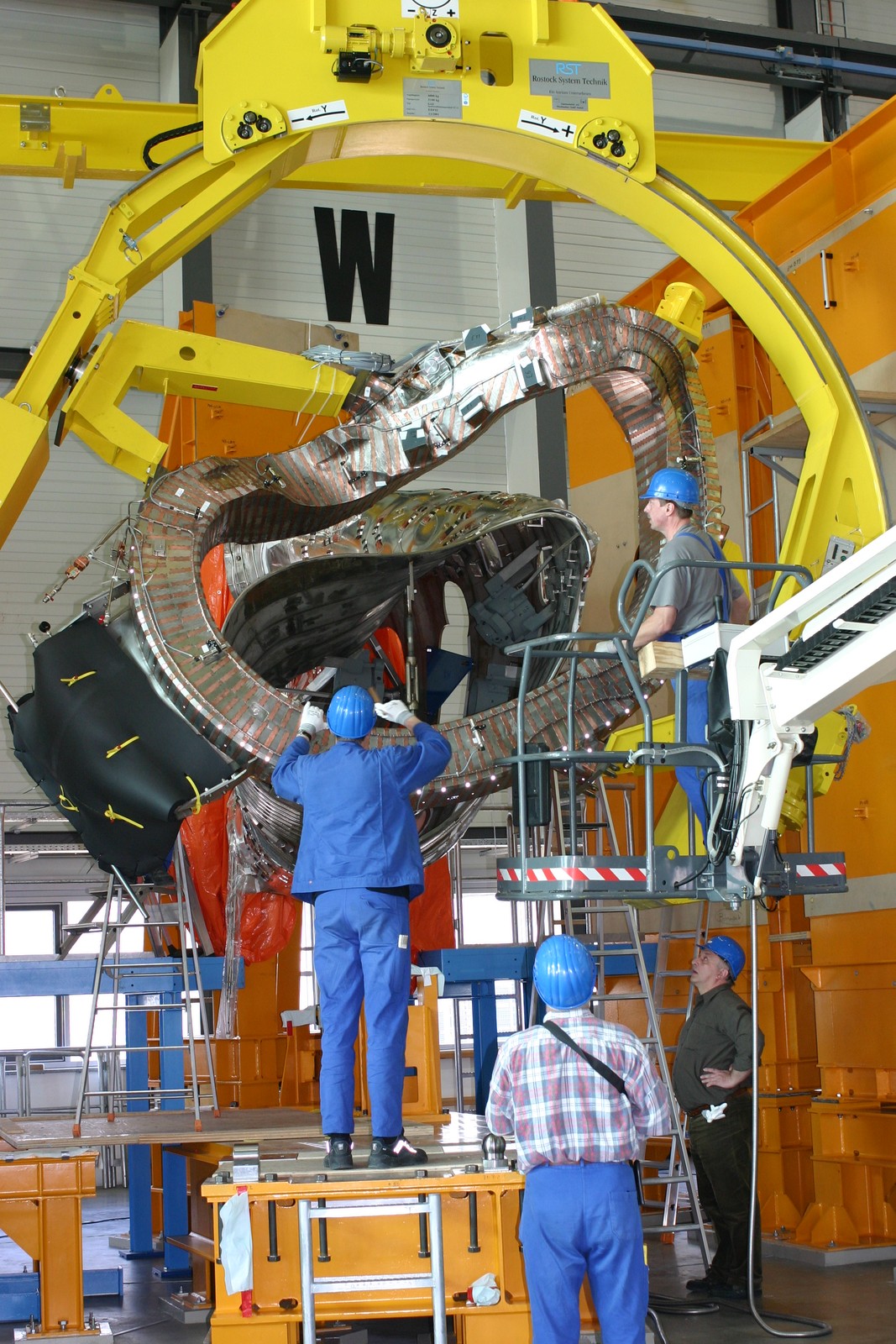
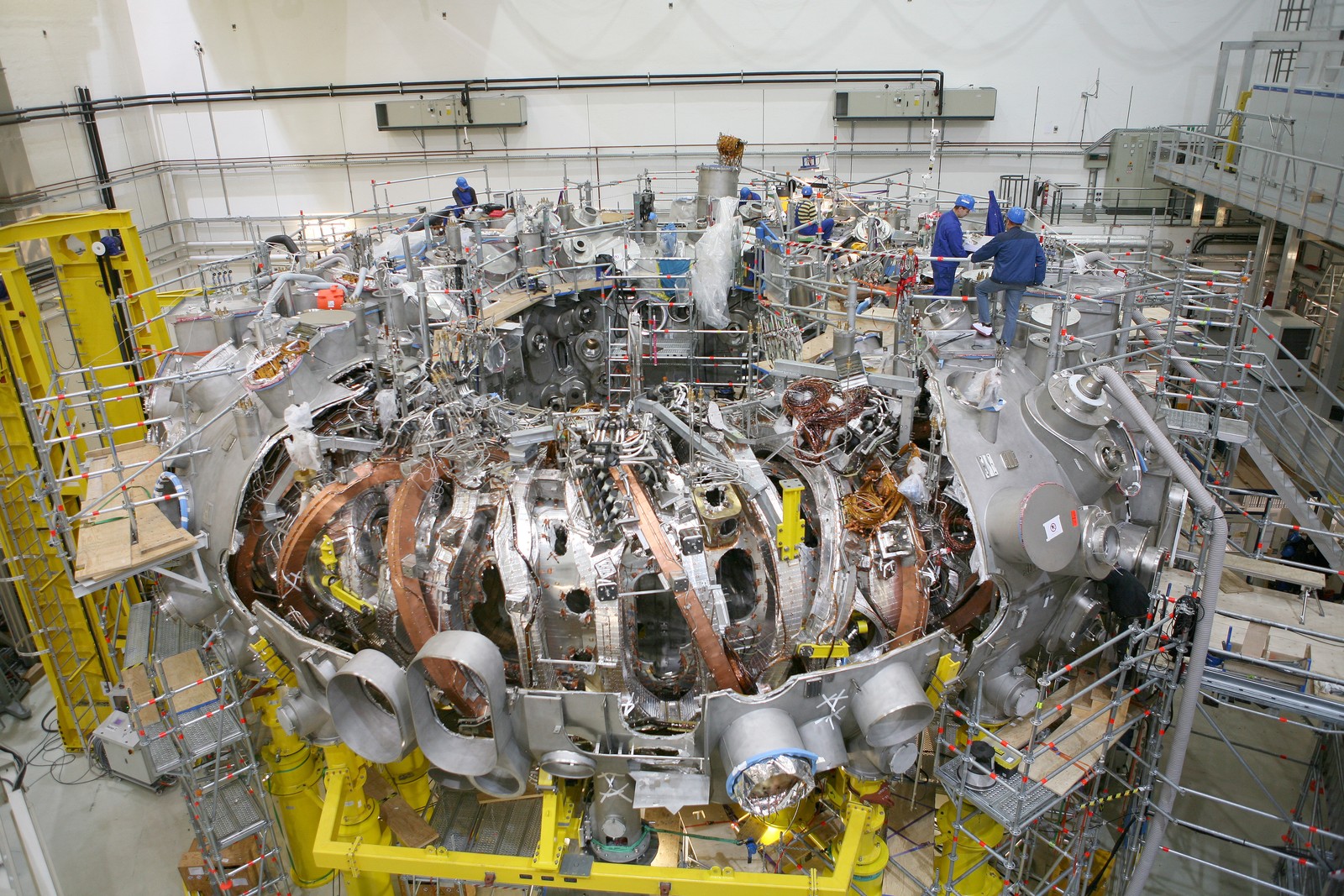
The coating also had to survive the period before operation. Humidity and oxidation protection were part of the development work. These are historical design and test records, not evidence of the present lifetime of every installed support. The photographs show W7-X construction, not coating surfaces or friction tests.
Assembly completes the specification
An assembly report explains why accurate installation matters for load sharing. FI’s reading is that stiffness alone cannot specify the component: the permitted movement, surface condition, storage and installation must fit together. Surface engineering belongs in the fusion supply chain alongside structural materials.
- Kochほか MoS2 Coatings for the Narrow Support Elements of the W-7X Non Planar Coils
- Wegener and W7-X Team WENDELSTEIN 7-X at the transition to assembly
- Wagnerほか Physics, Technologies, and Status of the Wendelstein 7-X Device 3.3節
Information checked as of:2026-11-25
W7-X建設期の設計・開発研究を読む科学解説。現在の全支持部の寿命・摩擦状態を示すデータではない。供給網への含意はFIの考察。