Fusion availability depends on replacement work: design remote maintenance from the start
Remove heavy in-vessel components, transport them, reconnect and verify them. ITER and UKAEA development illustrates maintenance design for shorter planned outages and the evidence suppliers should provide.
Read the Japanese original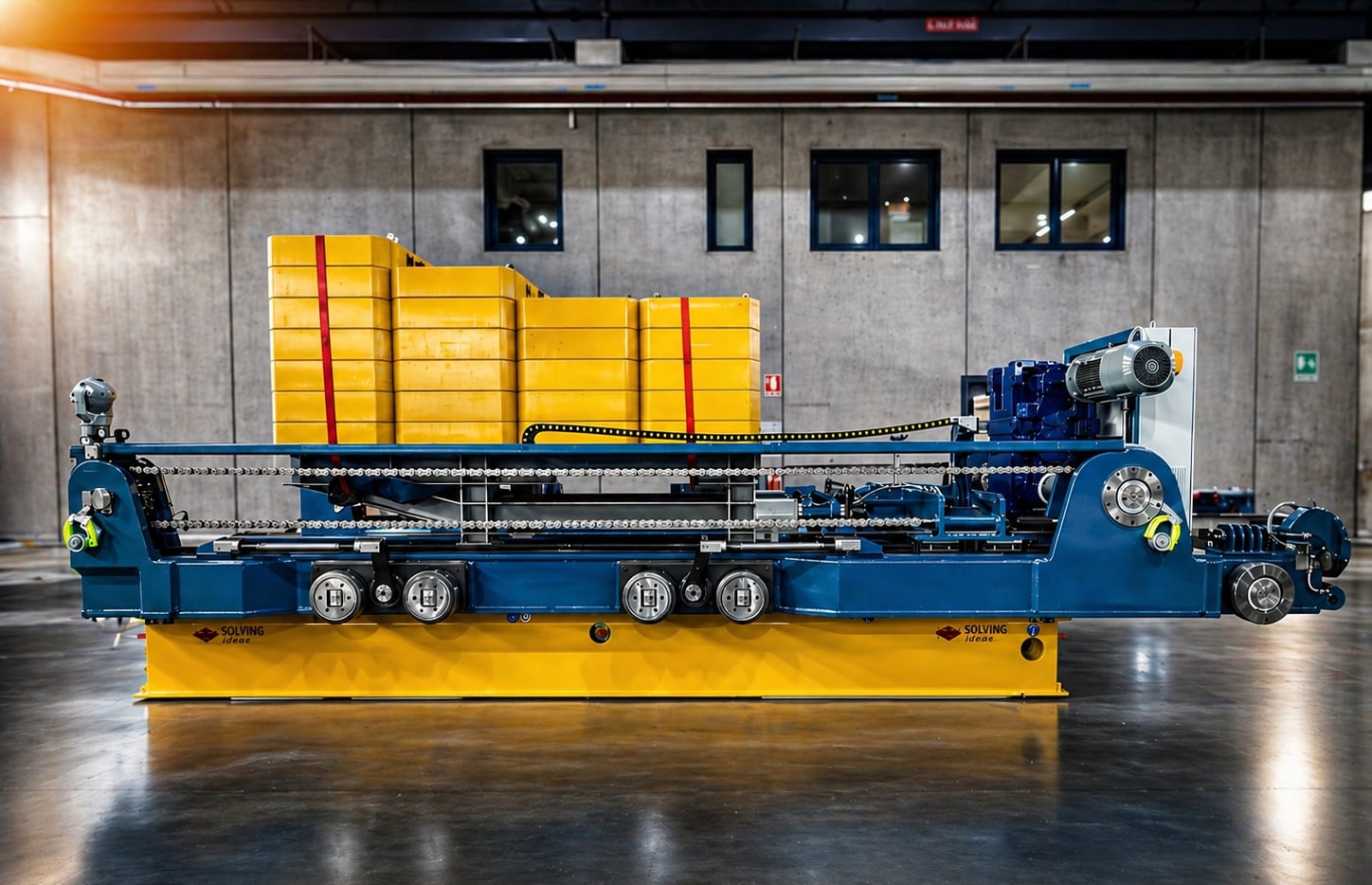
A fusion power plant's annual electricity supply depends not only on output while operating but on how many days maintenance takes it offline. Replacing in-vessel components involves removing heavy equipment, transporting it, reconnecting it and checking the result. Looking at remote maintenance through availability reveals design and validation work absent from a robot's specification sheet.
Replace heavy components through restricted routes
ITER's divertor receives heat and particles flowing out of the plasma. Its official description specifies 54 cassettes, each weighing approximately ten tonnes, to be installed remotely and replaced at least once during the machine's lifetime. This is not a replacement-frequency figure for future commercial reactors. ITER divertor explanation
Inspection and repairs in activated areas require remote handling. Alongside in-vessel replacement equipment, ITER plans transport systems between the machine and the hot cell facility. A hot cell provides radiation and contamination controls for handling removed equipment. Lifting a component is not enough if the process does not connect to its destination. Remote-handling system configuration
Replacement time is more than robot motion
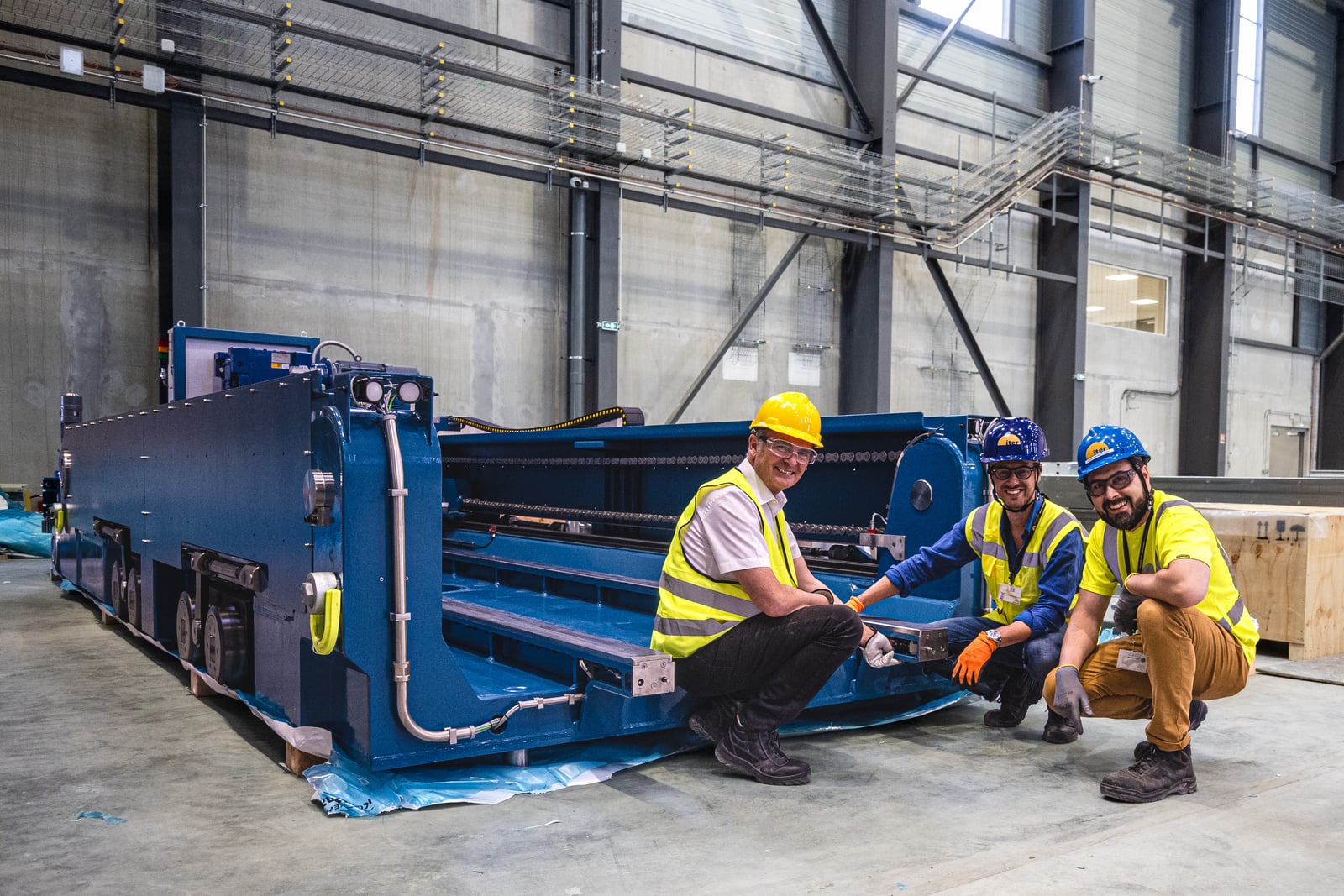
The following is a practical editorial framework. Divide an outage estimate into preparing working conditions, disconnecting equipment, removal and delivery, reconnection, inspection and restoration to operating condition. Cooling and vacuum requirements depend on machine design, so no universal replacement duration can be assigned.
Each stage can include waiting. If shared transport routes, inspection queues or tool preparation determine the overall schedule, speeding up one motion will not shorten the outage. Begin by distinguishing parallel tasks from those dependent on previous work, then identify what delays overall completion.
Availability comparisons need consistent definitions of available operating time, planned outages and unplanned failures over the assessment period. Examine replacement frequency separately from each outage's duration. The contribution of shorter outages to electricity supply also depends on component life, other systems' outages and operating plans.
Draw the reactor and maintenance layouts together
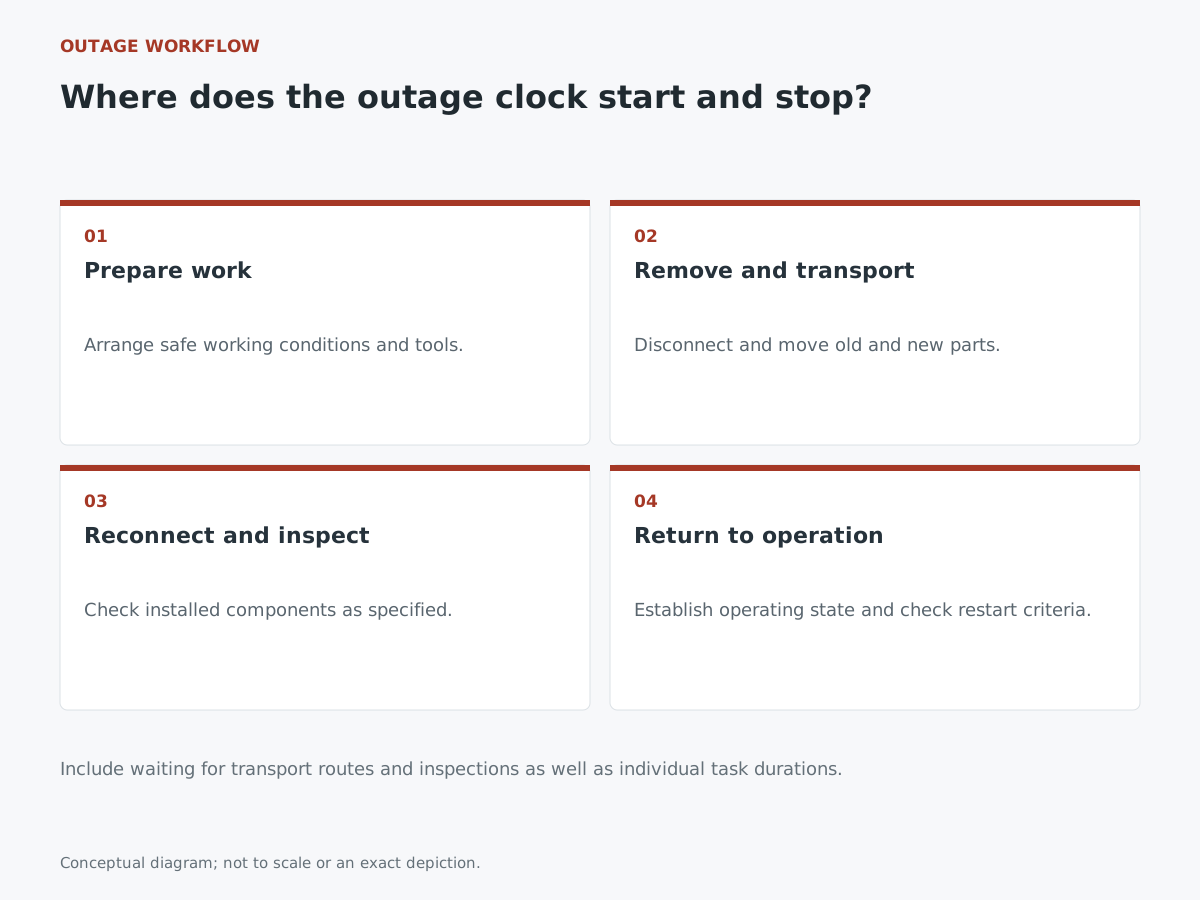
UKAEA identifies minimizing downtime as important for costs and energy production and treats remote maintenance as a major design driver. Relevant environments can involve radiation, heat, restricted access, vacuum and residual magnetic fields. Which conditions are most demanding depends on the component and workplace. UKAEA robotics explanation
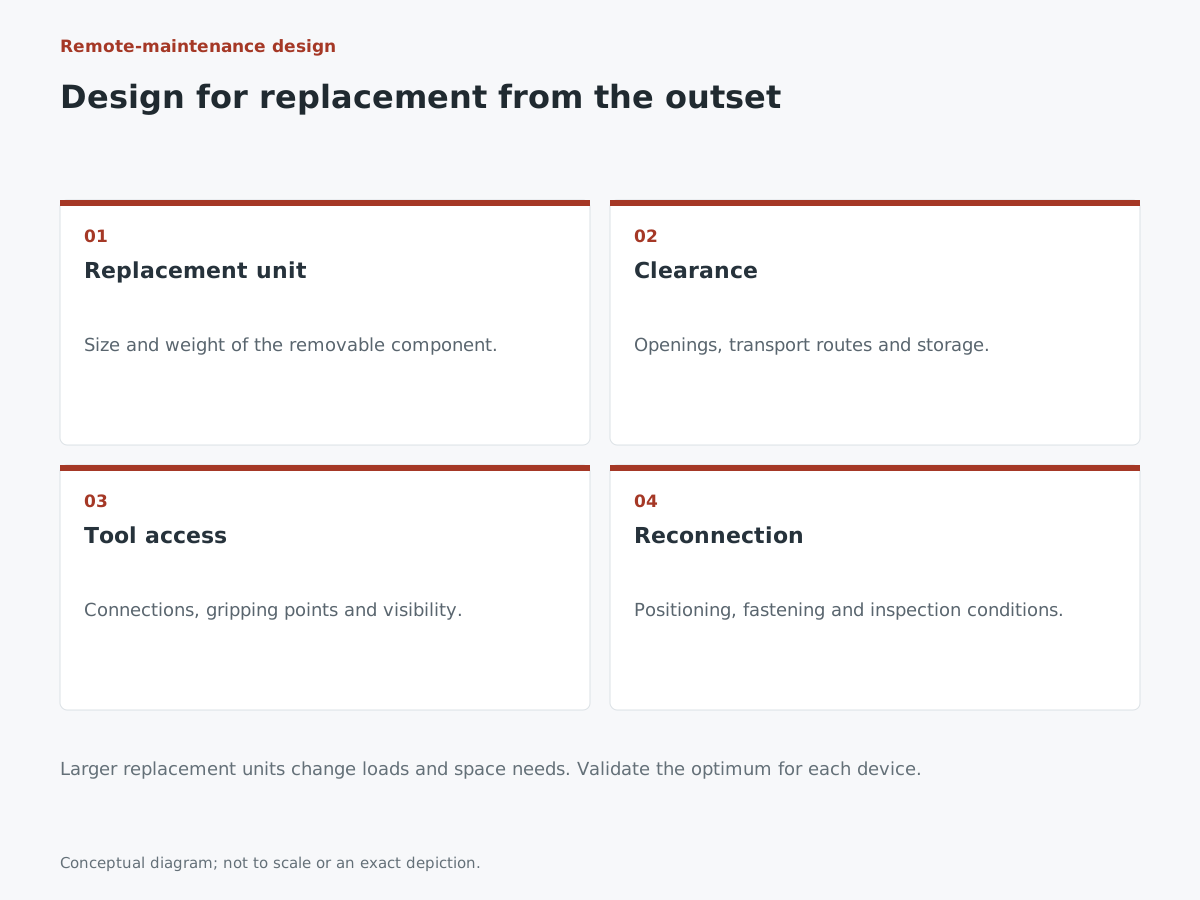
Translating this into design means considering replacement-unit size, accessible connections, gripping points, camera views and transport routes alongside reactor performance. Larger replacement units may reduce connections but increase load, opening and storage requirements. The optimal size is a design choice to validate for each machine.
Use full-scale tests to find bottlenecks
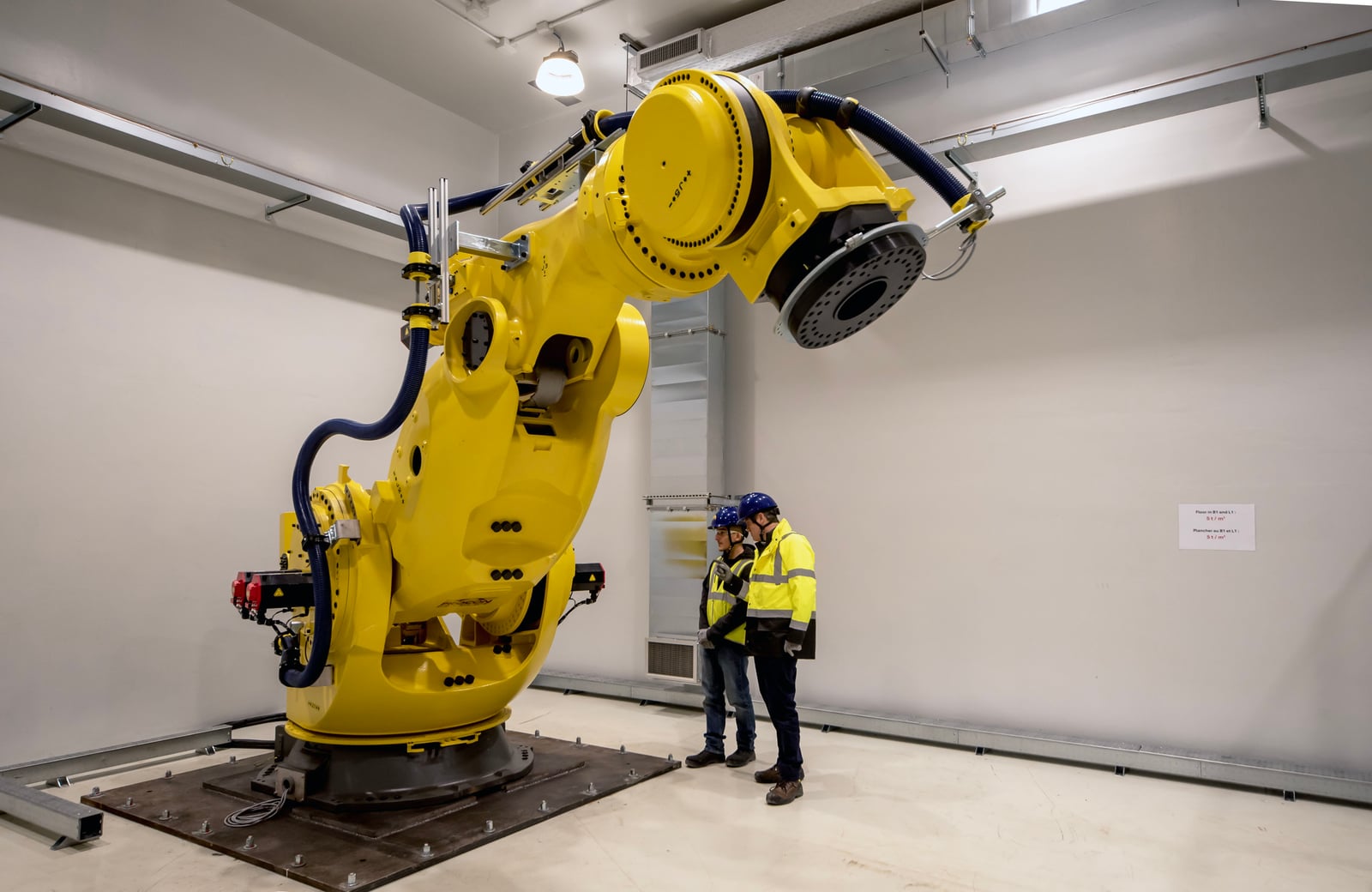
UKAEA's ITER Robotics Test Facility performs full-scale mock-up tests reproducing in-vessel and hot-cell tasks. These include remote pipe cutting and welding, positioning, fastening, joining and inspection. UKAEA says results and JET remote-handling experience inform reactor subsystem design. Public description of the test facility
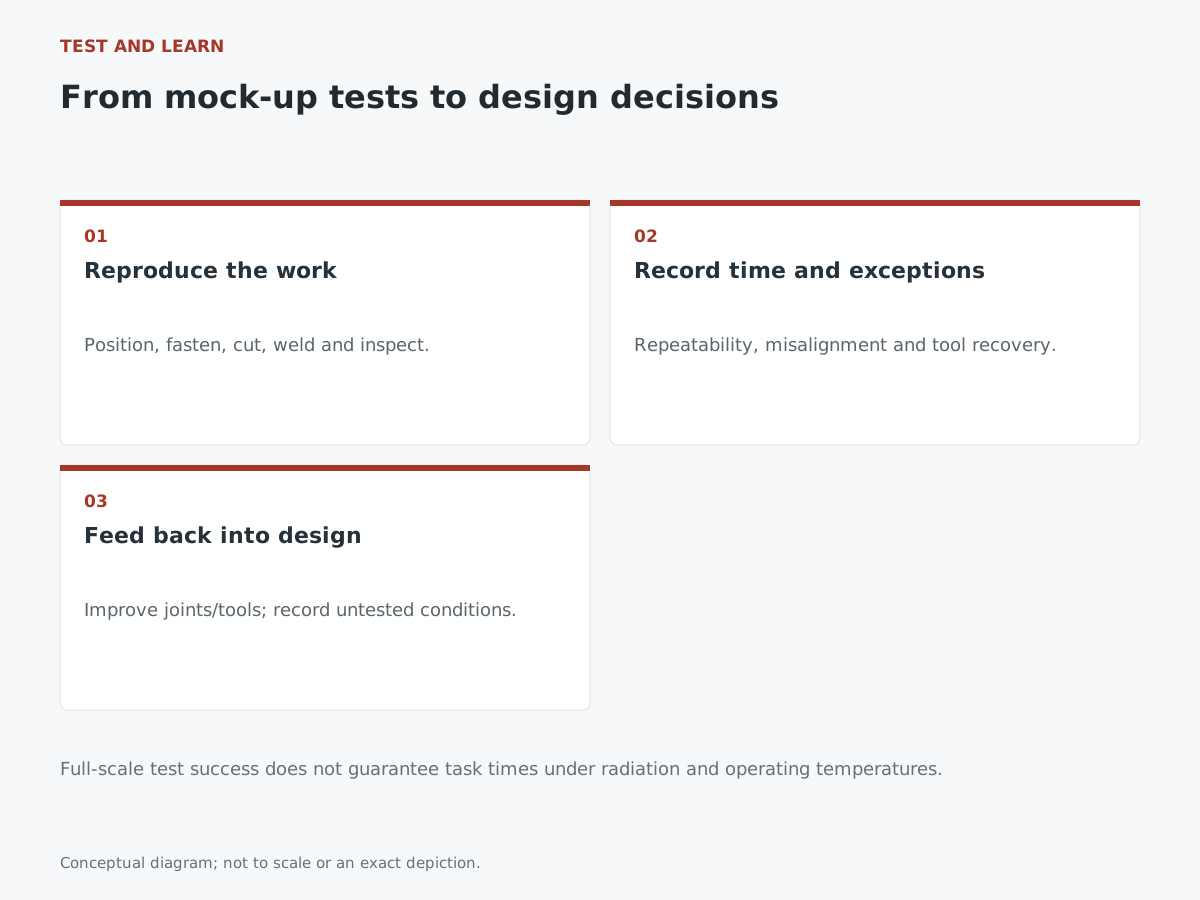
Our editorial recommendation is to record not only the fastest successful time but variation across repetitions, responses to misalignment and recovery procedures if a tool becomes unusable. Completing a task in a mock-up differs from guaranteeing the same time under real radiation and temperature conditions. Records clearly distinguishing reproduced and unassessed conditions are more useful for the next design decision.
Suppliers should demonstrate repeatable work
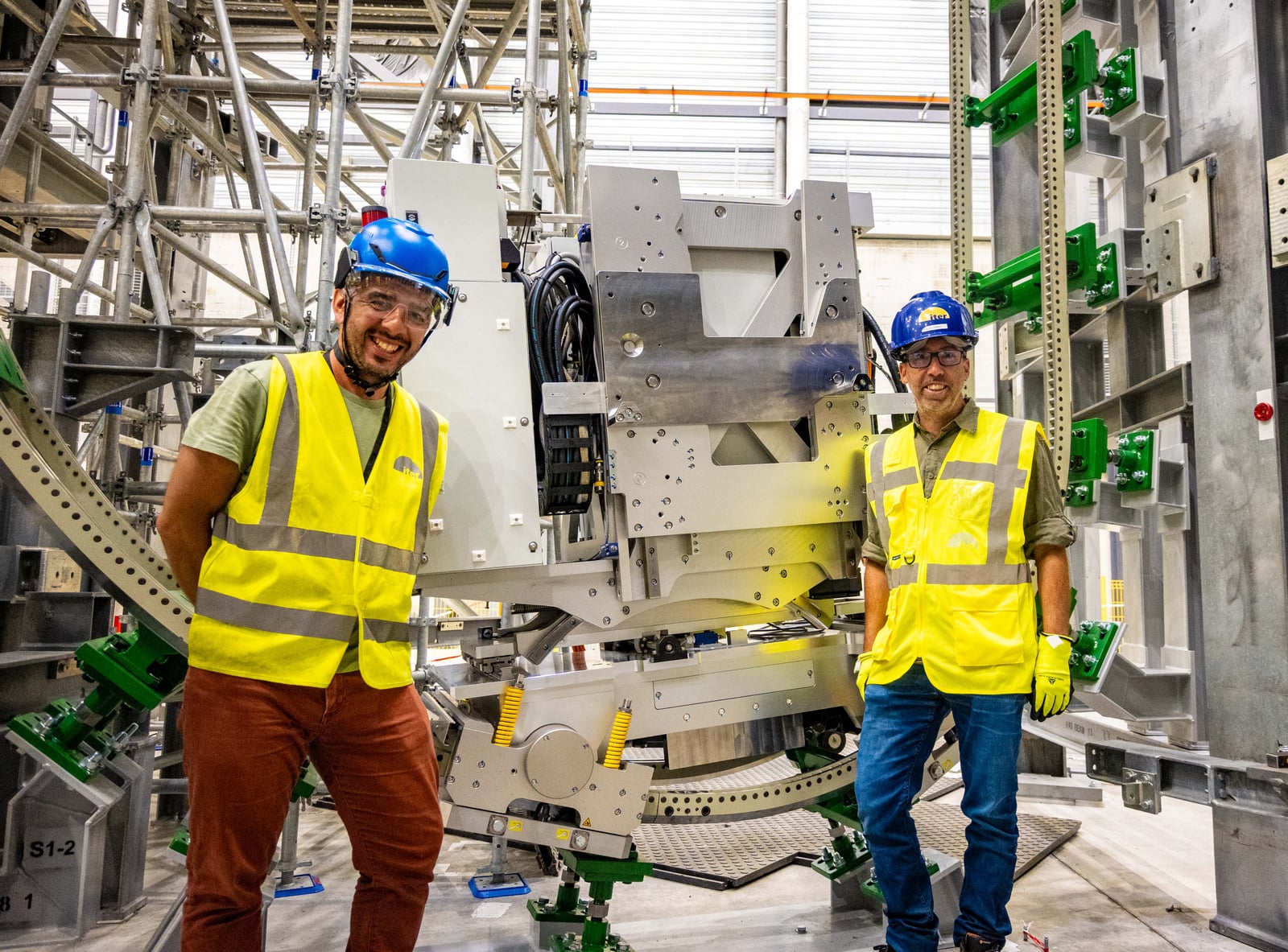
Companies in joining, nondestructive testing, transport and metrology can propose not only individual products but which maintenance process they can complete under which conditions. Costs and responsibilities change depending on whether delivery includes only a tool or also procedures, test records and operator training.
Agree early on the starting point and completion conditions of replacement work and the conditions requiring repeat tests. Reduce setup effort and rework without omitting safety-required inspections. Demonstrating the effect across the entire process is key to translating remote-maintenance technology into business value.
- ITER | Divertor: 54 cassettes and remote replacement plans
- ITER | Remote handling: in-vessel maintenance and transfer to the hot cell
- UKAEA | Robotics: design considering maintenance environments and downtime
- UKAEA | ITER Robotics Test Facility: full-scale mock-up testing
Information checked as of:2026-10-09
ITER remote replacement and transport and UKAEA full-scale tests are development toward future maintenance. Commercial reactor maintenance durations and availability remain unconfirmed. Suggested process breakdowns and commercial scopes are not individual procurement conditions.