Fusion energy as public policy: the state's role in connecting research with society
What does Japan's fusion policy do to develop a future energy source and industry? This guide connects the roles of the Cabinet Office, MEXT and METI with assessments toward power-generation demonstrations, safety frameworks and local understanding.
Read the Japanese originalAnnouncement date:2026-08-10

Bringing fusion energy into society requires systems that support facilities, safety and people. How does Japan's policy connect them? The answer begins with the division of responsibilities among government, research institutions and companies.
Why government acts: developing a future energy source and industry
The government's Fusion Energy Innovation Strategy was revised by the Integrated Innovation Strategy Promotion Council on June 4, 2025. Its motivations include decarbonization, energy security and technology-based industrial development. It seeks both the potential to reduce dependence on fuel resources and a route from Japan's accumulated research and manufacturing capabilities to future business. National strategy
The objective is to demonstrate electricity generation in the 2030s ahead of other countries. A demonstration means operating and testing the systems needed to generate electricity. Reaching the stage where commercial plants sell electricity reliably and recover their investment adds requirements involving cost, operation and maintenance. A target year does not guarantee that electricity supply will have been achieved.
Research and development take time and require test facilities and skilled people. Supporting common infrastructure that a single company would struggle to build, and enabling research results to pass into industry, are important public-policy functions.
How the Cabinet Office, MEXT and METI divide responsibilities
In the structure presented by METI on February 12, 2026, the Cabinet Office coordinates the overall strategy. The Ministry of Education, Culture, Sports, Science and Technology (MEXT) supports research and development led by national research agencies and universities; the Ministry of Economy, Trade and Industry (METI) supports privately led efforts, including startups. Responsibilities within government
MEXT's responsibilities include ITER, Japan-Europe Broader Approach activities, infrastructure for a demonstration reactor and workforce development. METI supports technological development by companies pursuing power-generation demonstrations and assesses their achievements. Connecting the two are efforts to make the facilities and expertise of QST (National Institutes for Quantum Science and Technology), NIFS (National Institute for Fusion Science) and the University of Osaka's Institute of Laser Engineering available to industry.
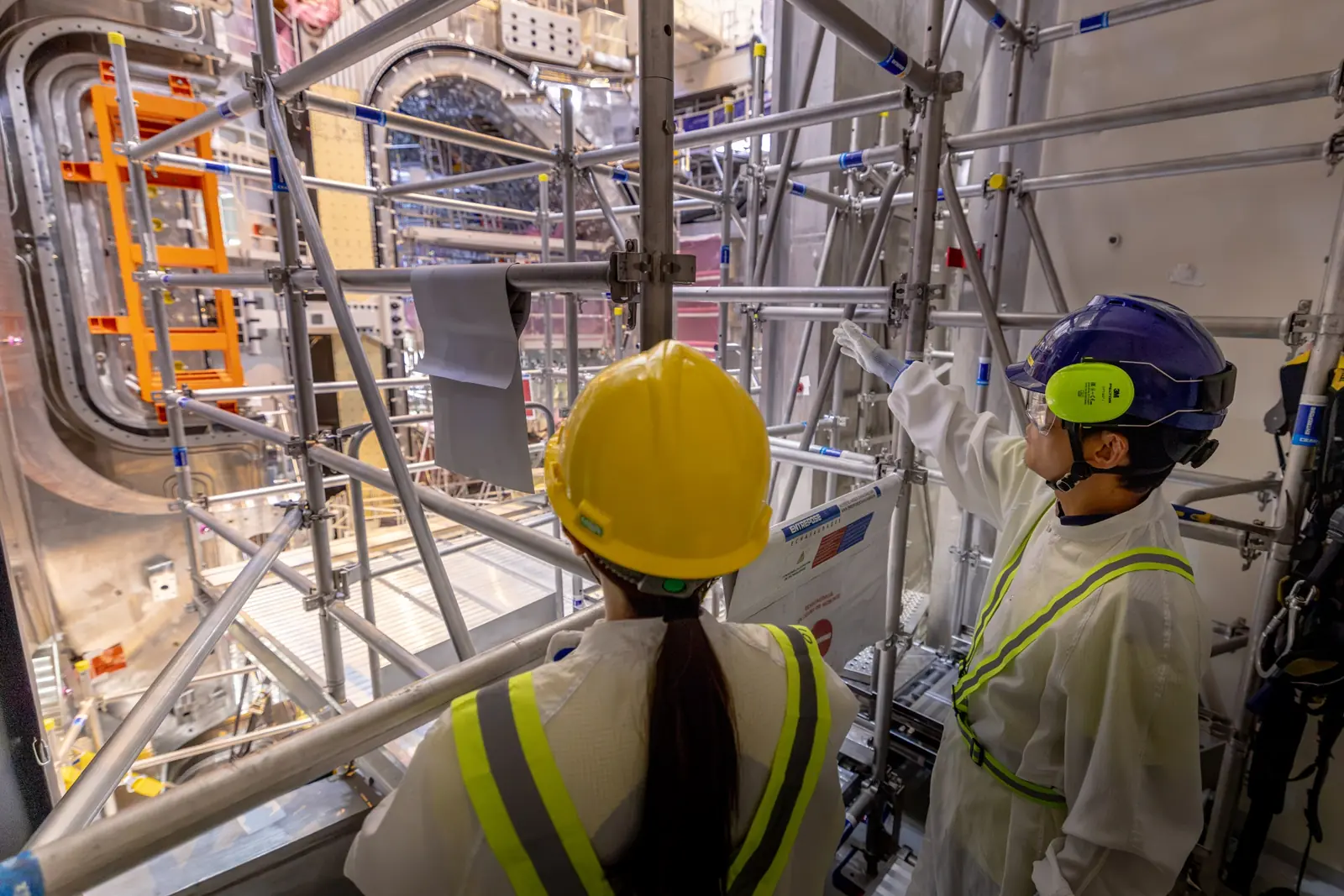
Ministries design policy and support programs; research institutions accumulate scientific knowledge and testing capabilities. Companies must manufacture equipment and build organizations capable of designing, constructing and operating future facilities. Sustaining international cooperation is also a government responsibility. The lead photograph and the photograph in this section show the September 12, 2026 visit to ITER by then science and technology policy minister Kimi Onoda to review progress.
Assess the conditions for power-generation demonstrations stage by stage
The approach to social implementation adopted by an expert council on April 8, 2026 distinguishes a power-generation demonstration in the 2030s from a subsequent pre-commercial power-generation demonstration establishing economics, long-duration operation and safety. The intention is to connect both international joint research and companies' diverse technical approaches to practical use. Approach to social implementation
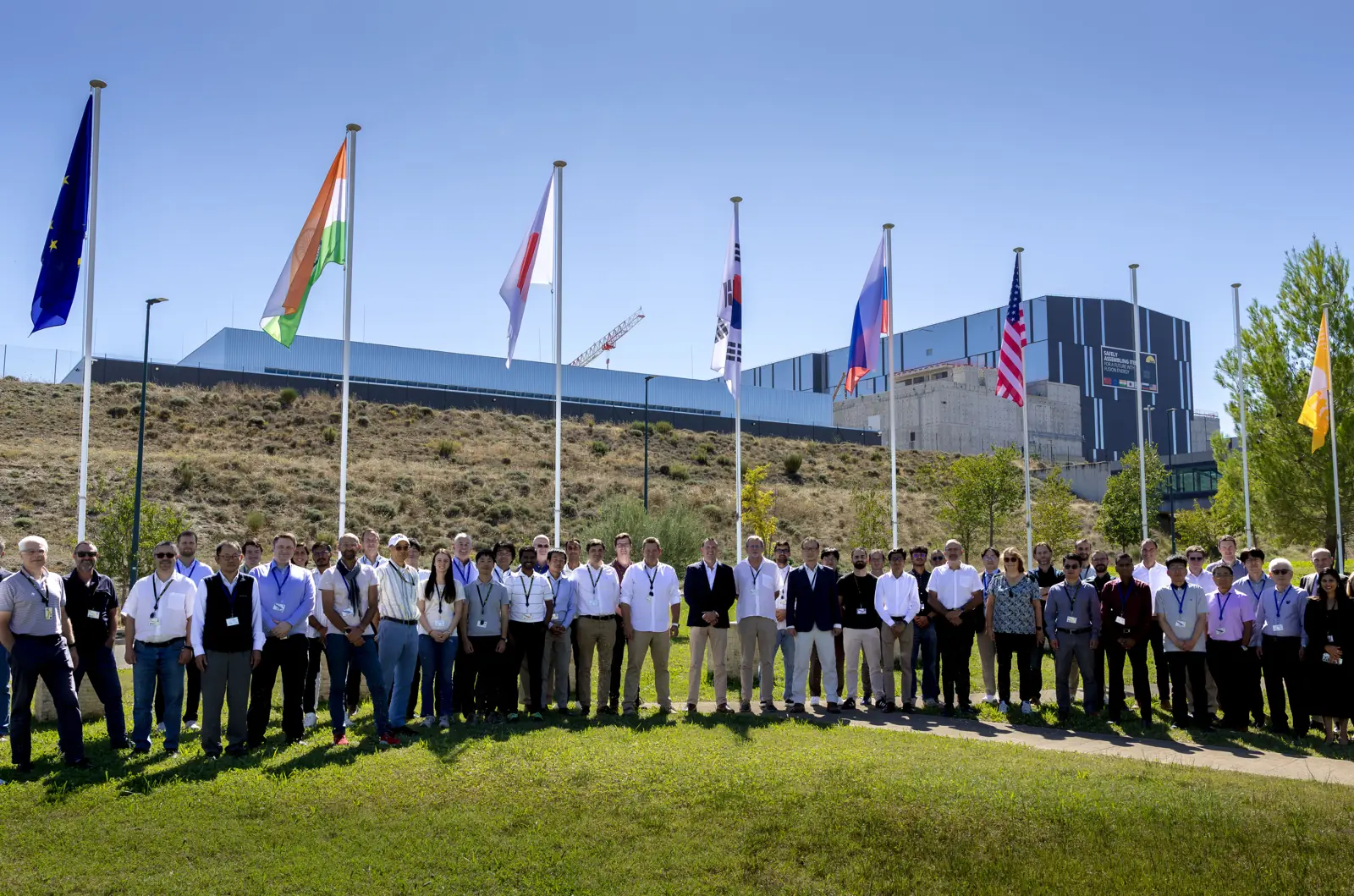
Shared challenges include tritium handling, heat-receiving equipment, reactor materials and remote maintenance. Even where reactor concepts differ, sharing testing and assessment expertise is valuable. The pictured ITER Tritium Plant Summit is an example of international collaboration among ITER, domestic procurement agencies and companies on design and manufacturing challenges. The September 2026 meeting also discussed coordination on equipment standardization and qualification.
The conditions for choosing which power-generation systems to support still require detailed development. Documents from the August 10 process review committee identify assessment methods for technological progress, market potential and delivery structures as issues for consideration. A milestone is an intermediate achievement to verify; check-and-review procedures assess results and determine the next steps. August discussion materials
Develop safety frameworks and public understanding alongside technology
Safety assessment is not a task added after a machine is complete. The basic approach to ensuring safety, adopted March 25, 2025, calls for risk assessment reflecting radiation and tritium quantities and the characteristics of each machine. It emphasizes a graded approach proportional to safety significance, and separation between promotion and regulation. Basic safety approach
The Nuclear Regulation Authority also discussed exchanges with operators and other parties at its March 25, 2026 meeting. NRA meeting documents
Adopting a basic policy or holding discussions must be distinguished from enacting new laws and standards. Applying the existing law regulating radioisotopes and considering arrangements for future machines cannot collectively be described as a completed regulatory framework.
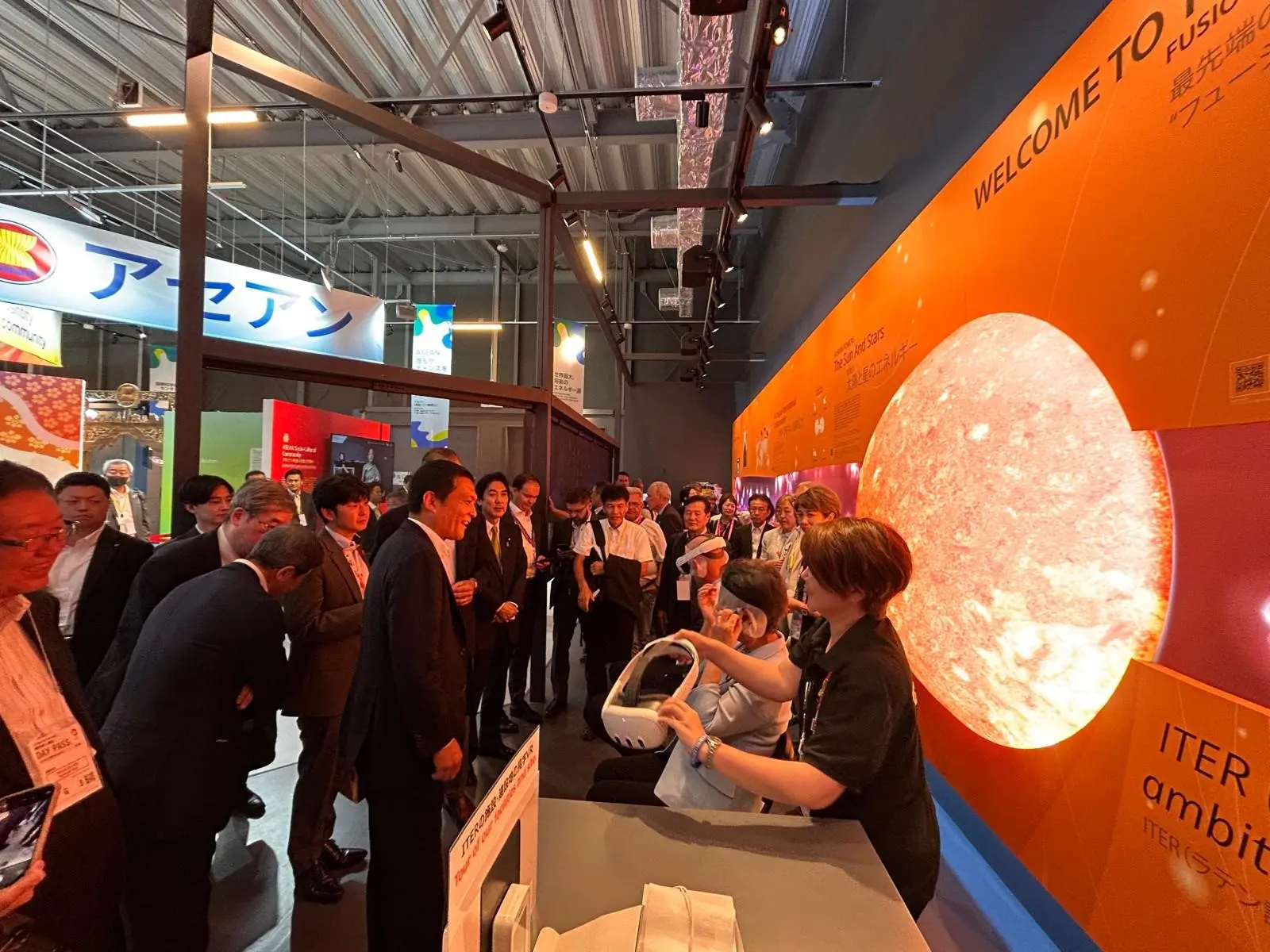
Local understanding is essential when siting facilities. Expected benefits and remaining challenges should be disclosed, and questions and concerns heard. Opportunities to learn about science, such as ITER's exhibition at Expo 2025 Osaka, Kansai, serve a different purpose from discussions with local communities about a specific facility proposal.
Companies should begin by asking who can verify what
A practical recommendation for prospective entrants is to separate contacts for research and development, support programs and safety requirements. For performance testing, approach research institutions; for support programs, the responsible implementing office; and for safety requirements, follow the machine proposal and discussions by the relevant authorities.
Even after national policy is announced, appropriations, calls for proposals, selections and facility-access conditions are decided separately. What technology will the company provide? What test data are needed? Who will make the next decision, and when? Recasting policy as these three questions helps connect research progress with concrete business preparation.
- Cabinet Office: Fusion Energy Innovation Strategy (revised June 4, 2025)
- METI: efforts toward realizing fusion energy (February 12, 2026)
- MEXT: fusion energy policy information (checked October 11, 2026)
- Cabinet Office: approach to social implementation of fusion energy (adopted April 8, 2026)
- Cabinet Office: consideration of next steps toward a power-generation demonstration (August 10, 2026)
- Cabinet Office: basic approach to ensuring safety for fusion energy (adopted March 25, 2025)
- Nuclear Regulation Authority: documents for the 67th meeting (March 25, 2026)
- ITER: September 12 visit by then science and technology policy minister Onoda (published September 21, 2026)
- ITER: Tritium Plant Summit (September 15–18, 2026; published September 21)
- ITER: Fusion Energy Day at Expo 2025 Osaka, Kansai (July 13, 2025; published July 15)
Information checked as of:2026-10-11
The national strategy revision and basic safety approach date from 2025; the social-implementation approach dates from April 2026. A power-generation demonstration in the 2030s is a policy goal, not achieved commercial operation. Safety policies and discussion documents must be distinguished from laws already enacted and in force.