Turning tungsten into usable components: joining and heat testing fusion divertors
A high melting point alone does not make a fusion component. ITER’s divertor illustrates joints to cooling tubes, the progression from small tests to full scale, and manufacturing qualification for series production.
Read the Japanese original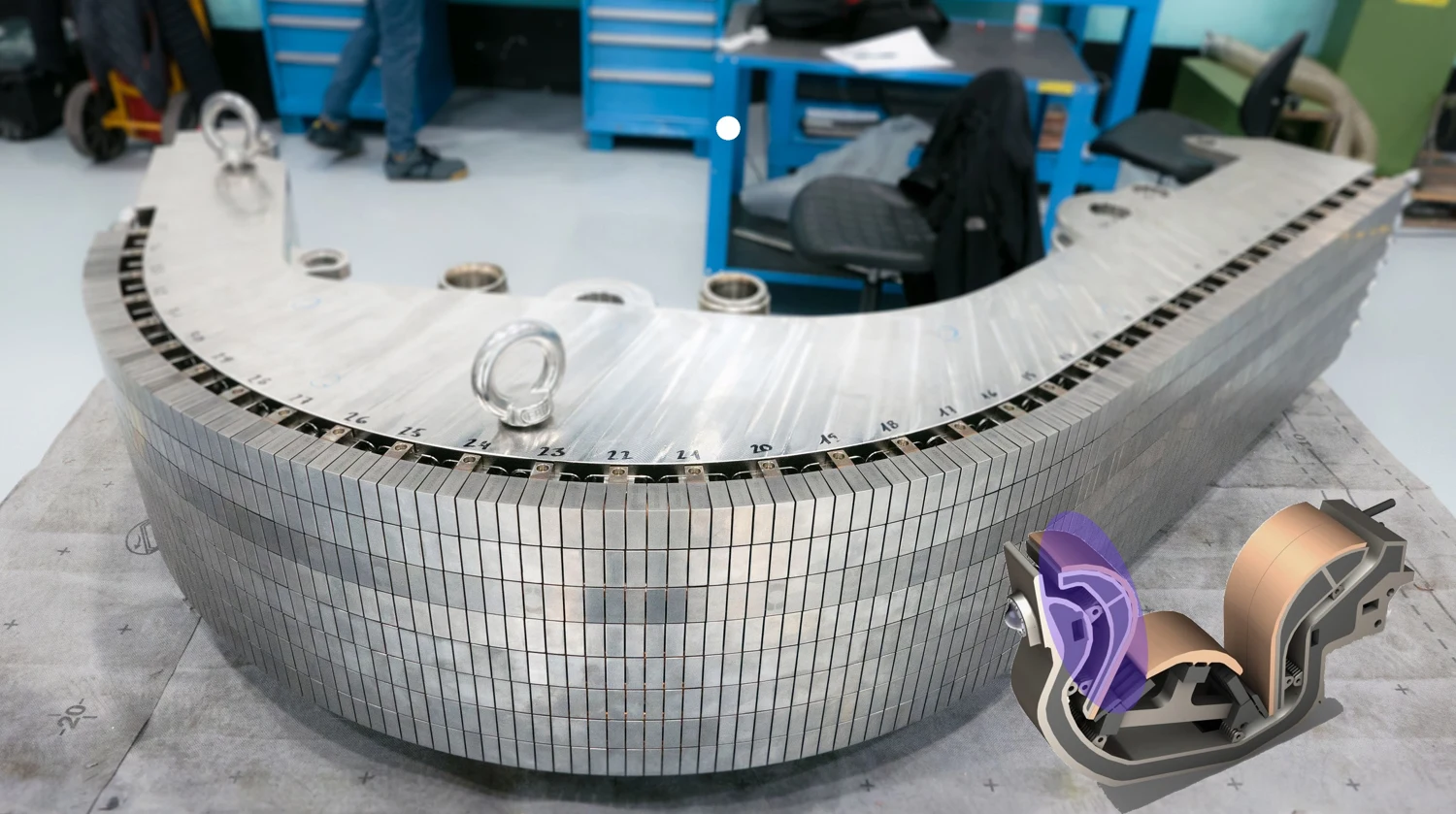
Hearing that tungsten is used in fusion components may suggest that making a heat-resistant metal is all that is needed. But an actual product also needs joints to cooling tubes that remove absorbed heat, and integrity under repeated heating. Using ITER’s divertor as an example, let us examine the work that connects material performance to usable components and sustained production.
Removing heat, not just withstanding it
The divertor sits at the bottom of a tokamak’s vacuum vessel and removes heat, helium produced by fusion reactions and other exhaust. ITER’s design uses tungsten in the areas exposed to particularly high heat loads, with water cooling. ITER’s explanation of the divertor
Heat flux here is the amount of heat entering a unit area per unit time, a different quantity from temperature. ITER’s design assumptions for the vertical targets are 10 megawatts per square metre in steady state and 20 megawatts per square metre during slow transients. These figures describe anticipated future operating conditions, not operation already achieved at ITER.
A high melting point matters, but components continuously receiving heat also require cooling. Manufacturing starts by considering the surface material, joints and cooling tubes as a single path for heat to flow.
Joints between different materials are central to the product
A Fusion for Energy (F4E) report of 29 May 2018 introduced a full-scale inner vertical target prototype. Tungsten blocks were arranged around copper-alloy tubes and cooled by pressurized water inside them. Developing sound joints and ensuring the required heat-removal performance were key challenges. F4E’s prototype report
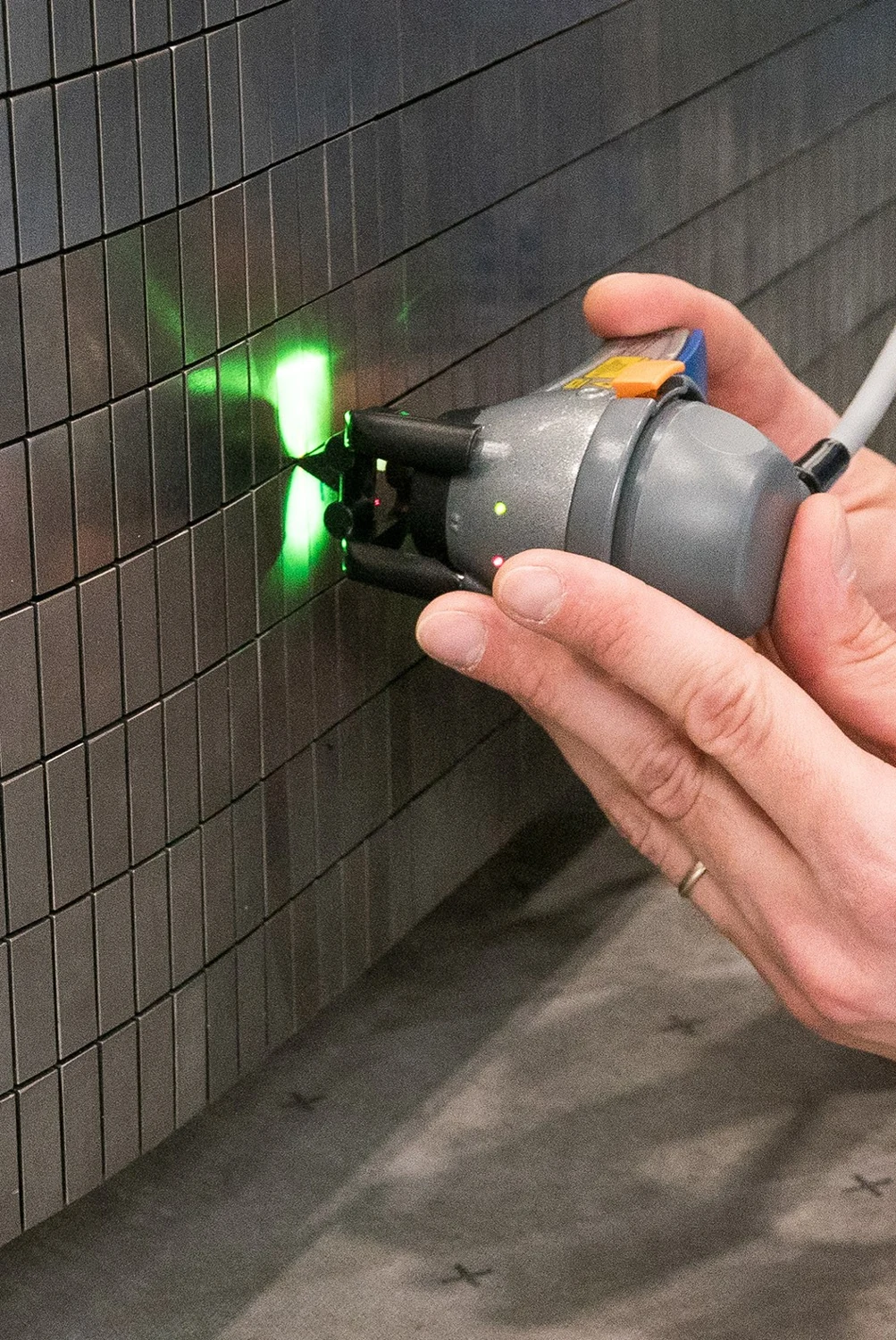
These block-shaped components are called “monoblocks.” Looking only at their neatly aligned surfaces in photographs reveals neither the internal state of the joints nor performance after repeated operation. Component manufacturers need not only material-processing skills but also technologies for joining dissimilar materials and verifying the results.
F4E also emphasizes block positioning, because incorrect alignment can concentrate heat locally. Dimensions here affect heat-loading conditions rather than mere appearance. This is a record of past development, not a current call for suppliers.
Progressing from small specimens to full scale
According to an ITER article published on 4 June 2018, European manufacturing qualification progressed from fabrication and testing of small mock-ups to full-scale prototypes. The full-scale inner vertical target is approximately 1.5 metres long and weighs about 0.5 tonnes, including a steel support structure. ITER’s account of the prototyping stages
A joining method that works on small components does not automatically scale to a large structure. Manufacturing handling, component positioning and post-joining checks add further requirements. The article announced completion of a prototype and preparation for subsequent heat testing; it should not be read as saying all verification was complete at that point.
Separating prototyping into stages also limits how far work must be rolled back if a problem is found. This is a practical inference from the public example. A company making a proposal should first define whether it will supply raw materials, joined components or completed units.
Successful heat tests do not demonstrate an entire reactor
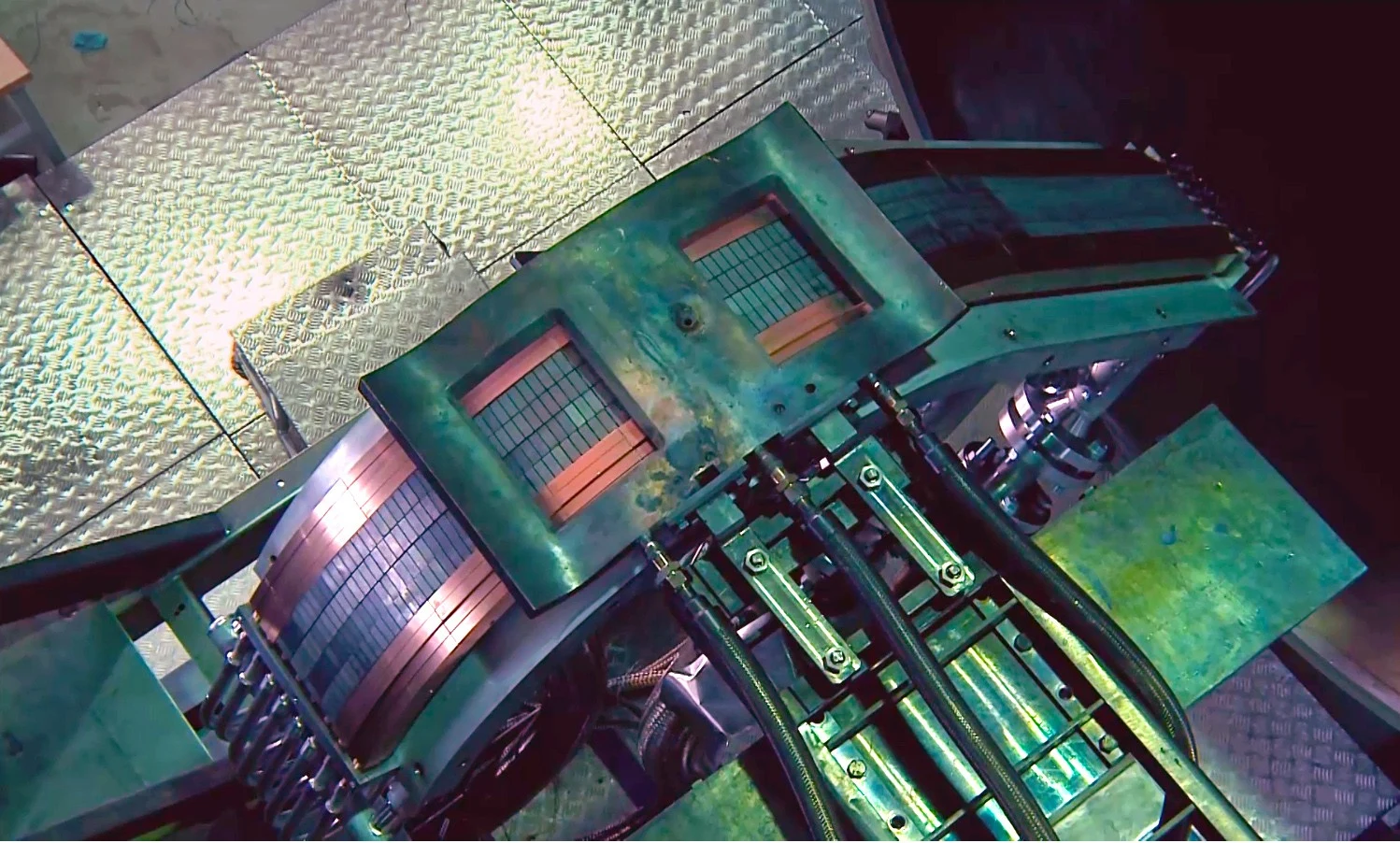
High-heat-flux tests use electron beams or other means to heat components and examine their performance under demanding conditions. The Russian test facility described by ITER on 21 December 2012 heated targets with an electron gun inside a vacuum vessel. The article reported that the facility had begun operating and testing in October of that year, while detailed evaluation of the results was still under way. Report on the test facility
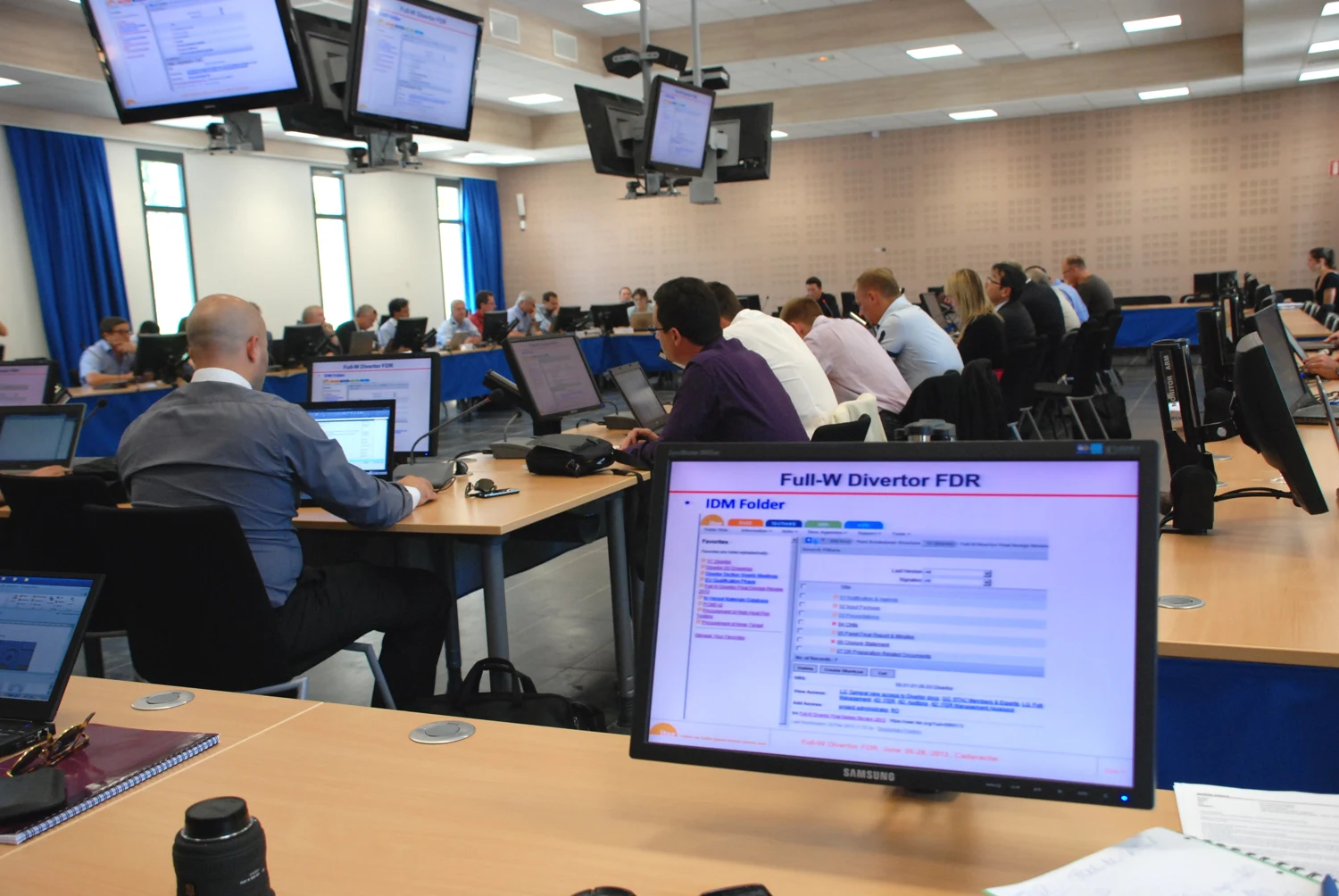
A subsequent ITER report, dated 1 July 2013, explained that Japanese-manufactured prototypes showed no macroscopic cracks, joint delamination or signs of melting in tests repeatedly applying specified heat fluxes. Design review and test results at the time
That is an achievement under those particular test conditions. Electron-beam heating tests alone do not demonstrate every environment inside a fusion reactor, including neutron irradiation, or a power plant’s service life. Test results must be read together with what was applied, what was observed and what lay outside their scope.
Commercial production must sustain quality after prototyping
On 16 December 2022, F4E introduced three companies or consortia that had obtained manufacturing qualification and announced a contract with one of them, Research Instruments, to manufacture the first 13 units. Passing the prototype stage and receiving a production order are distinct steps. The delivery schedule announced at the time must be distinguished from completed deliveries. F4E’s manufacturing-contract announcement
Companies considering entry should clarify the reproducibility of joining procedures, requalification when materials or equipment conditions change, the cost of making test articles, and access schedules for external test facilities. These are editorial suggestions, not requirements for any particular solicitation. Actual contracts require agreement with the customer on specifications, inspection methods, responsibility for nonconformities and delivery dates.
The value of fusion components is not determined solely by the ability to handle unusual materials. Creating a path for heat, verifying it under anticipated conditions and repeating the same process form a chain of capabilities. That chain offers interfaces for companies specializing in materials, joining and testing.
- ITER | Divertor (equipment-design explanation; publication date unspecified; checked 12 October 2026)
- F4E | Inner vertical target prototype (published 29 May 2018; prototype completed, subsequent heat testing planned at the time)
- ITER | The hottest stuff in ITER (published 4 June 2018; prototyping milestone in May 2018)
- ITER | A blast of heat (published 21 December 2012; operation began in October 2012 and tests reported)
- ITER | Design review for tungsten divertor (published 1 July 2013; review 26–28 June and heat-test results from the preceding year)
- F4E | Start of inner vertical target production (published 16 December 2022; detailed contract-signing date unspecified; series-production contract and plans)
Information checked as of:2026-10-12
Technical and practical explanation based on public materials from 2012–2023. Distinguishes heat-test results, manufacturing qualification, contracts and future operating conditions.