What is a spherical tokamak? Understanding the path to fusion power through the shape of plasma
Spherical tokamaks aim for high plasma performance in compact machines. From ST40, MAST Upgrade and NSTX-U to Demo4’s magnet tests and the STEP power-plant programme, we explain how plasma shape creates opportunities and what remains to be solved before electricity generation.
Read the Japanese original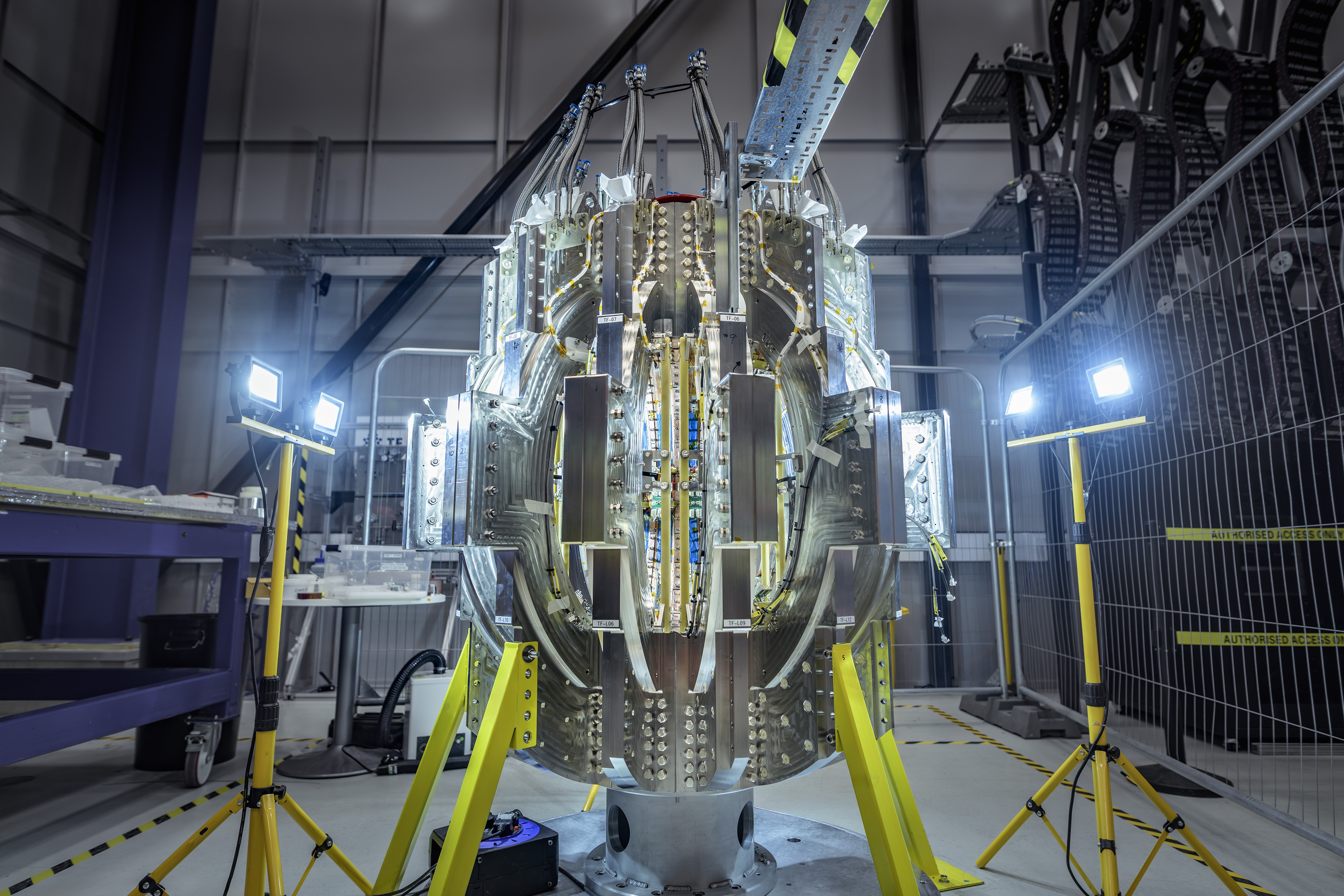
In fusion energy research, the shape in which the fuel plasma is confined affects a machine’s performance and size. A spherical tokamak produces a rounded plasma with a small central hole.
ST40, developed by the UK’s Tokamak Energy, and the UK research machine MAST Upgrade use this approach. It also underpins the UK’s STEP programme, which aims to build a fusion power plant.
Why can changing the shape bring us a step closer to generating electricity? Let us start by looking at the plasma itself.
It is the plasma inside the machine that is “spherical”
The plasma in a conventional tokamak forms a ring, rather like a doughnut. A spherical tokamak has a shape resembling a thicker ring with a smaller central hole. Because it is also elongated vertically, it looks like a cored apple when viewed from the side.
The important point is that a spherical tokamak is still a ring with a hole in the middle. It does not pack plasma into a solid sphere with no opening. “Spherical” also refers mainly to the plasma’s shape, rather than the appearance of the building or vacuum vessel.
The aspect ratio expresses this difference numerically. Let the major radius R be the distance from the machine’s central axis to the centre of the plasma ring, and the minor radius a be the horizontal half-width of the plasma cross-section. The aspect ratio is then A = R/a. Many conventional tokamaks have an A of around 3, while spherical tokamaks generally have an A below 2.
For example, if R is 3 and a is 1, A is 3. If R is 1.5 and a is 1, A is 1.5. In the latter case, the central hole is smaller relative to the thickness of the ring. This small central hole has a major influence on the plasma’s properties and the machine’s design.
Magnetic fields create twisted paths for the plasma
Fusion requires the fuel to reach extremely high temperatures. In that state, atoms separate into electrons and ions, forming a plasma of moving electrically charged particles. Because heat is lost if the plasma remains in direct contact with the vessel wall, magnetic fields are used to confine it.
Charged particles move in spirals around magnetic field lines. However, a field running in just one direction around the ring does not provide sufficient confinement. A tokamak combines a field that runs around the machine with a field that circles the plasma’s cross-section, giving the field lines a twist.
This is achieved using coils positioned outside the plasma and a current flowing through the plasma itself. Toroidal field coils produce the field around the ring. Poloidal field coils adjust the plasma’s position and shape. The field produced by the plasma current also contributes, creating the magnetic structure that confines the particles.
The same basic principle applies to a spherical tokamak. It does not use an entirely different fusion reaction from other tokamaks. Instead, it seeks to improve confinement by substantially changing the plasma’s shape.
Why can a different shape be an advantage?
As plasma becomes hotter and denser, its pressure rises and it tends to expand outwards. The magnetic field counteracts this motion. Researchers want to know how much plasma pressure can be supported stably at a given magnetic field strength.
The measure of this relationship is called beta. It is the plasma pressure divided by the magnetic pressure. At the same magnetic field strength, a higher beta means that higher plasma pressure can be accommodated.
In a spherical tokamak, the way magnetic field lines curve and wind around the plasma differs substantially between the inner and outer sides. Following a field line, a relatively large portion has curvature favourable to plasma stability, which is thought to make it easier to support high pressure. A paper published in 1997 reported experimental results with toroidal beta of at least 30% in the UK’s START machine.
The hope is to use this property to achieve high plasma performance in a relatively small machine. A smaller machine could reduce the scale of the components and facilities needed for construction. However, the size and cost of a power plant depend not just on its magnets, but also on cooling systems, fuel systems, shielding and maintenance arrangements.
A beta of 30% does not mean that 30% of the fuel’s energy has been converted into electricity. High beta is one measure of plasma performance, separate from electricity-generation efficiency or progress towards commercial operation.
From START to ST40: more than 30 years of research
The spherical tokamak is not an approach that first appeared with recent start-ups. In the UK, experiments on START began in 1991 and demonstrated that high beta could be achieved. Results from this small machine led to research testing performance in larger devices.
NSTX began operating in the United States in 1999, followed by MAST in the UK in 2000. The research expanded beyond producing plasma to examine how heat escapes, what causes instabilities and how to sustain the plasma current.
Japan has also pursued its own research, including on TST-2 and UTST at the University of Tokyo. UTST, for example, studies a method that converts magnetic energy into heat when two plasmas merge. Research on TST-2 has explored using electromagnetic waves to produce plasma and drive current. These studies contribute to technologies for efficiently starting up and sustaining plasma within a limited space.
From the 2010s onwards, development by private companies also joined this work. Tokamak Energy’s ST40 began operating in 2017. Knowledge accumulated by publicly funded research machines, together with private-sector development of machines and magnets, supports spherical tokamak research today.
Leading machines address different challenges
ST40: can a compact machine approach the high temperatures needed for fusion?
Tokamak Energy’s ST40 is a spherical tokamak that combines a compact design with a strong magnetic field. It is an experimental machine using copper magnets, which must be distinguished from the high-temperature superconducting magnets the company is developing separately.
One of ST40’s important achievements is an ion temperature of around 100 million degrees Celsius, reached in experiments in 2022. Ions are particles that include the atomic nuclei central to fusion reactions, so the ability to raise their temperature is significant. The result showed that even a compact spherical tokamak can reach high-temperature conditions relevant to fusion.
However, this experiment was not a demonstration of electricity generation. In the experiment described by the US Department of Energy, the discharge lasted about 0.15 seconds. To work towards power generation, particle density and heat confinement must be improved alongside temperature.
ST40 now also provides a research platform for the LEAPS programme, which involves government agencies from the United States and the UK, among others. Research including the use of lithium on plasma-facing surfaces is exploring the operating conditions that future power plants will need.
MAST Upgrade: how can the heat leaving a hot plasma be handled?
A fusion reactor must not only heat its plasma but also safely handle the heat leaving it. If heat is concentrated in a small area, component lifetimes shorten and more downtime is needed for replacement.
MAST Upgrade, operated by the UK Atomic Energy Authority (UKAEA), makes this heat exhaust a major research focus. The divertor is the part that receives particles and heat leaving the plasma. The machine uses configurations such as the Super-X divertor, which shapes the heat’s path with magnetic fields, to investigate ways of reducing concentrated loads on components.
MAST Upgrade began operating in 2020 and completed its fifth experimental campaign in 2026. On 3 November, the installation of a major component to increase heating capacity was announced. The machine is undergoing repeated experiments and upgrades as researchers work towards plasma conditions suitable for a power plant.
NSTX-U: exploring conditions closer to a reactor with stronger fields and heating
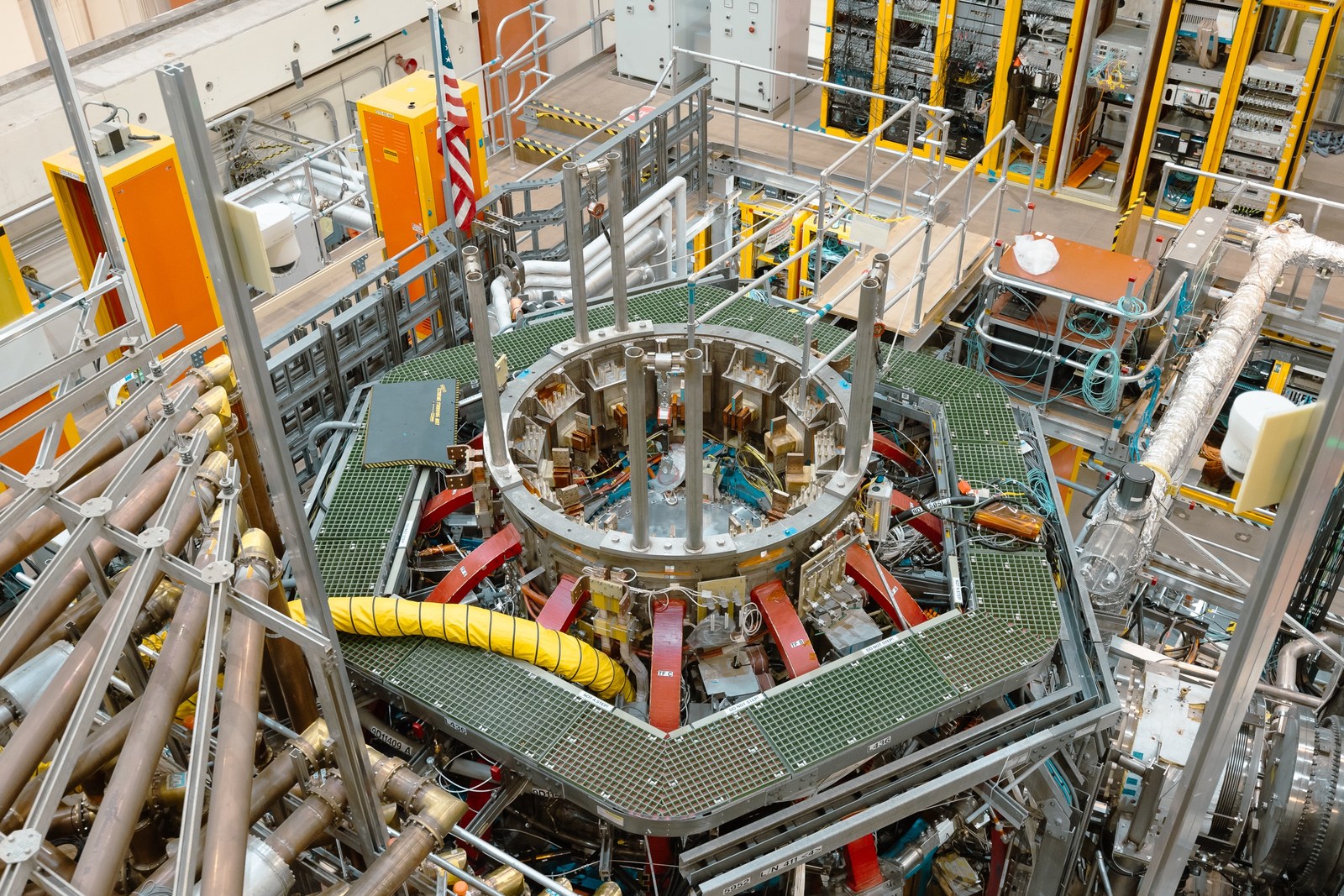
NSTX-U at the US Department of Energy’s Princeton Plasma Physics Laboratory is a research machine developed from NSTX. Using a more powerful central magnet and heating systems, it is intended to investigate confinement, stability and control in spherical tokamaks.
As of November 2026, a recovery project prompted by a failed coil is under way. The target performance described in introductions to the machine should not be read as operating performance already achieved. Research machines go through periods of experiments as well as periods of major modification and maintenance.
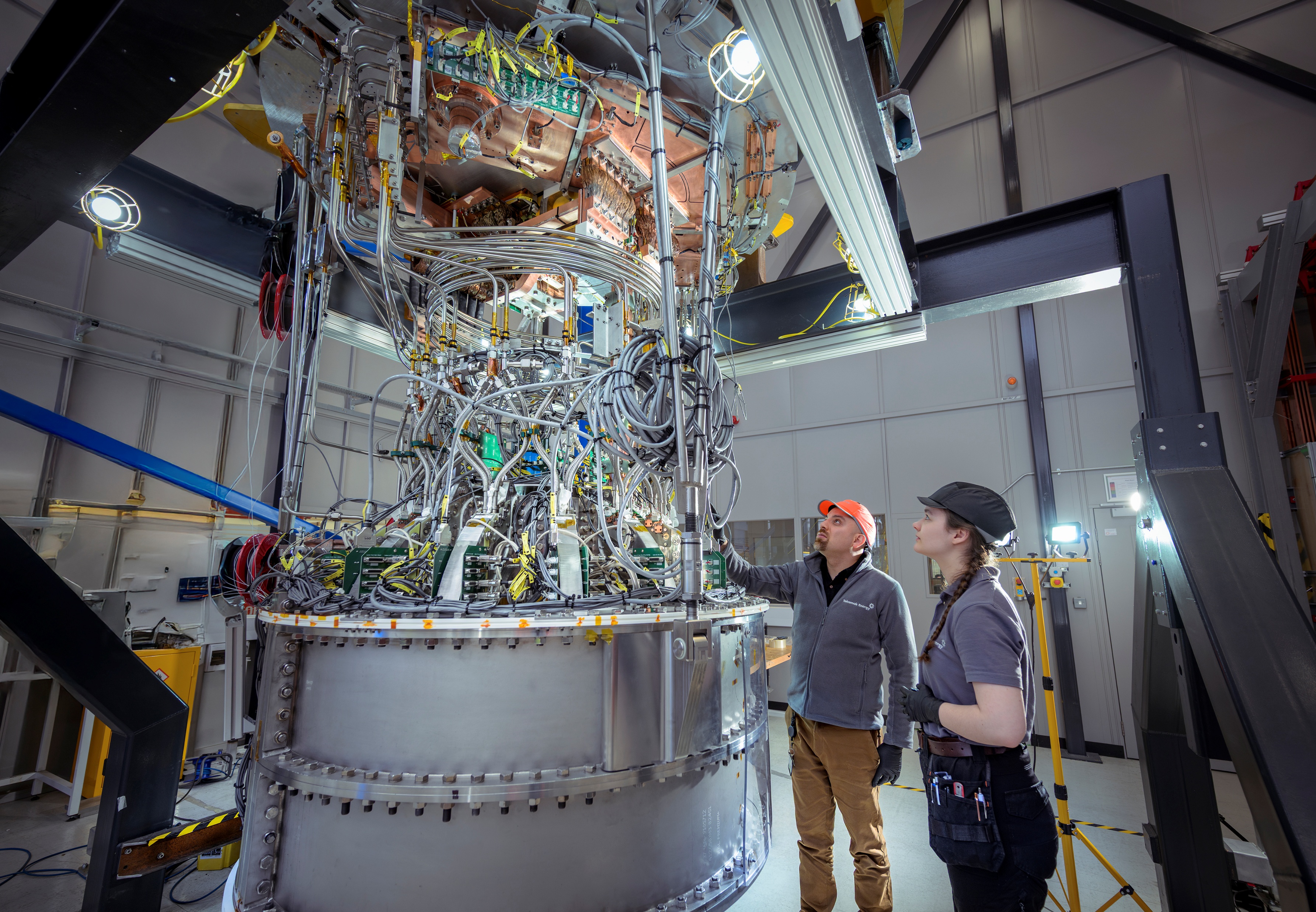
Tokamak Energy’s photographs show another development: Demo4
Alongside plasma research, the magnets that support it must also be developed. Tokamak Energy’s Demo4 is an integrated high-temperature superconducting magnet test system for this purpose.
Despite the term “high-temperature superconducting”, these magnets do not operate at room temperature. They use materials that remain superconducting at higher temperatures than conventional superconducting materials, but are cooled to low temperatures during operation.
A magnet is not finished simply because it can produce a strong field on its own. When several coils are arranged and operated together, large forces act between them. Power supplies to provide current, cooling systems to maintain temperature and systems to detect faults and protect the magnets are also needed. Demo4 tests these elements together.
In September 2026, the company announced that it had completed 14 months of testing and recorded a peak magnetic field of 13.7 tesla. What was verified here was the performance of the magnet system. This should be understood separately from ST40’s plasma experiments and from achievements in fusion electricity generation itself.
While ST40 investigates how to confine plasma, Demo4 investigates how to build a working system that produces strong magnetic fields. Their different roles both support future fusion machines.
What remains before a power plant can be built?
Concrete designs are being developed for power plants using spherical tokamaks. The UK’s STEP is a leading example. Its aim goes beyond producing plasma in a research machine: it seeks to build a prototype power plant that can supply electricity outside the plant even after subtracting the electricity consumed on site.
In October 2026, the third-generation design, SPP3, was announced. Its priorities include heating technologies to sustain the plasma, continuous operation and a maintenance structure that makes components easy to access. Power-plant challenges, including operating for long periods, replacing necessary components and restarting, are central to the design.
Adopting a spherical tokamak shape does not, however, automatically produce a completed power plant. In particular, the following three challenges must be solved together.
Fitting magnets and their protection into a narrow central region.
The smaller the central hole, the less space is available for the centre column. This space must accommodate conductors that generate the magnetic field and the means to cool them. In a power reactor, shielding to protect magnets from the heat and damage caused by fusion neutrons is also important. Greater compactness places tighter demands on materials and component layout.
Extracting heat and recovering and producing fuel.
In a power reactor using deuterium and tritium, neutron energy is recovered as heat and sent to the power-generation system. At the same time, the aim is to produce tritium from lithium around the reactor to replenish the fuel supply. The component that serves these purposes is the blanket. Because space on the inner side of a spherical tokamak is limited, deciding where to place the blanket and how much can be accommodated is difficult.
Sustaining high temperature and density while achieving a viable power balance.
Reaching a high temperature once is not enough for a power plant. The plasma must be stabilised, its current sustained and enough electricity left to export after accounting for the power used for heating, cooling and other systems. The frequency of component replacement and the length of shutdowns also affect electricity-generation costs.
Spherical tokamaks are a promising line of research that uses plasma geometry to pursue high-performance, compact reactors. Experiments have demonstrated their potential. The question now is whether that plasma performance can be translated into a power plant with the necessary magnets, fuel systems, materials, heat recovery and maintenance capabilities.
When looking at ST40, MAST Upgrade, NSTX-U and STEP, paying attention not just to peak temperature or machine size but also to the problem each machine is designed to solve helps reveal where research and development stand today.
The Demo4 photographs featured in this article are used with permission from Tokamak Energy. We thank Tokamak Energy for providing the photographs.
- UKAEA: Review of spherical tokamak research (aspect ratio, high beta and reactor engineering)
- UKAEA: History (START and MAST)
- High-β performance of the START spherical tokamak (1997; original paper record at Princeton University)
- PPPL: History of NSTX
- University of Tokyo: UTST
- Plasma and Fusion Research: Non-inductive plasma start-up in TST-2
- Tokamak Energy: ST40 and LEAPS
- APS DPP 2023: ST40 research on 100 MK ion temperatures
- DOE: ST40 high-temperature plasma research (12 May 2023)
- UKAEA: MAST Upgrade
- UKAEA: MAST Upgrade first plasma (29 October 2020)
- UKAEA: Results from the fifth experimental campaign (6 August 2026)
- UKAEA: Installation of MAST Upgrade heating components (3 November 2026)
- PPPL: NSTX-U and its recovery project
- Tokamak Energy: Demo4 test results (9 September 2026)
- STEP: Third-generation SPP3 design (9 October 2026)
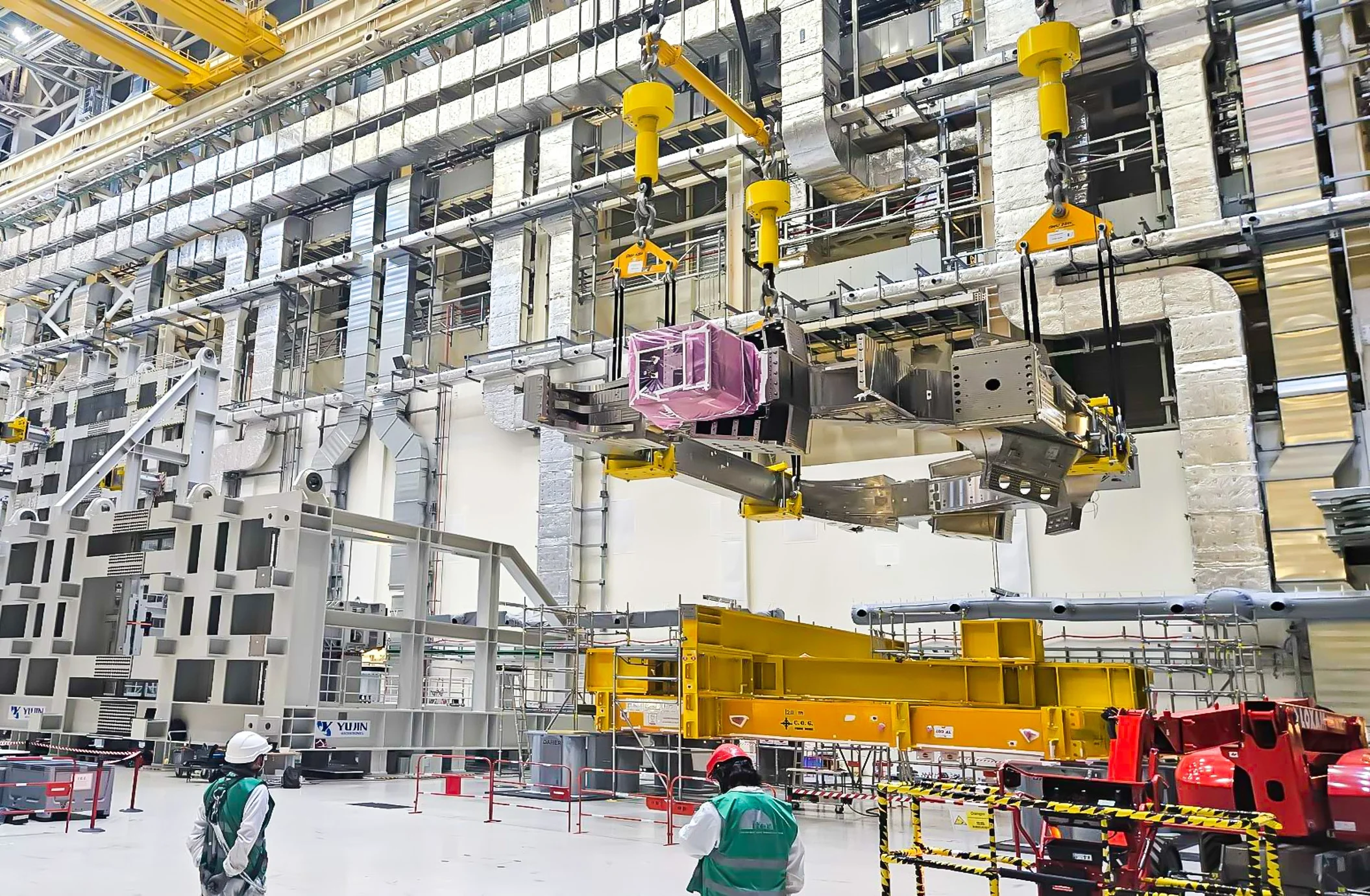
- ITER: Tokamak assembly (source of TF07 photograph)
- PPPL: Official media photographs and CC BY terms
Information checked as of:2026-11-07
Primary sources checked as of 7 November 2026. Experimental results, company announcements and design targets are distinguished. The Demo4 photographs show a high-temperature superconducting magnet test system in a spherical tokamak configuration, not ST40 or a demonstration of electricity generation.