How South Korea connects fusion experiments with manufacturing: industrial entry points through KSTAR and ITER
Control-system tests on KSTAR and Korean companies' manufacture and delivery of ITER vacuum-vessel sectors show two routes from research to industrial capability. This guide distinguishes those results from domestic demonstration-reactor plans and explores connections for Japanese companies.
Read the Japanese originalAnnouncement date:2026-07-22
Understanding South Korea's fusion industry requires looking at both the KSTAR research machine and equipment supply to the international ITER experiment. Beyond experiments with hot plasma, testing control systems on a working machine and manufacturing and delivering enormous components create capabilities for the next stage of industrial development.
KSTAR tests systems for future machines on real equipment
KSTAR, operated in Daejeon by the Korea Institute of Fusion Energy (KFE), is a tokamak using superconducting magnets. A tokamak confines plasma with magnetic fields. KSTAR achieved first plasma in 2008 and is used for research into long-duration operation and plasma control. ITER's introduction to the machine
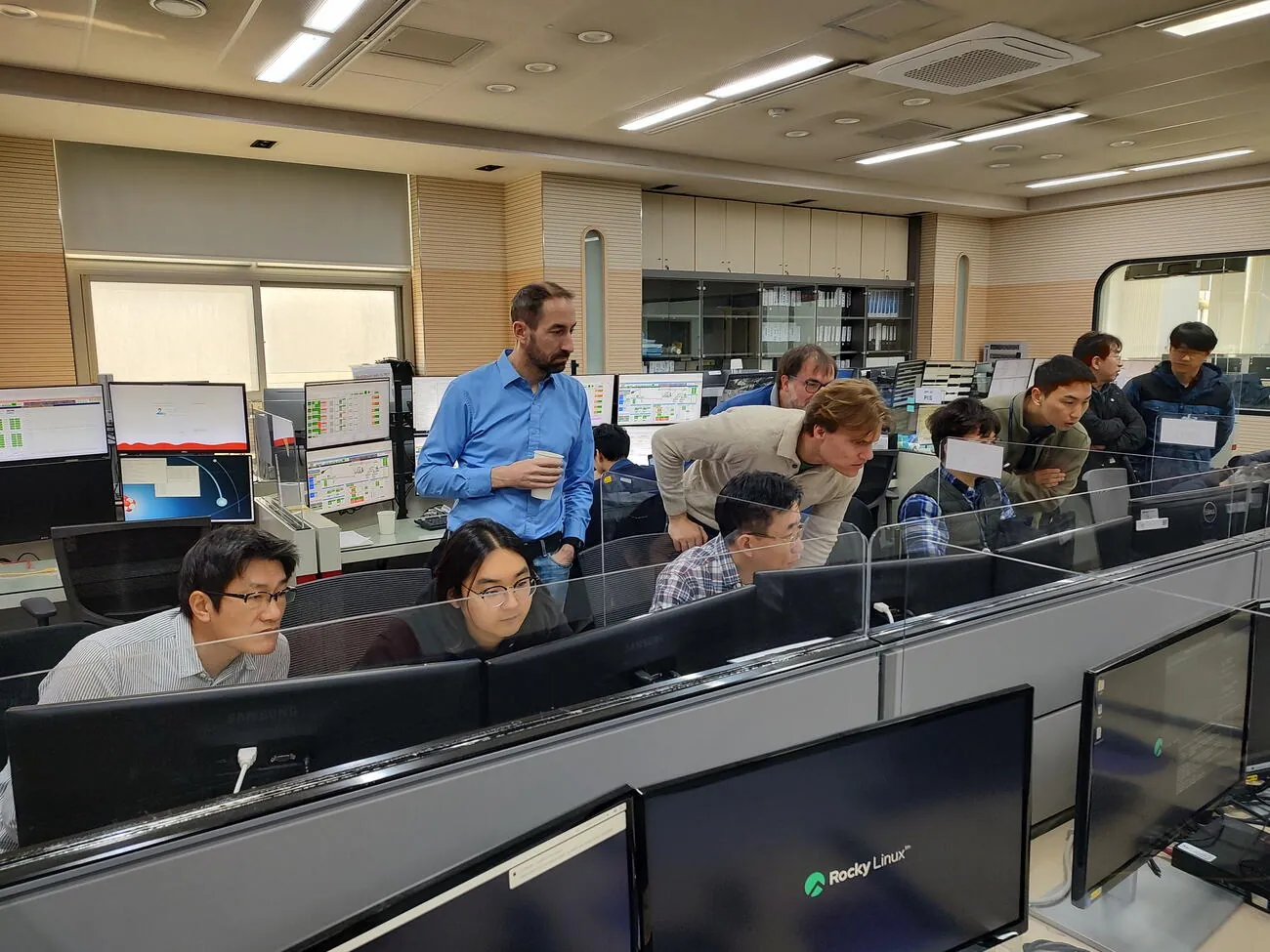
A concrete example is the test of ITER's plasma control system conducted March 9–20, 2026. According to ITER's April 13 report, the campaign performed 38 discharges including preliminary tuning, with the system producing its first plasma on March 10. The photograph shows data analysis in the KSTAR control room during the campaign. Testing the control system on a real machine
This is a different achievement from setting a new maximum temperature. It tests behavior between control commands and physical equipment, and the connection between diagnostics and control. It does not mean ITER has already achieved fusion operation or electricity generation. Equipment and software companies have a role in adapting specified performance to the operation of an integrated machine.
Applying shipbuilding capabilities to ITER's vacuum vessel
ITER's vacuum-vessel sectors exemplify South Korea's industrial contribution. A sector is one section of the large enclosure surrounding the plasma. South Korea manufactured four of the nine sectors, with Europe responsible for the other five.
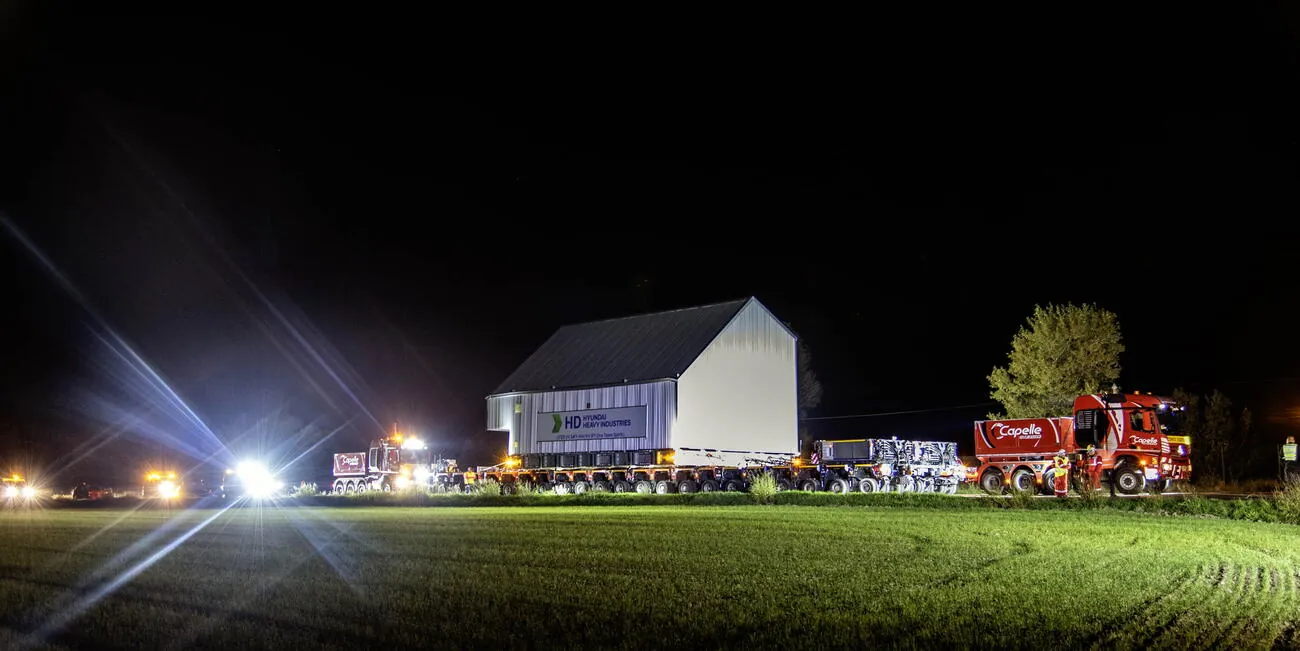
ITER's November 12, 2024 report states that all four were manufactured by Hyundai Heavy Industries in Ulsan and that the final sector arrived at ITER on November 8. Their manufacture combined thick-steel forming, heat treatment, machining and welding, drawing on shipbuilding and KSTAR equipment experience. The transport container in the photograph holds that final sector. Report on the fourth delivery
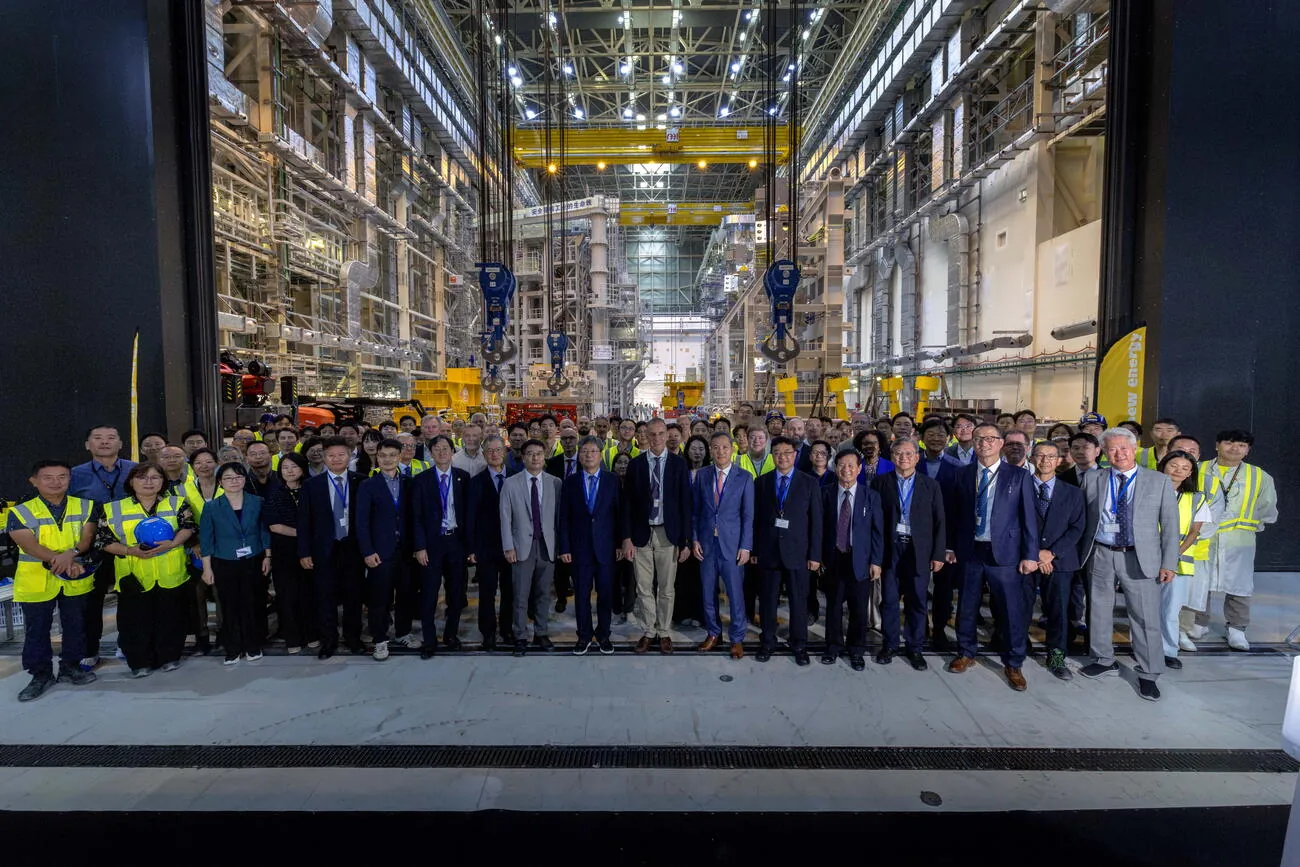
At ITER Korean Fusion Day on July 22, 2026, representatives of the Korean government, research institutions and industry reviewed their manufacturing contribution. The lead photograph shows participants gathered in front of the Assembly Hall. Research investment develops companies and engineers with delivery experience: that connection is important when assessing South Korea's sector. Korea's manufacturing contribution
Separate domestic power-demonstration targets from delivery structures
In its second-half work-plan presentation on July 16, 2026, South Korea's Ministry of Science and ICT (MSIT) stated that it was designing a demonstration reactor aimed at electricity generation in the 2030s. With completion targeted for 2035, it proposed developing public-private cooperation models, including a special-purpose company (SPC), from 2027. An SPC is a company established for a specific project. MSIT work plan
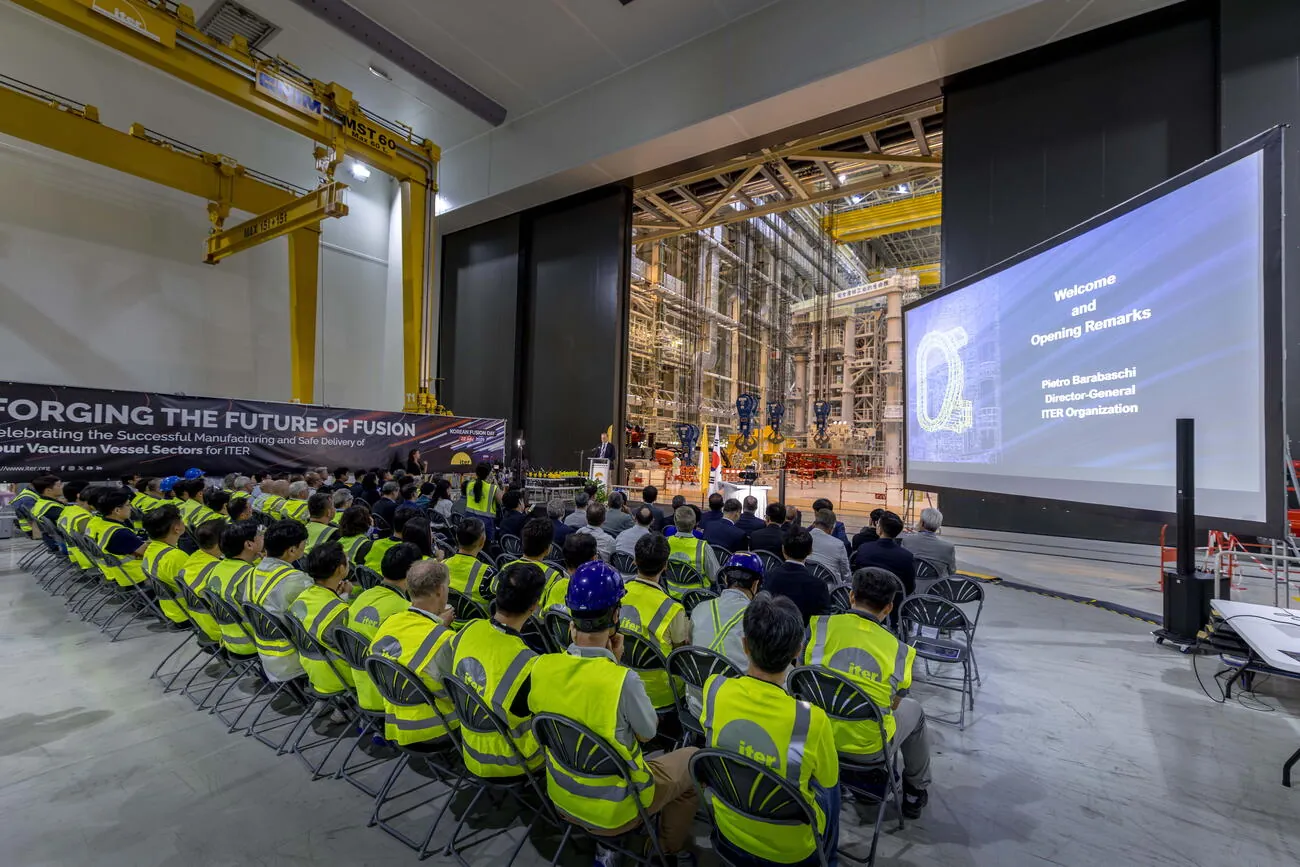
This is a policy for future schedules and organizational structures, not evidence that a company has been established, financing completed or power generated. Component delivery to ITER and the feasibility of a domestic power plant must also be evaluated separately. The photograph shows the July ceremony at ITER, not a domestic demonstration-reactor construction site.
Companies should track not just the target year but how the responsible organization, design conditions, test facilities and procurement timetable become specific. Research-stage cooperation and businesses serving volume production or maintenance have different investment needs and contract durations.
Japanese companies should separate research collaboration from procurement
Connections between Japan and South Korea are not limited to competition. In its December 2024 introduction to KSTAR experiments, ITER described plans for international joint experiments involving Japanese researchers. The entry point here is a contribution to research questions and experiments, which differs from selling equipment. International joint experiments
For procurement, distinguish direct contracts with the ITER Organization from contracts managed by each member's domestic agency. ITER's general procurement guidance indicates that businesses in member jurisdictions, including Japan and South Korea, may be eligible to bid. Registration does not guarantee an award, nor does the guidance mean all domestic Korean calls offer the same eligibility. ITER procurement conditions
The editorial team's suggested starting point is to place the company's strengths in one of three areas: technical cooperation in experiments, supply of specific equipment, or support for operation and maintenance. Then verify the purchaser, specifications, quality records, intellectual property, export controls and payment conditions for each project. South Korea's strength lies not only in the scale of its research results, but in carrying experience back and forth between experiments and manufacturing for the next machine.
- ITER: introduction to the machine
- ITER: real-machine test of the plasma control system
- ITER: report on delivery of the fourth sector
- ITER: Korea's manufacturing contribution
- MSIT: work plan
- ITER: introduction to international joint experiments
- ITER: procurement conditions
- ITER fusion glossary: KSTAR
Information checked as of:2026-10-12
Country overview. Deliveries in 2024, machine tests in March 2026 and the July ceremony are reported achievements. Electricity generation in the 2030s, demonstration-reactor completion in 2035 and development of a public-private structure from 2027 are government targets or plans, not completed outcomes.