China's fusion sector is not a single bloc: finding entry points through EAST, SWIP and private companies
EAST, CRAFT and BEST in Hefei; SWIP in Chengdu; CFEC in Shanghai; and private developer ENN. Distinguishing their roles and development stages reveals where businesses can connect with China's fusion sector.
Read the Japanese original
Describing China's fusion development simply as a giant national project can obscure business opportunities. Hefei combines plasma research with component testing, Chengdu connects research and manufacturing to ITER, Shanghai hosts corporate development activities, and private companies are pursuing different fuels. The important questions go beyond competing dates for electricity generation: who is demonstrating what, and at which stage are technology and people needed?
Hefei: EAST's 1,066 seconds and the roles of CRAFT and BEST
On January 21, 2025, the Hefei Institutes of Physical Science (HFIPS), Chinese Academy of Sciences, announced that EAST, operated by its Institute of Plasma Physics (ASIPP), had sustained a high-confinement plasma for 1,066 seconds the previous day. A tokamak uses magnetic fields to confine hot plasma; this result concerns research into long-duration operation. It does not mean 1,066 seconds of electricity generation or net electricity production by a complete power plant.
Development in Hefei extends beyond EAST. ASIPP's May 1, 2026 announcement described CRAFT as entering integrated testing and commissioning, while BEST had received its first one-eighth vacuum-vessel sector. CRAFT is a research infrastructure for testing major reactor systems and components; BEST is an experimental machine under construction. Both are fusion facilities, but their work differs. These were progress reports from May, not evidence of completion in October.
The broader pattern is the accumulation of capabilities in superconductivity, heating, vacuum systems, cooling, inspection and assembly alongside discharge-duration records. A company looking for a connection should identify not only the machine's name but whether its technology belongs in experiments, test facilities, or manufacturing and installation.
Chengdu: SWIP connects research and manufacturing to ITER
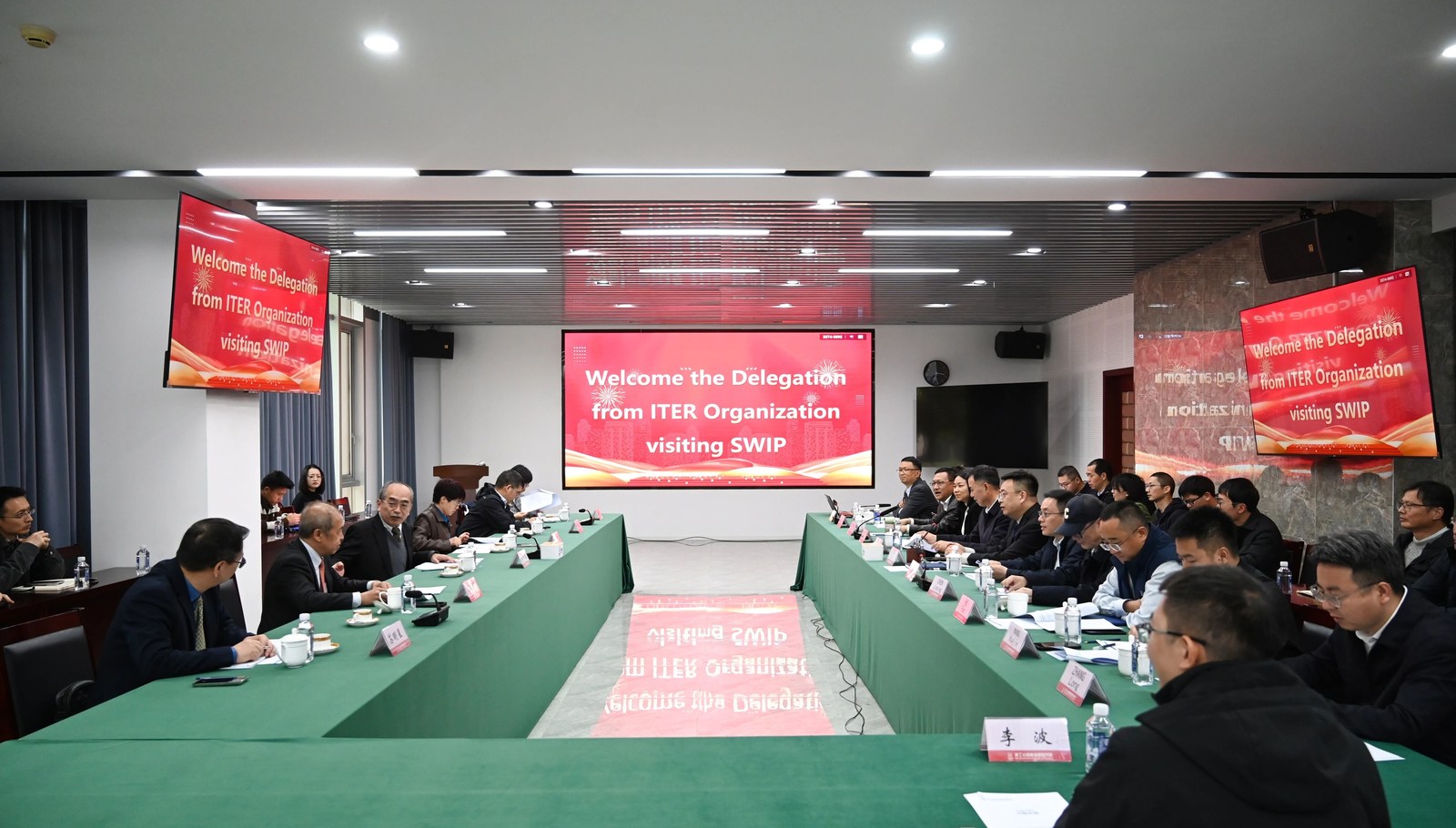
HL-3 at the Southwestern Institute of Physics (SWIP) is a tokamak used for research supporting ITER's future operation. ITER and SWIP signed a cooperation agreement in 2023 and conducted joint research on ITER priorities using HL-3 in 2025.
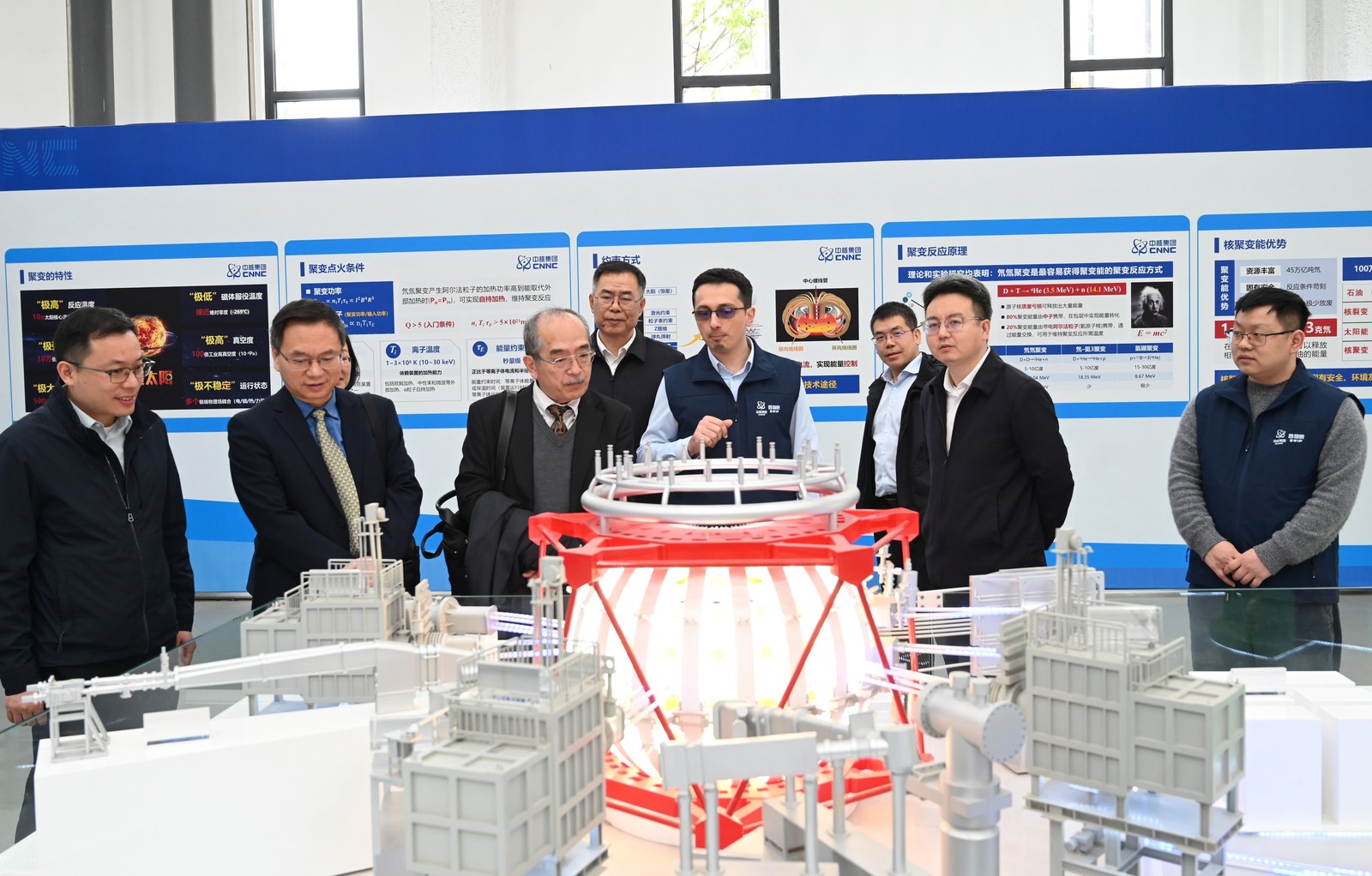
In its report on a visit to China, published March 30, 2026, ITER described SWIP's involvement not only in research but also in China's supply of major technologies and equipment for ITER. The March itinerary included a divertor assembly facility near Shanghai. A divertor receives heat and particles escaping the plasma, making it a clear example of the connection between plasma physics and precision manufacturing.
Separate research centers from corporate roles
The same delegation visited the Shanghai headquarters of China Fusion Energy Co., Ltd. (CFEC) and SWIP's technology research and development center. The involvement of both a company, CFEC, and a research organization, SWIP, illustrates why potential counterparts cannot be classified simply by country.
When Japanese companies investigate opportunities, they need to identify separately the organization making an announcement, the contracting entity, the facility owner and the department setting specifications. A research collaborator is not necessarily the purchasing authority, and participation in international cooperation does not guarantee orders for foreign suppliers.
Exchanges of people are part of machine development
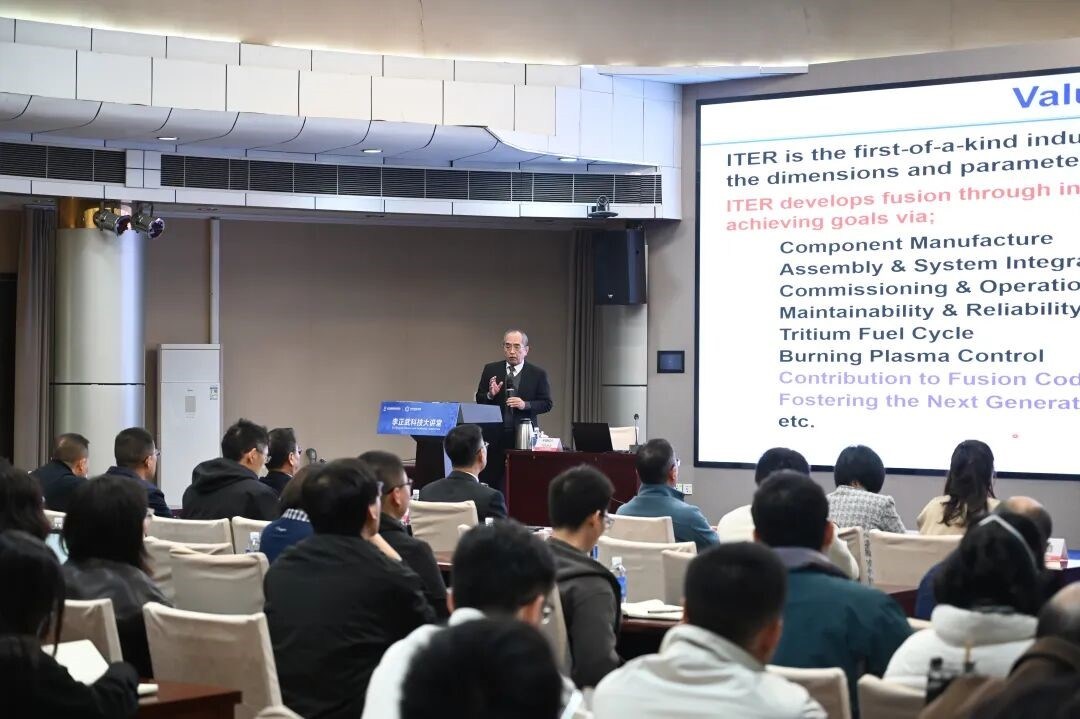
The March visit covered ITER's construction and assembly progress, future experiments and workforce development. Tracking China's fusion sector means following joint experiments and technical exchanges as well as announcements of new machines.
For business teams, it is important not to confuse exchanges between researchers, technical services, component manufacture and recruitment. Current vacancies and eligibility must be checked against individual official advertisements. Participation in an international conference alone does not establish that a recruitment route is open.
Private developer ENN is pursuing a different fuel
In an announcement dated September 28, 2026, ENN reported hydrogen-boron fusion reactions in Xuanlong-50U. This is a company announcement: producing fusion reactions is a different stage from achieving energy gain above input energy or net electricity generation.
The company held a construction-start ceremony for Helong-2 on September 15 and announced it the following day. Completion and the start of experiments by the end of 2027 are company plans, not achieved results. Even at country level, it is premature to rank EAST's operational research and a private company's business plan on a single scale.
Align technology stages and regulatory requirements before assessing opportunities
China's National Nuclear Safety Administration issued guidelines for environmental impact assessment of magnetic-confinement fusion devices dated September 17, 2026, and published them on September 18. Alongside research and development, the institutional framework for building and operating facilities is becoming more specific.
The first useful document for a Japanese company is not a statement that China is a large market, but a project map identifying the target organization, required technology, demonstration stage and contractual conditions. Before quoting, establish the scope of performance guarantees and acceptance testing, and examine the procedures required for each international transaction. The starting point for market entry is identifying work that the company can responsibly deliver, rather than counting announcements.
- HFIPS: EAST's 1,066-second high-confinement operation (January 21, 2025)
- ASIPP: progress on EAST, CRAFT and BEST (May 1, 2026)
- ITER: visit to SWIP and CFEC (March 30, 2026)
- ENN: company announcement on Xuanlong-50U reactions (text dated September 28, 2026)
- ENN: Helong-2 construction launch (event September 15; announcement September 16)
- National Nuclear Safety Administration: environmental assessment guidelines for magnetic-confinement fusion devices (issued September 17; published September 18)
Information checked as of:2026-10-11
A country overview based on official research-institution, government, ITER and company announcements. It separates EAST's 2025 result, ASIPP's May 2026 progress, ITER's March visit and September company announcements. ENN's reported reactions are a company claim; future targets remain plans.